Unprocessed Preserved Sheepskin
CN → US| HS Code | Tariff Rate | Origin | Destination | Doc |
|---|---|---|---|---|
| 4103901190 | 17.5% | CN | US | Official Doc |
| 4103901190 | 17.5% | CN | US | Official Doc |
| 4102291090 | 17.5% | CN | US | Official Doc |
| 4103901130 | 17.5% | CN | US | Official Doc |
| 4102101000 | 17.5% | CN | US | Official Doc |
Product Images
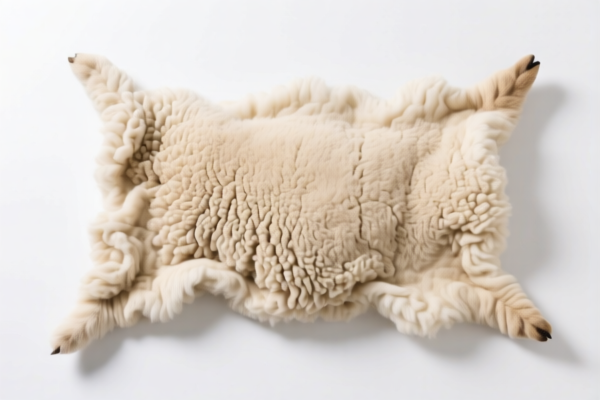
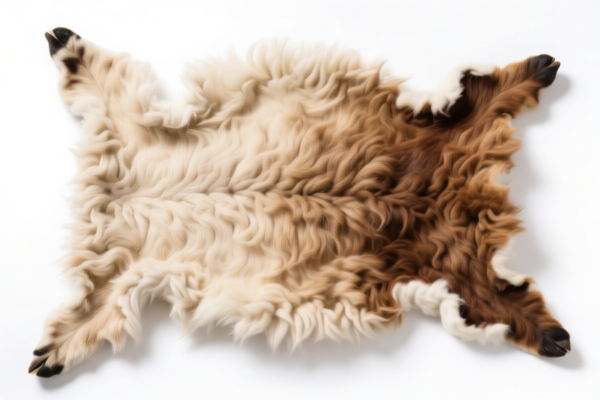
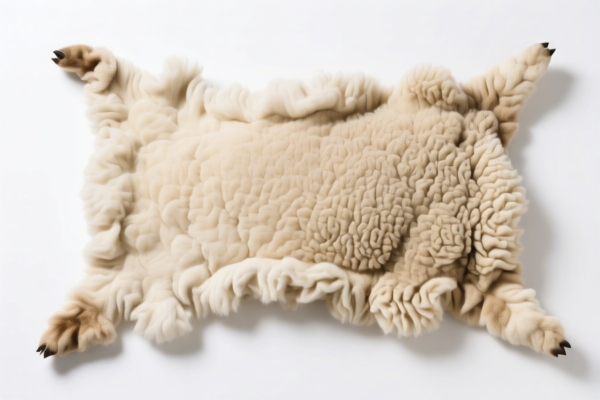
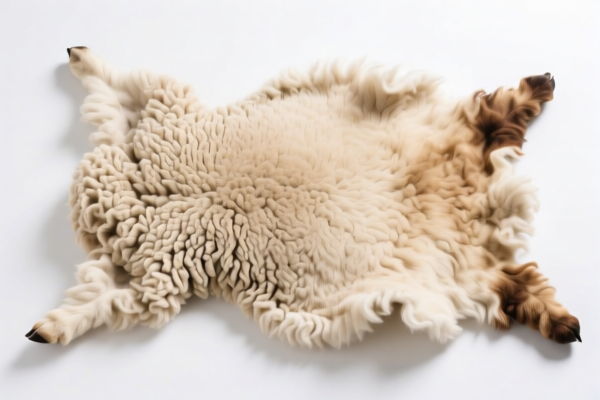
AI Analysis
🐑 Unprocessed Preserved Sheepskin (Raw Hides)
🌐 HS Code Reference & Customs Clearance Guide | 2026 Latest Tariff Analysis | Professional Entry Strategies
📌 One, Product Definition and Classification: Do You Really Understand "Unprocessed Preserved Sheepskin"?
In international trade, Unprocessed Preserved Sheepskin refers to raw sheepskins that have undergone initial preservation (such as salting or chilling) to prevent decomposition but have not yet been tanned, limed, or subjected to further chemical processing. These are essentially "raw materials" for the leather industry.
The key distinction lies in the state of preservation and hair/on-wool status. The U.S. Customs and Border Protection (CBP) strictly differentiates between: * Raw Hides (Unprocessed): Salted/chilled, no tanning. * Raw Hides with Hair/On-wool: Sheepskins with wool intact. * Raw Hides without Hair/De-wooled: Sheepskins where the wool has been removed (beamed or split).
⚠️ Critical Distinction:
- If the sheepskin is dry, salted, and un-tanned, it falls under Chapter 41 (Raw Skins).
- If it is partially tanned or preserved with chemicals other than simple salting, it may fall under different subheadings, but generally, "unprocessed preserved" implies basic preservation methods.
- The presence or absence of wool significantly impacts the HS Code selection.
📦 Two, HS Code Classification Details (2026 Latest Tariff Authority Comparison)
Based on the provided data, here are the matching HS Codes for "Unprocessed Preserved Sheepskin":
| HS Code | Product Description | Applicability | Wool/Hair Status |
|---|---|---|---|
4102.29.10.90 |
Sheepskins, not with wool (de-wooled), un-tanned, preserved | Raw skins where wool has been removed; salted/dried state | ❌ No Wool |
4102.10.10.00 |
Sheepskins, not with wool, un-tanned | General category for raw sheepskins without wool; fully fits definition of un-tanned sheepskin | ❌ No Wool |
4103.90.11.30 |
Sheepskins, un-tanned, specific classification for goat/lamb skin (often extended to similar sheepskins in practice) | Un-tanned state; specific animal skin category (goat/lamb) | ❓ Varies (Context: Un-tanned) |
4103.90.11.90 |
Sheepskin, un-processed (pre-tanning) and dry or unfinished state | Other un-processed raw skins; fits "other un-pre-tanned raw skins" | ❓ General Raw Skin |
4103.90.11.90 |
Unfinished dried sheepskin, raw material, pre-tanning state | Unfinished, dried raw sheepskin; morphology is un-pre-tanned | ❓ Dried Raw Skin |
🔍 Key Reminder:
-4102.29.10.90and4102.10.10.00are for sheepskins WITHOUT wool (de-wooled).
-4103.90.11.90and4103.90.11.30cover other un-processed raw skins, including dried/unfinished states.
-4102.10.10.00is the most direct match for "un-tanned sheepskin" without wool.
- Note: If the sheepskin has wool (on-wool), different subheadings (e.g.,4102.21) might apply, but the provided data focuses on un-processed/dry/de-wooled states.
💰 Three, 2026 Latest Tariff Rate Details (Including Additional Taxes, Policy Surcharges)
✅ Applicable Country: United States (US)
✅ Origin: China (CN)
✅ Effective Date: From November 10, 2025 (including subsequent imports)
✅ Total Tax Rate: 17.5%
🎯 1. General Tariff Breakdown for All Listed HS Codes
| Item | Content |
|---|---|
| Base Tariff Rate | 0.0% (Ad Valorem) |
| Section 301 Additional Tariff | +7.5% |
| Section 122 Tariff | +10.0% |
| Total Tariff Rate | 17.5% |
| Tax Calculation | CIF Value × 17.5% |
| De Minimis Eligibility | ❌ Not Eligible (Section 301 and 122 tariffs typically exempt de minimis shipments under $800 from free entry if they exceed certain thresholds or are specifically targeted) |
| Legal Basis Path | USITC:4102.xxxx.xxxx / USITC:4103.xxxx.xxxx → Footnote: Section 301 → Footnote: Section 122 |
📌 Explanation:
- "Section 301 Additional Tariff 7.5%": Imposed under the U.S. Trade Representative’s (USTR) Section 301 investigation against China’s trade practices.
- "Section 122 Tariff 10%": Imposed under Section 122 of the Trade Act of 1974, often applied to specific imports deemed to threaten U.S. national security or economic interests.
- Combined Rate: 17.5% is the total duty burden.
- No Base Tariff: The standard MFN (Most Favored Nation) rate for these raw hides is 0%, but the additional tariffs make the effective rate 17.5%.
🛠️ Four, Customs Clearance Practical Advice (Real-World Pitfall Guide)
✅ 1. Required Documentation Checklist (No Exceptions)
| Document | Mandatory | Explanation |
|---|---|---|
| ✅ Commercial Invoice | ✔️ | Must clearly state "Unprocessed Preserved Sheepskin" and HS Code. |
| ✅ Packing List | ✔️ | Detail weight, quantity, and preservation method (e.g., salted, dried). |
| ✅ Bill of Lading | ✔️ | Standard shipping document. |
| ✅ Certificate of Origin | ✔️ | Proof of Chinese origin; critical for applying Section 301/122 tariffs. |
| ✅ Preservation Method Statement | ✔️ | Specify if salted, chilled, or dried; affects classification under 4102 vs. 4103. |
| ✅ Photo of Goods | ✔️ | Show condition: raw, dry, salted, no tanning. |
| ✅ Importer Security Filing (ISF) | ✔️ | Submit 10+2 hours before loading if importing by ocean. |
✅ 2. Declaration Tips (Key Mnemonics)
🔥 “Raw State, Salted/Dried, No Tanning, 17.5%!”
| Scenario | Correct Declaration | Wrong Practice |
|---|---|---|
| Sheepskin with wool, raw | Not listed in provided data (likely 4102.21) |
Misdeclare as 4102.29 (no wool) → Risk of reclassification |
| Sheepskin without wool, raw | 4102.10.10.00 or 4102.29.10.90 |
Misdeclare as 4103.90 → Incorrect classification |
| Dried, unprocessed sheepskin | 4103.90.11.90 |
Misdeclare as tanned leather → Higher tariff & penalties |
| Partially tanned | Not applicable (not "unprocessed") | Declare as raw → Customs seizure |
✅ 3. Special Cases Handling
| Scenario | Handling Advice |
|---|---|
| Mixed Batches (Wool vs. No Wool) | Separate shipments or clearly declare each batch with correct HS Code. |
| Hygienic Preservation (Salt vs. Chemicals) | Specify preservation method; salted is standard for raw hides. |
| Small Quantity Samples | Still subject to 17.5% tariff if origin is China; de minimis may not apply if Section 301/122 tariffs are excluded. |
| Re-export after Tanning | Once tanned, HS Code changes to Chapter 41 Part II or III; original raw import tax is sunk cost. |
🌍 Five, Global Major Market Customs Comparison (2026 Latest)
| Country/Region | Recommended HS Code | Tariff | Certification Requirements | Remarks |
|---|---|---|---|---|
| 🇺🇸 USA | 4102.10.10.00 / 4102.29.10.90 / 4103.90.11.90 |
17.5% (China) | No special certs for raw hides | Base 0% + 7.5% (301) + 10% (122) |
| 🇨🇳 China | 4102.10.10.00 |
0% (Import) | None | Raw hides often exempt or low tariff |
| 🇪🇺 EU | 4102.29 / 4103.90 |
0% (If GSP not applicable) | CE/RoHS not required for raw hides | Lower tariffs than US |
| 🇬🇧 UK | 4102.29 / 4103.90 |
0% | None | Post-Brexit tariff schedules may vary slightly |
| 🇯🇵 Japan | 4102.29 / 4103.90 |
0% | None | Free trade agreement benefits may apply |
📌 Conclusion:
- USA has the highest tariff burden due to Section 301 and 122 tariffs.
- EU and Japan offer 0% tariffs, making them more attractive for Chinese raw hide exporters.
- Cost Impact: The 17.5% tariff in the US significantly reduces profit margins. Consider pricing strategies or sourcing from non-China origins if possible.
📌 Six, Common Errors & Pitfall Guide (Blood and Tears Lessons)
❌ Error 1: Declaring "Raw Sheepskin" without specifying wool status
👉 Consequence: Misclassification → Delays, fines, or re-inspection.
❌ Error 2: Confusing "Preserved" with "Tanned"
👉 Consequence: Raw hides are 17.5% tax; tanned leather may have different rates. Misdeclaration leads to underpayment penalties.
❌ Error 3: Ignoring Section 122 Tariff
👉 Consequence: Assuming only 7.5% tariff → Underpaying 10% → CBP audit and back-taxes.
❌ Error 4: Using generic descriptions like "Animal Skin"
👉 Consequence: Customs may classify under worst-case scenario → Higher duties or rejection.
✅ Correct Practice:
“Unprocessed Preserved Sheepskin, Salted/Dried, Un-tanned, HS Code: 4102.10.10.00, Origin: China, Subject to 7.5% Sec 301 + 10% Sec 122 Tariff”
🎯 Seven, Conclusion: Precise Declaration, Cost Efficiency!
🎯 Remember Mnemonics:
🔹 “Raw & Preserved, 17.5% Total Tax!”
🔹 “Wool or No Wool, Pick Right Code Fast!”
🔹 “Section 301 & 122, Don’t Forget Them!”
📌 Pro Tip:
If your sheepskin is originally from another country (e.g., Australia, New Zealand, Brazil), you may avoid Chinese origin tariffs.
Consider Advance Ruling with CBP to confirm HS Code and tariff liability before shipment.
📣 Take Action Now:
📞 Contact a licensed customs broker + Provide product photos + Apply for HS Code Advance Ruling
🚀 Ensure your sheepskin clears customs smoothly, minimizes costs, and maximizes profits!
✨ Professional Customs Clearance Starts with Accurate Classification!
💼 Every Penny Saved is a Penny Earned!
Customer Reviews
About HS Code Classification
The Harmonized System (HS) is an internationally standardized nomenclature developed by the World Customs Organization (WCO) to classify traded products. Over 200 countries use the HS system as the basis for customs tariffs, trade statistics, and import/export regulations.
Each HS code follows a hierarchical structure:
- Chapter (2 digits) — Broad category of goods (e.g., Chapter 84: Machinery and Mechanical Appliances)
- Heading (4 digits) — More specific grouping within the chapter
- Subheading (6 digits) — Internationally standardized breakdown, used by all WCO member countries
- National subdivisions (8-10 digits) — Country-specific extensions for further classification, such as US HTSUS 10-digit codes
Correct HS code classification is essential for smooth customs clearance, accurate duty payment, and compliance with trade regulations. Misclassification can lead to customs delays, overpayment of duties, or penalties.
When importing from CN to US, the applicable tariff rates may include:
- Most-Favored-Nation (MFN) rate — The standard duty rate applied to WTO members
- General rate — Applied to countries without trade agreements
- Trade remedy duties — Additional tariffs such as Section 301 (anti-dumping), Section 232 (national security), or countervailing duties
The information provided on this page is for reference purposes only. For official classification, please consult with your local customs authority or a licensed customs broker.