Unprocessed Raw Sheepskin
CN → US| HS Code | Tariff Rate | Origin | Destination | Doc |
|---|---|---|---|---|
| 4103901190 | 17.5% | CN | US | Official Doc |
| 4102291090 | 17.5% | CN | US | Official Doc |
| 4103901130 | 17.5% | CN | US | Official Doc |
| 4102101000 | 17.5% | CN | US | Official Doc |
| 4205000500 | 37.9% | CN | US | Official Doc |
Product Images
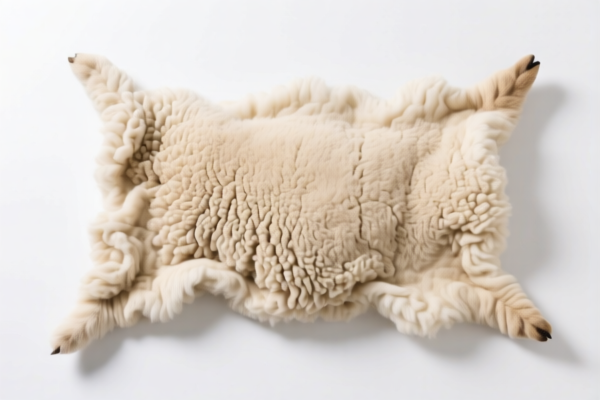
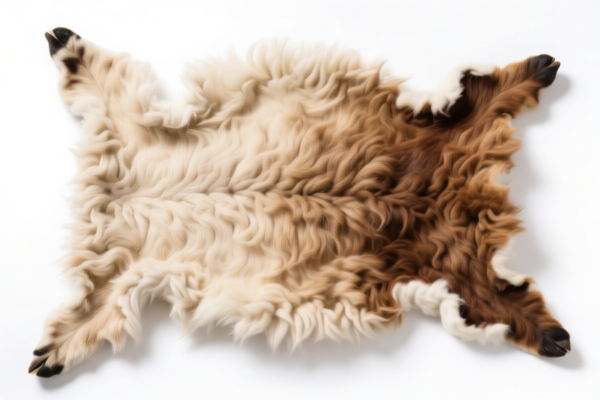
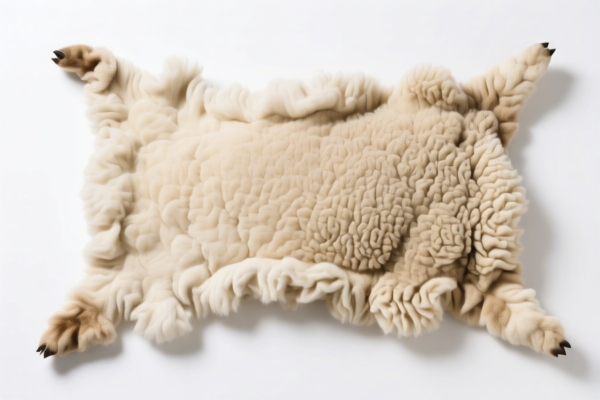
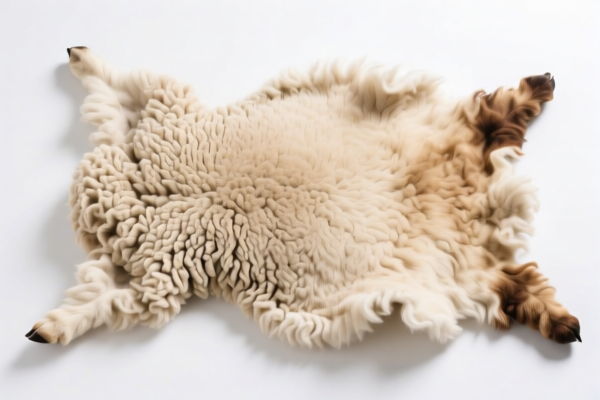
AI Analysis
🐑 Unprocessed Raw Sheepskin (Raw Hides)
🌐 HS Code Reference & Customs Clearance Guide | 2026 Latest Tariff Breakdown | Professional Entry Strategy
📌 I. Product Definition & Classification: Do You Truly Understand "Raw Sheepskin"?
Unprocessed raw sheepskin refers to animal hides/skins that have undergone cleaning (fleshing, liming-free) but have not been subjected to any tanning or preservative process. In international trade, the specific classification depends heavily on the presence of wool and the exact state of preservation (dry, salted, etc.).
Key Distinctions: * With Wool (Fleece-on): Typically classified under heading 4102. * Without Wool (Skin-only): Typically classified under heading 4103. * State: Must be in the "raw" state (untanned). If cured with salt, lime, or dried, they remain "raw" for HS purposes until tanning begins.
⚠️ Critical Classification Point:
- If the sheepskin retains its natural fleece/wool and is not tanned → It likely falls under 4102.xxxx.
- If the sheepskin has been shorn (wool removed) or is considered "other raw hides" (not specifically goat/bovine) → It may fall under 4103.xxxx.
- Note on the provided data: The dataset contains items from both 4102 (sheep/goat with wool) and 4103 (other raw hides). Accurate declaration requires verifying if the wool is present and the specific type of sheepskin.
📦 II. HS Code Classification Details (2026 Latest Tariff Authority Alignment)
Based strictly on the provided <DATA>, here are the applicable HS Codes for Unprocessed Raw Sheepskin:
| HS Code | Product Description | Key Characteristics | Wool Status? |
|---|---|---|---|
4102.29.10.90 |
Sheep/goat skins with wool, not split, raw | With Wool: Raw sheepskin, specific material/processing state defined | ✅ With Wool |
4102.10.10.00 |
Sheep/goat skins with wool, raw | With Wool: General raw sheepskin with fleece intact | ✅ With Wool |
4103.90.11.90 |
Other raw hides (sheep/goat), not pre-tanned | Without Wool/Specific: Sheepskin in dry/raw state, fits "other" classification | ❌ Often Shorn/Other |
4103.90.11.30 |
Other raw hides (sheep/goat), not pre-tanned | Without Wool/Specific: Sheepskin, specifically un-pre-tanned, fits animal hide category | ❌ Often Shorn/Other |
🔍 Important Clarification:
- Heading 4102 specifically covers "Sheep and Lamb Skins with Wool".
- Heading 4103 covers "Other Raw Hides and Skins" (which can include sheepskins without wool or those not specified in 4101-4102).
- Do not misdeclare: Declaring a skinned (wool-less) sheepskin as4102is a common error. Conversely, declaring a fleeced sheepskin as4103may also be incorrect. Check your physical inventory!
💰 III. 2026 Latest Tariff Rate Breakdown (Including Surtaxes & Policy Surcharges)
✅ Applicable Country: United States (US)
✅ Origin: China (CN)
✅ Effective Time: Includes imports post-2025/2026 (Current Policy Enforced)
All items in the provided <DATA> share the same total tax rate structure. This is due to the cumulative effect of Base, Section 301, and Section 122 tariffs.
🎯 1. Raw Sheepskins (All Listed HS Codes: 4102.10.10.00, 4102.29.10.90, 4103.90.11.30, 4103.90.11.90)
| Item | Detail |
|---|---|
| Base Tariff | 0.0% (Ad Valorem) |
| Section 301 Surtax | +7.5% |
| Section 122 Tariff | +10.0% |
| Total Tax Rate | 17.5% |
| Tax Calculation | CIF Value × 17.5% |
| De Minimis Exemption? | ❌ No (Deny de minimis for Section 301/122 goods) |
| Legal Authority Path | USITC:4102/4103 → Section 301: Footnote 9903.01.25 → Section 122: 10% Surtax |
📌 Explanation:
- Base Rate (0%): Raw hides often have low base MFN rates due to lack of processing value.
- Section 301 (7.5%): Part of the ongoing US-China trade action tariffs on Chinese-origin goods.
- Section 122 (10%): Additional surtax applied to specific categories of Chinese imports.
- Total 17.5%: This is a significant burden compared to base rates. It applies uniformly to the raw sheepskin categories listed above.⚠️ Note on
4205.00.05.00(Unprocessed Cowhide Belt):
The data includes a cowhide belt (4205.00.05.00) with a 37.9% total tax (Base 2.9% + Section 301 25% + Section 122 10%).
- However, since the user asked about "Unprocessed Raw Sheepskin", this cowhide entry is NOT applicable to the current product query. Do not use4205for sheepskin.
🛠️ IV. Customs Clearance Practical Advice (Avoid Pitfalls)
✅ 1. Essential Documentation Checklist
| Document | Required? | Description |
|---|---|---|
| ✅ Commercial Invoice | ✔️ | Must clearly state "Raw Sheepskin", "Untanned", "With/Without Wool". |
| ✅ Packing List | ✔️ | Detail weight, quantity, and packaging material (avoid contamination). |
| ✅ Product Photos | ✔️ | Clear images showing the presence/absence of wool, fleshing quality, and any salt/cure residue. |
| ✅ Certificate of Origin (CO) | ✔️ | Proves Chinese origin (triggers the 17.5% tariff). |
| ✅ Import License (if applicable) | ⚠️ | Some raw hides may require USDA/APHIS inspection for animal health safety. Check FSIS requirements. |
✅ 2. Declaration Tips (Key Mantra)
🔥 "Check Wool, Check State, Declare Correctly, Avoid Penalties!"
| Scenario | Correct Declaration | Incorrect Declaration | Risk |
|---|---|---|---|
| Sheepskin with wool | 4102.xxxx |
4103.xxxx |
Misclassification penalty + potential duty difference |
| Sheepskin without wool (shorn) | 4103.90.11.xx |
4102.xxxx |
Misclassification penalty |
| Tanned/Leather Sheepskin | Different HS (e.g., 4104/4105) | 4102/4103 |
High Risk: Raw vs. Processed is a major audit target |
| "Sheepskin" but actually Goat | 4102 (Goat also) |
4103 |
Minor, but specify species if possible |
✅ 3. Special Situation Handling
| Situation | Handling Advice |
|---|---|
| USDA/APHIS Inspection | Raw hides may be subject to animal disease controls (e.g., FMD, Bluetongue). Ensure origin country is approved for raw hide import to the US. Pre-shipment inspection may be required. |
| Salted vs. Dried | Both are "raw". Clearly state method in invoice. Salted hides may incur additional handling fees or moisture claims. |
| Contamination | Ensure hides are free from excessive soil, blood, or foreign bodies. Contaminated hides may be rejected by customs or USDA, leading to destruction costs. |
| Valuation | Base CIF value carefully. Since tariffs are ad valorem, any over-valuation directly increases duty cost. |
🌍 V. Global Market Comparison (2026 Overview)
| Country/Region | Recommended HS Code (Raw Sheepskin) | Tariff Rate (China Origin) | Key Requirements | Notes |
|---|---|---|---|---|
| 🇺🇸 USA | 4102.29.10.90 or 4103.90.11.xx |
17.5% | USDA/APHIS, FSIS | High tariffs + strict biosecurity. |
| 🇨🇳 China | 4102 or 4103 |
0% - 5% | CIQ Inspection | Import duty may be low, but inspection costs exist. |
| 🇪🇺 EU | 4102 or 4103 |
1.5% - 3% | REACH, Biosecurity | Lower tariffs, but strict environmental regulations. |
| 🇬🇧 UK | 4102 or 4103 |
1.5% - 3% | Post-Brexit Rules | Similar to EU post-2021. |
📌 Conclusion:
- The USA imposes the highest effective tariff (17.5%) on raw sheepskins from China due to Section 301 and 122 surcharges.
- Biosecurity (USDA) is as critical as tariffs. Failure to meet health standards can lead to refusal of entry, regardless of tariff payment.
📌 VI. Common Mistakes & Pitfalls (Lessons Learned)
❌ Mistake 1: Declaring "Sheepskin Leather" when it is actually "Raw Sheepskin"
👉 Consequence: Misclassification. Leather has different HS codes and potentially different duties/quotas. Severe penalty.
❌ Mistake 2: Ignoring the "With/Without Wool" distinction
👉 Consequence: Using 4103 for wool-bearing hides (or vice versa). This triggers customs audits.
❌ Mistake 3: Assuming "Raw" means "Free of Duties"
👉 Consequence: Base rate might be 0%, but 17.5% total tax still applies. Do not budget for 0% duty!
❌ Mistake 4: Overlooking USDA/APHIS Requirements
👉 Consequence: Goods held at port, inspected, or destroyed if health certificates are missing. This is often more costly than tariffs.
✅ Correct Approach:
"Raw Sheepskin, Untanned, [With/Without Wool], Country of Origin: China, CIF Value: $XXX, Compliant with US Dept of Agriculture Regulations."
🎯 VII. Conclusion: Professional Declaration, Cost Control & Compliance!
🎯 Remember the Mantra:
🔹 "Wool on? Go 4102. Wool off? Go 4103.
🔹 Raw state? 17.5% Tax. Tanned? Different Code!
🔹 Biosecurity first, Tariffs second!
🔹 Clear docs save dollars!"**
📌 Pro Tip:
If your raw sheepskins are not from China (e.g., from Australia, New Zealand, or Uruguay), the 17.5% surtax does NOT apply. Base rates may apply instead (often 0-3%), resulting in massive savings.
Recommendation:
1. Verify Origin.
2. Confirm Wool Status.
3. Secure USDA Health Certificates.
4. Declare Accurately.
📣 Immediate Action:
📞 Contact your freight forwarder to verify USDA APHIS entry requirements.
📄 Prepare detailed specs (Wool presence, curing method).
🚀 Ensure compliance to avoid port delays and 17.5% surprise costs!
✨ Professional Customs Clearance Starts with Accurate Classification!
💼 Every Percentage Point Counts in Raw Material Imports!
Customer Reviews
About HS Code Classification
The Harmonized System (HS) is an internationally standardized nomenclature developed by the World Customs Organization (WCO) to classify traded products. Over 200 countries use the HS system as the basis for customs tariffs, trade statistics, and import/export regulations.
Each HS code follows a hierarchical structure:
- Chapter (2 digits) — Broad category of goods (e.g., Chapter 84: Machinery and Mechanical Appliances)
- Heading (4 digits) — More specific grouping within the chapter
- Subheading (6 digits) — Internationally standardized breakdown, used by all WCO member countries
- National subdivisions (8-10 digits) — Country-specific extensions for further classification, such as US HTSUS 10-digit codes
Correct HS code classification is essential for smooth customs clearance, accurate duty payment, and compliance with trade regulations. Misclassification can lead to customs delays, overpayment of duties, or penalties.
When importing from CN to US, the applicable tariff rates may include:
- Most-Favored-Nation (MFN) rate — The standard duty rate applied to WTO members
- General rate — Applied to countries without trade agreements
- Trade remedy duties — Additional tariffs such as Section 301 (anti-dumping), Section 232 (national security), or countervailing duties
The information provided on this page is for reference purposes only. For official classification, please consult with your local customs authority or a licensed customs broker.