Unprocessed Rough Square Pine Wood
CN → US| HS Code | Tariff Rate | Origin | Destination | Doc |
|---|---|---|---|---|
| 4403220120 | 35.0% | CN | US | Official Doc |
| 4403210130 | 35.0% | CN | US | Official Doc |
| 4407110052 | 35.0% | CN | US | Official Doc |
| 4407110042 | 35.0% | CN | US | Official Doc |
| 4404100080 | 35.0% | CN | US | Official Doc |
Product Images
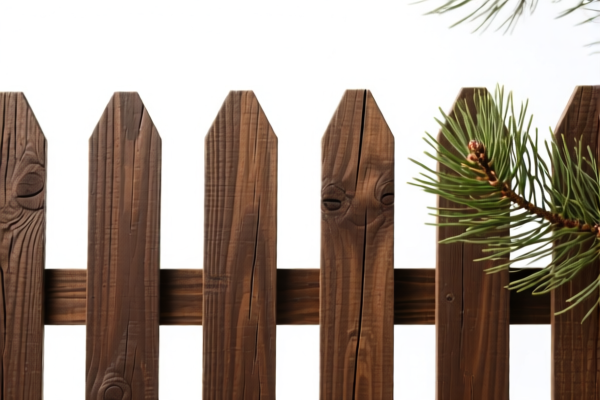
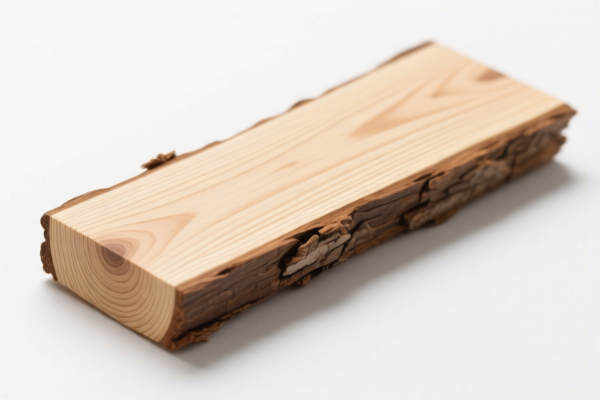
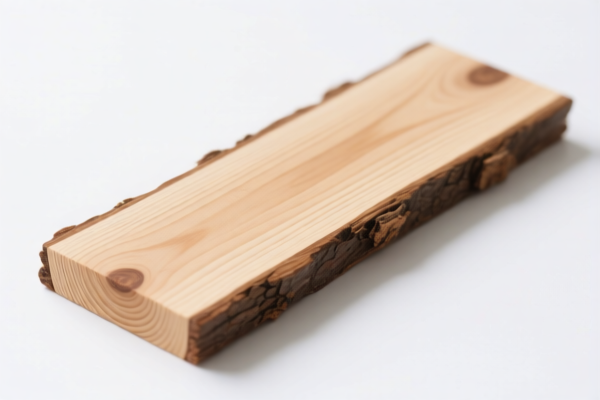
AI Analysis
🌲 Unprocessed Rough Square Pine Wood
🌐 HS Code Reference & Customs Clearance Guide | 2026 Latest Tariff Analysis | Professional Transit Strategy
📌 Part 1: Product Definition & Classification: Do You Really Understand "Unprocessed Rough Square Pine"?
"Unprocessed Rough Square Pine Wood" refers to timber that has been cut into square or rectangular cross-sections (roughly squared) but retains its natural surface characteristics or basic sawn texture, without further processing like planing, sanding, or treating. In international trade, this product is generally classified under Chapter 44 (Wood and articles of wood), specifically targeting coniferous woods (like Pine) in their raw or semi-raw forms.
Key Distinction Points:
- Processing Level: "Unprocessed" and "Rough" mean it has not been planed, sanded, or treated with preservatives. It is essentially "sawn timber" or "rough-hewn logs."
- Shape: "Square" indicates the cross-section is rectangular or square, distinguishing it from round logs (which might fall under 4403) or finished lumber (which might fall under 4407 or 4421 depending on dimensions).
- Material: Specifically Pine (a coniferous wood), which triggers specific tariff lines for conifers.
⚠️ Critical Classification Logic:
- If it is round or roughly shaped but not squared → 4403 (Wood in the rough).
- If it is squared/sawn but unplaned/unprocessed → 4407 (Wood sawn or chipped lengthwise).
- If it is further processed (planed, sanded, treated) → Different codes (e.g., 4409, 4421).
- For "Rough Square Pine," the most accurate fits are typically 4407.11.xx (Sawn wood, coniferous, rough) or potentially 4403.22/21 if considered "logs in the rough" with minimal processing. The provided DATA focuses on these two categories.
📦 Part 2: HS Code Classification Details (2026 Latest Tariff Authority Comparison)
| HS Code | Product Description | Application Scenario | Processing Level | Tax Rate |
|---|---|---|---|---|
4403.22.01.20 |
Unprocessed Pine Log, Pine Material, Log Form, Fits Rough Definition | Raw pine logs with minimal shaping, essentially "logs in the rough" | ✅ Unprocessed/Rough | 35.0% |
4403.21.01.30 |
Unprocessed Pine Log, Pine Material, Unprocessed Log Form, No Material Conflict | Similar to above, specifically categorized under pine sub-category 21 | ✅ Unprocessed/Rough | 35.0% |
4407.11.00.52 |
Rough Square Pine Log, Pine Material, Rough Form, Fits Conifer Features | Sawn/squared pine but unplaned, rough surface, clear coniferous identity | ✅ Sawn/Squared (Rough) | 35.0% |
4407.11.00.42 |
Rough Square Pine Log, Pine Material, Rough Form, Fits Coniferous Pine Category | Sawn/squared pine, rough finish, specific pine type classification | ✅ Sawn/Squared (Rough) | 35.0% |
4404.10.00.80 |
Rough Square Pine Wood, Pine Material, Log Form, Fits Coniferous Pole/Post Features | Pine wood shaped into poles/posts, rough surface, coniferous | ✅ Shaped (Pole/Post) | 35.0% |
🔍 Key Reminder:
- All listed codes carry a total tax rate of 35.0% for Chinese-origin goods entering the US.
- The distinction between4403(Logs/Rough) and4407(Sawn/Squared) depends on whether the wood has been cut to specific dimensions (sawn) or remains in a more natural log state. "Rough Square" usually leans toward 4407 if cut to square dimensions, but if it's just roughly hewn logs, 4403 may apply.
- No duty-free or reduced rates apply due to the high tariffs.
💰 Part 3: 2026 Latest Tariff Rate Detailed Breakdown (Including Surtaxes, Policy Surtaxes)
✅ Applicable Country: United States (US)
✅ Origin: China (CN)
✅ Effective Date: November 10, 2025 (and subsequent imports)
🎯 1. General Tax Structure for All Listed HS Codes
| Item | Content |
|---|---|
| Base Tariff | 0.0% (Most pine wood codes have 0% base MFN rate) |
| Section 301 Surtax | +25.0% (From USITC Footnote 9903.88.01 / Section 301) |
| Section 122 Clause Tariff | +10.0% (Specific 122 Clause Tariff for certain wood products) |
| Total Tax Rate | 35.0% |
| Tax Calculation | CIF Value × 35% |
| De Minimis Exemption Eligible? | ❌ NO (deny_de_minimis) |
| Legal Basis Path | IEEPA:9903.01.25 → IEEPA:9903.01.24 → USITC:4403/4407 Codes → FOOTNOTE:9903.88.01 |
📌 Explanation:
- "Section 301 Surtax 25%": Imposed under the U.S. Trade Act of 1974, Section 301, targeting Chinese imports.
- "Section 122 Clause Tariff 10%": Additional tariff specifically applied to certain wood products under Section 122 of the U.S. Trade Act (or related executive orders).
- Combined 35%: This is a very high effective tariff rate for raw materials. Importers must factor this into cost calculations.
- No De Minimis: Values under $800 (de minimis) cannot be used to avoid these tariffs for these HS codes.
🛠️ Part 4: Customs Clearance Practical Advice (Battle-Tested Pitfall Avoidance Guide)
✅ 1. Required Documentation Checklist (Non-Negotiable)
| Document | Required? | Description |
|---|---|---|
| ✅ Commercial Invoice | ✔️ | Must clearly state "Unprocessed Rough Square Pine Wood," origin, and value. |
| ✅ Packing List | ✔️ | Detail dimensions, weight, number of pieces, and packaging type. |
| ✅ Bill of Lading/Air Waybill | ✔️ | Standard shipping document. |
| ✅ Phytosanitary Certificate | ✔️ | Critical! For wood products, this is mandatory to prove freedom from pests/diseases. |
| ✅ ISPM 15 Marking Proof | ✔️ | If packaged in wood pallets/crates, they must be heat-treated or fumigated and marked ISPM 15. |
| ✅ Product Photos | ✔️ | Show the wood's condition, square shape, and lack of processing (rough surface). |
| ✅ Certificate of Origin | ✔️ | To confirm Chinese origin for tariff assessment. |
✅ 2. Declaration Tips (Key Mnemonics)
🔥 “Rough Square? Think 4407 or 4403. Pine? Watch the 35%. No Treatment? Prove It!”
| Scenario | Correct Declaration | Error to Avoid |
|---|---|---|
| Rough Square Pine | 4407.11.00.52 or 4407.11.00.42 |
Misdeclaring as "Finished Lumber" → Higher penalties |
| Rough Pine Logs | 4403.22.01.20 or 4403.21.01.30 |
Misdeclaring as "Processed Wood" → Classification error |
| Pine Poles/Posts | 4404.10.00.80 |
Misdeclaring as "General Wood" → Inaccurate duty calculation |
| Untreated Wood | Clearly state "Unprocessed, Un-treated" | Hiding treatment status → Customs seizure |
✅ 3. Special Cases Handling
| Situation | Handling Advice |
|---|---|
| ISPM 15 Compliance | Ensure all wooden packaging is marked. Non-compliant pallets can cause delays or destruction. |
| Pest Inspection | Be prepared for USDAAPHIS inspection. Have phytosanitary certificate ready. |
| Origin Proof | Ensure Certificate of Origin is valid. Incorrect origin can lead to misclassification of tariffs. |
| Mixed Shipments | If the shipment contains both pine and non-pine wood, declare separately to avoid blanket tariffs. |
🌍 Part 5: Global Market Comparison (2026 Latest)
| Country/Region | Recommended HS Code | Tariff | Certification Requirement | Notes |
|---|---|---|---|---|
| 🇺🇸 USA | 4407.11.00.52 / 4403.22.01.20 |
35% (China Origin) | ISPM 15 + Phytosanitary | High tariffs due to Section 301 & 122 |
| 🇨🇳 China | 4407.11.00.52 |
0-5% | None | No surtaxes |
| 🇪🇺 EU | 4407.10.00.00 |
0-2.5% | FLEGT/EUTR (if tropical) | Lower tariffs for coniferous |
| 🇯🇵 Japan | 4407.11.00.00 |
0-3.2% | Phytosanitary | Low tariffs |
| 🇦🇺 Australia | 4407.11.00.00 |
0-5% | Biosecurity Permit | Strict biosecurity |
📌 Conclusion:
- The US market has the highest entry barriers for Chinese pine wood due to the 35% combined tariff.
- Other markets like EU, Japan, and Australia have significantly lower tariffs, but may have stricter biosecurity or environmental regulations (e.g., EUTR in EU).
📌 Part 6: Common Mistakes & Pitfall Guide (Lessons from Tears)
❌ Mistake 1: Misdeclaring "Rough Square Pine" as "Finished Lumber"
👉 Consequence: Wrong HS Code → Potential penalty + incorrect duty calculation.
✅ Fix: Clearly state "Unprocessed" and "Rough."
❌ Mistake 2: Ignoring ISPM 15 for Wooden Pallets
👉 Consequence: Shipment held at port, pallets destroyed, delay costs.
✅ Fix: Ensure all wooden packaging is marked and compliant.
❌ Mistake 3: Failing to Provide Phytosanitary Certificate
👉 Consequence: USDAAPHIS inspection, potential rejection or fumigation at importer’s cost.
✅ Fix: Obtain certificate from origin country’s plant protection agency before shipping.
❌ Mistake 4: Not Accounting for 35% Tariff in Costing
👉 Consequence: Unexpected high costs, eroded profit margins.
✅ Fix: Include 35% tariff in landed cost calculations.
🎯 Part 7: Conclusion: Professional Declaration, Save Time, Save Money!
🎯 Remember the Mnemonic:
🔹 “Rough Square Pine: 4407 or 4403. 35% Tax. ISPM 15. No De Minimis.”
🔹 “HS Code is Life, Tariff is Cost, Declaration is Key, Mistake is Penalty!”
📌 Pro Tip:
If your pine wood is sourced from non-Chinese origins (e.g., Russia, Canada, New Zealand), check if they qualify for lower tariffs under FTAs or general MFN rates. However, for Chinese-origin pine, the 35% rate is non-negotiable under current policies.
📣 Immediate Action Required:
📞 Contact a Professional Customs Broker + Provide Product Photos + Obtain ISPM 15 & Phytosanitary Certificates
🚀 Let Your Pine Wood Clear Customs Smoothly, Boost Efficiency, Maximize Profit!
✨ Professional Clearance Starts with Precise Classification!
💼 Every Dollar of Cost, Deserves Precise Calculation!
Customer Reviews
About HS Code Classification
The Harmonized System (HS) is an internationally standardized nomenclature developed by the World Customs Organization (WCO) to classify traded products. Over 200 countries use the HS system as the basis for customs tariffs, trade statistics, and import/export regulations.
Each HS code follows a hierarchical structure:
- Chapter (2 digits) — Broad category of goods (e.g., Chapter 84: Machinery and Mechanical Appliances)
- Heading (4 digits) — More specific grouping within the chapter
- Subheading (6 digits) — Internationally standardized breakdown, used by all WCO member countries
- National subdivisions (8-10 digits) — Country-specific extensions for further classification, such as US HTSUS 10-digit codes
Correct HS code classification is essential for smooth customs clearance, accurate duty payment, and compliance with trade regulations. Misclassification can lead to customs delays, overpayment of duties, or penalties.
When importing from CN to US, the applicable tariff rates may include:
- Most-Favored-Nation (MFN) rate — The standard duty rate applied to WTO members
- General rate — Applied to countries without trade agreements
- Trade remedy duties — Additional tariffs such as Section 301 (anti-dumping), Section 232 (national security), or countervailing duties
The information provided on this page is for reference purposes only. For official classification, please consult with your local customs authority or a licensed customs broker.