Unprocessed Softwood Logs for Fine Carpentry
CN → US| HS Code | Tariff Rate | Origin | Destination | Doc |
|---|---|---|---|---|
| 4403210130 | 35.0% | CN | US | Official Doc |
| 4403220120 | 35.0% | CN | US | Official Doc |
Product Images
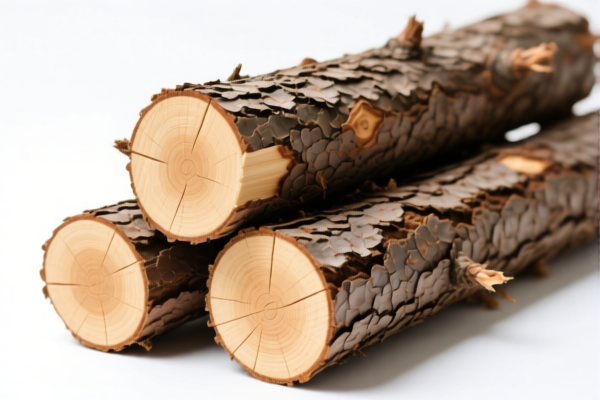
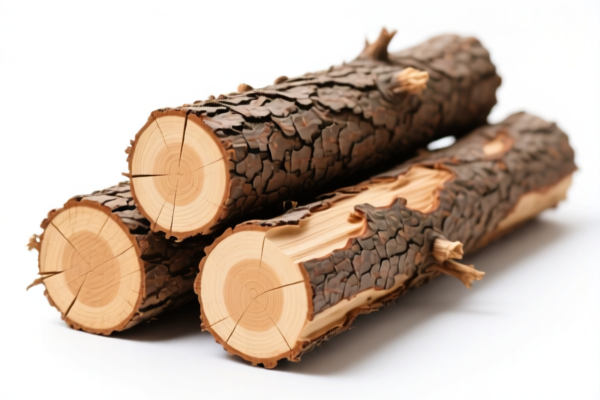
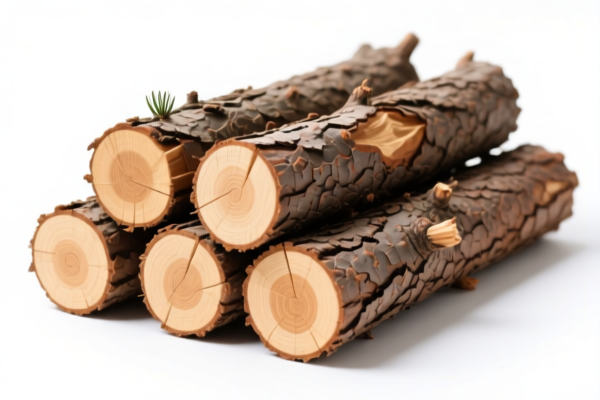
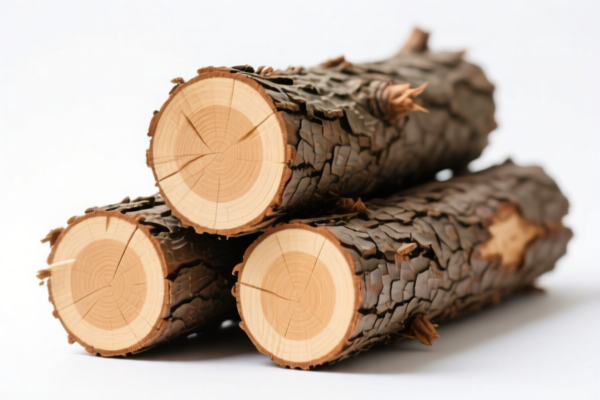
AI Analysis
🌲 Raw Softwood Logs for Fine Carpentry
🌐 HS Code Reference & Customs Clearance Guide | 2026 Latest Tariff Analysis | Professional Entry Strategy
📌 I. Product Definition and Classification: What Exactly Are "Rough Softwood Logs"?
In international trade, "Wood in the rough" refers to timber that has undergone minimal processing. It is typically stripped of bark or sapwood or roughly squared, but not planed, dressed, or finished.
For Fine Carpentry, the raw material is critical. The distinction lies in the species (coniferous vs. non-coniferous) and the minimum cross-sectional dimension.
⚠️ Key Distinction Point:
- Coniferous (Softwood): Includes Pines, Spruces, Firs, etc.
- Minimum Dimension:
- ≥ 15 cm (Smallest cross-sectional dimension): Classified as Logs and Timber.
- < 15 cm: Usually classified under different subheadings (not covered in this specific dataset).
- Processing Level: "Roughly squared" or "stripped of bark" is allowed. If it is planed or dressed, it moves to HS Code4407. If it is completely unprocessed (round logs), it may still fall under4403depending on specific national interpretations, but4403is the standard for "in the rough."
📦 II. HS Code Classification Details (2026 Latest Tariff Authority Comparison)
Based on the provided <DATA>, here are the two specific classifications for Coniferous Wood (Pine Species) meeting the criteria for logs and timber (smallest cross-sectional dimension ≥ 15 cm).
| HS Code | Product Description | Key Characteristics | Smallest Cross-Sectional Dimension |
|---|---|---|---|
4403.21.01.30 |
Other Pine (Pinus spp.), not specified as Southern Yellow Pine variety | Generic Pine species (e.g., Radiata, Scotch Pine) excluding the specific Southern Yellow Pine varieties listed below. | ≥ 15 cm |
4403.22.01.20 |
Southern Yellow Pine (SYP) Species | Specifically includes: 1. Loblolly Pine (Pinus taeda) 2. Longleaf Pine (Pinus palustris) 3. Pitch Pine (Pinus rigida) 4. Shortleaf Pine (Pinus echinata) 5. Slash Pine (Pinus elliottii) 6. Virginia Pine (Pinus virginiana) |
≥ 15 cm |
🔍 Critical Note:
- Both codes apply to "Logs and Timbers".
- The primary difference is biological species.
- If your pine is not one of the 6 SYP species listed above, it defaults to4403.21.01.30.
- If your pine is one of the 6 SYP species, it must be declared under4403.22.01.20.
💰 III. 2026 Latest Tariff Rate Details (Including Surtaxes)
✅ Applicable Country: United States (US)
✅ Country of Origin: China (CN) (Assumed based on the 25% surtax context in the data)
✅ Effective Time: Current applicable rates
🎯 1. 4403.21.01.30 —— Pine (Pinus spp.), Other Coniferous Logs/Timbers
| Item | Content |
|---|---|
| Base Tariff Rate | 0.0% |
| Additional Tariff (Section 301 / Surtax) | +25.0% |
| Total Tax Rate | 25.0% |
| Tax Calculation | CIF Value × 25.0% |
| De Minimis Exemption | ❌ Not Applicable (De minimis does not apply to Section 301 goods) |
| Legal Basis | 4403.21.01.30 → Additional Tariff: 25.0% |
📌 Explanation:
- Although the base MFN (Most Favored Nation) rate is 0%, US trade policy imposes a 25% additional tariff on these Chinese-origin wooden logs.
- This is a flat percentage of the CIF value.
- Total Cost Impact: For every $100,000 of logs imported, you must pay $25,000 in duties.
🎯 2. 4403.22.01.20 —— Southern Yellow Pine (SYP) Logs/Timbers
| Item | Content |
|---|---|
| Base Tariff Rate | 0.0% |
| Additional Tariff (Section 301 / Surtax) | +25.0% |
| Total Tax Rate | 25.0% |
| Tax Calculation | CIF Value × 25.0% |
| De Minimis Exemption | ❌ Not Applicable |
| Legal Basis | 4403.22.01.20 → Additional Tariff: 25.0% |
📌 Explanation:
- Despite being a distinct subcategory due to species specificity (SYP), the tax rate is identical to the generic pine category.
- Total Cost Impact: Same as above, 25% of CIF value.
- Why the distinction? While tax is the same, customs authorities strictly monitor SYP due to its high demand in US construction and potential phytosanitary restrictions. Misdeclaration (e.g., declaring SYP as generic Pine) can lead to severe penalties.
🛠️ IV. Customs Clearance Practical Advice (Real-World Pitfall Guide)
✅ 1. Required Documentation Checklist (Non-Negotiable)
| Document | Mandatory? | Description |
|---|---|---|
| ✅ Commercial Invoice | ✔️ | Must clearly state: "Wood in the rough," Species (e.g., Pinus taeda), and Dimensions. |
| ✅ Packing List | ✔️ | Detailed list of logs, including count, volume (board feet/cubic meters), and dimensions. |
| ✅ Phytosanitary Certificate | ✔️ | Critical for Wood. Issued by the country of origin's plant protection organization to prove freedom from pests/diseases. |
| ✅ Fumigation Certificate | ✔️ | Proof that logs have been treated against insects (ISPM 15 standard). |
| ✅ Bill of Lading / Air Waybill | ✔️ | Standard transport document. |
| ✅ Species Verification | ✔️ | If declaring SYP, be prepared to provide botanic proof if challenged. |
✅ 2. Declaration Tips (Key Mnemonics)
🔥 "Species Matters, Dimensions Count, Bark Stripped is OK!"
| Scenario | Correct Declaration | Incorrect Practice |
|---|---|---|
| Logs are ≥ 15 cm in smallest diameter | 4403.21.01.30 or 4403.22.01.20 |
Declare as 4403.21.01.10 (which may be for <15cm) → Wrong Code |
| Logs are < 15 cm in smallest diameter | Not covered in this dataset | Use 4403.21.01.30 → Penalty for Wrong Classification |
| Wood is Planed/Dressed | 4407.10 (Sawn Wood) |
Declare as 4403 (Logs) → Major Error |
| Southern Yellow Pine | 4403.22.01.20 |
Declare as 4403.21.01.30 → Potential Fraud/Compliance Issue |
| Wood has bark on | Allowed under "In the Rough" | Claim it is "Processed" → No, it's still rough |
✅ 3. Special Circumstances & Risk Management
| Situation | Handling Advice |
|---|---|
| Phytosanitary Inspection | USDA APHIS will inspect upon arrival. Ensure logs are free of bark (if stripped) or properly fumigated. Delays are common if documentation is missing. |
| Misidentification of Species | SYP is often confused with other pines. Be precise. If you cannot prove it is SYP, declare it as 4403.21.01.30 (Generic Pine) to avoid fraud allegations, unless you are certain. |
| Dimension Dispute | Customs may measure random samples. Ensure your stated "smallest cross-sectional dimension" matches reality. If <15cm, you must find a different HS code (not in this dataset). |
| Sustainable Forestry | While not a tariff issue, some buyers require FSC/PEFC certification. Ensure your supplier provides this if needed for "Fine Carpentry" marketing. |
🌍 V. Global Market Comparison (2026 Latest)
| Country/Region | Recommended HS Code | Tariff Rate | Certification | Notes |
|---|---|---|---|---|
| 🇺🇸 USA | 4403.21.01.30 / 4403.22.01.20 |
25% (25% surtax + 0% base) | Phytosanitary Certificate | High duty due to Section 301. |
| 🇨🇳 China | 4403.21 / 4403.22 |
~0-5% | Phytosanitary | Import duties may vary by exact species. |
| 🇪🇺 EU | 4403.21 / 4403.22 |
0% (If EUTR compliant) | EUTR Compliance | No Section 301 tax. Strict deforestation regulations (EUDR) upcoming. |
| 🇬🇧 UK | 4403.21 / 4403.22 |
0% | UK Woodland Guarantee | Post-Brexit rules. |
📌 Conclusion:
- The US market is the most expensive due to the 25% additional tariff.
- The EU and UK may have 0% tariffs but have strict environmental/sustainability compliance (EUDR) which can be more complex than tariffs.
- Phytosanitary requirements are global; do not underestimate the logistical burden of wood imports.
📌 VI. Common Errors & Pitfall Guide (Lessons Learned)
❌ Error 1: Declaring < 15 cm logs as 4403.21.01.30
👉 Consequence: Wrong Classification. Logs <15cm have different duties. You may face back-taxes and penalties.
👉 Fix: Verify the smallest cross-sectional dimension accurately.
❌ Error 2: Misdeclaring Southern Yellow Pine as Generic Pine
👉 Consequence: While the tax rate is the same (25%), it is a compliance violation. If you intentionally mislabel SYP to avoid specific tracking, you risk audits.
👉 Fix: Use the correct HS code 4403.22.01.20 if it is SYP.
❌ Error 3: Missing Phytosanitary Certificate
👉 Consequence: Hold/Seizure at US Port. Logs will be fumigated at your expense or destroyed.
👉 Fix: Ensure the certificate is issued before shipment and matches the invoice.
❌ Error 4: Claiming "Roughly Squared" when logs are Round
👉 Consequence: No penalty, as "round logs" are also "in the rough." However, ensure you don't claim they are "Sawn" if they are not.
👉 Fix: Accurate description: "Logs, Round, Unprocessed."
✅ Correct Declaration Example:
"Pine Logs, In the Rough, Stripped of Bark, Smallest Cross-Sectional Dimension 20 cm, Species: Pinus taeda (Southern Yellow Pine), Phytosanitary Certified."
🎯 VII. Conclusion: Precision Saves Money
🎯 Remember the Mantra:
🔹 "≥ 15 cm? Then 4403.21 or .22."
🔹 "SYP? Go to .20. Other Pine? Go to .30."
🔹 "25% Tax is Fixed, Don't Try to Cheat the Species."
🔹 "Phyto Cert is King, No Paper, No Entry."
📌 Pro Tip:
If your wood is sourced from non-Chinese countries (e.g., Canada, Russia, New Zealand), the 25% surtax does NOT apply. The total tariff would be 0%. Always verify the Country of Origin on your Bill of Lading.
📣 Immediate Action:
📞 Contact your Customs Broker with the Invoice, Packing List, and Phytosanitary Certificate.
🚀 Confirm the Smallest Dimension and Exact Species before shipment to avoid costly delays at US ports.
✨ Professional Clearance Starts with Accurate Classification!
💼 Your Timber is Valuable; Protect Your Margins with Precision!
Customer Reviews
About HS Code Classification
The Harmonized System (HS) is an internationally standardized nomenclature developed by the World Customs Organization (WCO) to classify traded products. Over 200 countries use the HS system as the basis for customs tariffs, trade statistics, and import/export regulations.
Each HS code follows a hierarchical structure:
- Chapter (2 digits) — Broad category of goods (e.g., Chapter 84: Machinery and Mechanical Appliances)
- Heading (4 digits) — More specific grouping within the chapter
- Subheading (6 digits) — Internationally standardized breakdown, used by all WCO member countries
- National subdivisions (8-10 digits) — Country-specific extensions for further classification, such as US HTSUS 10-digit codes
Correct HS code classification is essential for smooth customs clearance, accurate duty payment, and compliance with trade regulations. Misclassification can lead to customs delays, overpayment of duties, or penalties.
When importing from CN to US, the applicable tariff rates may include:
- Most-Favored-Nation (MFN) rate — The standard duty rate applied to WTO members
- General rate — Applied to countries without trade agreements
- Trade remedy duties — Additional tariffs such as Section 301 (anti-dumping), Section 232 (national security), or countervailing duties
The information provided on this page is for reference purposes only. For official classification, please consult with your local customs authority or a licensed customs broker.