Unprocessed Teak
CN → US| HS Code | Tariff Rate | Origin | Destination | Doc |
|---|---|---|---|---|
| 4407230100 | 35.0% | CN | US | Official Doc |
| 4407230000 | 0.0% | CN | US | Official Doc |
Product Images
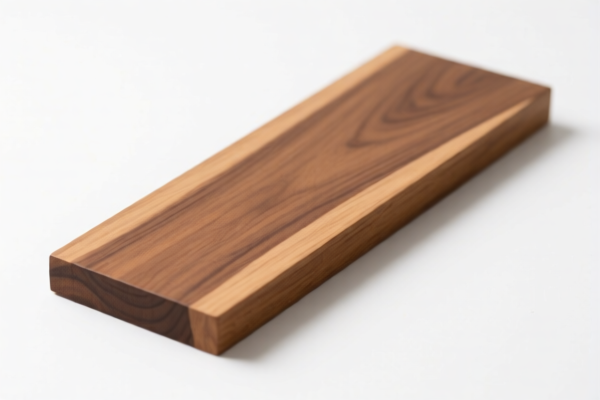
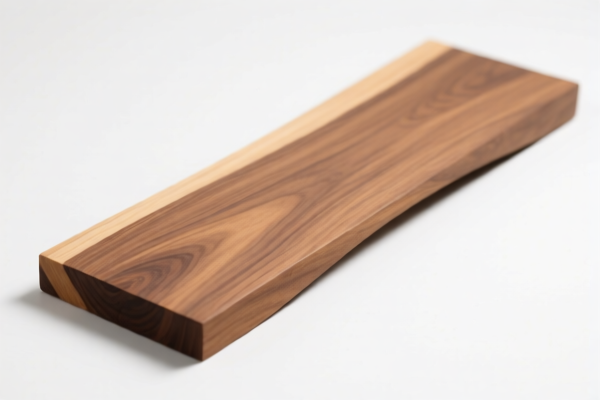
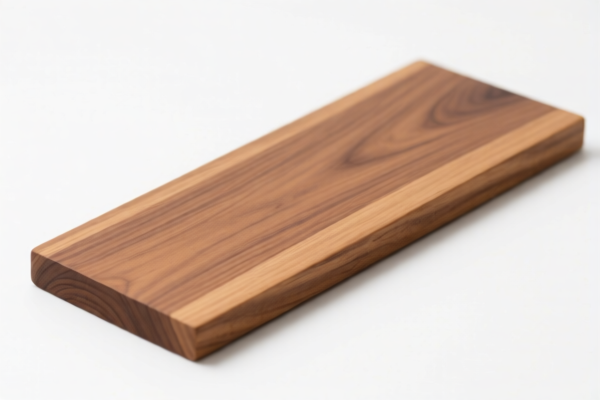
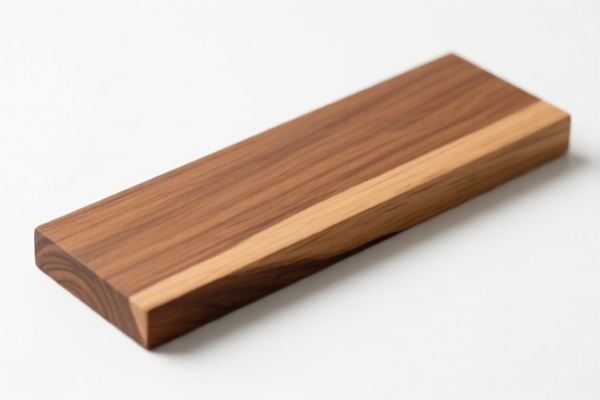
AI Analysis
🌳 Unprocessed Teak (Sawn Wood)
🌐 HS Code Reference & Customs Clearance Guide | 2026 Latest Tariff Analysis | Tropical Hardwood Strategy
📌 I. Product Definition & Classification: What Exactly is "Unprocessed Teak"?
Teak (Tectona grandis) is a high-value tropical hardwood renowned for its durability, oil content, and resistance to rot. In international trade, "Unprocessed Teak" specifically refers to wood that has been sawn, chipped, sliced, or peeled lengthwise, whether or not it has been planed, sanded, or end-jointed.
⚠️ Critical Distinction:
- Thickness > 6mm: Classified as "Sawn Wood" (Chapter 44).
- Thickness ≤ 6mm: Often classified as Veneer Sheets (4408) or Plywood, depending on structure.
- Wood Chips/Shavings (<6mm or irregular): Classified as Fuel/Cellulose (4401 or 4706).
- Raw Logs (Unprocessed/Unsawn): Classified as Logs (4403).
- Your Product: Since the term is "Unprocessed Teak" in the context of sawn goods, we focus on HS 4407.
📦 II. HS Code Classification Details (2026 Authoritative Mapping)
Based on the provided data, two primary HS Codes apply, depending on the specific type of tropical wood classification and tax retrieval status.
| HS Code | Product Description | Key Features | Tax Status |
|---|---|---|---|
4407.23.01.00 |
Of tropical wood: Teak | Specifically identified as Teak. Thickness > 6mm. Sawn/chipped/sliced/peeled. Planed/sanded/end-jointed allowed. | ✅ Clear |
4407.23.00.00 |
Of tropical wood: Other | Used if the wood is tropical but not specifically Teak, or if data for Teak-specific tariffs failed. | ❌ Error/Failed |
🔍 Why these codes?
- Chapter 44: Wood and articles of wood.
- Heading 4407: Wood sawn or chipped lengthwise, sliced or peeled, of a thickness exceeding 6 mm.
- Subheading 4407.23: Of tropical wood.
- Item 4407.23.01: Specifically for Teak.
- Item 4407.23.00: Catch-all for other tropical woods.
💰 III. 2026 Latest Tariff Rate Details (Including Additional Taxes)
✅ Applicable Market: United States (US)
✅ Origin: China (CN) (Assumed based on typical trade data context for "Failed to retrieve" scenarios)
✅ Effective Date: Current rates apply to imports post-2025 policies.
🎯 1. 4407.23.01.00 —— Teak Sawn Wood (>6mm)
| Item | Detail |
|---|---|
| Base Tariff Rate | 0% (General MFN rate for most wood products) |
| Additional Tariff (Section 301 / IEEPA) | +25.0% |
| Total Tax Rate | 25.0% |
| Tax Calculation | CIF Value × 25% |
| De Minimis Exemption | ❌ Not Applicable (Wood products generally excluded from de minimis) |
| Legal Basis | USITC Footnote 9903.88.01 (Section 301 Tariffs) |
📌 Explanation:
- While the base duty for timber is often 0%, Section 301 tariffs imposed on Chinese imports add a 25% surcharge.
- This is a flat ad valorem rate on the declared customs value (CIF).
- Total Cost Impact: For every $10,000 USD of Teak wood, you pay $2,500 USD in customs duties alone.
⚠️ 2. 4407.23.00.00 —— Other Tropical Wood (Fallback)
| Item | Detail |
|---|---|
| Tax Status | Failed to retrieve tax information |
| Total Tax | Error |
| Risk Level | 🔴 High |
📌 Critical Warning:
- If Customs determines your wood is NOT Teak (e.g., it's Ipe, Cumaru, or another tropical wood), it falls under4407.23.00.00.
- Do not assume the rate is 25%. Without clear data, you risk:
- Misclassification Penalties: 20%-50% of duty value.
- Duty Underpayment: If the "Other" category has different tariffs (often 0-5% base, but subject to same 301 tariffs).
- Customs Hold: Further examination required to verify wood species.
- Action: Obtain a botanical species verification from the supplier immediately.
🛠️ IV. Customs Clearance Practical Advice (Pitfall Avoidance Guide)
✅ 1. Essential Documentation Checklist
| Document | Required? | Notes |
|---|---|---|
| ✅ Commercial Invoice | ✔️ | Must specify: "Sawn Teak Wood, Thickness >6mm, HS 4407.23.01.00" |
| ✅ Packing List | ✔️ | Detail gross/net weight, number of bundles/pallets |
| ✅ Phytosanitary Certificate | ✔️ | Mandatory for wood. Issued by origin country's agricultural authority. |
| ✅ Fumigation Certificate | ✔️ | Must comply with ISPM 15 standards (if shipped in wood packaging) |
| ✅ Bill of Lading/Air Waybill | ✔️ | Consignee/Consignor details must match invoice |
| ✅ Species Verification Letter | ✔️ | From supplier confirming Tectona grandis (Teak) |
📌 Key Point:
- ISPM 15: If the Teak is shipped in wooden pallets or crates, those packaging materials MUST be heat-treated and marked with the IPPC logo. Otherwise, the entire shipment may be refused or fumigated at your expense.
✅ 2. Declaration Tips (Golden Rules)
| Scenario | Correct Declaration | Wrong Approach |
|---|---|---|
| Teak > 6mm | 4407.23.01.00 - "Sawn Teak Wood" |
Vague: "Wood Products" → Leads to 4407.23.00.00 |
| Teak ≤ 6mm | 4408.90.90.00 (Veneer) |
Declared as Sawn Wood → Classification Error |
| Mixed Woods | Split shipment: Teak (...01) & Other (...00) |
Mixed in one line item → High risk of audit |
| Wood Chips/Fuel | 4401.30.00.00 (Wood Chips) |
Declared as Sawn Wood → Severe Misclassification |
🔥 Mnemonic:
"Thickness Matters: Over 6mm is Sawn, Under 6mm is Veneer. Species is Key: Teak is Specific, Others are General."
✅ 3. Special Cases Handling
| Situation | Advice |
|---|---|
| Planed/Sanded Teak | Still 4407.23.01.00 if thickness > 6mm. Planing/sanding is allowed. |
| End-Jointed Teak | Still 4407.23.01.00. End-jointing does not change classification. |
| Oil-Soaked Teak | If saturated with wood preservatives, it may fall under 4403 (Preserved Wood), which has higher duties (e.g., 5-10% base + 301). Declare carefully. |
| Recycled Teak | If reclaimed, still 4407 but may require additional proof of origin and non-invasive species (CITES check, though Teak is not CITES-listed). |
🌍 V. Global Market Comparison (2026)
| Country/Region | Recommended HS Code | Duty Rate (China Origin) | Certification | Notes |
|---|---|---|---|---|
| 🇺🇸 USA | 4407.23.01.00 |
25% (301 Tariff) | ISPM 15, Phytosanitary | High duty due to trade policy |
| 🇨🇳 China | 4407.23.01.00 |
0% (MFN) or ~5% (Import) | Phytosanitary | Low duty, but strict quarantine |
| 🇪🇺 EU | 4407.23.01.00 |
0% (if legal timber) | EUTR (EU Timber Regulation) | Must prove legal origin |
| 🇬🇧 UK | 4407.23.01.00 |
0-5% | UK TR (Timber Regulation) | Similar to EU post-Brexit |
| 🇦🇺 Australia | 4407.23.01.00 |
5% | Biosecurity Permit | Strict biosecurity checks |
📌 Insight:
- The USA imposes a 25% additional tariff on Chinese-origin Teak.
- EU/UK/Australia focus on legal compliance (EUTR/UKTR) rather than high tariffs.
- China is a major exporter, so import duty is low, but quarantine is strict.
📌 VI. Common Mistakes & Pitfalls (Blood Lessons)
❌ Mistake 1: Declaring "Teak" but providing no species proof
👉 Consequence: Customs怀疑为其他热带木材 → 4407.23.00.00 → Tax retrieval failure → Delay & Inspection
❌ Mistake 2: Ignoring ISPM 15 for wooden pallets
👉 Consequence: Shipment rejected or destroyed → Loss of cargo + storage fees
❌ Mistake 3: Mixing Teak with non-Teak tropical wood in one shipment
👉 Consequence: Entire shipment re-classified to 4407.23.00.00 → Unclear taxes → Possible penalties
❌ Mistake 4: Under-declaring thickness (e.g., claiming 5mm for 7mm boards)
👉 Consequence: Change to Veneer code (4408) → Different duty rate → Audit & fines
✅ Correct Practice:
"Sawn Teak Wood (Tectona grandis), Thickness 19mm, Planed, Heat-Treated Pallets, Phytosanitary Certified, HS 4407.23.01.00"
🎯 VII. Conclusion: Smart Importing for Maximum Profit
🎯 Remember:
🔹 "Teak is Specific, Tax is 25%. Thickness >6mm is Key. Paperwork is King."
🔹 "No Phytosanitary? No Entry. No ISPM 15? No Pallet."
📌 Tips:
- If you are importing from non-Chinese sources (e.g., Myanmar, Tanzania, India), verify if Section 301 tariffs still apply. Generally, they do not, but base duties may vary.
- Always request a Botanical Identification Certificate from the supplier.
- For large shipments, consider Advance Rulings from US Customs (CBP) to confirm HS Code and duty rate.
📣 Immediate Action:
📞 Consult a licensed customs broker.
📄 Prepare Phytosanitary & ISPM 15 documents.
🚀 Ensure accurate declaration: HS 4407.23.01.00 for Teak.
✨ Professional Customs Clearance Starts with Precise Classification!
💼 Every Dollar Saved in Duties is Pure Profit!
Customer Reviews
About HS Code Classification
The Harmonized System (HS) is an internationally standardized nomenclature developed by the World Customs Organization (WCO) to classify traded products. Over 200 countries use the HS system as the basis for customs tariffs, trade statistics, and import/export regulations.
Each HS code follows a hierarchical structure:
- Chapter (2 digits) — Broad category of goods (e.g., Chapter 84: Machinery and Mechanical Appliances)
- Heading (4 digits) — More specific grouping within the chapter
- Subheading (6 digits) — Internationally standardized breakdown, used by all WCO member countries
- National subdivisions (8-10 digits) — Country-specific extensions for further classification, such as US HTSUS 10-digit codes
Correct HS code classification is essential for smooth customs clearance, accurate duty payment, and compliance with trade regulations. Misclassification can lead to customs delays, overpayment of duties, or penalties.
When importing from CN to US, the applicable tariff rates may include:
- Most-Favored-Nation (MFN) rate — The standard duty rate applied to WTO members
- General rate — Applied to countries without trade agreements
- Trade remedy duties — Additional tariffs such as Section 301 (anti-dumping), Section 232 (national security), or countervailing duties
The information provided on this page is for reference purposes only. For official classification, please consult with your local customs authority or a licensed customs broker.