Unprocessed Western Hemlock Wood
CN → US| HS Code | Tariff Rate | Origin | Destination | Doc |
|---|---|---|---|---|
| 4407190065 | 35.0% | CN | US | Official Doc |
| 4407140000 | 35.0% | CN | US | Official Doc |
| 4407190065 | 35.0% | CN | US | Official Doc |
| 4407140000 | 35.0% | CN | US | Official Doc |
| 4407190065 | 35.0% | CN | US | Official Doc |
Product Images
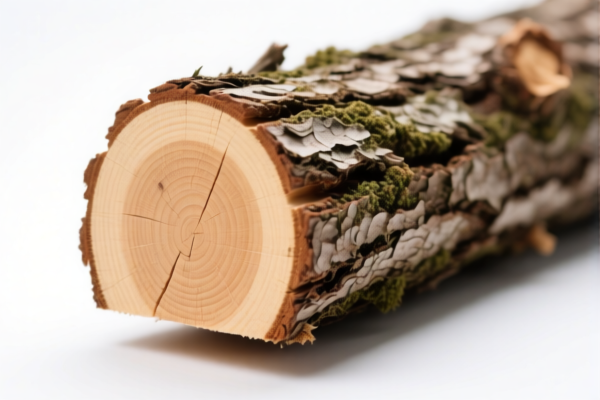
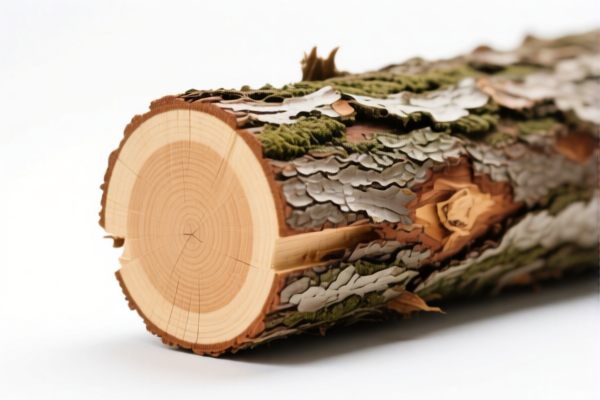
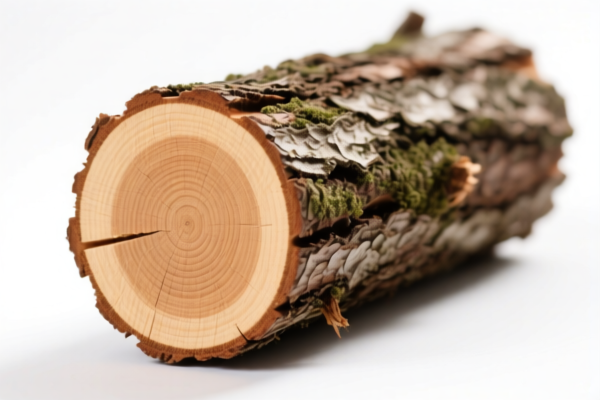
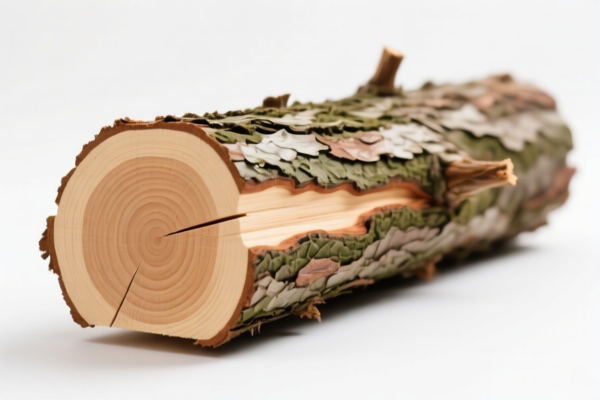
AI Analysis
🌲 Unprocessed Western Hemlock Wood (Sawn, >6mm)
🌐 HS Code Reference & Customs Clearance Guide | 2026 Latest Tariff Analysis | Professional Level Clearance Strategy
📌 I. Product Definition & Classification: Do You Really Understand "Western Hemlock"?
Western Hemlock is a type of softwood, specifically classified under Coniferous Wood. In international trade, it falls under Chapter 44 (Wood and articles of wood; wood charcoal). The key distinction lies in the processing level and thickness:
Sawn or Chipped Lengthwise: The wood has been cut into logs, planks, or boards but has not been further processed into finished furniture or structural components (like beams for construction, which might fall under different headings if specifically prepared).
Thickness Exceeding 6 mm: This is a critical threshold. Wood thinner than 6mm often falls under veneers or other categories. Wood >6mm is considered "sawn wood" or "timber" for general use.
Unprocessed: This implies the wood has not been chemically treated, impregnated, or heavily machined beyond planing/sanding (if even that). It is essentially raw lumber ready for further manufacturing.
⚠️ Key Distinction:
- If the wood is treated with preservatives → It may be excluded or reclassified.
- If the wood is <6mm thick → It is likely a veneer sheet (Heading 4408), not sawn wood.
- If the wood is coniferous and >6mm → It falls under Heading 4407.
📦 II. HS Code Classification Details (2026 Latest Official Tariff Match)
Based on your input <DATA>, we have two specific HS Codes that cover Unprocessed Western Hemlock Wood (sawn/chipped, >6mm, coniferous). Both carry the same tax rate.
| HS Code | Product Description | Sub-Category | Applicable Scenario |
|---|---|---|---|
4407.14.00.00 |
Wood sawn or chipped lengthwise... of a thickness exceeding 6 mm: Coniferous: Of Hem-fir (Western hemlock Tsuga heterophylla and fir Abies spp.) | Hem-fir Specific | Specifically identifies Western Hemlock (Tsuga heterophylla) mixed with Fir. This is the most precise classification for "Western Hemlock" if it is blended or commonly traded as "Hem-fir" (a standard US/Canadian lumber grade). |
4407.19.00.65 |
Wood sawn or chipped lengthwise... of a thickness exceeding 6 mm: Coniferous: Other: Hemlock (Tsuga spp.): Other | Other Hemlock | Used for Tsuga species (Hemlock) that does not fit the strict "Hem-fir" definition or is identified purely as Hemlock without the specific Fir blend designation. |
🔍 Critical Note:
- Both codes apply to Western Hemlock (Tsuga heterophylla).
-4407.14.00.00is the primary code for "Hem-fir," which is the standard commercial term for Western Hemlock lumber in North America (often mixed with Douglas-fir).
-4407.19.00.65is for other Hemlock (Tsuga spp.) if not classified as Hem-fir.
- Tax Rate: Both codes have an identical tax structure (see below).
💰 III. 2026 Latest Tariff Rate Breakdown (Including Surtaxes & Policy Surcharges)
✅ Applicable Country: United States (US)
✅ Country of Origin: China (CN)
✅ Effective Time: 2025年11月10日起 (Including subsequent imports)
🎯 1. 4407.14.00.00 —— Sawn Wood of Hem-fir (Western Hemlock & Fir)
| Item | Content |
|---|---|
| Base Tariff Rate | 0.0% (ad valorem) |
| USITC Surcharge (Section 301) | +25.0% |
| Total Tax Rate | 25.0% |
| Tax Calculation | CIF Value × 25% |
| De Minimis Exemption | ❌ Not Applicable (Wood products are generally subject to full duty; de minimis applies only to shipments < $800, but duties still apply if imported commercially) |
| Legal Basis Path | USITC:4407.14.00.00 → FOOTNOTE:301.01 (Section 301 Tariff List) |
📌 Explanation:
- The 0% base rate reflects the normal MFN (Most Favored Nation) duty for sawn wood from most countries.
- The +25% surcharge is the Section 301 Tariff imposed on Chinese-origin wood products. This is a fixed 25% on top of the base.
- Total Impact: You pay 25% of the declared value as duty. This is a significant cost factor for wood imports.
🎯 2. 4407.19.00.65 —— Other Sawn Wood of Hemlock (Tsuga spp.)
| Item | Content |
|---|---|
| Base Tariff Rate | 0.0% |
| USITC Surcharge (Section 301) | +25.0% |
| Total Tax Rate | 25.0% |
| Tax Calculation | CIF Value × 25% |
| De Minimis Exemption | ❌ Not Applicable |
| Legal Basis Path | USITC:4407.19.00.65 → FOOTNOTE:301.01 (Section 301 Tariff List) |
📌 Note:
- Identical tax treatment to4407.14.00.00.
- The classification difference is purely descriptive based on the specific species blend (Hem-fir vs. pure Hemlock).
- Ensure your commercial invoice and packing list accurately reflect the species to avoid misclassification penalties.
🛠️ IV. Customs Clearance Practical Advice (Real-World Pitfall Avoidance)
✅ 1. Required Documentation Checklist (Non-Negotiable)
| Document | Must Provide | Description |
|---|---|---|
| ✅ Commercial Invoice | ✔️ | Must clearly state: "Sawn Wood, Western Hemlock, Thickness >6mm, Unprocessed." |
| ✅ Packing List | ✔️ | Detail dimensions, quantity, weight, and package type (e.g., palletized, bulk). |
| ✅ Species Declaration | ✔️ | Must specify Tsuga heterophylla (Western Hemlock) and whether it is "Hem-fir" or "Other Hemlock." |
| ✅ ISPM 15 Phytosanitary Certificate | ✔️ | Crucial! Wood must be treated (heat-treated or fumigated) and marked with the ISPM 15 stamp to prevent pest import. |
| ✅ Phytosanitary Certificate | ✔️ | Issued by the exporting country's plant protection agency. |
| ✅ Fumigation Certificate | ✔️ | If heat treatment is not used, chemical fumigation proof is required. |
| ✅ Bill of Lading/Air Waybill | ✔️ | Standard shipping document. |
⚠️ Critical Warning:
- No ISPM 15 Mark? → REJECTED AT PORT. US Customs and Border Protection (CBP) and the Animal and Plant Health Inspection Service (APHIS) will not release wood without proper phytosanitary treatment.
- Mislabeling Species: If you declare "Pine" instead of "Western Hemlock," you risk penalties for misdeclaration. Be precise.
✅ 2. Declaration Tips (Key Mantra)
🔥 “True Species, Correct Thickness, ISPM 15 Stamped!”
| Situation | Correct Declaration | Wrong Practice |
|---|---|---|
| Western Hemlock + Fir Mix | 4407.14.00.00 (Hem-fir) |
Declaring as "Other Softwood" → Higher scrutiny |
| Pure Western Hemlock | 4407.19.00.65 (Other Hemlock) |
Declaring as "Hem-fir" if not mixed → Misclassification |
| Thickness < 6mm | NOT 4407.14/19 | Use Heading 4408 (Veneers) → Different Tax! |
| Treated Wood | Check for exclusion | If chemically treated, it may be excluded from 4407 → Re-check HTS |
✅ 3. Special Cases Handling
| Situation | Handling Advice |
|---|---|
| Wood with Insect Damage | APHIS will inspect. If infested, the shipment may be destroyed or re-exported at your cost. |
| Unprocessed but Planed/Sanded | Still falls under 4407 if planed/sanded. Ensure description matches "sawed, planed, sanded." |
| End-Jointed Wood | If end-joined into longer lengths, still 4407. Do not confuse with engineered wood (which may be Chapter 44 or 39). |
| Origin: Not China | If from Canada/US, NO Section 301 Tariff. Tax is 0%. Check Certificate of Origin carefully! |
🌍 V. Global Main Market Comparison (2026 Latest)
| Country/Region | Recommended HS Code | Tariff (China Origin) | Certification Requirement | Notes |
|---|---|---|---|---|
| 🇺🇸 USA | 4407.14.00.00 / 4407.19.00.65 |
25% | ISPM 15 + APHIS Inspection | High duty. Critical for cost calculation. |
| 🇨🇳 China | 4407.14 / 4407.19 | 0-5% | Phytosanitary Certificate | Varies by import policy. |
| 🇪🇺 EU | 4407.14 / 4407.19 | 0% | Fitosanitary Certificate + EUTR | No Section 301. But strict EUTR (EU Timber Regulation) for legality proof. |
| 🇯🇵 Japan | 4407.14 / 4407.19 | 0-5% | Phytosanitary Certificate | Strict on pest-free status. |
| 🇬🇧 UK | 4407.14 / 4407.19 | 0% | Phytosanitary Certificate | Post-Brexit rules similar to EU. |
📌 Conclusion:
- USA imposes a heavy 25% surcharge on Chinese-origin Western Hemlock.
- EU/Japan/UK have lower or 0% tariffs, but stricter non-tariff barriers (EUTR, phytosanitary checks).
- Supply Chain Strategy: If targeting the US market, consider sourcing from non-China origins (e.g., Canada, which has 0% Section 301) to save 25%.
📌 VI. Common Mistakes & Pitfall Guide (Lessons Learned)
❌ Mistake 1: Ignoring ISPM 15 requirement
👉 Consequence: Shipment held or destroyed by APHIS. Delays of weeks/months.
❌ Mistake 2: Misdeclaring "Hem-fir" when it's pure "Hemlock"
👉 Consequence: Misclassification penalty. Even though tax is the same, it triggers audits.
❌ Mistake 3: Assuming "Unprocessed" means no treatment
👉 Consequence: If it's chemically treated, it may not qualify for 4407. It might be classified under 4403 (Wood treated) or excluded.
❌ Mistake 4: Not checking Thickness
👉 Consequence: If wood is <6mm, it’s a veneer. Declaring as sawn wood leads to incorrect duty calculation and potential fraud accusations.
✅ Correct Practice:
"Sawn Wood, Western Hemlock (Tsuga heterophylla), Thickness 19mm, Unprocessed, ISPM 15 Heat Treated, Origin: China, HS Code: 4407.14.00.00"
🎯 VII. Conclusion: Professional Declaration, Save Money, Avoid Risk!
🎯 Remember the Mantra:
🔹 "Species True, Thickness >6mm, ISPM 15 Stamped!"
🔹 "HS Code Defines Duty, 25% Surtax for China, Check Origin for Savings!"
📌 Pro Tip:
If your wood is sourced from Canada (a major Western Hemlock producer), you can avoid the 25% Section 301 Tariff entirely.
Ensure your Certificate of Origin clearly states "Canada" to claim 0% duty.
Sourcing from Canada vs. China can save you 25% on the product value.
📣 Immediate Action:
📞 Contact a licensed customs broker + Provide Phytosanitary Certificate + Apply for ISPM 15 Compliance
🚀 Let your wood clear customs smoothly, save 25%, and maximize profit!
✨ Professional Clearance Starts with Accurate Classification!
💼 Every penny of duty matters. Calculate it precisely.
Customer Reviews
About HS Code Classification
The Harmonized System (HS) is an internationally standardized nomenclature developed by the World Customs Organization (WCO) to classify traded products. Over 200 countries use the HS system as the basis for customs tariffs, trade statistics, and import/export regulations.
Each HS code follows a hierarchical structure:
- Chapter (2 digits) — Broad category of goods (e.g., Chapter 84: Machinery and Mechanical Appliances)
- Heading (4 digits) — More specific grouping within the chapter
- Subheading (6 digits) — Internationally standardized breakdown, used by all WCO member countries
- National subdivisions (8-10 digits) — Country-specific extensions for further classification, such as US HTSUS 10-digit codes
Correct HS code classification is essential for smooth customs clearance, accurate duty payment, and compliance with trade regulations. Misclassification can lead to customs delays, overpayment of duties, or penalties.
When importing from CN to US, the applicable tariff rates may include:
- Most-Favored-Nation (MFN) rate — The standard duty rate applied to WTO members
- General rate — Applied to countries without trade agreements
- Trade remedy duties — Additional tariffs such as Section 301 (anti-dumping), Section 232 (national security), or countervailing duties
The information provided on this page is for reference purposes only. For official classification, please consult with your local customs authority or a licensed customs broker.