Unprocessed Whole Mink Skin
CN → USProduct Images
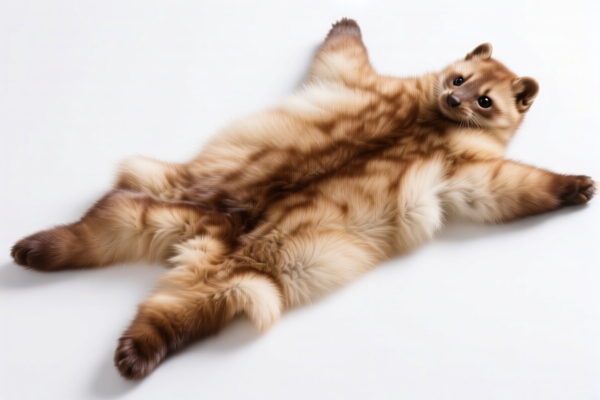
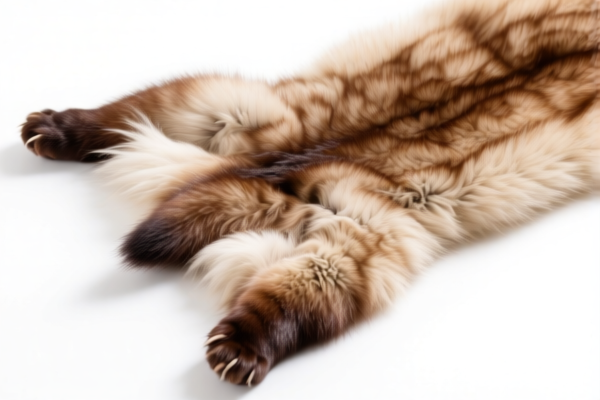
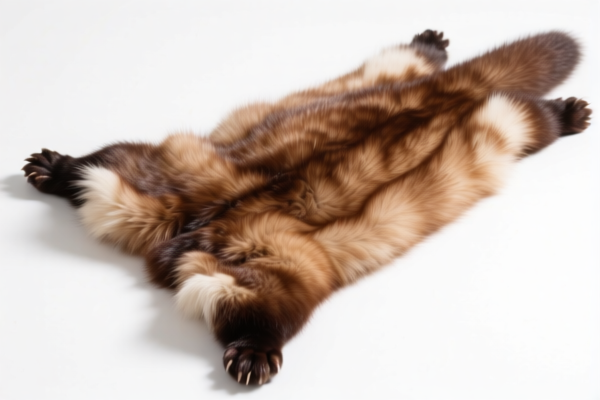
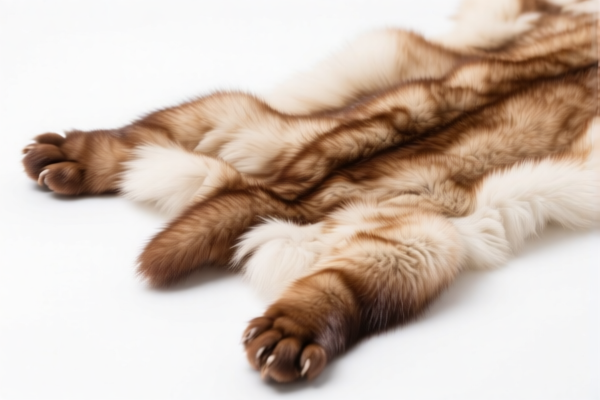
AI Analysis
🐸 Unprocessed Whole Mink Skin (Raw Pelts)
🌐 HS Code Reference & Customs Clearance Guide | 2026 Latest Tariff Analysis | Professional Level Clearance Strategy
📌 I. Product Definition & Classification: What Exactly Is "Unprocessed Whole Mink Skin"?
Unprocessed Whole Mink Skin refers to raw furs harvested from minks that have undergone minimal processing—typically only salted, cured, or frozen—without tanning, dyeing, or sewing into garments. In international trade, these are classified as "Raw Hides and Skins," not finished leather or apparel.
Key Distinction:
- Raw/Cured Skins: Salted, frozen, or air-dried; no chemical tanning → HS Chapter 43 (Furskins and artificial fur).
- Tanned/Chrome-processed Skins: Chemically treated for durability → HS Chapter 41 (Leather).
- Sewn/Finished Garments: Cut and assembled → HS Chapter 4303/4304 (Clothing/Accessories).
⚠ Critical Note:
- If the skin is only salted/cured, it belongs to 4303.10.
- If it is tanned but not sewn, it may fall under 4107 (Leather) or 4303 depending on local interpretation, but whole mink skins are typically treated as furskins under Chapter 43.
- DO NOT classify as leather (Ch. 41) unless explicitly tanned for leather use, as this causes severe misdeclaration risks.
📦 II. Detailed Classification for 2026 (Authoritative Harmonized System)
| HS Code | Product Description | Applicable Scenario | Processing Level |
|---|---|---|---|
4303.10.00.00 |
Furskins of mink, whole | Raw, salted, or frozen whole mink pelts | ✅ Unprocessed/Cured |
4303.90.90.00 |
Other furskins, n.e.c. | Mink skins cut up, defective, or non-whole | ⚠ Partially processed |
4107.21.00.00 |
Other leather of bovine/equine | Not applicable (wrong animal/species) | ❌ Incorrect |
9601.90.90.00 |
Worked ivory, bone, etc. | Not applicable | ❌ Incorrect |
🔍 Key Reminder:
- Whole mink skins (intact, with head/legs potentially attached or removed post-curing) are strictly classified under4303.10.00.00.
- If skins are cut into pieces (e.g., for patchwork), they may fall under4303.90.90.00, but this is less common for bulk trade.
- Never declare as "Leather" or "Clothing" unless fully processed.
💰 III. 2026 Latest Tariff Rates Detail (Including Surtarges & Policy Add-ons)
✅ Target Market: United States (US)
✅ Origin: China (CN)
✅ Effective Date: November 10, 2025 (and subsequent imports)
🎯 1. 4303.10.00.00 —— Mink Furskins (Unprocessed/Whole)
| Item | Content |
|---|---|
| Base Duty Rate | 0% (ad valorem) |
| USITC Surtarge | +25% (Under USITC Footnote 9903.88.01 for furskins) |
| IEEPA Surtarge | +10% (Against Chinese/HK products, effective Nov 10, 2025) |
| Total Duty Rate | 35% |
| Duty Calculation | CIF Value × 35% |
| De Minimis Exempt? | ❌ NO (deny_de_minimis applies) |
| Legal Basis Path | IEEPA:9903.01.25 → IEEPA:9903.01.24 → USITC:4303.10.00.00 → FOOTNOTE:9903.88.01 |
📌 Explanation:
- The 25% USITC surcharge is part of Section 301 tariffs targeting Chinese furskins.
- The 10% IEEPA surcharge is an additional penalty on Chinese-origin goods.
- Total 35% is high for raw materials; however, compared to finished garments (which can exceed 50%+), raw skins are slightly more manageable but still expensive.
- Crucial: There is no de minimis exemption (i.e., packages under $800 are NOT tax-free for these codes). Every single shipment is subject to duty.
🎯 2. 4303.90.90.00 —— Other Furskins (Non-whole/Cut-up)
| Item | Content |
|---|---|
| Base Duty Rate | 0% |
| USITC Surtarge | +25% |
| IEEPA Surtarge | +10% |
| Total Duty Rate | 35% |
| Duty Calculation | CIF × 35% |
| De Minimis Exempt? | ❌ NO |
| Legal Basis Path | IEEPA:9901.25 → IEEPA:9903.01.24 → USITC:4303.90.90.00 → FOOTNOTE:9903.88.01 |
📌 Note:
- Same tariff structure as whole skins.
- Only applies if skins are not whole (e.g., cut for quilting/patchwork).
- Ensure your commercial invoice specifies "Cut-up Mink Skins" if using this code.
🛠 IV. Customs Clearance Practical Advice (Avoid Pitstops)
✅ 1. Required Documentation (No Exceptions)
| Document | Mandatory? | Details |
|---|---|---|
| ✅ Packing List | ✔ | Must specify quantity, weight (net/gross), and condition (salted/frozen). |
| ✅ Commercial Invoice | ✔ | Must clearly state "Unprocessed Whole Mink Skin," origin, and value. |
| ✅ Species Certification | ✔ | Proof that skins are from mink (not protected wild species). |
| ✅ CITES Permit | ⚠ Conditional | If mink is CITES-listed in specific regions (rare for farm-raised, but check origin). |
| ✅ Sanitary/Phytosanitary Cert | ✔ | Required for animal products to prevent disease (e.g., Foot-and-Mouth). |
| ✅ Free Sale/Health Cert | ✔ | Issued by origin country’s veterinary authority. |
✅ 2. Declaration Tips (Key Mantras)
🔥 "Raw skins are not leather, whole skins are not garments, and always declare species correctly!"
| Scenario | correct Declaration | Wrong Practice |
|---|---|---|
| Salted Whole Mink Skins | 4303.10.00.00 + "Mink Furskin, Unprocessed" |
Declare as "Leather" → Seizure/Fine |
| Frozen Whole Mink Skins | 4303.10.00.00 + "Mink Furskin, Frozen" |
Declare as "Clothing Accessory" → 50%+ Duty |
| Cut-up Mink Skins | 4303.90.90.00 + "Cut-up Mink Skins" |
Declare as "Whole Skins" → Mismatch Inspection |
| Mink Fur Garments | 4303.90.90.00 (Coat) or 4304.00.00.00 (Artificial Fur) |
Declare as "Raw Skins" → Wrong Duty Base |
✅ 3. Special Circumstances Handling
| Situation | Handling Advice |
|---|---|
| Farm-raised vs. Wild | Most mink are farm-raised. Provide farm registration/license to prove non-wild origin (avoids CITES issues). |
| Salted vs. Fresh | Salted skins require Sanitary Certs. Fresh skins may be rejected due to biosecurity. |
| Small Sample Shipments | Even small samples are subject to 35% duty (no de minimis). Consider consolidating or using bonded warehouses. |
| OEM/Custom Processing | If sending raw skins to a tannery for processing before export, ensure the importer handles the duty, and re-export after tanning (may qualify for duty drawbacks). |
🌍 V. Global Market Comparison (2026 Latest)
| Country/Region | Recommended HC Code | Duty Rate | Certification | Notes |
|---|---|---|---|---|
| 🇺🇸 USA | 4303.10.00.00 |
35% | CITES (if applicable), Vet Cert | High duty, strict biosecurity. |
| 🇨🇳 China | 4303.10.00.00 |
5% | Vet Cert | Low duty, major importer of raw furs. |
| 🇪🇺 EU | 4303.10.00.00 |
3.5% | REACH, Vet Cert | EU has strict animal welfare laws. |
| 🇯🇵 Japan | 4303.10.00.00 |
4.3% | Vet Cert | High quality standards for raw furs. |
| 🇦🇺 Australia | 4303.10.00.00 |
5% | Biosecurity Clearance | Strict quarantine for animal products. |
📌 Conclusion:
- USA remains the most expensive market due to 35% combined duty.
- China and EU are more favorable for raw skin imports, but EU has strict animal welfare concerns.
- Biosecurity is the biggest hurdle worldwide, not just duty.
📌 VI. Common Mistakes & Pitfall Guide (Lessons Learned)
❌ Mistake 1: Classifying raw skins as "Leather" (Ch. 41).
👉 Consequence: Incorrect duty rate, potential fraud accusations, shipment delay.
Fix: Always use Ch. 43 for raw furskins.
❌ Mistake 2: Omitting Sanitary/Vet Certificates.
👉 Consequence: Shipment rejected at border, destroyed, or returned at exporter’s cost.
Fix: Secure vet certs before shipping.
❌ Mistake 3: Using De Minimis for small shipments.
👉 Consequence: Customs audit, back taxes + fines.
Fix: Pay duty on all shipments >$0 for Ch. 43.
❌ Mistake 4: Vague descriptions like "Animal Skins."
👉 Consequence: Customs inspection delay, potential misclassification.
Fix: Specify "Mink Furskin, Unprocessed, Salted".
✅ Best Practice Declaration:
"MINK FURSKINS, UNPROCCESSED, SALTCURED, WHOLE, ORIGIN: DENMARK, NET WEIGHT 500KG, VALUE $10,000"
🎯 VII. Conclusion: Precision in Fur Trade
🎯 Remember Mantras:
🔹 "Raw skins = Chapter 43, not 41."
🔹 "No de minimis for furskins in the US."
🔹 "Vet certs are non-negotiable."
📌 Pro Tip:
If importing into the US, consider duty drawbacks if the skins are processed and re-exported.
For smaller volumes, consolidate with other non-fur goods only if properly separated to avoid cross-contamination in inspection.
📣 Immediate Action Required:
📞 Consult a licensed customs broker specializing in animal products.
📄 Ensure CITES/Vet Certs are issued by the origin country’s official authority.
🚀 Avoid Biosecurity Rejection by packaging skins in approved, sealed containers.
✨ Professional Clearance, Starts with Accurate Classification!
💼 Your raw furs are valuable—don’t let customs errors destroy your margin!
Customer Reviews
About HS Code Classification
The Harmonized System (HS) is an internationally standardized nomenclature developed by the World Customs Organization (WCO) to classify traded products. Over 200 countries use the HS system as the basis for customs tariffs, trade statistics, and import/export regulations.
Each HS code follows a hierarchical structure:
- Chapter (2 digits) — Broad category of goods (e.g., Chapter 84: Machinery and Mechanical Appliances)
- Heading (4 digits) — More specific grouping within the chapter
- Subheading (6 digits) — Internationally standardized breakdown, used by all WCO member countries
- National subdivisions (8-10 digits) — Country-specific extensions for further classification, such as US HTSUS 10-digit codes
Correct HS code classification is essential for smooth customs clearance, accurate duty payment, and compliance with trade regulations. Misclassification can lead to customs delays, overpayment of duties, or penalties.
When importing from CN to US, the applicable tariff rates may include:
- Most-Favored-Nation (MFN) rate — The standard duty rate applied to WTO members
- General rate — Applied to countries without trade agreements
- Trade remedy duties — Additional tariffs such as Section 301 (anti-dumping), Section 232 (national security), or countervailing duties
The information provided on this page is for reference purposes only. For official classification, please consult with your local customs authority or a licensed customs broker.