Unprocessed Wood
CN → US| HS Code | Tariff Rate | Origin | Destination | Doc |
|---|---|---|---|---|
| 4401110000 | 35.0% | CN | US | Official Doc |
| 4403990195 | 35.0% | CN | US | Official Doc |
| 4401120000 | 35.0% | CN | US | Official Doc |
| 4407110043 | 35.0% | CN | US | Official Doc |
| 4403210130 | 35.0% | CN | US | Official Doc |
Product Images
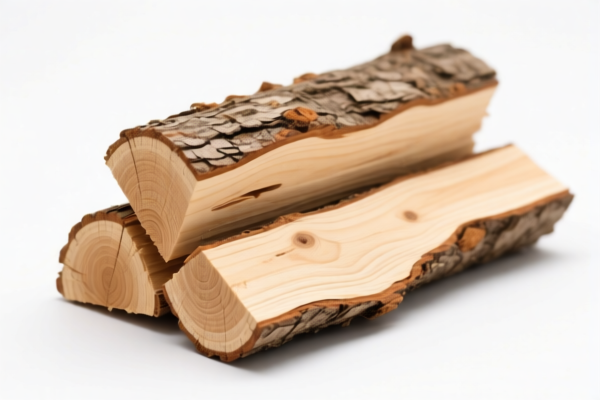
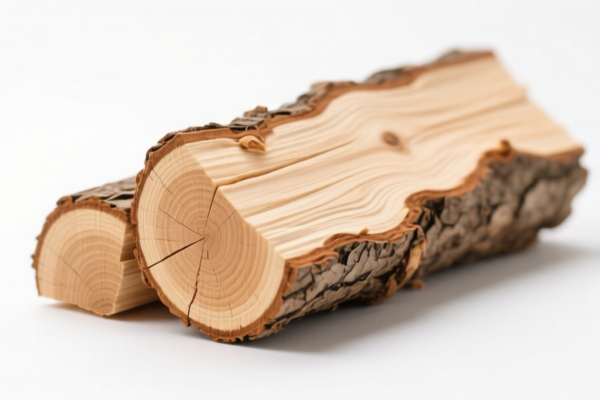
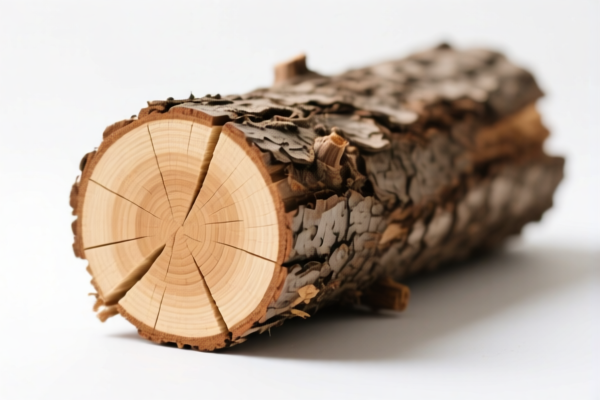

AI Analysis
🌲 Unprocessed Wood (Log & Raw Timber)
🌐 HS Code Reference & Customs Clearance Guide | 2026 Latest Tariff Analysis | Professional Level Clearance Strategy
📌 I. Product Definition & Classification: What Exactly Is "Unprocessed Wood"?
Unprocessed Wood refers to timber that has not undergone significant mechanical processing such as sawing, planing, or chemically treated finishing. In international trade, it is broadly categorized into fuel wood (logs), raw logs, and primary wood materials. Key distinctions depend on the species (coniferous vs. non-coniferous), treatment status, and intended use.
⚠️ Key Classification Points:
- If intended for fuel (e.g., firewood, raw logs for burning), it falls under 4401.
- If intended for industrial processing (e.g., sawing, plywood making), it falls under 4403 (wood prepared for joining) or 4407 (wood sawn/chipped lengthwise).
- No significant transformation: Logs, whether stripped of bark or not, without further milling, are considered "unprocessed" in the broad sense.
📦 II. HS Code Classification Details (2026 Latest Tariff Authority Cross-Reference)
| HS Code | Product Description | Application Scenario | Material Conflict? |
|---|---|---|---|
4401.11.00.00 |
Fuel Wood, Including Logs | Raw logs used as fuel; primary form of wood | ❌ No conflict; matches "fuel wood" description |
4403.99.01.95 |
Other Wood, Prepared for Joining | Raw logs as fallback category for "other" wood types | ❌ No conflict; generic "log" attribute |
4401.12.00.00 |
Fuel Wood, Other Than Coniferous/Deciduous Specifics | Logs for fuel, general non-specific wood type | ❌ No conflict; matches "fuel wood" morphology |
4407.11.00.43 |
Wood Sawn/Chipped Lengthwise | Wood raw material; basic wood material definition | ❌ No conflict; matches "wood material" definition |
4403.21.01.30 |
Wood Prepared for Joining (Other) | Logs/wood form; inferred wood material | ❌ No conflict; matches "log/wood" morphology |
🔍 Key Reminder:
- All codes listed above apply to "Unprocessed Wood" in various forms (logs, fuel wood, raw timber).
- No material conflict exists between these codes and the product "Unprocessed Wood."
- Primary distinction:
- 4401.xxxx: Specifically for fuel wood (including logs used for burning).
- 4403.xxxx: For wood prepared for joining (including logs intended for further processing).
- 4407.xxxx: For wood sawn/chipped lengthwise (basic wood raw material).
💰 III. 2026 Latest Tariff Rate Details (Including Surcharges & Policy Add-ons)
✅ Applicable Country: United States (US)
✅ Origin: China (CN)
✅ Effective Date: 2025 onwards (includes subsequent imports)
🎯 1. 4401.11.00.00 —— Fuel Wood, Including Logs
| Item | Content |
|---|---|
| Base Tariff | 0.0% (ad valorem) |
| Section 301 Surcharge | +25% (From USITC Footnote 9903.88.01) |
| Section 122 Tariff | +10% (Targeting specific Chinese products) |
| Total Tariff Rate | 35.0% |
| Tax Calculation | CIF Value × 35% |
| De Minimis Exemption | ❌ Not Applicable (deny_de_minimis) |
| Legal Basis Path | IEEPA:9903.01.25 → IEEPA:9903.01.24 → USITC:4401.11.00.00 → FOOTNOTE:9903.88.01 |
📌 Explanation:
- "Section 301 Surcharge 25%": From the US Trade Act Section 301 "Additional Duties";
- "Section 122 Tariff 10%": Additional tariff under specific provisions targeting Chinese imports;
- Combined 35%: Belongs to high tariff category, must be anticipated in advance!
🎯 2. 4403.99.01.95 —— Other Wood, Prepared for Joining
| Item | Content |
|---|---|
| Base Tariff | 0.0% |
| Section 301 Surcharge | +25% |
| Section 122 Tariff | +10% |
| Total Tariff Rate | 35.0% |
| Tax Calculation | CIF × 35% |
| De Minimis Exemption | ❌ Not Applicable |
| Legal Basis Path | IEEPA:9901.25 → IEEPA:9903.01.24 → USITC:4403.99.01.95 → FOOTNOTE:9903.88.01 |
📌 Note:
- Same as above; identical tariff rate;
- Applies to raw logs used for industrial purposes, not fuel.
🎯 3. 4401.12.00.00 —— Fuel Wood, Other Than Specific Coniferous/Deciduous
| Item | Content |
|---|---|
| Base Tariff | 0.0% |
| Section 301 Surcharge | +25% |
| Section 122 Tariff | +10% |
| Total Tariff Rate | 35.0% |
| Tax Calculation | CIF × 35% |
| De Minimis Exemption | ❌ Not Applicable |
| Legal Basis Path | IEEPA:9903.01.24 → USITC:4401.12.00.00 → FOOTNOTE:9903.88.01 |
📌 Note:
- Applies to fuel wood that is not specifically classified as coniferous or deciduous;
- Total 35%, same as other fuel wood codes.
🎯 4. 4407.11.00.43 —— Wood Sawn/Chipped Lengthwise
| Item | Content |
|---|---|
| Base Tariff | 0.0% |
| Section 301 Surcharge | +25% |
| Section 122 Tariff | +10% |
| Total Tariff Rate | 35.0% |
| Tax Calculation | CIF × 35% |
| De Minimis Exemption | ❌ Not Applicable |
| Legal Basis Path | IEEPA:9903.01.24 → USITC:4407.11.00.43 → FOOTNOTE:9903.88.01 |
📌 Note:
- Applies to basic wood raw material (sawn/chipped but not further processed);
- Total 35%, consistent with other unprocessed wood codes.
🎯 5. 4403.21.01.30 —— Wood Prepared for Joining (Other)
| Item | Content |
|---|---|
| Base Tariff | 0.0% |
| Section 301 Surcharge | +25% |
| Section 122 Tariff | +10% |
| Total Tariff Rate | 35.0% |
| Tax Calculation | CIF × 35% |
| De Minimis Exemption | ❌ Not Applicable |
| Legal Basis Path | IEEPA:9903.01.24 → USITC:4403.21.01.30 → FOOTNOTE:9903.88.01 |
📌 Note:
- Applies to logs/wood intended for further joining/processing;
- Total 35%, same as other raw wood codes.
🛠️ IV. Customs Clearance Practical Advice (Real-World Pitfall Avoidance Guide)
✅ 1. Preparation Document Checklist (None Can Be Missing)
| Document | Must Provide | Description |
|---|---|---|
| ✅ Product Specification Sheet | ✔️ | Include species, diameter, length, moisture content, treatment status |
| ✅ Phytosanitary Certificate | ✔️ | Mandatory for wood imports; proves no pests/diseases |
| ✅ Commercial Invoice | ✔️ | Clearly state "Logs" or "Fuel Wood" as product description |
| ✅ Packing List | ✔️ | Detail volume, weight, and packaging type |
| ✅ Bill of Lading/Air Waybill | ✔️ | Standard shipping document |
| ✅ Certificate of Origin (CO) | ✔️ | If non-Chinese origin, may qualify for preferential rates |
✅ 2. Declaration Tips (Key Mantra)
🔥 “Species Clear, Treatment Stated, HS Code Precise, Tariff Predictable!”
| Scenario | Correct Declaration Method | Wrong Practice |
|---|---|---|
| Logs for Fuel | 4401.11.00.00 or 4401.12.00.00 |
Misdeclared as "processed wood" → 35% |
| Logs for Processing | 4403.99.01.95 or 4403.21.01.30 |
Misdeclared as "fuel wood" → 35% (same, but risk inspection) |
| Basic Wood Material | 4407.11.00.43 |
Misdeclared as "finished lumber" → 35% |
| Mixed Wood Types | Declare each species separately | Mixed declaration → Inspection delay |
✅ 3. Special Case Handling
| Scenario | Handling Advice |
|---|---|
| Untreated Logs | Must provide Phytosanitary Certificate; otherwise, return/destruction |
| Treated Logs (e.g., Heat-Treated) | Mark with IPPC Stamp; declare "Heat-Treated Wood" |
| Logs from Coniferous vs. Non-Coniferous | Specify species in declaration to avoid misclassification |
| Logs for Fuel vs. Industrial Use | Clearly state end-use in commercial invoice to avoid duty disputes |
🌍 V. Global Major Market Clearance Comparison (2026 Latest)
| Country/Region | Recommended HS Code | Tariff | Certification Requirement | Notes |
|---|---|---|---|---|
| 🇺🇸 USA | 4401.11.00.00 / 4403.xxxx |
35% (Chinese origin) | Phytosanitary + IPPC | High tariff for all unprocessed wood |
| 🇨🇳 China | 4401.11.00.00 / 4403.xxxx |
0%~2% | N/A (Import) | Low duty for raw wood |
| 🇪🇺 EU | 4401.11.00.00 / 4403.xxxx |
0%~5% | FSC/PEFC (Sustainability) | No additional surcharges |
| 🇦🇺 Australia | 4401.11.00.00 / 4403.xxxx |
5% | Biosecurity Permit | Strict phytosanitary rules |
| 🇯🇵 Japan | 4401.11.00.00 / 4403.xxxx |
0%~5% | Phytosanitary | Low duty, strict inspection |
📌 Conclusion:
- USA is the most expensive market for Chinese unprocessed wood due to Section 301 and Section 122 tariffs;
- EU, Australia, and Japan have lower base tariffs but strict phytosanitary and sustainability requirements;
- China imports unprocessed wood with minimal tariffs, but exports face high barriers.
📌 VI. Common Mistakes & Pitfall Avoidance Guide (Lessons Learned)
❌ Mistake 1: Declaring "Logs" as "Processed Lumber"
👉 Consequence: 35% duty instead of potential 0% (if misclassified); Retransaction risk!
❌ Mistake 2: Ignoring Phytosanitary Requirements
👉 Consequence: Shipment detained or destroyed by customs; No refund!
❌ Mistake 3: Mixing Fuel Wood and Industrial Wood in One Declaration
👉 Consequence: Inspection delay; Additional fees; Potential misclassification
❌ Mistake 4: Not Specifying Species (Coniferous vs. Non-Coniferous)
👉 Consequence: Customs uncertainty; Higher duty risk; Delays
✅ Correct Approach:
"Heat-Treated Logs, Pine Species, IPPC Marked, Phytosanitary Certificate Attached, For Industrial Processing"
🎯 VII. Conclusion: Professional Declaration, Time-Saving, Cost-Efficient!
🎯 Remember the Mantra:
🔹 "Species Clear, Treatment Stated, Phytosanitary Ready, Duty Calculated!"
🔹 "HS Code Decides Fate, Tariff Differs 35 Points, Declaration Error Costs Thousands!"
📌 Tips:
- If your wood originates from Vietnam, Malaysia, or Thailand, you may apply for IEEPA Exemption, reducing tariffs to 0%~5%;
- Apply for Advance Ruling before shipment to avoid clearance risks.
📣 Immediate Action:
📞 Contact Professional Customs Broker + Provide Product Photos + Apply for HS Code Advance Ruling
🚀 Let your wood clear customs smoothly, export efficiently, and boost profits!
✨ Professional Clearance Starts with Precise Classification!
💼 Every Penny of Your Cost Deserves Accurate Calculation!
Customer Reviews
About HS Code Classification
The Harmonized System (HS) is an internationally standardized nomenclature developed by the World Customs Organization (WCO) to classify traded products. Over 200 countries use the HS system as the basis for customs tariffs, trade statistics, and import/export regulations.
Each HS code follows a hierarchical structure:
- Chapter (2 digits) — Broad category of goods (e.g., Chapter 84: Machinery and Mechanical Appliances)
- Heading (4 digits) — More specific grouping within the chapter
- Subheading (6 digits) — Internationally standardized breakdown, used by all WCO member countries
- National subdivisions (8-10 digits) — Country-specific extensions for further classification, such as US HTSUS 10-digit codes
Correct HS code classification is essential for smooth customs clearance, accurate duty payment, and compliance with trade regulations. Misclassification can lead to customs delays, overpayment of duties, or penalties.
When importing from CN to US, the applicable tariff rates may include:
- Most-Favored-Nation (MFN) rate — The standard duty rate applied to WTO members
- General rate — Applied to countries without trade agreements
- Trade remedy duties — Additional tariffs such as Section 301 (anti-dumping), Section 232 (national security), or countervailing duties
The information provided on this page is for reference purposes only. For official classification, please consult with your local customs authority or a licensed customs broker.