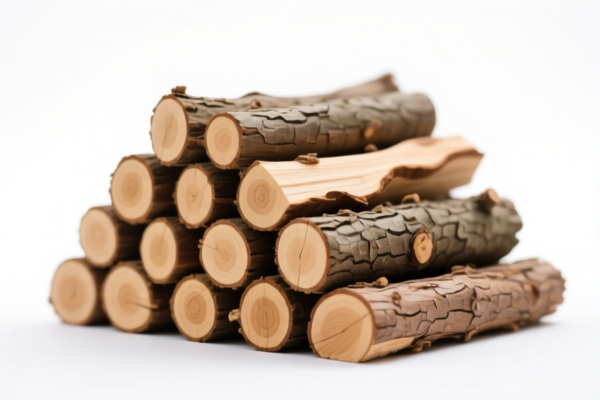
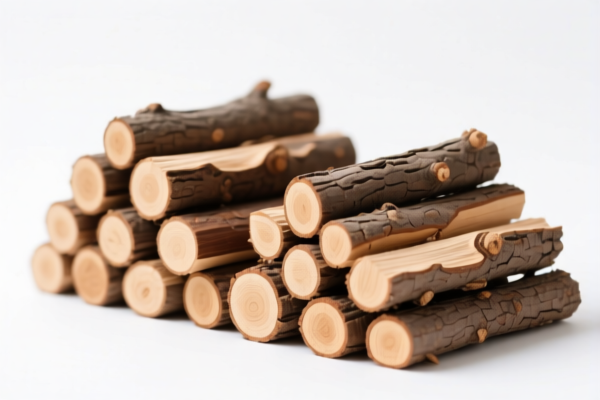
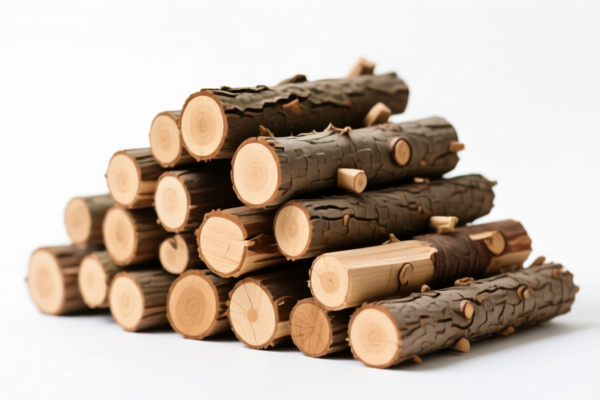
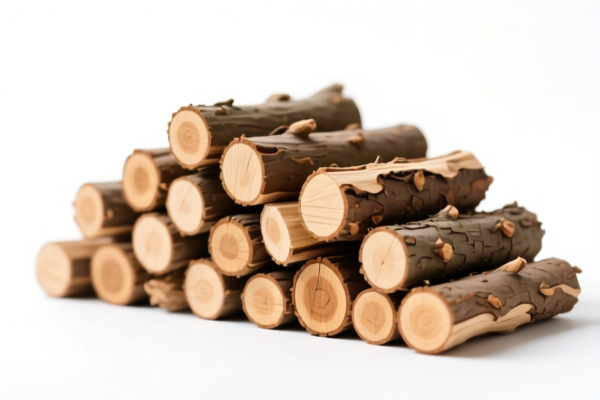
Unprocessed Wood Pile
CN → US| HS Code | Tariff Rate | Origin | Destination | Doc |
|---|---|---|---|---|
| 4403110020 | 35.0% | CN | US | Official Doc |
| 4403990128 | 35.0% | CN | US | Official Doc |
Product Images
AI Analysis
🪵 Unprocessed Wood Pile (Wood in the Rough)
🌐 HS Code Reference & Clearance Guide | 2026 Latest Tariff Analysis | Professional Customs Strategy
📌 I. Product Definition & Classification: Do You Really Understand "Wood Piles"?
Wood Piles, also known as wooden piles or posts, are fundamental structural components used in construction, marine engineering, and utility infrastructure. In international trade, they fall under Chapter 44: Wood and articles of wood.
They are classified based on two critical factors: 1. Tree Species: Coniferous (softwood, e.g., pine, spruce, fir) vs. Non-Coniferous (hardwood, e.g., oak, teak). 2. Treatment Status: Whether the wood is treated with preservatives (paint, creosote, etc.).
⚠️ Key Distinction:
- If the wood is treated with preservatives, it generally falls under specific subheadings for Coniferous or Other woods depending on the type of pile.
- If the wood is untreated, it may fall under broader categories for "Wood in the rough."
- Shape matters: "Poles, piles, and posts" must be roughly squared or retaining their original shape, stripped of bark or sapwood, or simply rough.
📦 II. HS Code Classification Details (2026 Latest Tariff Authority)
Based on the provided data, we have two specific HS Codes for treated wood piles/posts. Note that the data specifies "Treated" wood.
| HS Code | Product Description | Applicable Scenario | Treatment Status |
|---|---|---|---|
4403.11.00.20 |
Coniferous Poles, piles and posts: Telephone, telegraph and electrical power poles | Utility poles for power/telecom lines made from pine, fir, spruce, etc. | ✅ Treated (Paint, stain, creosote, or other preservatives) |
4403.99.01.28 |
Other Poles, piles and posts | Construction piles, fence posts, or utility poles made from non-coniferous wood (hardwoods) | ✅ Treated (Paint, stain, creosote, or other preservatives) |
🔍 Important Note:
- The description explicitly states: "Treated with paint, stain, creosote or other preservatives."
- If the wood is untreated, these specific subheadings (.20and.28) might not apply directly, and you would need to look at other subheadings under4403.11(Coniferous) or4403.99(Other) that do not require treatment. However, for treated piles, these are the precise codes.
💰 III. 2026 Latest Tariff Rate Details (Detailed Breakdown)
✅ Applicable Country: United States (US)
✅ Origin: China (CN)
✅ Effective Time: Current as of 2026 tariff schedule
🎯 1. 4403.11.00.20 —— Coniferous Treated Piles/Posts (Utility Poles)
| Item | Detail |
|---|---|
| Base Duty Rate | 0.0% (Ad Valorem) |
| Section 301 Additional Duty | +25.0% |
| Total Tax Rate | 25.0% |
| Tax Calculation | CIF Value × 25% |
| De Minimis Exemption | ❌ Not Eligible (Deny de minimis) |
| Legal Basis | Based on provided data: 基础关税: 0.0%, 加征关税: 25.0% |
📌 Explanation:
- Base Rate 0%: Coniferous wood products often have low or zero base tariffs to encourage construction materials import.
- Additional Duty 25%: This is the Section 301 tariff imposed on Chinese goods. It applies to most wood products from China to protect domestic timber industries.
- Total 25%: This is a significant cost. Importers must factor this into their landed cost calculation.
🎯 2. 4403.99.01.28 —— Other Treated Poles, Piles, and Posts (Hardwoods)
| Item | Detail |
|---|---|
| Base Duty Rate | 0.0% (Ad Valorem) |
| Section 301 Additional Duty | +25.0% |
| Total Tax Rate | 25.0% |
| Tax Calculation | CIF Value × 25% |
| De Minimis Exemption | ❌ Not Eligible (Deny de minimis) |
| Legal Basis | Based on provided data: 基础关税: 0.0%, 加征关税: 25.0% |
📌 Note:
- Even though this is for "Other" woods (non-coniferous), the tariff structure is identical to coniferous piles in this context.
- Both codes carry a 25% total tax burden due to the Section 301 additional duty.
🛠️ IV. Clearance Practical Advice (Avoid Pitfalls)
✅ 1. Required Documents Checklist
| Document | Mandatory? | Description |
|---|---|---|
| ✅ Commercial Invoice | ✔️ | Must clearly state: "Wooden Poles/Piles," "Treated with Creosote/Paint," "HS Code," "Country of Origin: China." |
| ✅ Packing List | ✔️ | Detail the quantity, weight, and dimensions. Ensure it matches the invoice. |
| ✅ Treatment Certificate | ✔️ | Critical! Provide proof of treatment (e.g., creosote, copper chromate arsenate) if claimed. This affects classification and environmental compliance. |
| ✅ Fumigation Certificate | ✔️ | Required for wood products to prevent pest introduction. Must be issued by an authorized agency. |
| ✅ Bill of Lading (B/L) | ✔️ | Standard shipping document. |
| ✅ ISPM 15 Mark | ✔️ | If the wood is not chemically treated but is still wood, ensure it has the ISPM 15 mark for pest control. However, if treated with preservatives, ensure the treatment is documented. |
✅ 2. Declaration Tips (Key Mnemonics)
🔥 "Treated Wood, Check the Code; 25% Tax, Must Be Ready!"
| Scenario | Correct Declaration | Incorrect Action |
|---|---|---|
| Coniferous Utility Pole (Treated) | 4403.11.00.20 |
Misdeclaring as "Untreated Wood" → Risk of penalty |
| Hardwood Construction Pile (Treated) | 4403.99.01.28 |
Misdeclaring as "Other Wood Products" → Incorrect Tax |
| Untreated Wood Pile | NOT in the provided data | Do not use .20 or .28 unless treated |
| Wood with Bark | Not "Stripped" | Ensure description says "Stripped of bark" if applicable |
⚠️ Critical Point:
- The provided HS codes require the wood to be treated. If your wood is not treated, these codes are incorrect. You must find the corresponding HS code for untreated wood in the rough.
- Creosote Treatment: If creosote is used, ensure the treatment certificate is valid and the wood is labeled as such. Creosote is a regulated substance in some contexts.
✅ 3. Special Situations
| Situation | Handling Advice |
|---|---|
| Mixed Wood Types | If a shipment contains both coniferous and hardwood piles, declare separately to avoid misclassification. |
| Partial Treatment | If only one end is treated, clarify in the description. Customs may still classify based on the primary use or overall treatment. |
| Origin Non-China | If from Vietnam, India, etc., the 25% Section 301 duty may not apply. Check for FTAs or lower additional tariffs. |
| Environmental Compliance | Treated wood may contain heavy metals or chemicals. Ensure it complies with EPA regulations if for residential use. |
🌍 V. Global Market Clearance Comparison (2026 Latest)
| Country/Region | Recommended HS Code | Tariff Rate | Certification Requirements | Notes |
|---|---|---|---|---|
| 🇺🇸 USA | 4403.11.00.20 / 4403.99.01.28 |
25% | Fumigation, Treatment Certificate | High tariff due to Section 301. |
| 🇨🇳 China | 4403.11.00.20 / 4403.99.01.28 |
0% - 5% | None (Domestic) | Lower tariff for domestic trade. |
| 🇪🇺 EU | 4403.10.00 / 4403.90.00 |
0% - 5% | ISPM 15, REACH Compliance | REACH may apply to treated wood chemicals. |
| 🇦🇺 Australia | 4403.10.00 / 4403.90.00 |
5% | Biosecurity Declaration | Strict biosecurity controls for wood. |
| 🇯🇵 Japan | 4403.10.00 / 4403.90.00 |
0% - 5% | Phytosanitary Certificate | Strict pest control requirements. |
📌 Conclusion:
- USA has the highest tariff (25%) for treated wood piles from China.
- Other markets have significantly lower tariffs (0-5%).
- Strategy: Consider sourcing from non-China countries (e.g., Canada, Russia, Southeast Asia) to avoid the 25% Section 301 duty, if possible.
📌 VI. Common Mistakes & Pitfalls (Lessons Learned)
❌ Mistake 1: Declaring Untreated wood under Treated HS Codes
👉 Consequence: Misclassification → Penalties + Back Taxes + Seizure Risk
❌ Mistake 2: Ignoring Fumigation/Treatment Certificates
👉 Consequence: Customs detention → Storage Fees + Demurrage
❌ Mistake 3: Mixing Coniferous and Non-Coniferous in one line item
👉 Consequence: Customs may reject the declaration or apply the highest tariff rate to the entire shipment.
❌ Mistake 4: Not specifying "Treated" in the description
👉 Consequence: Customs may assume untreated wood and apply a different HS code, leading to audit risks.
✅ Correct Practice:
"Treated Coniferous Wooden Poles, Creosote-Treated, for Utility Lines, HS Code 4403.11.00.20, Country of Origin: China"
🎯 VII. Conclusion: Professional Declaration, Save Money, Speed Up Clearance!
🎯 Remember the Mnemonic:
🔹 "Treated Wood, Check the Code; 25% Tax, Must Be Ready!"
🔹 "Coniferous Utility, Hardwood Other; Untreated, Find the Correct One!"
🔹 "HS Code determines Tax; 25% Difference, Declare Right to Save!"
📌 Pro Tip:
If your wood is untreated, do NOT use
4403.11.00.20or4403.99.01.28. Look for HS Codes under4403.11and4403.99that specify "Wood in the rough... not treated". The tariff might be different.
📣 Immediate Action:
📞 Consult a licensed customs broker
📄 Prepare Fumigation and Treatment Certificates
🚀 Clear Customs Smoothly, Avoid Delays, Maximize Profits!
✨ Professional Customs Clearance Starts with Accurate Classification!
💼 Every Dollar of Tax Saved is Pure Profit!
Customer Reviews
About HS Code Classification
The Harmonized System (HS) is an internationally standardized nomenclature developed by the World Customs Organization (WCO) to classify traded products. Over 200 countries use the HS system as the basis for customs tariffs, trade statistics, and import/export regulations.
Each HS code follows a hierarchical structure:
- Chapter (2 digits) — Broad category of goods (e.g., Chapter 84: Machinery and Mechanical Appliances)
- Heading (4 digits) — More specific grouping within the chapter
- Subheading (6 digits) — Internationally standardized breakdown, used by all WCO member countries
- National subdivisions (8-10 digits) — Country-specific extensions for further classification, such as US HTSUS 10-digit codes
Correct HS code classification is essential for smooth customs clearance, accurate duty payment, and compliance with trade regulations. Misclassification can lead to customs delays, overpayment of duties, or penalties.
When importing from CN to US, the applicable tariff rates may include:
- Most-Favored-Nation (MFN) rate — The standard duty rate applied to WTO members
- General rate — Applied to countries without trade agreements
- Trade remedy duties — Additional tariffs such as Section 301 (anti-dumping), Section 232 (national security), or countervailing duties
The information provided on this page is for reference purposes only. For official classification, please consult with your local customs authority or a licensed customs broker.