Unroasted Malt
CN → USProduct Images
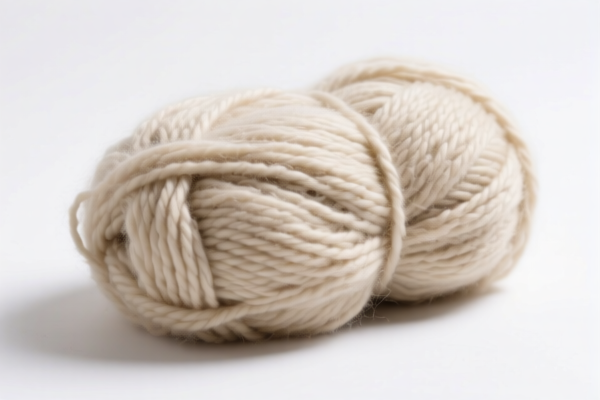
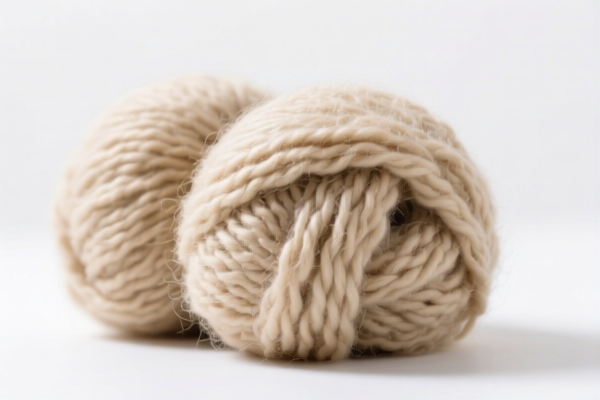
AI Analysis
🌾 Unroasted Malt (Raw Barley Malt for Brewing)
🌐 HS Code Reference & Customs Clearance Guide | 2026 Latest Tariff Analysis | Professional Clearance Strategy
📌 I. Product Definition & Classification: What Exactly is "Unroasted Malt"?
Unroasted Malt (often referred to as Base Malt, Pale Malt, or Raw Malt) is the foundational ingredient in beer brewing and distilling. It is produced by germinating barley (or other grains) and then drying it at low temperatures to halt germination, without the high-heat roasting process that creates darker, flavorful malts (like Chocolate or Crystal malt).
In international trade, it is critical to distinguish between: 1. Malted Grain (Unroasted/Roasted): Barley that has undergone the malting process (germination + drying). This falls under Chapter 10 or 11 depending on further processing. 2. Malt Extract: A concentrated syrup or powder made from mashing malt. This falls under Chapter 21. 3. Raw Barley (Unmalted): Just the grain, no germination process. This falls under Chapter 10.
⚠️ Critical Distinction Point:
- If the product is only dried, unroasted malted barley (used as a raw material for brewing/distilling), it is generally classified as Malted Grain.
- Do NOT confuse with "Malt Extract" (syrup/powder), which has different duties and regulations.
- Do NOT confuse with "Unmalted Barley" (raw grain), which has lower tariffs but different functional use.
📦 II. HS Code Classification Details (2026 Latest Tariff Authority)
| HS Code | Product Description | Application | Malted? | Roasted? |
|---|---|---|---|---|
1003.00.10.00 |
Malted barley (including unmalted malted barley) | Raw material for beer brewing, whiskey distilling | ✅ Yes | ❌ No (Unroasted/Light Roast) |
1003.00.90.00 |
Barley (unmalted) | Animal feed, seed, or further processing | ❌ No | N/A |
1109.00.00.00 |
Wheat Gluten (Not Malt) | Food additive | ❌ No | N/A |
2106.90.92.00 |
Malt Extract (Syrup/Powder) | Beverage base, baking, health supplements | ✅ Yes | Varies |
1902.20.00.00 |
Farinaceous Foods Containing Egg | Pasta/Noodles | ❌ No | N/A |
🔍 Key Reminder:
- Unroasted Malt (Pale Ale Malt, Pilsner Malt, Base Malt) is strictly classified under1003.00.10.00(Malted Barley).
- Even if it is "lightly roasted" (typical for Pale Malt), as long as it is not a "roasted malt" for coloring/flavoring (which might still be 1003 but with different notes), it remains Malted Barley.
- Note on US Tariff: The US HTSUS often classifies Malted Barley under1003.00.10.00. However, duty rates vary significantly based on trade agreements and Section 301 tariffs.
💰 III. 2026 Latest Tariff Rate Details (Including Additional Taxes & Policy Add-ons)
✅ Applicable Country: United States (US)
✅ Country of Origin: China (CN)
✅ Effective Date: November 10, 2025 onwards (including subsequent imports)
🎯 1. 1003.00.10.00 —— Malted Barley (Unroasted/Base Malt)
| Item | Content |
|---|---|
| General Duty Rate | 0% (ad valorem) – Note: General rate is 0, but specific rates apply |
| USITC Additional Duty (Section 301) | +25% (from USITC Footnote 9903.88.01 or similar Section 301 list) |
| IEEPA Additional Duty | +10% (against China/Hong Kong products, effective Nov 10, 2025) |
| Total Effective Rate | 35% |
| Tax Calculation | CIF Value × 35% |
| De Minimis Eligibility | ❌ Not Eligible (deny_de_minimis) |
| Legal Basis Path | IEEPA:9903.01.25 → IEEPA:9903.01.24 → USITC:1003.00.10.00 → FOOTNOTE:9903.88.01 |
📌 Explanation:
- Although the base MFN tariff for barley might be low or zero, Section 301 tariffs apply to many agricultural products from China to counter trade imbalances.
- The IEEPA 10% is a new addition for specific categories as of late 2025.
- Total 35% is a significant cost factor for brewers importing base malt from China.
- Important: If the malt is imported from Canada, Mexico, or EU countries (under USMCA/EU-US agreements), duties may be 0%. Always verify Country of Origin!
🎯 2. 1003.00.90.00 —— Barley, Unmalted (Raw Grain)
| Item | Content |
|---|---|
| General Duty Rate | 0% |
| USITC Additional Duty | +25% (if from China) |
| IEEPA Additional Duty | +10% (if from China) |
| Total Effective Rate | 35% |
| Tax Calculation | CIF Value × 35% |
| De Minimis Eligibility | ❌ Not Eligible |
| Legal Basis Path | Same as above |
📌 Note:
- Unmalted Barley is often used for animal feed. If you declare "Unroasted Malt" but it is actually unmalted barley, you risk misclassification penalties.
- Malted means it has been germinated and dried. Unmalted means it is just the raw grain. This distinction is critical for customs.
🛠️ IV. Customs Clearance Practical Advice (Real-World Pitfall Avoidance)
✅ 1. Preparation Checklist (Essential Documents)
| Document | Required | Description |
|---|---|---|
| ✅ Certificate of Origin | ✔️ | Must specify Country of Origin. Critical for determining tariff rates (e.g., USMCA vs. Section 301). |
| ✅ Processing Statement | ✔️ | Must clearly state: "Germinated and Dried, Unroasted" to distinguish from raw barley or roasted malt. |
| ✅ Product Specification | ✔️ | Include protein content, moisture, diastatic power, and malt extract yield. |
| ✅ Fumigation Certificate | ✔️ | Mandatory for all grain imports into the US. Must show treatment date and method. |
| ✅ Phytosanitary Certificate | ✔️ | Required by USDA APHIS to prevent pest introduction. |
| ✅ Commercial Invoice | ✔️ | Clearly describe as "Malted Barley, Unroasted" or "Base Malt for Brewing." |
| ✅ Packaging List | ✔️ | Detail weight, dimensions, and material of packaging. |
✅ 2. Declaration Tips (Key Mantra)
🔥 "Germination is Key, Fumigation is Law, Origin Determines Rate!"
| Situation | Correct Declaration | Wrong Action |
|---|---|---|
| Malted, Unroasted Barley | 1003.00.10.00 - "Malted Barley" |
Misdeclare as "Raw Barley" (1003.00.90) → Risk of audit for falsification |
| Malted, Dark/Roasted Malt | 1003.00.10.00 (still malted) |
Misdeclare as "Processed Food" (2106) → Wrong chapter, higher scrutiny |
| Unmalted Barley (Feed) | 1003.00.90.00 - "Barley, Unmalted" |
Misdeclare as "Malt" → Incorrect tariff, potential duty evasion penalty |
| Malt Extract (Syrup) | 2106.90.92.00 |
Misdeclare as "Malted Grain" (1003) → Chapter mismatch |
✅ 3. Special Cases Handling
| Case | Handling Advice |
|---|---|
| OEM/Custom Malt | Provide brewing recipe or malt specification sheet to prove it is "Malted" and not just roasted grain. |
| Mixed Shipments | If shipment contains both Malted and Unmalted barley, declare separately. Do not mix HS codes. |
| Animal Feed Use | If declaring as "Unmalted Barley" for animal feed, ensure it is not intended for human consumption. Clear labeling required. |
| USDA Inspection | All grain imports are subject to USDA APHIS inspection at the port of entry. Ensure fumigation certificate matches the shipment date. |
🌍 V. Global Market Customs Comparison (2026 Latest)
| Country/Region | Recommended HS Code | Tariff (China Origin) | Certification Requirements | Notes |
|---|---|---|---|---|
| 🇺🇸 United States | 1003.00.10.00 |
35% (25% + 10%) | USDA Fumigation + Phytosanitary | High duty due to Section 301 & IEEPA |
| 🇨🇳 China | 1003.00.10.00 |
0% | CIQ Inspection | No import duty for malted barley |
| 🇪🇺 European Union | 1003.00 |
0% (if GSP applies) | EU Phytosanitary | Check for anti-dumping duties on specific origins |
| 🇬🇧 United Kingdom | 1003.00 |
0% - 15% | UK Fumigation Certificate | Post-Brexit rules apply; check UK Tariff |
| 🇯🇵 Japan | 1003.00 |
0% - 3% | Japan Plant Quarantine | Strict pest control requirements |
📌 Conclusion:
- USA imposes the highest effective tariff (35%) on Chinese unroasted malt due to combined Section 301 and IEEPA taxes.
- China, EU, Japan have low or zero tariffs, making them more cost-effective for re-export or local use.
- Fumigation and Phytosanitary certificates are non-negotiable for grain imports globally.
📌 VI. Common Mistakes & Pitfall Guide (Blood Lessons)
❌ Mistake 1: Declaring "Malted Barley" as "Barley, Unmalted" (1003.00.90)
👉 Consequence: If inspected and found to be malted, you face falsification penalties and back-taxes. Malted barley has specific duties and regulatory scrutiny.
❌ Mistake 2: Forgetting Fumigation Certificate
👉 Consequence: Shipment rejected or destroyed by USDA APHIS at US port. High demurrage and disposal costs.
❌ Mistake 3: Confusing "Malted Barley" with "Malt Extract"
👉 Consequence: Wrong HS code (1003 vs 2106). Malt Extract is a processed food ingredient with different duties and FDA regulations.
❌ Mistake 4: Using "Pale Ale Malt" as the only description
👉 Consequence: Customs may not recognize "Pale Ale Malt" as a technical term. Use "Malted Barley, Unroasted" in the formal description.
✅ Correct Practice:
"Malted Barley, Unroasted, Base Malt for Brewing, Protein: 10-11%, Moisture: <5%, Fumigated, Certificate No. XYZ, Origin: Canada"
🎯 VII. Conclusion: Professional Declaration, Save Time, Reduce Costs!
🎯 Remember the Mantra:
🔹 "Germination = Malt, No Germination = Grain"
🔹 "Fumigation Certificate = Mandatory for US Entry"
🔹 "Section 301 + IEEPA = 35% Duty for China Origin"
🔹 "Origin Matters: USMCA/EU may be 0%"
📌 Pro Tip:
If your malt is originating from Canada, Mexico, or the EU, you can claim preferential tariff treatment (often 0%) under USMCA or GSP. Ensure your Certificate of Origin is properly filled out and declared on the CBP entry.
📣 Immediate Action:
📞 Contact a customs broker specializing in agricultural products.
📄 Ensure Fumigation and Phytosanitary certificates are valid and match the shipment.
🚀 Verify Country of Origin to determine accurate duty rates.Your malt shipment, cleared smoothly, with minimum duty cost!
✨ Professional Customs Clearance Starts with Accurate Classification!
💼 Every Percent of Duty Saved is Pure Profit!
Customer Reviews
About HS Code Classification
The Harmonized System (HS) is an internationally standardized nomenclature developed by the World Customs Organization (WCO) to classify traded products. Over 200 countries use the HS system as the basis for customs tariffs, trade statistics, and import/export regulations.
Each HS code follows a hierarchical structure:
- Chapter (2 digits) — Broad category of goods (e.g., Chapter 84: Machinery and Mechanical Appliances)
- Heading (4 digits) — More specific grouping within the chapter
- Subheading (6 digits) — Internationally standardized breakdown, used by all WCO member countries
- National subdivisions (8-10 digits) — Country-specific extensions for further classification, such as US HTSUS 10-digit codes
Correct HS code classification is essential for smooth customs clearance, accurate duty payment, and compliance with trade regulations. Misclassification can lead to customs delays, overpayment of duties, or penalties.
When importing from CN to US, the applicable tariff rates may include:
- Most-Favored-Nation (MFN) rate — The standard duty rate applied to WTO members
- General rate — Applied to countries without trade agreements
- Trade remedy duties — Additional tariffs such as Section 301 (anti-dumping), Section 232 (national security), or countervailing duties
The information provided on this page is for reference purposes only. For official classification, please consult with your local customs authority or a licensed customs broker.