Unsaturated Polyester Automotive Grade Board
CN → US| HS Code | Tariff Rate | Origin | Destination | Doc |
|---|---|---|---|---|
| 3907915000 | 41.5% | CN | US | Official Doc |
| 3921190090 | 41.5% | CN | US | Official Doc |
| 3921905050 | 39.8% | CN | US | Official Doc |
| 8708295160 | 0.0% | CN | US | Official Doc |
| 3921190090 | 41.5% | CN | US | Official Doc |
Product Images
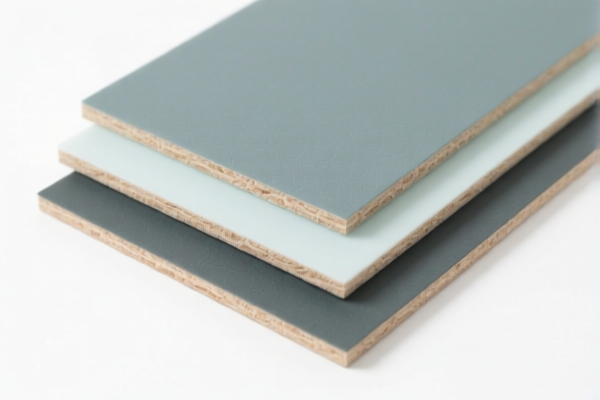


AI Analysis
🚗 Unsaturated Polyester Automotive Grade Board – Global HS Code & Tax Strategy 2026
🌐 HS Code Reference & Customs Clearance Guide | 2026 Tariff Analysis | Professional Strategy
📌 I. Product Definition & Classification: Do You Really Understand "Automotive Grade Boards"?
Unsaturated polyester boards are high-performance thermosetting plastic sheets widely used in the automotive industry for components such as under-hood parts, body panels, insulation, and structural reinforcements due to their excellent heat resistance, chemical stability, and lightweight properties.
In international trade, these boards are primarily classified under Chapter 39 (Plastics), with specific subheadings depending on: - Application (e.g., automotive parts vs. general industrial use) - Physical Form (sheets, plates, or films) - Composition (unsaturated polyester resin matrix)
⚠️ Critical Classification Distinction:
- If the board is used as a general plastic sheet →归类 to 3921.19.00.90 / 3921.90.50.50
- If the board is specifically designed and classified as an automotive part or material for vehicles →归类 to 8708.29.51.60 (subject to higher tariffs)
- If it falls under residual categories due to ambiguity →归类 to 3907.91.50.00
📦 II. HS Code Classification Details (2026 Official Tariff Schedule)
| HS Code | Product Description | Application Scenario | Material Type |
|---|---|---|---|
3907.91.50.00 |
Unsaturated polyester boards, general category fallback | Industrial sheets, non-specific use | ✅ Polyester resin |
3921.19.00.90 |
Unsaturated polyester plastic sheets/boards, other | Automotive, construction, packaging | ✅ Plastic resin (sheet form) |
3921.90.50.50 |
Other plastic sheets, unsaturated polyester | General industrial, niche applications | ✅ Plastic/resin composite |
8708.29.51.60 |
Automotive body parts/materials, polyester-based | Car body panels, under-hood components | ✅ Automotive grade material |
3921.19.00.90 |
Polyester-based plastic thin sheets | Lightweight automotive trim, insulation | ✅ Plastic (thin sheet) |
🔍 Key Insight:
- The same material (unsaturated polyester) can fall into different HS codes based on intended use and product form.
- Automotive-specific classification (8708.29.51.60) often triggers additional tariffs due to trade protection policies.
💰 III. 2026 Tariff Rate Breakdown (Including Surcharges & Policy Add-ons)
✅ Applicable Market: United States (US)
✅ Country of Origin: China (CN)
✅ Effective Date: From November 10, 2025 (including subsequent imports)
🎯 1. 3907.91.50.00 – General Polyester Board (Fallback Category)
| Item | Details |
|---|---|
| Base Tariff | 6.5% |
| Section 301 Tariff | +25% |
| Section 122 Tariff | +10% |
| Total Tariff | 41.5% |
| Tax Calculation | CIF Value × 41.5% |
| De Minimis Exemption | ❌ Not Applicable |
| Legal Pathway | IEEPA:9903.01.25 → Section 301:3907.91.50.00 → Section 122:10% |
📌 Explanation:
- Base tariff of 6.5% applies to general plastic products.
- 25% Section 301 is a punitive tariff on Chinese-origin plastics.
- 10% Section 122 is an additional tariff on specific chemical-based materials.
- Total: 41.5% – very high, requires cost planning.
🎯 2. 3921.19.00.90 – Unsaturated Polyester Plastic Sheets
| Item | Details |
|---|---|
| Base Tariff | 6.5% |
| Section 301 Tariff | +25% |
| Section 122 Tariff | +10% |
| Total Tariff | 41.5% |
| Tax Calculation | CIF Value × 41.5% |
| De Minimis Exemption | ❌ Not Applicable |
| Legal Pathway | Section 301:3921.19.00.90 → IEEPA:9903.01.24 → Section 122:10% |
📌 Note:
- This code covers thin plastic sheets made of unsaturated polyester.
- Despite being "thin," it still attracts 41.5% total tariff.
- Commonly used in automotive interior panels, insulation, or lightweight components.
🎯 3. 3921.90.50.50 – Other Plastic Sheets (Residual Category)
| Item | Details |
|---|---|
| Base Tariff | 4.8% |
| Section 301 Tariff | +25% |
| Section 122 Tariff | +10% |
| Total Tariff | 39.8% |
| Tax Calculation | CIF Value × 39.8% |
| De Minimis Exemption | ❌ Not Applicable |
| Legal Pathway | Section 301:3921.90.50.50 → Section 122:10% → Residual Category |
📌 Note:
- Slightly lower base tariff (4.8%) due to residual classification.
- Still subject to Section 301 + Section 122 surcharges.
- 39.8% total – still high, but 1.7% lower than other plastic board codes.
🎯 4. 8708.29.51.60 – Automotive Body Part Materials (Polyester-Based)
| Item | Details |
|---|---|
| Base Tariff | 2.5% |
| Section 301 Tariff | +25% |
| Section 122 Tariff | +10% |
| Metal/Steel/Alum/Copper Surcharges | +50% (if applicable) |
| Total Tariff | 2.5% + 85.0% (depending on metal content) |
| Tax Calculation | CIF Value × (2.5% + 85.0%) = 87.5% or 2.5% + 50% |
| De Minimis Exemption | ❌ Not Applicable |
| Legal Pathway | Section 301:8708.29.51.60 → Section 122:10% → Metal Surcharge:50% |
📌 Critical Warning:
- If the board contains any steel, aluminum, or copper components, an additional 50% tariff applies.
- This can raise total tariff to 85% or 87.5% – extremely high.
- Must verify material composition before declaration.
🎯 5. 3921.19.00.90 (Repeat Entry) – Polyester Thin Sheets for Automotive
| Item | Details |
|---|---|
| Base Tariff | 6.5% |
| Section 301 Tariff | +25% |
| Section 122 Tariff | +10% |
| Total Tariff | 41.5% |
| Tax Calculation | CIF Value × 41.5% |
| De Minimis Exemption | ❌ Not Applicable |
| Legal Pathway | Section 301:3921.19.00.90 → Section 122:10% |
📌 Note:
- This is a duplicate of code #2, emphasizing that thin polyester sheets used in automotive applications still face 41.5% tariff.
- No special exemption for "automotive grade" unless classified under 8708 series.
🛠️ IV. Customs Clearance Practical Tips (Avoid Pitfalls)
✅ 1. Documentation Checklist (Must-Have)
| Document | Required? | Notes |
|---|---|---|
| ✅ Product Specification Sheet | ✔️ | Include material composition, dimensions, thickness |
| ✅ Material Safety Data Sheet (MSDS) | ✔️ | For chemical compliance |
| ✅ Automotive Grade Certification | ✔️ | If claiming automotive application |
| ✅ Commercial Invoice | ✔️ | Must specify "Unsaturated Polyester Board" |
| ✅ Packing List | ✔️ | Clear indication of quantity and form |
| ✅ Certificate of Origin (CO) | ✔️ | Required for tariff determination |
| ✅ Test Reports (e.g., UL, ASTM) | ✔️ | For automotive compliance |
✅ 2. Declaration Strategy (Key Mnemonic)
🔥 "Material First, Use Second, Auto Trap Avoided!"
| Scenario | Correct Declaration | Wrong Declaration |
|---|---|---|
| General polyester sheet | 3921.19.00.90 |
8708.29.51.60 → 85% tariff |
| Automotive body part material | 8708.29.51.60 |
3921.19.00.90 → 41.5% (underpaid, audit risk) |
| Thin plastic sheet for insulation | 3921.19.00.90 |
3907.91.50.00 → 41.5% (same, but less precise) |
| Board with metal content | 8708.29.51.60 + metal surcharge |
3921.19.00.90 → 50% penalty |
✅ 3. Special Cases Handling
| Case | Recommendation |
|---|---|
| OEM Automotive Parts | Provide customer order + design drawings to justify 8708 classification |
| Mixed Material Boards | Declare material composition accurately to avoid metal surcharge |
| Automotive Grade Certification | Submit third-party test reports to support "automotive" claim |
| Resin Composition Change | Re-classify if resin type changes (e.g., from unsaturated to epoxy) |
🌍 V. Global Market Comparison (2026 Latest)
| Country/Region | Recommended HS Code | Tariff | Certification | Notes |
|---|---|---|---|---|
| 🇺🇸 USA | 3921.19.00.90 / 8708.29.51.60 |
41.5% ~ 87.5% | ASTM, UL | High tariffs on automotive grade |
| 🇨🇳 China | 3921.19.00.90 |
6.5% | CCC | No surcharges |
| 🇪🇺 EU | 3921.19.00.90 |
0% (if CE certified) | CE, RoHS | No surcharges |
| 🇦🇺 Australia | 3921.19.00.90 |
5% | RCM | Moderate tariff |
| 🇯🇵 Japan | 3921.19.00.90 |
0% | PSE | No surcharges |
📌 Conclusion:
- USA imposes highest tariffs, especially on automotive-grade materials (8708series).
- China, EU, Japan offer low or zero tariffs for general plastic boards.
- Cost-saving strategy: Consider exporting non-automotive versions to US to avoid high tariffs.
📌 VI. Common Mistakes & Pitfalls (Lessons Learned)
❌ Mistake 1: Declaring "automotive grade" without certification
👉 Consequence: Audit risk, potential back-tariff + penalties
❌ Mistake 2: Using 8708 code for general plastic boards
👉 Consequence: Under-declaration, customs seizure, 200% penalty
❌ Mistake 3: Ignoring metal content in composite boards
👉 Consequence: 50% metal surcharge applies retroactively
❌ Mistake 4: Not updating declaration when resin type changes
👉 Consequence: HS code mismatch, customs delay
✅ Correct Practice:
"Unsaturated Polyester Board, Automotive Grade, 3mm Thick, ASTM D638 Certified, No Metal Content, Model X-2026"
🎯 VII. Conclusion: Accurate Classification = Cost Savings & Smooth Customs
🎯 Remember the Mnemonic:
🔹 "Material First, Use Second, Auto Trap Avoided!"
🔹 "HS Code is Life, Tax is Cost, One Wrong Move, Bill Doubles!"
📌 Pro Tip:
If your board is not automotive-specific, declare as general plastic board (3921.19.00.90) to avoid 85%+ tariffs.
Consider pre-classification rulings from U.S. Customs to avoid audit risk.
📣 Take Action Now:
📞 Contact a certified customs broker + Provide material specs + Apply for Advance Ruling
🚀 Ensure smooth clearance, lower taxes, faster delivery!
✨ Professional Classification Starts with Precision!
💼 Every Cent Counts – Calculate It Right!
Customer Reviews
About HS Code Classification
The Harmonized System (HS) is an internationally standardized nomenclature developed by the World Customs Organization (WCO) to classify traded products. Over 200 countries use the HS system as the basis for customs tariffs, trade statistics, and import/export regulations.
Each HS code follows a hierarchical structure:
- Chapter (2 digits) — Broad category of goods (e.g., Chapter 84: Machinery and Mechanical Appliances)
- Heading (4 digits) — More specific grouping within the chapter
- Subheading (6 digits) — Internationally standardized breakdown, used by all WCO member countries
- National subdivisions (8-10 digits) — Country-specific extensions for further classification, such as US HTSUS 10-digit codes
Correct HS code classification is essential for smooth customs clearance, accurate duty payment, and compliance with trade regulations. Misclassification can lead to customs delays, overpayment of duties, or penalties.
When importing from CN to US, the applicable tariff rates may include:
- Most-Favored-Nation (MFN) rate — The standard duty rate applied to WTO members
- General rate — Applied to countries without trade agreements
- Trade remedy duties — Additional tariffs such as Section 301 (anti-dumping), Section 232 (national security), or countervailing duties
The information provided on this page is for reference purposes only. For official classification, please consult with your local customs authority or a licensed customs broker.