Unsaturated Polyester Resin (For Spray Up)
CN → US| HS Code | Tariff Rate | Origin | Destination | Doc |
|---|---|---|---|---|
| 3907915000 | 41.5% | CN | US | Official Doc |
| 3907995050 | 41.5% | CN | US | Official Doc |
| 3907915000 | 41.5% | CN | US | Official Doc |
| 3907995050 | 41.5% | CN | US | Official Doc |
| 3907915000 | 41.5% | CN | US | Official Doc |
Product Images
AI Analysis
🧪 Unsaturated Polyester Resin (For Spray Up)
🌐 HS Code Reference & Customs Clearance Guide | 2026 Latest Tariff Analysis | Professional-Level Strategy
📌 I. Product Definition & Classification: Do You Understand "Spray-Up Resin"?
Unsaturated Polyester Resin (UPR) is a thermosetting polymer widely used in fiberglass reinforcement, marine vessels, automotive parts, and construction. When specified "For Spray Up", it typically refers to resin systems designed for Chopped Strand Mat (CSM) spray-up processes, often containing styrene and specific viscosity modifiers to ensure proper atomization and curing.
In international trade, these are classified under Chapter 39: Plastics and Articles Thereof. Specifically, they fall under Heading 3907: Polyacetals, other polyethers and epoxide resins; polycarbonates, alkyd resins, polyallyl esters and other polyesters, in primary forms.
⚠️ Key Distinction Point:
- If it is a raw polymer/resin in liquid or solid form before mixing with hardeners/catalysts → Classified as Primary Form (HS 3907).
- If it is a pre-mixed kit with catalysts/hardeners already added → Might be classified differently (e.g., as a prepared adhesive or mixed product), but pure UPR for spray-up is typically raw resin.
- High Heat Resistance variants may have different sub-classifications compared to standard general-purpose resins.
📦 II. HS Code Classification Details (2026 Latest Tariff Authority Comparison)
| HS Code | Product Description | Application Scenario | Key Characteristics |
|---|---|---|---|
3907.91.50.00 |
Unsaturated Polyester Resin, High Heat Resistance, Primary Form | High-performance composites, industrial parts requiring thermal stability | High耐热性 (High Heat Resistance), Primary Form |
3907.99.50.50 |
Polyester Resin, Primary Form, No Material Conflict, Suitable for Spray Coating | General spray-up applications, fiberglass boat building, automotive panels | General Purpose, Spray-Up Compatible, Primary Form |
3907.91.50.00 |
Unsaturated Polyester Resin, High Heat Resistance, Primary Form | High-performance composites, industrial parts requiring thermal stability | High耐热性 (High Heat Resistance), Primary Form |
3907.99.50.50 |
Polyester Resin, Primary Form, No Material Conflict, Suitable for Spray Coating | General spray-up applications, fiberglass boat building, automotive panels | General Purpose, Spray-Up Compatible, Primary Form |
3907.91.50.00 |
Unsaturated Polyester Resin, High Heat Resistance, Primary Form | High-performance composites, industrial parts requiring thermal stability | High耐热性 (High Heat Resistance), Primary Form |
🔍 Key Reminders:
- "Primary Form" is critical: The resin must be in its basic chemical form (liquid/solid) before any final manufacturing mixing.
- Heat Resistance:3907.91.50.00is specifically for high-heat-resistant unsaturated polyesters. If your resin is standard grade, use3907.99.50.50.
- Spray-Up Suitability: This is a functional description, not a classification criterion. Both codes can apply to spray-up resins, depending on their thermal properties.
💰 III. 2026 Latest Tariff Rate Breakdown (Including Surcharges, Policy Add-ons)
✅ Applicable Country: China (CN) Export / Import Context (Based on Tax Detail Provided)
✅ Origin: China (CN)
✅ Effective Time: Current 2026 Tariff Schedule
🎯 1. 3907.91.50.00 —— Unsaturated Polyester Resin, High Heat Resistance
| Item | Content |
|---|---|
| Base Tariff Rate | 6.5% |
| Additional Tariff | +25.0% (Section 301 / Retaliatory Tariff) |
| Section 122 Tariff | +10.0% (Specific regulatory surcharge) |
| Total Tax Rate | 41.5% |
| Tax Calculation | CIF Value × 41.5% |
| De Minimis Eligibility | ❌ Not Eligible (High tax rate typically excludes small parcels from de minimis benefits) |
| Legal Authority Path | Base: 3907.91.50.00 → Section 301: 25% → Section 122: 10% |
📌 Explanation:
- 6.5% is the standard Most Favored Nation (MFN) base rate for unsaturated polyesters.
- +25% is the standard Section 301 tariff on many Chinese chemical products.
- +10% is a specific "122 Clause" tariff (often related to anti-dumping or specific regulatory measures).
- Total 41.5% is a very high tariff, significantly impacting cost competitiveness.
🎯 2. 3907.99.50.50 —— Polyester Resin, Primary Form (General/Spray-Up)
| Item | Content |
|---|---|
| Base Tariff Rate | 6.5% |
| Additional Tariff | +25.0% (Section 301 / Retaliatory Tariff) |
| Section 122 Tariff | +10.0% (Specific regulatory surcharge) |
| Total Tax Rate | 41.5% |
| Tax Calculation | CIF Value × 41.5% |
| De Minimis Eligibility | ❌ Not Eligible |
| Legal Authority Path | Base: 3907.99.50.50 → Section 301: 25% → Section 122: 10% |
📌 Note:
- Despite being a "general" polyester, it still falls under the same high-tax bracket due to Section 301 and Section 122 applicability.
- The 41.5% rate applies regardless of whether it is for spray-up or high-heat applications, as both are under Chapter 3907.
🛠️ IV. Customs Clearance Practical Advice (Pitfall Avoidance Guide)
✅ 1. Required Documentation Checklist (None Can Be Missing)
| Document | Mandatory | Notes |
|---|---|---|
| ✅ Technical Data Sheet (TDS) | ✔️ | Must specify: Viscosity, Styrene Content, Cure Time, Heat Resistance Grade |
| ✅ Safety Data Sheet (SDS/MSDS) | ✔️ | Critical for hazardous material classification (Styrene is flammable/volatile) |
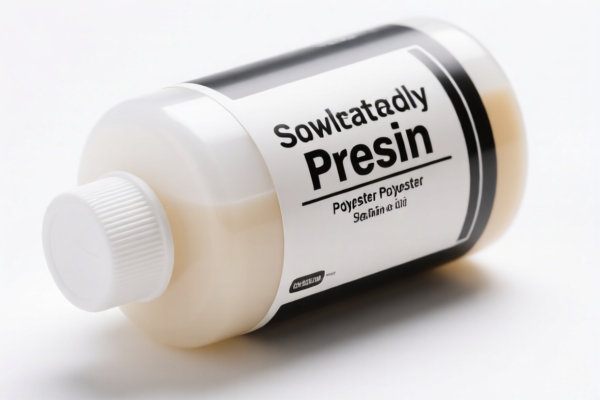
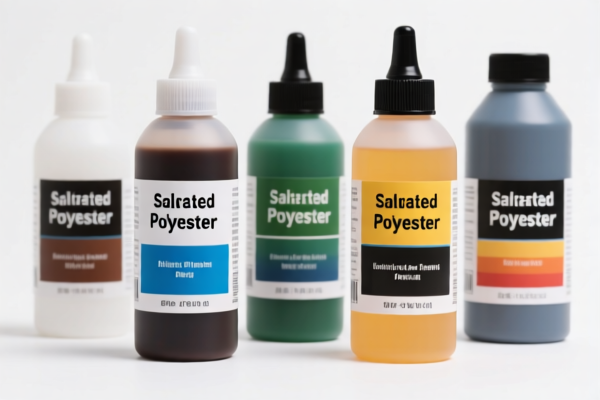
| ✅ Product Photo (Label/Drum) | ✔️ | Must show HS code if marked, batch number, and "Primary Form" |
| ✅ Commercial Invoice | ✔️ | Clearly state: "Unsaturated Polyester Resin, Primary Form, For Spray-Up Application" |
| ✅ Packing List | ✔️ | Net weight, gross weight, number of drums/tons |
| ✅ Certificate of Origin (CO) | ✔️ | Essential for verifying origin for tariff determination |
| ✅ Non-Metallic Hazardous Goods Certification | ✔️ | If applicable, to prove it's not classified as a high-risk hazardous chemical |
✅ 2. Declaration Tips (Key Mnemonic)
🔥 "Primary Form, Not Mixed, TDS & SDS, Clearance Goes Well!"
| Scenario | Correct Declaration | Wrong Practice |
|---|---|---|
| Raw Resin for Spray-Up | 3907.99.50.50 or 3907.91.50.00 (as applicable) |
Misdeclaring as "Plastic Pellets" → 13%+ |
| Pre-Mixed Resin + Catalyst | Do not declare as UPR → May be 3910.00.00 (Preparations) |
Declaring mixed product as raw resin → Penalty |
| High-Heat Resin | 3907.91.50.00 |
Using 3907.99.50.50 → Potential misclassification audit |
| Standard Spray Resin | 3907.99.50.50 |
Using 3907.91.50.00 → Over-declaring heat resistance |
✅ 3. Special Situation Handling
| Situation | Handling Advice |
|---|---|
| OEM Custom Resin | Provide formula sheets (redacted) and client specifications to justify "High Heat" or "General" classification. |
| Bulk Tanker vs. Drum | Ensure documents match packaging type. Bulk shipments require additional phytosanitary/safety checks if applicable. |
| Styrene Content >50% | May trigger additional hazardous material regulations. Ensure SDS clearly states styrene percentage. |
| Intended Use: Marine vs. Automotive | Intended use does not change HS code, but must be consistent with technical data in TDS. |
🌍 V. Global Market Customs Comparison (2026 Latest)
| Country/Region | Recommended HS Code | Tariff (Approx.) | Certification Requirements | Notes |
|---|---|---|---|---|
| 🇺🇸 USA | 3907.91.50.00 / 3907.99.50.50 |
41.5% (CN Origin) | TSCA Compliance | High tariff impact; consider supply chain diversification. |
| 🇨🇳 China | 3907.91.50.00 / 3907.99.50.50 |
6.5% | CCC (if applicable) | Base rate only; no Section 301. |
| 🇪🇺 EU | 3907.91.00 / 3907.99.00 |
6.5% | REACH Registration | Must have REACH registration for importers. |
| 🇬🇧 UK | 3907.91.00 / 3907.99.00 |
6.5% | UK REACH | Post-Brexit, UK-specific chemical regulations apply. |
| 🇯🇵 Japan | 3907.91.00 / 3907.99.00 |
6.5% | PRTR Notification | Chemical substance management laws apply. |
📌 Conclusion:
- USA is the only major market with the 41.5% total tariff for Chinese-origin UPR.
- EU, UK, Japan, and China have a significantly lower base rate of 6.5%.
- Supply Chain Strategy: For US-bound goods, consider sourcing from non-China origins (e.g., Vietnam, Mexico) to avoid Section 301 and 122 tariffs, if possible.
📌 VI. Common Errors & Pitfall Guide (Lessons Learned)
❌ Error 1: Declaring "Resin" without specifying "Primary Form"
👉 Consequence: Customs may suspect it's a finished plastic product → Wrong HS code → Penalty + Back Taxes.
❌ Error 2: Mixing "High Heat" and "General" resins in one shipment without separate declarations
👉 Consequence: Customs inspection delay → Demurrage Charges + Re-inspection Fees.
❌ Error 3: Failing to provide SDS for styrene-containing resins
👉 Consequence: Flagged as Hazardous Material → Shipping delays, additional safety fees, or refusal of entry.
❌ Error 4: Using "Polyester" instead of "Unsaturated Polyester Resin"
👉 Consequence: Ambiguity in classification → 3907 is specific; generic terms may lead to incorrect 3915 or 3911 classification → Under/Over Payment.
✅ Correct Practice:
"Unsaturated Polyester Resin, Primary Form, High Heat Resistance, Styrene Content 35%, Viscosity 400cP, For Spray-Up Application, TDS & SDS Attached"
🎯 VII. Conclusion: Professional Declaration, Save Time & Money!
🎯 Remember the Mnemonic:
🔹 "Primary Form, Not Mixed, SDS & TDS, Clearance Goes Well!"
🔹 "HS Code Decides Destiny, Tax Rate 41.5%, Declaration Step Wrong, Penalty Up!"
📌 Pro Tip:
If your UPR originates from Vietnam, Mexico, Thailand, or Malaysia, you may qualify for Section 301 exemptions or lower tariffs under FTAs.
Recommendation:
- Apply for Advance Ruling before shipment to confirm HS code and tariff.
- Consult a Licensed Customs Broker to verify SDS and TDS compliance.
📣 Immediate Action:
📞 Contact professional customs broker + Provide TDS/SDS + Apply for HS Code Advance Ruling
🚀 Let your resin, smooth clearance, efficient export, profit increase!
✨ Professional clearance starts with accurate classification!
💼 Every cent of your cost deserves precise calculation!
Customer Reviews
About HS Code Classification
The Harmonized System (HS) is an internationally standardized nomenclature developed by the World Customs Organization (WCO) to classify traded products. Over 200 countries use the HS system as the basis for customs tariffs, trade statistics, and import/export regulations.
Each HS code follows a hierarchical structure:
- Chapter (2 digits) — Broad category of goods (e.g., Chapter 84: Machinery and Mechanical Appliances)
- Heading (4 digits) — More specific grouping within the chapter
- Subheading (6 digits) — Internationally standardized breakdown, used by all WCO member countries
- National subdivisions (8-10 digits) — Country-specific extensions for further classification, such as US HTSUS 10-digit codes
Correct HS code classification is essential for smooth customs clearance, accurate duty payment, and compliance with trade regulations. Misclassification can lead to customs delays, overpayment of duties, or penalties.
When importing from CN to US, the applicable tariff rates may include:
- Most-Favored-Nation (MFN) rate — The standard duty rate applied to WTO members
- General rate — Applied to countries without trade agreements
- Trade remedy duties — Additional tariffs such as Section 301 (anti-dumping), Section 232 (national security), or countervailing duties
The information provided on this page is for reference purposes only. For official classification, please consult with your local customs authority or a licensed customs broker.