Unsaturated Polyester Resin (Semi Transparent)
CN → USProduct Images

AI Analysis
🧪 Unsaturated Polyester Resin (Semi-Transparent)
🌐 HS Code Reference & Clearance Guide | 2026 Latest Tariff Analysis | Professional Clearance Strategy
📌 I. Product Definition & Classification: Do You Really Understand "Unsaturated Polyester Resin"?
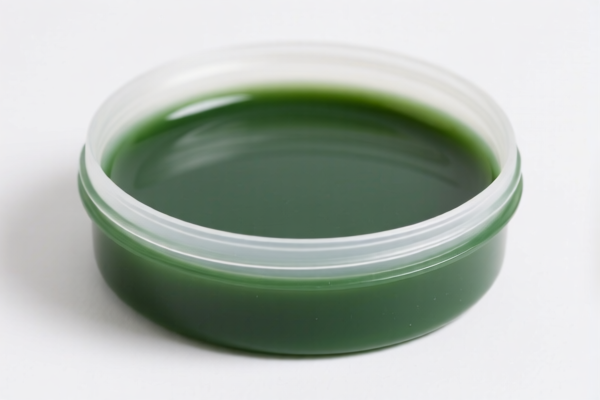
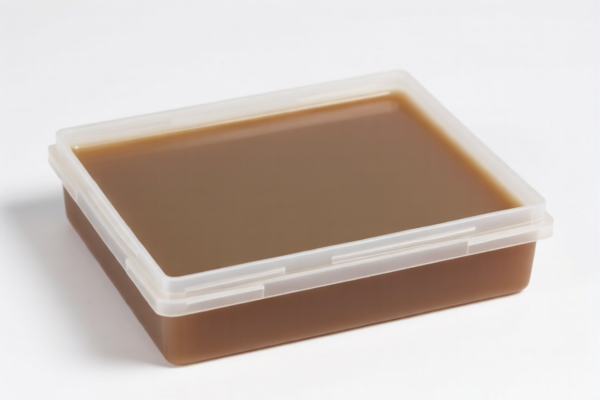
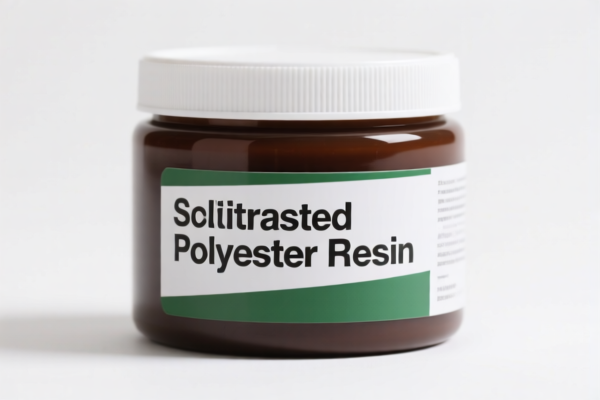
Unsaturated Polyester Resin (UPR) is a thermosetting polymer widely used in the manufacturing of fiberglass reinforced plastics (FRP), coatings, adhesives, and composite materials. The "Semi-Transparent" characteristic refers to its physical state or curing appearance, but it does not change its fundamental chemical classification.
In international trade, it is strictly classified under Chapter 39 (Plastics and Articles Thereof), specifically as Primary Forms of Polymers of Unsaturated Polyesters.
⚠️ Critical Distinction:
- If it is a liquid resin ready for use (uncured) → Classified under 3907.
- If it is pre-impregnated with fibers (e.g., fiberglass mats soaked in resin) → Classified under 3907.90 or potentially Chapter 54/70 depending on the primary material.
- If it is cured/solidified into a final part (e.g., a boat hull, car bumper) → Classified as a Plastic Article (e.g., 3926.90).🔍 Key Clarification for This Entry:
We assume the input "Unsaturated Polyester Resin" refers to the raw material (liquid resin) for trade purposes. The "Semi-Transparent" descriptor is a quality attribute, not a classification trigger.
📦 II. HS Code Classification Details (2026 Latest Tariff Authority)
| HS Code | Product Description | Application | Form | Curing State |
|---|---|---|---|---|
3907.91.00.00 |
Other polyesters in primary forms | Raw resin for FRP, coatings, casting | Liquid/Semi-solid | Uncured |
3907.99.00.00 |
Other polyesters in primary forms (Miscellaneous) | Specialty resins, low viscosity, high reactivity | Liquid | Uncured |
3926.90.97.00 |
Other articles of plastics | Final molded parts, castings, laminates | Solid | Cured |
3506.91.00.00 |
Prepared adhesives | If mixed with hardeners/accelerators for immediate use | Paste/Liquid | Curing Ready |
🔍 Important Note:
- Raw Resin: Must be classified under 3907. The transparency (semi-transparent vs. opaque) is irrelevant for HS coding.
- Prepared Adhesives: If the resin is already mixed with a hardener or catalyst specifically for bonding, it may shift to 3506. However, standard UPR for FRP is 3907.
- Final Product: Do not confuse raw resin with the final plastic product.
💰 III. 2026 Latest Tariff Rate Breakdown (Including Additional Taxes)
✅ Applicable Country: United States (US)
✅ Origin: China (CN)
✅ Effective Date: November 10, 2025 (including subsequent imports)
🎯 1. 3907.91.00.00 / 3907.99.00.00 —— Unsaturated Polyester Resin (Primary Form)
| Item | Content |
|---|---|
| Base Rate | 0% (ad valorem) |
| USITC Additional Tax | +25% (under USITC Footnote 9903.88.01, Section 301) |
| IEEPA Additional Tax | +10% (for Chinese/HK origin, effective Nov 10, 2025) |
| Total Tariff Rate | 35% |
| Tax Calculation | CIF Value × 35% |
| De Minimis Eligibility | ❌ Not Eligible (deny_de_minimis) |
| Legal Basis Path | IEEPA:9903.01.25 → IEEPA:9903.01.24 → USITC:3907.91.00.00 → FOOTNOTE:9903.88.01 |
📌 Explanation:
- The 25% USITC tax is part of the Section 301 trade remedy against China.
- The 10% IEEPA tax is an additional surcharge for Chinese-origin plastics/resins.
- Total 35% is high for a chemical raw material, significantly impacting profit margins.
- No De Minimis: Small shipments cannot bypass this tax.📌 Warning:
- Some specific types of UPR (e.g., those with certain flame retardants) may have different footnotes. Always verify the specific formulation against the USITC lookup tool.
🛠️ IV. Clearance Practical Advice (Battle-Tested Pitfall Guide)
✅ 1. Required Documentation Checklist (Non-Negotiable)
| Document | Must Provide | Description |
|---|---|---|
| ✅ Safety Data Sheet (SDS) | ✔️ | Must comply with OSHA HazCom Standard (Section 2: Hazard Identification, Section 14: Transport Info) |
| ✅ Certificate of Analysis (COA) | ✔️ | Confirms viscosity, acid value, active content, and transparency level |
| ✅ Product Specification Sheet | ✔️ | Details: Viscosity (cPs), Solid Content (%), Color, Density, Curing Time |
| ✅ Commercial Invoice | ✔️ | Clearly state: "Unsaturated Polyester Resin, Uncured, Liquid" – Do NOT write "Glue" or "Adhesive" unless it is 3506 |
| ✅ Bill of Lading (B/L) | ✔️ | Ensure proper packaging description (e.g., "Drums," "Intermediate Bulk Container") |
| ✅ DOT Hazard Class Certificate | ✔️ | If flammable, must declare Hazmat for air/freight transport |
✅ 2. Declaration Tips (Key Mantra)
🔥 "Liquid Resin, 3907, SDS Ready, Hazmat Declared!"
| Scenario | Correct Declaration | Incorrect Practice |
|---|---|---|
| Raw UPR Liquid | 3907.91.00.00 / 3907.99.00.00 |
Misdeclare as "Adhesive" (3506) to avoid tariffs → Penalty! |
| Resin + Hardener Mix | 3506.91.00.00 (if for bonding) |
Declare as 3907 → Misclassification Risk |
| Final Plastic Part | 3926.90.97.00 |
Declare raw resin rate for finished goods → Overpayment/Underpayment |
| Semi-Transparent Liquid | 3907.91.00.00 |
Use "Semi-Transparent" in description to confuse customs → Audit Trigger |
✅ 3. Special Situations
| Situation | Handling Advice |
|---|---|
| Flammability | UPR is often flammable. Ensure Hazmat Declaration is filed correctly for air freight. If misdeclared, shipment will be rejected. |
| Viscosity Variance | High viscosity may affect liquid classification. Ensure COA matches declared viscosity range for 3907. |
| Packaging | Drums vs. IBCs: Tariff is the same, but transport class differs. IBCs may require different hazardous material labels. |
| Origin Fraud | Do not label Chinese resin as "Made in Vietnam" to avoid 35% tax. CBP conducts extensive audits on chemical origins. |
🌍 V. Global Market Clearance Comparison (2026 Latest)
| Country/Region | Recommended HS Code | Tariff | Certification | Note |
|---|---|---|---|---|
| 🇺🇸 USA | 3907.91.00.00 |
35% (China Origin) | OSHA SDS, DOT Hazmat | High tax burden |
| 🇨🇳 China | 3907.91.00.00 |
0% | N/A | Domestic trade |
| 🇪🇺 EU | 3907.99.00.00 |
0% | REACH, CLP | REACH registration required for chemicals |
| 🇦🇺 Australia | 3907.91.00.00 |
5% | AICIS | Chemical inventory check |
| 🇮🇳 India | 3907.91.00.00 |
10% | BIS (if applicable) | Basic Customs Duty + IGST |
📌 Conclusion:
- USA is the most expensive market due to 35% combined tariffs.
- EU requires REACH registration for the resin manufacturer/supplier. Non-compliance leads to seizure.
- India imposes a 10% basic duty, but no additional "war taxes."
📌 VI. Common Errors & Pitfall Guide (Blood & Tears Lessons)
❌ Error 1: Declaring UPR as "Adhesive" (3506) to reduce tariffs
👉 Consequence: CBP determines it is a raw polymer, not a prepared adhesive. Back taxes + penalties!
❌ Error 2: Ignoring Hazmat declaration for air freight
👉 Consequence: Shipment rejected by airline. Demurrage fees + return shipping!
❌ Error 3: Mislabeling origin as "Vietnam" without substantial transformation
👉 Consequence: CBP audit reveals Chinese origin. 10-year ban from expedited clearance!
❌ Error 4: Not providing SDS for liquid chemicals
👉 Consequence: Custom holds shipment for safety review. Delay of 2-4 weeks!
✅ Correct Practice:
"Unsaturated Polyester Resin, Uncured, Liquid, Semi-Transparent, Viscosity 400 cPs, Acid Value 35 mg KOH/g, Model XYZ, REACH Compliant, Hazmat Class 3"
🎯 VII. Conclusion: Precision Declares, Profits Protect!
🎯 Remember the Mantra:
🔹 "Raw Resin is 3907, Adhesive is 3506, Hazmat is Mandatory!"
🔹 "35% US Tax is Real, Don't Hide Origin, SDS is Key!"
📌 Pro Tip:
If your UPR is used for marine or automotive applications, ensure your supplier provides REACH compliance (for EU) and DOT certification (for US air/sea).
Consider Duty Drawback if the resin is used to manufacture products that are later exported from the US.
📣 Immediate Action:
📞 Contact your freight forwarder to confirm Hazmat classification
📄 Ensure your SDS is updated and OSHA-compliant
🚀 Apply for CBP Binding Ruling if unsure about "Adhesive vs. Resin" status
🌟 Smooth clearance starts with accurate classification!
✨ Professional clearance, from precise coding onwards!
💼 Every percentage point of duty counts!
Customer Reviews
About HS Code Classification
The Harmonized System (HS) is an internationally standardized nomenclature developed by the World Customs Organization (WCO) to classify traded products. Over 200 countries use the HS system as the basis for customs tariffs, trade statistics, and import/export regulations.
Each HS code follows a hierarchical structure:
- Chapter (2 digits) — Broad category of goods (e.g., Chapter 84: Machinery and Mechanical Appliances)
- Heading (4 digits) — More specific grouping within the chapter
- Subheading (6 digits) — Internationally standardized breakdown, used by all WCO member countries
- National subdivisions (8-10 digits) — Country-specific extensions for further classification, such as US HTSUS 10-digit codes
Correct HS code classification is essential for smooth customs clearance, accurate duty payment, and compliance with trade regulations. Misclassification can lead to customs delays, overpayment of duties, or penalties.
When importing from CN to US, the applicable tariff rates may include:
- Most-Favored-Nation (MFN) rate — The standard duty rate applied to WTO members
- General rate — Applied to countries without trade agreements
- Trade remedy duties — Additional tariffs such as Section 301 (anti-dumping), Section 232 (national security), or countervailing duties
The information provided on this page is for reference purposes only. For official classification, please consult with your local customs authority or a licensed customs broker.