Unsaturated Polyester Resin (Translucent)
CN → USProduct Images

AI Analysis
🏗️ Unsaturated Polyester Resin (Translucent)
🌐 HS Code Reference & Customs Clearance Guide | 2026 Latest Tariff Analysis | Professional Compliance Strategy
📌 I. Product Definition & Classification: What Exactly is "Translucent Unsaturated Polyester Resin"?
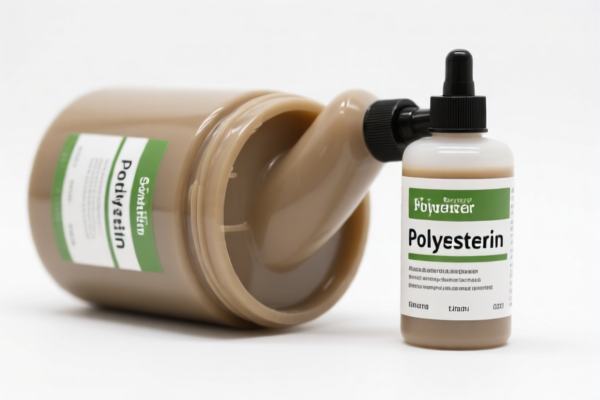
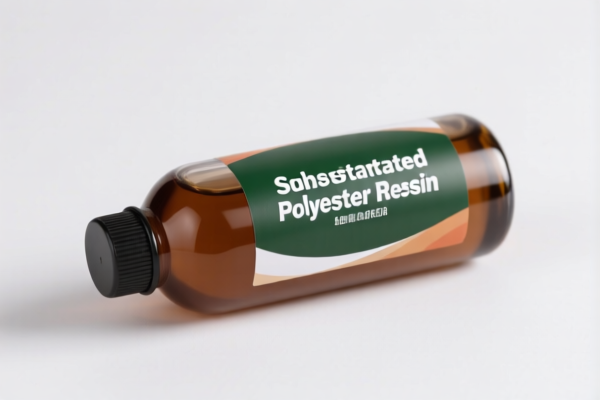
Unsaturated Polyester Resin (UPR) is a thermosetting polymer widely used in fiberglass-reinforced plastics (FRP), corrosion-resistant equipment, flooring, and artificial stone. The key descriptor "Translucent" (or "Transparent") indicates that the resin has low viscosity and minimal opacity, typically used for applications requiring light transmission, such as crystal art, decorative stones, or specialized lighting fixtures, rather than standard opaque marine or automotive bodies.
Key Distinction in Trade: * Raw Resin (Liquid): Must be declared strictly as "Unsaturated Polyester Resin." It is a chemical raw material. * Pre-mixed Compounds: If filled with catalysts, thickeners, or pigments to the point where it is ready for immediate use (e.g., "putty" or "gel coat kits"), it might be reclassified under Chapter 39 plastics in primary forms or other chemical preparations. However, for standard bulk liquid resin sold to formulators, it remains Chapter 39.
⚠️ Critical Note:
- If the resin is packaged in containers ≤ 1kg or labeled as "for laboratory use," it may face stricter chemical safety regulations (e.g., EPA TSCA in the US, REACH in EU).
- "Translucent" is a physical property, not a separate HS code. It does not change the HS code but is critical for customs valuation and safety classification (flammability, flash point).
📦 II. HS Code Classification Details (2026 Latest Tariff Authority)
| HS Code | Product Description | Application Scenario | State/Form |
|---|---|---|---|
3907.99.00.00 |
Other unsaturated polyester resins, in primary forms | Bulk liquid resin for FRP, flooring, artificial marble | ✅ Liquid, Raw |
3907.99.90.80 |
Other polymers of epoxides, polyesters, etc. (Not elsewhere specified) | Specialty translucent resins for optical or decorative use (if not explicitly "unsaturated polyester") | ✅ Specialized |
3824.99.99.99 |
Other prepared binders for foundry mold or core preparation | If mixed with sand or catalysts for specific casting uses | ⚠️ Mixed |
3506.91.90.90 |
Other adhesives and glues (if marketed as adhesive) | If sold specifically as "glue" for bonding plastics | ❌ Misclassification Risk |
🔍 Focus:
The most accurate and common classification for bulk Unsaturated Polyester Resin (Translucent) is3907.99.00.00.
- "Unsaturated Polyester" is explicitly covered under Heading 3907.
- "Primary Forms" (liquid, powder, granules) fits subheading 3907.99.
- "Translucent" is a quality attribute within this code, not a separate category.
💰 III. 2026 Latest Tariff Rate Details (Including Surcharges & Policy Add-ons)
✅ Applicable Country: United States (US)
✅ Origin: China (CN)
✅ Effective Date: From November 10, 2025 (including subsequent imports)
🎯 1. 3907.99.00.00 —— Unsaturated Polyester Resin (Raw)
| Item | Content |
|---|---|
| Base Tariff Rate | 5.3% (ad valorem) |
| USITC Surcharge (Section 301) | +25% (from USITC Footnote 9903.88.01) |
| IEEPA Surcharge | +10% (针对中国/香港产品,自2025年11月10日起) |
| Total Tariff Rate | 40.3% |
| Tax Calculation | CIF Value × 40.3% |
| De Minimis Eligibility | ❌ No (deny_de_minimis applies to chemical products from China) |
| Legal Basis Path | IEEPA:9903.01.25 → IEEPA:9903.01.24 → USITC:3907.99.00.00 → FOOTNOTE:9903.88.01 |
📌 Explanation:
- Base Rate (5.3%): Standard MFN rate for unsaturated polyester resins.
- Section 301 (25%): Applies to "Plastics and articles thereof" from China.
- IEEPA (10%): New surcharge effective Nov 10, 2025, for critical chemicals/materials from China.
- Total: 40.3% is a high tariff, making cost control essential.
🎯 2. Alternative: 3907.99.90.80 (Specialty Translucent Resins)
| Item | Content |
|---|---|
| Base Tariff Rate | 5.7% |
| USITC Surcharge (Section 301) | +25% |
| IEEPA Surcharge | +10% |
| Total Tariff Rate | 40.7% |
| Tax Calculation | CIF Value × 40.7% |
| De Minimis Eligibility | ❌ No |
📌 Note:
- If customs officials doubt the "unsaturated polyester" classification and place it in the "Other Polymers" bucket, the rate is slightly higher.
- Documentation is key to prove it is indeed "Unsaturated Polyester."
🛠️ IV. Customs Clearance Practical Advice (Real-World Pitfall Avoidance)
✅ 1. Documentation Checklist (Non-negotiable)
| Document | Required | Description |
|---|---|---|
| ✅ Product Specification Sheet | ✔️ | Must state: "Unsaturated Polyester Resin," Viscosity (cs), Acid Value, Gel Time, Flash Point |
| ✅ MSDS/SDS (Safety Data Sheet) | ✔️ | Crucial for liquids. Must match HS code chemical class. Flash point determines shipping class (Flammable vs. Non-flammable). |
| ✅ Commercial Invoice | ✔️ | Clearly describe: "Translucent Unsaturated Polyester Resin, Liquid, UN 1866 (if flammable)" |
| ✅ Certificate of Origin | ✔️ | If from Vietnam/Malaysia, may qualify for exemption (see below) |
| ✅ Packing List | ✔️ | Show net/gross weight, container type (drums, IBC totes) |
| ✅ FCC/EPA Certifications | ✔️ | If for specific consumer applications, may require additional environmental compliance |
✅ 2. Declaration Tips (Key Mantra)
🔥 "Liquid Resin, UN Code First, Flash Point Clear, HS 3907 Best!"
| Scenario | Correct Declaration | Wrong Practice |
|---|---|---|
| Standard Bulk Liquid UPR | 3907.99.00.00 + "Unsaturated Polyester Resin" |
Vague terms like "Glue" or "Plastic Liquid" |
| Translucent/Special Grade | 3907.99.00.00 + "Translucent Grade, Low Viscosity" |
Trying to hide "translucent" to avoid scrutiny |
| Pre-mixed Gel Coat | Re-evaluate HS (May be 3907.99 or 3208/3214 if pigment-rich) |
Declaring as raw resin if it’s a finished compound |
| Small Sample (<1kg) | 3907.99.00.00 |
De Minimis claim → Reject & Penalty |
✅ 3. Special Handling for "Translucent" Resin
| Scenario | Handling Advice |
|---|---|
| High Viscosity vs. Low Viscosity | Translucent resin is often low viscosity. Ensure MSDS reflects this for shipping classification (DOT/IMO). |
| Flash Point < 60°C | Classified as Flammable Liquid (Class 3). Requires UN 1263 or UN 1866 packaging. Extra safety docs needed for US customs (CBP) and DHS. |
| Artificial Stone Use | If marketed for "artificial marble," still 3907.99.00.00. Do not declare as "stone" (25 or 68). |
🌍 V. Global Market Clearance Comparison (2026 Latest)
| Country/Region | Recommended HS Code | Tariff (China Origin) | Certification Requirements | Notes |
|---|---|---|---|---|
| 🇺🇸 USA | 3907.99.00.00 |
40.3% | TSCA Inventory Certification | High tariff; consider Section 301 exclusions if available |
| 🇨🇳 China | 3907.99.00.00 |
5% | No special import license | Low duty; common raw material |
| 🇪🇺 EU | 3907.99.00 |
6.5% | REACH Registration | Must have REACH ECHA registration for EU import |
| 🇦🇺 Australia | 3907.99.00.00 |
5% | NICNAS/AIIC | Check for hazardous substance labels |
| 🇯🇵 Japan | 3907.99.00.00 |
5.5% | PRTR Law Notification | Declare under 46 Chemical Substances Law if applicable |
📌 Conclusion:
- USA is the most expensive market due to Section 301 + IEEPA surcharges.
- EU requires REACH compliance, which is a non-tariff barrier.
- China, Australia, Japan have moderate, stable tariffs.
📌 VI. Common Errors & Pitfall Guide (Blood & Tears Lessons)
❌ Error 1: Declaring as "Glue" (3506 or 3509)
👉 Consequence: HS code mismatch → 40%+ tariff + Penalty. UPR is a polymer, not just an adhesive.
❌ Error 2: Ignoring "Translucent" Viscosity in MSDS
👉 Consequence: Shipping classification error → Dangerous Goods (DG) rejection by carrier or CBP.
❌ Error 3: Claiming De Minimis (<$800) for Chemicals
👉 Consequence: Immediate rejection. Chemicals from China are excluded from de minimis relief under 19 USC 1321(b)(2)(C).
❌ Error 4: Misidentifying "Unsaturated" vs "Saturated" Polyester
👉 Consequence: Saturated polyester (e.g., for bottles) is 3907.40. Wrong code → Audit Risk.
✅ Correct Practice:
"Unsaturated Polyester Resin, Translucent, Liquid, UN 1866, Flash Point 65°C, HS 3907.99.00.00, for FRP Manufacturing"
🎯 VII. Conclusion: Professional Declaration, Time-Saving, Cost-Effective!
🎯 Remember the Mantra:
🔹 "3907 for Resin, Not 3506 for Glue"
🔹 "SDS Matches HS, Flash Point Defines Shipping"
🔹 "China to US? 40.3% is the Price, Plan Ahead!"
📌 Pro Tip:
If your resin is originating from Vietnam, Malaysia, or Thailand, you may qualify for IEEPA Exemption or FTA Zero Tariff (e.g., under CPTPP or ASEAN-US trade discussions, though currently limited).
Recommendation: Apply for ISF (Importer Security Filing) 24 hours before loading and CBP Advance Ruling to lock in the HS code classification.
📣 Immediate Action:
📞 Contact your freight forwarder to confirm DG (Dangerous Goods) packaging requirements.
🚀 Provide a certified MSDS with your invoice to avoid customs delays.
💼 Your chemical compliance is your competitive advantage!
✨ Professional Clearance Starts with Accurate Classification!
💼 Every percent of tariff saved is profit earned!
Customer Reviews
About HS Code Classification
The Harmonized System (HS) is an internationally standardized nomenclature developed by the World Customs Organization (WCO) to classify traded products. Over 200 countries use the HS system as the basis for customs tariffs, trade statistics, and import/export regulations.
Each HS code follows a hierarchical structure:
- Chapter (2 digits) — Broad category of goods (e.g., Chapter 84: Machinery and Mechanical Appliances)
- Heading (4 digits) — More specific grouping within the chapter
- Subheading (6 digits) — Internationally standardized breakdown, used by all WCO member countries
- National subdivisions (8-10 digits) — Country-specific extensions for further classification, such as US HTSUS 10-digit codes
Correct HS code classification is essential for smooth customs clearance, accurate duty payment, and compliance with trade regulations. Misclassification can lead to customs delays, overpayment of duties, or penalties.
When importing from CN to US, the applicable tariff rates may include:
- Most-Favored-Nation (MFN) rate — The standard duty rate applied to WTO members
- General rate — Applied to countries without trade agreements
- Trade remedy duties — Additional tariffs such as Section 301 (anti-dumping), Section 232 (national security), or countervailing duties
The information provided on this page is for reference purposes only. For official classification, please consult with your local customs authority or a licensed customs broker.