Unsaturated Polyester Resin Semi Transparent
CN → USProduct Images
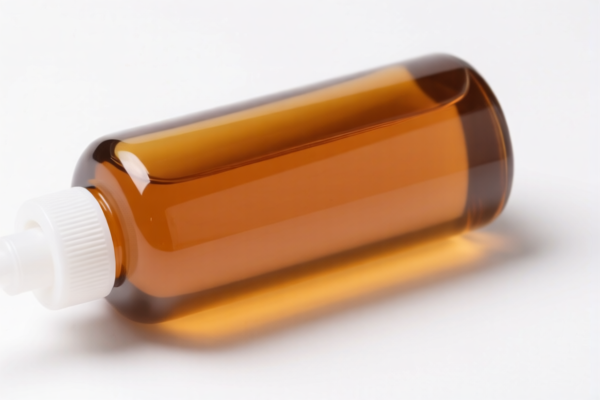
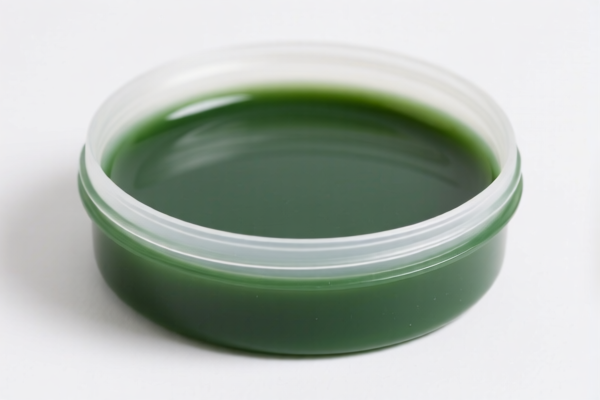
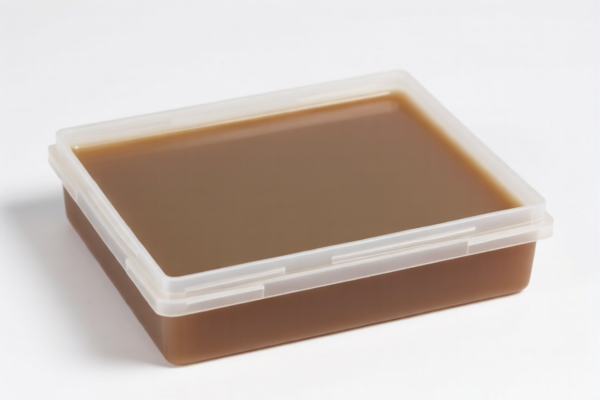
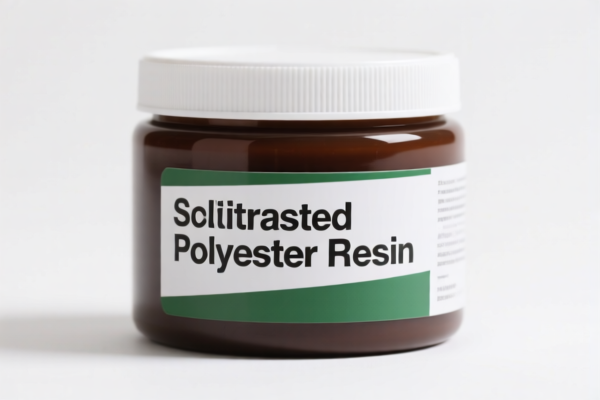
AI Analysis
🧪 Unsatuerd Polyester Resin (Semi-Transparent)
🌐 HS Code Reference & Customs Clearance Guide | 2026 Latest Tariff Analysis | Professional Clearance Strategy
📌 I. Product Definition & Classification: Do You Really Understand "UPR"?
Unsaturated Polyester Resin (UPR) is a versatile thermosetting resin widely used in the manufacturing of fiberglass-reinforced plastics (FRP), gel coats, marine vessels, automotive parts, and sanitary ware. The "semi-transparent" descriptor refers to the optical property of the raw resin before curing or in thin films, often indicating a high-purity, low-viscosity grade suitable for aesthetic applications like artificial stone countertops or decorative coatings.
In international trade, UPR is primarily classified based on its chemical structure and lack of further modification into specific plastic families. It is not typically classified by its visual transparency, but rather by its polymer type.
⚠️ Key Distinction Point:
- If it is a raw unsaturated polyester resin (liquid or solid, uncured) → Classified under Chapter 39 (Plastics).
- If it is a pre-mixed compound containing significant amounts of fillers, pigments, or catalysts that change its fundamental character, it might fall under Chapter 32 (Tanning or Dyeing Extracts; Tannins and Their Derivatives; Dyes, Pigments and Other Coloring Matters) or Chapter 38 (Miscellaneous Chemical Products), but pure UPR is strictly 3907.
📦 II. HS Code Classification Details (2026 Latest Tariff Authority Comparison)
| HS Code | Product Description | Applicable Scenario | Is it Pure Resin? |
|---|---|---|---|
3907.99.00.00 |
Other unsaturated polyesters, in primary forms | Standard Raw UPR, liquid or solid, including semi-transparent grades for FRP, gel coats, or artificial stone | ✅ Yes (Primary Form) |
3907.40.00.00 |
Unsaturated polyesters, in primary forms | Note: This code is often obsolete or merged in many 8-digit systems into 3907.99. Check local 8-digit tariff. In some jurisdictions, specific viscosities may have separate codes, but 3907.99 is the global standard for "Other". |
✅ Yes |
3208.90.00.00 |
Paints and varnishes based on synthetic polymers | If the resin is pre-mixed with solvents, pigments, or curing agents to form a ready-to-use coating/gel coat | ❌ No (It's a Coating) |
3824.99.00.00 |
Prepared binders for foundry molds and cores | If specifically formulated as a binder for sand casting, not for general FRP | ❌ No (Specific Use) |
3902.10.00.00 |
Polymers of ethylene | Wrong Classification. Do not confuse UPR with Polyethylene (PE). | ❌ No |
🔍 Key Reminder:
- "Semi-transparent" is a physical property, not a chemical definition. Customs officials look at the chemical composition (Unsaturated Polyester).
- The correct heading is 3907 (Oligomers, ethers, phenolic resins, and other polyethers; epoxy resins, polycarbonates, alkyd resins, polyallyl esters and other polyesters, in primary forms).
- Since UPR is a "Polyester" and not "Cellulose ethers" or "Acrylics," it falls under the residual category 3907.99.
💰 III. 2026 Latest Tariff Rate Details (Including Surtaxes, Policy Surcharges)
✅ Applicable Country: United States (US)
✅ Origin: China (CN)
✅ Effective Time: From November 10, 2025 (Including subsequent imports)
🎯 1. 3907.99.00.00 —— Unsaturated Polyesters, in Primary Forms
| Item | Content |
|---|---|
| Base Tax Rate | 5.7% (ad valorem) |
| USITC Surtax | +25% (from USITC Footnote 9903.88.01, Section 301) |
| IEEPA Surcharge | +10% (Against China/HK products, effective Nov 10, 2025) |
| Total Tax Rate | 40.7% |
| Tax Calculation | CIF Value × 40.7% |
| Can De Minimis Be Applied? | ❌ No (deny_de_minimis) |
| Legal Basis Path | IEEPA:9903.01.25 → IEEPA:9903.01.24 → USITC:3907.99.00.00 → FOOTNOTE:9903.88.01 |
📌 Explanation:
- The 25% USITC surcharge is part of the Section 301 tariffs targeting Chinese imports of plastics and resins.
- The 10% IEEPA surcharge is an additional penalty applied to Chinese goods.
- Total 40.7% is a very high tax burden. This significantly impacts the profitability of importing raw UPR from China to the US.
🎯 2. 3907.99.00.00 —— If Origin is NOT China (e.g., Vietnam, India)
| Item | Content |
|---|---|
| Base Tax Rate | 5.7% |
| USITC Surtax | +25% (Section 301 does NOT apply to non-China origin if rules of origin are strictly met) |
| IEEPA Surcharge | 0% |
| Total Tax Rate | 5.7% |
| Legal Basis | Standard MFN Rate |
📌 Note:
- If you can prove the Substantial Transformation occurred in a third country (e.g., Vietnam), you may avoid the 35% extra surcharges.
- Warning: The US Customs and Border Protection (CBP) aggressively audits "transshipment" schemes. Ensure your supply chain is legitimate.
🛠️ IV. Customs Clearance Practical Advice (Practical Pitfall Avoidance Guide)
✅ 1. Required Documents Checklist (Missing one means trouble)
| Document | Must Provide | Explanation |
|---|---|---|
| ✅ Product Specification Sheet | ✔️ | Must state: "Unsaturated Polyester Resin," Solid Content %, Viscosity, Acid Value. |
| ✅ Formula/Composition | ✔️ | Detailed list of chemicals (Styrene, Glycols, etc.) to prove it is not a hazardous waste or prohibited substance. |
| ✅ Safety Data Sheet (SDS) | ✔️ | Critical. UPR often contains Styrene, which is flammable and hazardous. Must comply with OSHA/Hazmat regulations. |
| ✅ Non-Dangerous Goods Transportation Appraisal | ✔️ | For sea/air freight, a report from recognized agencies (e.g., DGM, CIQ) stating it is UN 3082 (Flammable liquid, n.o.s.) or UN 1866 (if solid). |
| ✅ Commercial Invoice | ✔️ | Clearly describe as "UNSATURATED POLYESTER RESIN, LIQUID/SOLID, UN 3082." |
| ✅ Certificate of Origin | ✔️ | To claim preferential rates if originating from Vietnam/India/ASEAN. |
✅ 2. Declaration Tips (Key Mnemonic)
🔥 "Chemical Name First, Hazmat Label Clear, Origin Matters, Tax Drops Half!"
| Situation | Correct Declaration | Wrong Practice |
|---|---|---|
| Raw UPR (Liquid) | 3907.99.00.00 + "Unsaturated Polyester Resin" |
Mislabel as "Glue" or "Adhesive" → 70%+ Penalty! |
| Raw UPR (Solid) | 3907.99.00.00 + "Unsaturated Polyester Resin" |
Same as above |
| Pre-mixed Gel Coat | 3208.90.00.00 (if ready-to-use) |
Declaring as raw resin → Customs Rejection |
| Origin: China | Accept 40.7% Tax OR Plan Supply Chain Shift | Try to hide origin → Seizure & Fraud Charges |
✅ 3. Special Handling Cases
| Situation | Handling Advice |
|---|---|
| Hazmat Classification | UPR with Styrene is Class 3 Flammable Liquid (UN 3082). Must use DG (Dangerous Goods) containers. Standard freight forwarders may refuse it. |
| Transshipment Risk | If shipped from China but labeled "Made in Vietnam" without transformation → CBP Seizure. Requires Bill of Lading, Factory Audit, and Process Documentation. |
| Small Sample Imports | Even small quantities of UPR are subject to Hazmat rules. No "De Minimis" exemption for hazardous chemicals in many cases. |
🌍 V. Global Major Market Clearance Comparison (2026 Latest)
| Country/Region | Recommended HS Code | Tariff (China Origin) | Certification Requirement | Notes |
|---|---|---|---|---|
| 🇺🇸 United States | 3907.99.00.00 |
40.7% (5.7% Base + 25% + 10%) | DOT Hazmat (UN 3082) | High tax barrier. |
| 🇨🇳 China | 3907.99.00.00 |
0-5% (Export Rebate applies) | N/A | Major exporter. |
| 🇪🇺 European Union | 3907.99.00.00 |
6.5% | REACH Registration (Styrene) | Strict chemical regulation. |
| 🇦🇺 Australia | 3907.99.00.00 |
5.0% | AICIS Registration | Moderate barrier. |
| 🇮🇳 India | 3907.99.00.00 |
7.5% - 10% | BIS Certification | Anti-dumping duties may apply. |
📌 Conclusion:
- USA is the most expensive market due to the 35% surcharges.
- EU and Australia are moderately priced but have strict chemical compliance (REACH/AICIS) costs.
- China Origin Risk: High. Consider sourcing from Vietnam, Malaysia, or Thailand to reduce US duties, but ensure legitimate origin.
📌 VI. Common Errors & Pitfall Guide (Lessons from Blood & Tears)
❌ Error 1: Declaring UPR as "Adhesive" or "Glue"
👉 Consequence: Wrong HS Code (3506), leading to 70%+ tax and customs fines for misdeclaration.
❌ Error 2: Ignoring Hazmat (DG) Classification
👉 Consequence: Ship rejected by carrier, seizure by customs, and fines for unsafe shipping. UPR is Flammable.
❌ Error 3: Claiming "Non-China Origin" without Proof
👉 Consequence: CBP audit reveals Chinese raw materials shipped to Vietnam for simple blending → Penalty + Back Taxes.
❌ Error 4: Using "Semi-Transparent" as the Primary Name
👉 Consequence: Customs doesn't know the chemical nature. Request for Additional Information (AI), causing delays.
✅ Correct Declaration Example:
"UNSATURATED POLYESTER RESIN, LIQUID, SEMI-TRANSPARENT, GRADE XYZ, STYRENE-BASED, UN 3082 CLASS 3 FLAMMABLE LIQUID, NOT FOR CONSUMER USE, MANUFACTURE OF FRP SHEETS"
🎯 VII. Conclusion: Professional Declaration, Cost Saving, Efficiency!
🎯 Remember the Mnemonic:
🔹 "Chemical Name True, Hazmat Label Clear, Origin Check Twice, Tax Saved in Time!"
🔹 "HS 3907 is King, 40% Tax is Sting, Avoid China Route, Or Budget Will Ring!"
📌 Pro Tip:
If your UPR is destined for the US, and you cannot source from non-China origins, consider duty drawback programs if you re-export the final FRP product. Alternatively, consult a customs broker about HTS 3907.99.0000 exclusions if any specific policy changes occur in 2026.
📣 Immediate Action:
📞 Contact a Hazmat-trained freight forwarder + Provide SDS + Apply for Pre-Ruling if volume is high.
🚀 Let your resin flow smoothly, avoid seizures, and protect margins!
✨ Professional Customs Clearance Starts with Accurate Classification!
💼 Your cost per liter matters. Calculate it precisely!
Customer Reviews
About HS Code Classification
The Harmonized System (HS) is an internationally standardized nomenclature developed by the World Customs Organization (WCO) to classify traded products. Over 200 countries use the HS system as the basis for customs tariffs, trade statistics, and import/export regulations.
Each HS code follows a hierarchical structure:
- Chapter (2 digits) — Broad category of goods (e.g., Chapter 84: Machinery and Mechanical Appliances)
- Heading (4 digits) — More specific grouping within the chapter
- Subheading (6 digits) — Internationally standardized breakdown, used by all WCO member countries
- National subdivisions (8-10 digits) — Country-specific extensions for further classification, such as US HTSUS 10-digit codes
Correct HS code classification is essential for smooth customs clearance, accurate duty payment, and compliance with trade regulations. Misclassification can lead to customs delays, overpayment of duties, or penalties.
When importing from CN to US, the applicable tariff rates may include:
- Most-Favored-Nation (MFN) rate — The standard duty rate applied to WTO members
- General rate — Applied to countries without trade agreements
- Trade remedy duties — Additional tariffs such as Section 301 (anti-dumping), Section 232 (national security), or countervailing duties
The information provided on this page is for reference purposes only. For official classification, please consult with your local customs authority or a licensed customs broker.