Unsaturated Polyester Soundproof Board
CN → US| HS Code | Tariff Rate | Origin | Destination | Doc |
|---|---|---|---|---|
| 3921905050 | 39.8% | CN | US | Official Doc |
| 3907915000 | 41.5% | CN | US | Official Doc |
| 3921190090 | 41.5% | CN | US | Official Doc |
| 3920632000 | 40.8% | CN | US | Official Doc |
| 3920631000 | 39.2% | CN | US | Official Doc |
Product Images
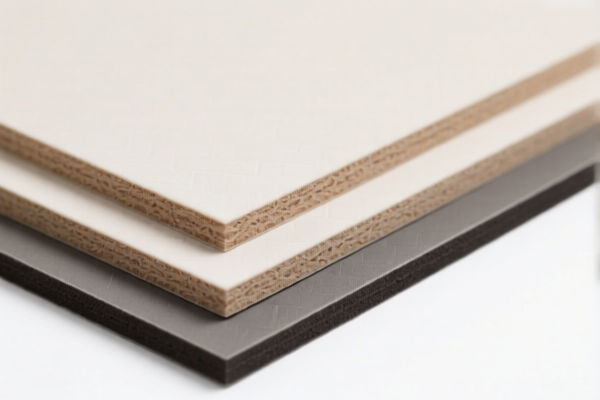
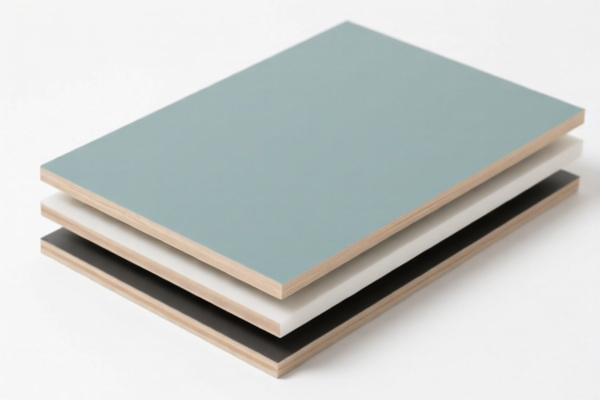
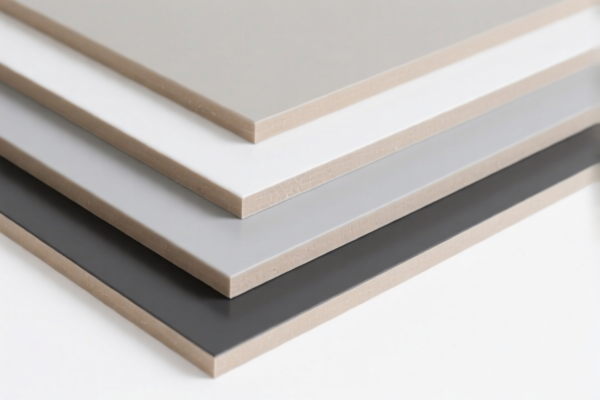
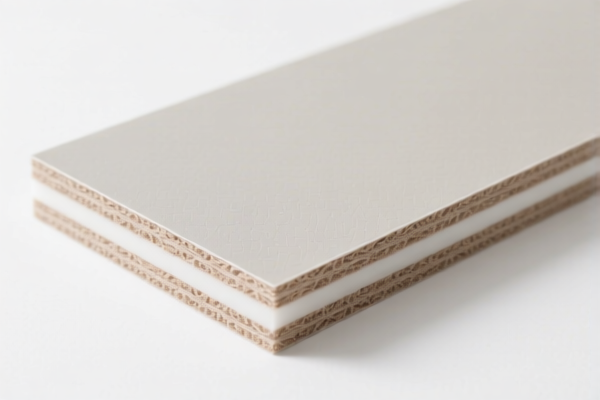
AI Analysis
🏗️ Unsaturated Polyester Soundproof Board (不饱和聚酯薄板/板材)
🌐 HS Code Classification & Customs Clearance Guide | 2026 Latest Tariff Analysis | Professional Entry Strategy
📌 I. Product Definition & Classification: What is "Unsaturated Polyester Board"?
Unsaturated Polyester (UP) resin boards are versatile thermoset plastic sheets widely used in construction, automotive, and industrial applications. They are known for their high strength, corrosion resistance, and acoustic insulation properties.
In international trade, UP boards are classified based on their physical form (thin sheet vs. thick board) and specific material composition. Misclassification often leads to significant tariff discrepancies because US Customs and Border Protection (CBP) distinguishes between general plastic sheets (Chapter 3901-3907) and other plastic plates/sheets (Chapter 3920-3921).
⚠️ Key Distinction Point:
- If the product is a thin sheet/foil/film (typically <6mm, flexible or semi-rigid), it may fall under 3920 (Other plates, sheets, film, foil, and strip).
- If the product is a general board/slab (rigid, structural), it may fall under 3921 (Other plates, sheets, film, foil, and strip).
- Pre-mixed Putties/Compounds vs. Solid Boards: Pure solid resin boards are classified differently from putties (3907).
📦 II. HS Code Classification Details (2026 Latest Tariff Reference)
Based on the provided data, here are the five valid HS Codes for "Unsaturated Polyester Thin Boards/Sheets" and their corresponding tax structures.
| HS Code | Product Description (Summary) | Physical Form | Material Type | Total Tax Rate (China Origin) |
|---|---|---|---|---|
| 3921.90.50.50 | Unsaturated Polyester Thin Board | Thin Board (薄板) | Unsaturated Polyester | 39.8% |
| 3907.91.50.00 | Unsaturated Polyester Thin Board | Thin Board (薄板) | Unsaturated Polyester | 41.5% |
| 3921.19.00.90 | Unsaturated Polyester Board | Board (板) | Polyester Plastic (聚酯类塑料) | 41.5% |
| 3920.63.20.00 | Unsaturated Polyester Thin Board | Sheet/Film/Foil (片/膜/箔) | Unsaturated Polyester | 40.8% |
| 3920.63.10.00 | Unsaturated Polyester Thin Board | Sheet/Film/Foil (片/膜/箔) | Unsaturated Polyester | 39.2% |
🔍 Critical Analysis:
- 3921 vs. 3920: Code 3921 generally covers "Other plates, sheets... of plastics," while 3920 covers "Other plates, sheets... of non-cellular plastics." The distinction often lies in thickness, rigidity, and specific chemical definition.
- 3907.91.50.00: This code often captures specific polyester preparations or putties that might be confused with thin boards. If your "soundproof board" is actually a semi-liquid putty applied on-site that cures, this might apply. If it's a pre-formed solid sheet, 3921 or 3920 is more likely.
- Tax Variance: The difference between the lowest tax (39.2%) and highest (41.5%) is small but significant for high-volume shipments. Proper classification is key to minimizing costs.
💰 III. 2026 Latest Tariff Rate Breakdown (Detailed Tax Clauses)
✅ Applicable Country: United States (US)
✅ Origin: China (CN)
✅ Effective Date: Post-2025 tariff regime (Section 301 & IEEPA)
All five HS Codes share a common structure of tariffs, consisting of a Base Rate, Section 301 Additional Duty, and Section 122/IEEPA Additional Duty.
🎯 1. 3921.90.50.50 – Unsaturated Polyester Thin Board (Thin Board Form)
| Item | Detail |
|---|---|
| Base Tariff | 4.8% (Most Favored Nation) |
| Section 301 Duty | +25.0% (Trade Remedy) |
| Section 122/IEEPA | +10.0% (Specific Additional Duty) |
| Total Tax Rate | 39.8% |
| De Minimis? | ❌ No (Cannot use $800 exemption) |
| Legal Path | HTSUS 3921.90.50.50 → Footnote 122/Section 301 list |
📌 Explanation:
- This code offers the second-lowest total tax rate (39.8%).
- Suitable if the product is explicitly classified as a "thin board" under the "Other plates/sheets" category (3921).
🎯 2. 3907.91.50.00 – Unsaturated Polyester Thin Board (Polyester Putty/Prep?)
| Item | Detail |
|---|---|
| Base Tariff | 6.5% |
| Section 301 Duty | +25.0% |
| Section 122/IEEPA | +10.0% |
| Total Tax Rate | 41.5% |
| De Minimis? | ❌ No |
| Legal Path | HTSUS 3907.91.50.00 → Footnote 122/Section 301 list |
📌 Warning:
- This has the highest base tariff (6.5%).
- Only use if the product is technically a polyester putty or semi-finished compound rather than a solid sheet. Misclassification here is a high-risk audit area.
🎯 3. 3921.19.00.90 – Unsaturated Polyester Board (Board Form, Polyester Plastic)
| Item | Detail |
|---|---|
| Base Tariff | 6.5% |
| Section 301 Duty | +25.0% |
| Section 122/IEEPA | +10.0% |
| Total Tax Rate | 41.5% |
| De Minimis? | ❌ No |
| Legal Path | HTSUS 3921.19.00.90 → Footnote 122/Section 301 list |
📌 Note:
- Also at 41.5%.
- "Polyester Plastic" is a broader term. If your board is rigid and thick, this might be the intended code, but it comes with a higher base duty than the "thin board" variant.
🎯 4. 3920.63.20.00 – Unsaturated Polyester Thin Board (Sheet/Film/Foil)
| Item | Detail |
|---|---|
| Base Tariff | 5.8% |
| Section 301 Duty | +25.0% |
| Section 122/IEEPA | +10.0% |
| Total Tax Rate | 40.8% |
| De Minimis? | ❌ No |
| Legal Path | HTSUS 3920.63.20.00 → Footnote 122/Section 301 list |
📌 Explanation:
- 40.8% Total.
- Use if the product is thin enough to be considered a "sheet, film, or foil" rather than a "board." This is a middle-ground option if 3921 doesn't fit perfectly.
🎯 5. 3920.63.10.00 – Unsaturated Polyester Thin Board (Sheet/Film/Foil)
| Item | Detail |
|---|---|
| Base Tariff | 4.2% |
| Section 301 Duty | +25.0% |
| Section 122/IEEPA | +10.0% |
| Total Tax Rate | 39.2% |
| De Minimis? | ❌ No |
| Legal Path | HTSUS 3920.63.10.00 → Footnote 122/Section 301 list |
📌 Optimal Choice?:
- Lowest Total Tax Rate: 39.2%.
- Lowest Base Tariff: 4.2%.
- This code is the most tariff-efficient if the product qualifies as a "sheet, film, or foil" of polyester. Ensure the thickness and physical properties align with "sheet/film" rather than "board."
🛠️ IV. Customs Clearance Practical Advice (Pitfall Avoidance Guide)
✅ 1. Documentation Checklist (Mandatory)
| Document | Required? | Description |
|---|---|---|
| Product Specification Sheet | ✔️ | Must detail: Thickness, Width, Length, Density, Resin Type (Unsaturated Polyester), Additives (Fillers, Fiberglass). |
| Physical Samples/Photos | ✔️ | Clear images showing the cross-section to prove it is a solid sheet/board, not a liquid putty. |
| Commercial Invoice | ✔️ | Must state: "Unsaturated Polyester Soundproof Board," HS Code, Country of Origin (China). |
| Packing List | ✔️ | Net/Gross weight, dimensions. |
| Certificate of Origin | ✔️ | Proof of Chinese origin (triggers Section 301 & IEEPA). |
| Non-Hazardous Material Declaration | ✔️ | UP resins can be hazardous before curing; confirm final product is stable. |
✅ 2. Classification Strategy (Key Tips)
🔥 "Thickness Defines Form, Resin Defines Material!"
| Scenario | Recommended HS Code | Reason |
|---|---|---|
| Thin, Flexible Sheet (<6mm) | 3920.63.10.00 (Lowest Tax: 39.2%) |
Qualifies as "Sheet/Film." |
| Thin, Semi-Rigid Board | 3921.90.50.50 (Tax: 39.8%) |
Qualifies as "Thin Board" under 3921. |
| Thick, Rigid Structural Board | 3921.19.00.90 (Tax: 41.5%) |
Qualifies as general "Board." |
| Putty/Compound for Application | 3907.91.50.00 (Tax: 41.5%) |
Only if not pre-formed into a solid sheet. |
⚠️ Common Error:
- Mistake: Classifying all UP products under one generic code.
- Consequence: CBP may reclassify during audit, leading to back duties, penalties, and delayed release.
- Fix: Always provide technical data sheets to prove whether the product is a "sheet" (3920) or "board" (3921).
✅ 3. Special Considerations for Soundproof Boards
- Acoustic Properties: Do not classify based on "soundproof" function alone. Customs classifies by material and form, not function. A soundproof board is still a plastic board.
- Reinforcement: If the board contains fiberglass reinforcement, it may still fall under 3920/3921, but ensure the invoice clearly states "Unsaturated Polyester with Fiberglass Reinforcement."
- Section 301 Exclusions: Check if any specific UP resin sheets have current exclusions. Most do not. Assume the +25% +10% will apply unless verified otherwise.
🌍 V. Global Market Comparison (2026)
| Region | Recommended HS Code | Approx. Total Duty (China Origin) | Notes |
|---|---|---|---|
| 🇺🇸 USA | 3920.63.10.00 |
39.2% | Highest base tariff in US for plastics. Section 301 & IEEPA apply. |
| 🇨🇳 China | 3920.63.10.00 |
~5-6% | Import into China for re-export? Lower duties. |
| 🇪🇺 EU | 3920.63.00 |
~6.5% | No Section 301. Standard EU duty. |
| 🇯🇵 Japan | 3920.63.00 |
~6.0% | Standard duty. No punitive tariffs. |
📌 Conclusion:
- The US market is the most expensive due to the combination of base tariffs and punitive measures (Section 301 + IEEPA).
- The difference between 39.2% and 41.5% is 2.3%. On a $100,000 shipment, this is a $2,300 difference.
- Action: Aim for 3920.63.10.00 if the product physically qualifies as a "sheet/film."
📌 VI. Common Mistakes & Pitfalls (Lessons Learned)
❌ Mistake 1: Using "Soundproof" as the primary descriptor in the invoice without HS Code clarity.
👉 Result: CBP may query the classification, causing delays.
✅ Fix: Use "Unsaturated Polyester Sheet, Soundproof Grade" + HS Code.
❌ Mistake 2: Ignoring the "Thin Board" vs. "Board" distinction.
👉 Result: Overpaying 2.3% or underpaying and facing penalties.
✅ Fix: Measure thickness. If <6mm, argue for "Sheet/Thin Board" (3920/3921.90).
❌ Mistake 3: Assuming "Plastic" means low duty.
👉 Result: Underestimating total landed cost.
✅ Fix: Always calculate Base + 25% + 10%.
🎯 VII. Conclusion: Optimize Cost, Ensure Compliance
🎯 Key Takeaway:
🔹 "Form Matters: Sheet (39.2%) vs. Board (41.5%)"
🔹 "Always Account for Section 301 + IEEPA: Total ~40%+ Duty!"
🔹 "Document Thickness and Material: Unsaturated Polyester is Key!"
📌 Pro Tip:
- Request a Pre-Ruling from CBP if your product is a borderline case between "Sheet" and "Board." This provides legal certainty.
- Ensure your supplier accurately describes the product as "Unsaturated Polyester" and not generic "Plastic."
📣 Next Steps:
📞 Contact your customs broker with the technical datasheet.
📄 Verify HS Code 3920.63.10.00 eligibility for your specific board thickness.
🚀 Calculate landed cost including the 39.2%-41.5% tariff to ensure profitability.
✨ Accurate Classification Saves Money!
💼 Every percentage point counts in high-duty plastic imports!
Customer Reviews
About HS Code Classification
The Harmonized System (HS) is an internationally standardized nomenclature developed by the World Customs Organization (WCO) to classify traded products. Over 200 countries use the HS system as the basis for customs tariffs, trade statistics, and import/export regulations.
Each HS code follows a hierarchical structure:
- Chapter (2 digits) — Broad category of goods (e.g., Chapter 84: Machinery and Mechanical Appliances)
- Heading (4 digits) — More specific grouping within the chapter
- Subheading (6 digits) — Internationally standardized breakdown, used by all WCO member countries
- National subdivisions (8-10 digits) — Country-specific extensions for further classification, such as US HTSUS 10-digit codes
Correct HS code classification is essential for smooth customs clearance, accurate duty payment, and compliance with trade regulations. Misclassification can lead to customs delays, overpayment of duties, or penalties.
When importing from CN to US, the applicable tariff rates may include:
- Most-Favored-Nation (MFN) rate — The standard duty rate applied to WTO members
- General rate — Applied to countries without trade agreements
- Trade remedy duties — Additional tariffs such as Section 301 (anti-dumping), Section 232 (national security), or countervailing duties
The information provided on this page is for reference purposes only. For official classification, please consult with your local customs authority or a licensed customs broker.