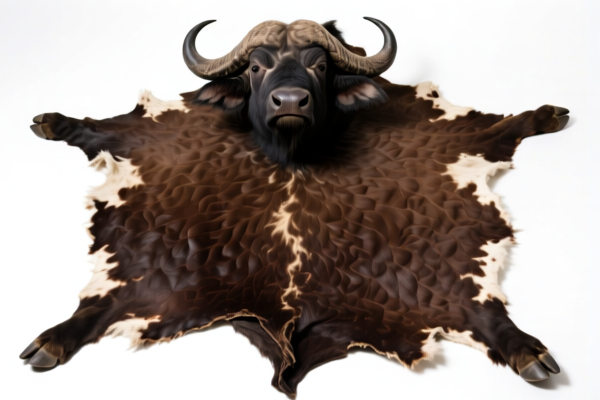
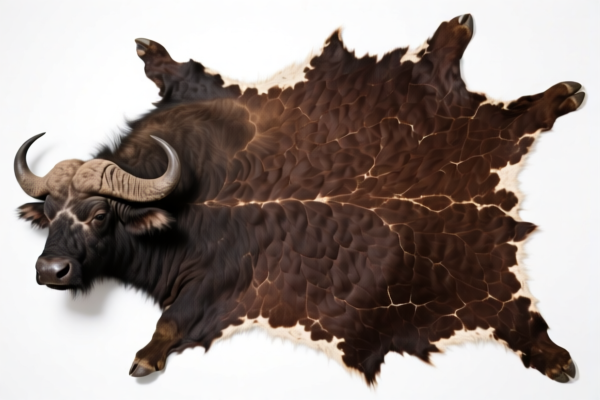
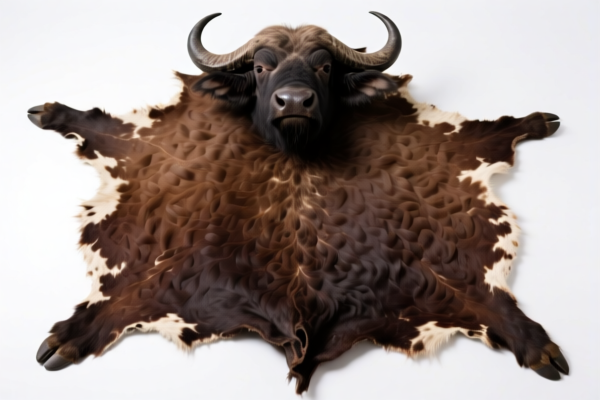
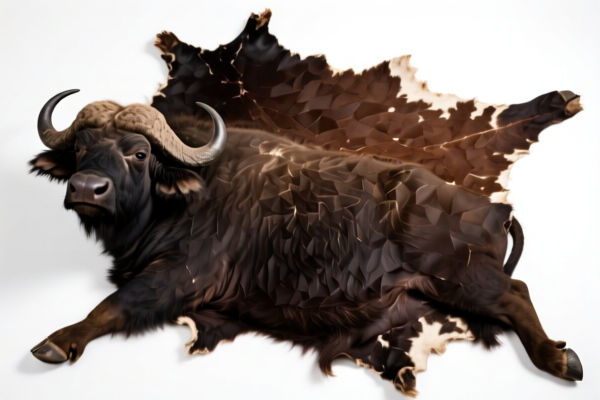
Untanned Buffalo Hide
CN → US| HS Code | Tariff Rate | Origin | Destination | Doc |
|---|---|---|---|---|
| 4101501020 | 17.5% | CN | US | Official Doc |
| 4101201010 | 17.5% | CN | US | Official Doc |
| 4101901020 | 17.5% | CN | US | Official Doc |
| 4101901010 | 17.5% | CN | US | Official Doc |
| 4101901020 | 17.5% | CN | US | Official Doc |
Product Images
AI Analysis
🐃 Untanned Buffalo Hides (Raw Bovine Skins)
🌐 HS Code Reference & Customs Clearance Guide | 2026 Latest Tariff Analysis | Professional Entry Strategy
📌 I. Product Definition & Classification: What Exactly Is "Untanned Buffalo Hide"?
Untanned buffalo hides represent the raw, unprocessed skins of bovines (specifically buffalo/bison) at their most basic stage of preservation. In international trade, these are classified under Chapter 41: Animal Skins and Furskins, Other Than Furskin of Chapter 43.
The classification depends strictly on the state of preservation (wet, dry, salted) and the specific cut/location of the hide.
⚠️ Key Distinction Points: - If the hide is fresh/wet salted or dry, it falls under specific subheadings based on weight and condition. - Full Hide vs. Cut Pieces: A "full hide" (ungutted or gutted but intact) is treated differently from "belly skins" (abdominal parts). - Pre-tanning Status: These are strictly raw skins. Any chemical treatment for tanning moves them to Chapter 41 subheadings 4104, 4105, etc. These entries are for unpre-treated skins.
📦 II. HS Code Classification Details (2026 Latest Tariff Mapping)
Based on the provided data, here are the specific HS Codes and their corresponding descriptions for Untanned Buffalo Hides:
| HS Code | Product Description | Specific Characteristics / Use Case |
|---|---|---|
4101.50.10.20 |
Untanned Buffalo Hides | Matches the complete raw hide characteristics of bovines. Typically refers to full, uncut hides in their natural state. |
4101.20.10.10 |
Untanned Buffalo Hides | Fits the classification for un-tanned original skins of bovines. Often used for fresh or standard raw hides that haven't undergone any preliminary preservation like salting (if specified as such) or refers to specific weight brackets for fresh hides. |
4101.90.10.20 |
Dry Raw Buffalo Hide (Un-tanned) | Specifically for Dried raw hides. They are un-tanned, un-pre-treated, and preserved via drying methods. |
4101.90.10.10 |
Raw Buffalo Belly Skins (Un-tanned) | Specifically for Abdominal parts (belly) of the hide. These are often thinner and more flexible than back/hide portions. Classified as un-pre-treated. |
4101.90.10.20 |
Raw Buffalo Belly Skins (Un-tanned) | Specifically for Abdominal parts (belly) in a Wet-Salted state. Differentiated from dry belly skins by the preservation method. |
🔍 Critical Note:
- All entries above share the same tax structure due to their origin and type. - The distinction between4101.90.10.10and4101.90.10.20in the provided data highlights the difference between Dry Belly Skins vs. Wet-Salted Belly Skins (or potentially different weight classes/definitions within the same code family, as seen in the varying summaries). - Code4101.90.10.20appears twice with different summaries: once for Dry Raw Hides and once for Raw Belly Skins (Wet-Salted). Ensure your physical product matches the specific description (Dry vs. Wet/Salted, Full vs. Belly) to avoid customs delays.
💰 III. 2026 Latest Tariff Rate Breakdown (Including Surtaxes & Policy Surcharges)
✅ Applicable Country: United States (US)
✅ Origin: China (CN) (Inferred from "Section 301" and "122 Clause" context in tax details)
✅ Effective Date: Current and post-2025 regulations apply.
🎯 Unified Tax Structure for All Untanned Buffalo Hides
| Item | Detail |
|---|---|
| Base Tariff Rate | 0.0% |
| Section 301 Surcharge | +7.5% |
| "122 Clause" Surcharge | +10.0% |
| Total Effective Tax Rate | 17.5% |
| Tax Calculation | CIF Value × 17.5% |
| De Minimis Exemption | ❌ Not Eligible (High value, bulk commodity; usually excluded from 800 USD exemption) |
📌 Detailed Explanation of Tax Components: - Base Tariff (0.0%): Raw animal skins generally have low or zero base MFN (Most Favored Nation) duties to encourage raw material import for domestic leather processing. - Section 301 Surtax (+7.5%): This is part of the ongoing trade measures against Chinese goods. Chapter 41 items are subject to this additional duty. - "122 Clause" Surcharge (+10.0%): This refers to specific administrative or retaliatory trade clauses (often related to agricultural or raw material imports in current trade negotiations). It adds a flat percentage on top of the base and 301 duties. - Total Burden: Despite the 0% base, the 17.5% total landed duty cost is significant. Importers must factor this into their cost of goods sold (COGS).
🛠️ IV. Customs Clearance Practical Advice (Avoiding Pitfalls)
✅ 1. Documentation Checklist (Mandatory)
| Document | Required | Purpose |
|---|---|---|
| ✅ Commercial Invoice | ✔️ | Must clearly state: "Untanned Buffalo Hide," HS Code, Weight, and Value. |
| ✅ Packing List | ✔️ | Detail number of hides, weight per hide, and total gross/net weight. |
| ✅ Phytosanitary Certificate | ✔️ | CRITICAL: Untanned skins are biological products. Many countries require proof that the hides are free from pests, diseases, and taint. |
| ✅ Bill of Lading / Air Waybill | ✔️ | Standard shipping document. |
| ✅ Preservation Method Declaration | ✔️ | Explicitly state if hides are Dry, Wet-Salted, or Fresh. Mismatches here cause classification errors. |
| ✅ Country of Origin Certificate | ✔️ | Required to confirm applicability of the 17.5% rate. |
✅ 2. Classification Accuracy Tips
| Scenario | Correct HS Code | Common Mistake |
|---|---|---|
| Full, Dry Buffalo Hide | 4101.90.10.20 |
Misclassifying as "Tanned Leather" (Chapter 41.04/41.05) → Higher taxes or rejection. |
| Wet-Salted Belly Skins | 4101.90.10.20 |
Confusing with dry belly skins (4101.90.10.10) → Potential duty assessment delay. |
| Fresh/Raw Full Hides | 4101.50.10.20 or 4101.20.10.10 |
Using the "Belly" code for full hides → Incorrect description. |
| Salted Full Hides | Check local tariff book for "Wet Salted" vs "Dry" in 4101.10/4101.20 | Assuming all salted hides go to 4101.90 → May be incorrect depending on weight/state. |
🔥 Key Rule: "Describe State, Not Just Product"
Do not just write "Buffalo Hide." Write: "Untanned Buffalo Belly Skins, Wet-Salted, Raw, Un-tanned." This precision prevents customs flags.
✅ 3. Special Handling & Compliance
| Issue | Solution |
|---|---|
| Biological Risk | Ensure hides are properly cured/salted to prevent odor or pest issues during transit. Customs may inspect for biological contaminants. |
| Weight Discrepancy | Tariff calculations are often weight-based. Ensure declared weight matches physical weight exactly. Discrepancies >3% can trigger audits. |
| Mixed Lots | If shipping both full hides and belly skins, declare separately with separate HS codes if possible, or ensure the highest duty/code applies to the entire shipment if not separated. |
| 122 Clause Applicability | Verify if the "122 Clause" still applies to your specific shipment date. Trade policies can change. Check with a licensed customs broker. |
🌍 V. Global Market Comparison (2026 Overview)
| Market | Recommended HS Code | Estimated Total Duty | Notes |
|---|---|---|---|
| 🇺🇸 USA | 4101.x0.10.xx (See above) |
17.5% | Includes 7.5% Sec 301 + 10% Clause 122. |
| 🇨🇳 China | 4101.x0.xx.xx |
Varies (0-5%) | No Section 301. Lower base duty for raw skins. |
| 🇪🇺 EU | 4101.x0.xx.xx |
0-4% | Generally low duty on raw skins. No US-style surcharges. |
| 🇬🇧 UK | 4101.x0.xx.xx |
0-4% | Post-Brexit tariff schedule similar to EU. |
📌 Conclusion:
- The US market is significantly more expensive due to 17.5% total duties compared to <5% in EU/UK. - Importers to the US must calculate this 17.5% cost into their pricing model.
📌 VI. Common Mistakes & Pitfalls (Lessons Learned)
❌ Mistake 1: Labeling as "Leather" instead of "Untanned Hide"
👉 Result: Wrong HS Code (Chapter 41.04/41.05). May lead to higher base duties or rejection if tanning process isn't documented.
❌ Mistake 2: Ignoring Phyto Certification
👉 Result: Shipment held at port for biosecurity inspection. Can lead to destruction or re-export at importer's expense.
❌ Mistake 3: Not Specifying "Wet-Salted" vs "Dry"
👉 Result: Customs may refuse to classify under 4101.90.10.20 for wet skins, causing delays.
❌ Mistake 4: Assuming De Minimis Exemption Applies
👉 Result: Shipments under $800 may still be taxed at 17.5% if classified as high-value raw materials or if documentation fails the exemption test.
🎯 VII. Conclusion: Precision is Profit
🎯 Remember:
🔹 "Untanned is Raw: State (Dry/Wet) Matters."
🔹 "17.5% Total Duty: Budget for Sec 301 + Clause 122."
🔹 "Phyto Certificate: Non-negotiable for Biological Goods."
📌 Pro Tip:
If you are importing large volumes, consider Applying for an Advance Ruling from US Customs and Border Protection (CBP) to confirm the specific HS Code for your exact batch (e.g., wet-salted belly vs. dry full hide). This provides legal certainty and prevents unexpected 17.5% duty shocks.
📣 Immediate Action:
📞 Engage a licensed customs broker.
📄 Prepare Phytosanitary Certificates.
📊 Calculate landed cost at 17.5% duty.
🚀 Ensure smooth, compliant entry for your Untanned Buffalo Hides.
✨ Professional Clearance Starts with Accurate Classification!
💼 Every Percent of Duty Counts in Raw Material Import!
Customer Reviews
About HS Code Classification
The Harmonized System (HS) is an internationally standardized nomenclature developed by the World Customs Organization (WCO) to classify traded products. Over 200 countries use the HS system as the basis for customs tariffs, trade statistics, and import/export regulations.
Each HS code follows a hierarchical structure:
- Chapter (2 digits) — Broad category of goods (e.g., Chapter 84: Machinery and Mechanical Appliances)
- Heading (4 digits) — More specific grouping within the chapter
- Subheading (6 digits) — Internationally standardized breakdown, used by all WCO member countries
- National subdivisions (8-10 digits) — Country-specific extensions for further classification, such as US HTSUS 10-digit codes
Correct HS code classification is essential for smooth customs clearance, accurate duty payment, and compliance with trade regulations. Misclassification can lead to customs delays, overpayment of duties, or penalties.
When importing from CN to US, the applicable tariff rates may include:
- Most-Favored-Nation (MFN) rate — The standard duty rate applied to WTO members
- General rate — Applied to countries without trade agreements
- Trade remedy duties — Additional tariffs such as Section 301 (anti-dumping), Section 232 (national security), or countervailing duties
The information provided on this page is for reference purposes only. For official classification, please consult with your local customs authority or a licensed customs broker.