Untanned Water Buffalo Leather
CN → US| HS Code | Tariff Rate | Origin | Destination | Doc |
|---|---|---|---|---|
| 4106910000 | 38.3% | CN | US | Official Doc |
| 4106920000 | 38.3% | CN | US | Official Doc |
| 4103901190 | 17.5% | CN | US | Official Doc |
| 4103901130 | 17.5% | CN | US | Official Doc |
| 4107124000 | 12.5% | CN | US | Official Doc |
| 4107194000 | 12.5% | CN | US | Official Doc |
Product Images
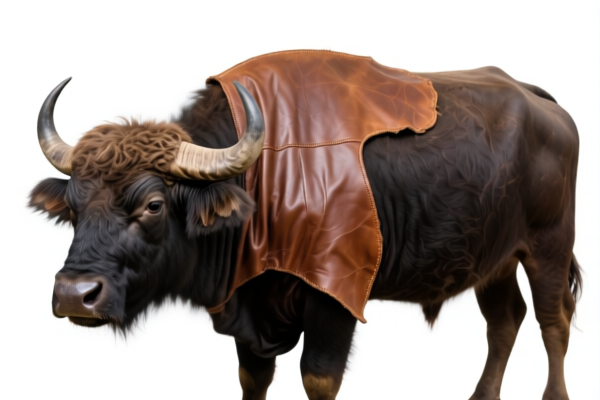
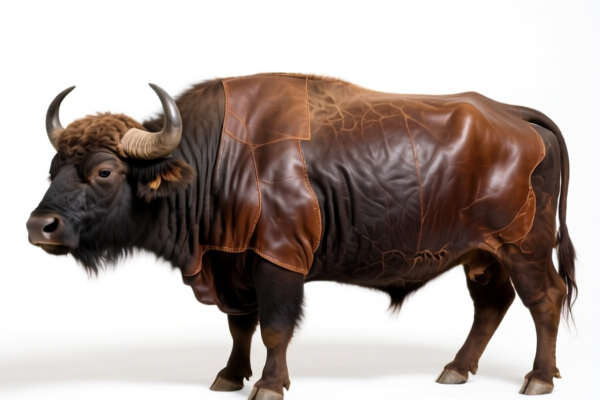
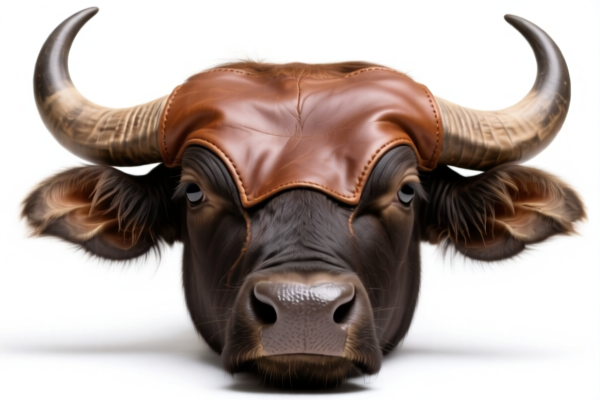
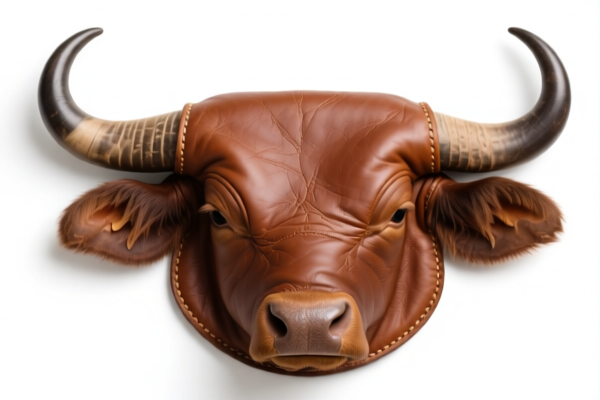
AI Analysis
🐂 Untanned Water Buffalo Leather (Raw Hides/Skins)
🌐 HS Code Reference & Customs Clearance Guide | 2026 Latest Tariff Analysis | Professional Clearance Strategy
📌 1. Product Definition & Classification: Do You Understand "Untanned Water Buffalo Leather"?
Untanned water buffalo leather refers to animal skins that have been salted, cured, or preserved but have not undergone the tanning process (which stabilizes the protein structure to prevent decay). In international trade, these are classified based on their state of preparation: * Raw/Hides (4103): Skins that are not yet tanned or merely salted/dried, intended for further processing. * Half-Tanned/Pigmented (4106): Skins that have undergone preliminary tanning (e.g., chrome tanning or vegetable tanning stages) but are not yet finished or further processed for final use.
⚠️ Key Distinction:
- If the leather is merely preserved (salted, dried, or limed) without chemical tanning → It falls under Chapter 4103.
- If the leather has undergone preliminary tanning (becoming "half-tanned") → It falls under Chapter 4106.
- If the leather is fully tanned and finished → It falls under Chapter 4107 (Note: The term "Untanned" in the prompt specifically excludes this, but for completeness, finished buffalo leather is often misclassified here if not properly documented).
📦 2. HS Code Classification Details (2026 Latest Tariff Authority Comparison)
| HS Code | Product Description | Applicable Scenario | Tanning Status |
|---|---|---|---|
4103.90.11.30 |
Other untreated raw hides, other species (Water Buffalo) | Raw, salted, or dried buffalo hides; not yet tanned. | ❌ Untreated |
4103.90.11.90 |
Other untreated raw hides, other species | Generic untreated raw hides for non-specified uses. | ❌ Untreated |
4106.91.00.00 |
Tanned or half-tanned leather, other animals | Leather that has undergone preliminary tanning processes. | ⚠️ Half-Tanned |
4106.92.00.00 |
Tanned or half-tanned leather, other animals | Semi-tanned buffalo leather, ready for further processing. | ⚠️ Half-Tanned |
4107.12.40.00 |
Tanned leather, bovine, full grain | Finished tanned buffalo leather (Full grain). | ✅ Fully Tanned |
4107.19.40.00 |
Tanned leather, bovine, other | Finished tanned buffalo leather (Corrected/Split). | ✅ Fully Tanned |
🔍 Critical Reminder:
- The term "Untanned" strictly points to 4103 codes.
- However, many suppliers confuse "untanned" with "half-tanned" (4106). If the hide has been chemically treated to prevent rotting but not finished for sale, it is 4106.
- Finished Leather (4107) is NOT untanned. Do not use 4107 codes for raw materials unless the product is actually finished.
💰 3. 2026 Latest Tariff Rate Breakdown (Including Surtaxes & Policy Surcharges)
✅ Applicable Country: USA (US)
✅ Country of Origin: China (CN)
✅ Effective Date: From November 10, 2025 (including subsequent imports)
🎯 1. 4103.90.11.30 / 4103.90.11.90 — Untreated Raw Hides (True "Untanned")
| Item | Content |
|---|---|
| Base Tariff | 0.0% (ad valorem) |
| USITC Surtax | +7.5% (Additional Tariff under US Trade Act) |
| Section 122 Tariff | +10% (Specific surcharge for certain agricultural/raw materials) |
| Total Rate | 17.5% |
| Tax Calculation | CIF Value × 17.5% |
| De Minimis Eligibility | ❌ No (High risk of scrutiny for raw animal products) |
| Legal Path | USITC:4103.90.11.30 → FOOTNOTE:122-A |
📌 Explanation:
- Although the base tariff is 0%, the 17.5% total is significant due to the 7.5% additional surtax and 10% Section 122 tariff.
- Section 122 often applies to raw hides to protect domestic tanning industries.
- Warning: Customs may inspect for biosecurity risks (BSE, Foot-and-Mouth Disease). Ensure proper veterinary certificates are attached.
🎯 2. 4106.91.00.00 / 4106.92.00.00 — Half-Tanned Leather
| Item | Content |
|---|---|
| Base Tariff | 3.3% (ad valorem) |
| USITC Surtax | +25.0% (Section 301 Additional Tariff) |
| Section 122 Tariff | +10% (Specific surcharge) |
| Total Rate | 38.3% |
| Tax Calculation | CIF Value × 38.3% |
| De Minimis Eligibility | ❌ No |
| Legal Path | USITC:4106.91.00.00 → FOOTNOTE:9903.88.01 → FOOTNOTE:122-A |
📌 Explanation:
- High Risk Category: If your "untanned" leather has undergone any chemical tanning (even preliminary), it falls here.
- The 25% Section 301 tariff drastically increases the cost.
- Misclassification Alert: Declaring half-tanned leather as "untanned" (4103) to save 20% is a major fraud risk. Ensure chemical treatment records are accurate.
🎯 3. 4107.12.40.00 / 4107.19.40.00 — Fully Tanned Buffalo Leather (Finished)
⚠️ Note: These codes are for finished leather. If the product is truly "Untanned," do not use these. However, if the product is finished but mislabeled as "untanned," here are the rates:
| Item | Content |
|---|---|
| Base Tariff | 2.5% (ad valorem) |
| USITC Surtax | 0.0% (No Section 301 surcharge for finished leather in this subcategory) |
| Section 122 Tariff | +10% |
| Total Rate | 12.5% |
| Tax Calculation | CIF Value × 12.5% |
| Legal Path | USITC:4107.12.40.00 → FOOTNOTE:122-A |
📌 Explanation:
- Best Rate for Finished Goods: If you can prove the leather is finished (chrome-tanned, dyed, and ready for manufacturing), the rate drops to 12.5%.
- Strategic Note: If your "untanned" hides are actually semi-tanned, consider investing in further tanning to move to 4107 if commercially viable, as the tax rate (12.5%) is much lower than half-tanned (38.3%).
- Constraint: You must have documentation proving the tanning process is complete.
🛠️ 4. Customs Clearance Practical Advice (Real-World Pitfall Guide)
✅ 1. Required Documentation Checklist (None of these can be missing)
| Document | Must Provide? | Description |
|---|---|---|
| ✅ Veterinary Certificate | ✔️ | Critical for raw hides. Must certify freedom from BSE, Foot-and-Mouth Disease, etc. |
| ✅ Salt/Curing Details | ✔️ | Specify if salted, dried, or brined. Crucial for distinguishing 4103 vs. 4106. |
| ✅ Chemical Treatment Statement | ✔️ | Key for Classification. If no chemicals were used → 4103. If chrome/vegetable tanning agents were used → 4106 or 4107. |
| ✅ Product Photos | ✔️ | Clear images showing texture, thickness, and any labeling. |
| ✅ Commercial Invoice | ✔️ | Must clearly state "Untanned Water Buffalo Hides" or "Half-Tanned..." with precise HS Code. |
| ✅ Packing List | ✔️ | Include gross/net weight, number of hides, and preservation method. |
✅ 2. Declaration Tips (Key Mantra)
🔥 "Raw = 4103, Half = 4106, Finished = 4107. Mislabeling = Heavy Fines!"
| Situation | Correct Declaration | Wrong Action |
|---|---|---|
| Just Salted/Dried Hides | 4103.90.11.30 (17.5%) |
Declaring as 4107 (12.5%) → Fraud (if not tanned) |
| Preliminary Tanned (Half-Tanned) | 4106.91.00.00 (38.3%) |
Declaring as 4103 (17.5%) → 20% Tax Evasion Risk |
| Fully Tanned & Dyed | 4107.12.40.00 (12.5%) |
Declaring as 4106 (38.3%) → Overpaying Taxes |
| Mixture of Raw and Tanned | Split Declaration | Mixing in one shipment → Customs Hold & Inspection |
✅ 3. Special Case Handling
| Scenario | Handling Advice |
|---|---|
| "Untanned" but Chemically Preserved | If only salt/brine is used → 4103. If lime/sulfide is used → Still 4103 (not tanned). If chrome is used → 4106. |
| Biosecurity Concerns | Ensure hides are dry and salted. Wet raw hides are often rejected due to odor and disease risk. |
| Section 122 Tariff Applicability | All raw and half-tanned leathers are subject to the 10% Section 122 tariff. Ensure this is included in cost calculations. |
| USITC Footnote 9903.88.01 | Applies to Chapter 41 goods from China. Confirm your HS Code is listed under this footnote for Section 301 applicability. |
🌍 5. Global Market Comparison for Water Buffalo Leather (2026)
| Country/Region | Recommended HS Code | Tariff Rate | Certification Requirements | Notes |
|---|---|---|---|---|
| 🇺🇸 USA | 4103.90.11.30 |
17.5% (Raw) 38.3% (Half-Tanned) |
USDA Vet Certificate + Section 122 Compliance | High scrutiny on raw hides. |
| 🇨🇳 China | 4103.90.11.30 |
0% (Raw) 3.3% (Half-Tanned) |
None specific for import | Major importer of raw hides for tanning. |
| 🇪🇺 EU | 4103.90.11 |
0% (Raw) | REACH Compliance + Vet Health Cert | Strict on chemical residues in tanned leather. |
| 🇮🇳 India | 4103.90.11 |
0% (Raw) | Veterinary Cert + CITES (if applicable) | Large tanning industry; imports raw hides. |
📌 Conclusion:
- USA is the most expensive market for half-tanned leather (38.3%) due to Section 301 + 122 tariffs.
- Raw hides (4103) are cheaper to import into the US (17.5%) but require strict biosecurity documentation.
- Strategy: If possible, process "half-tanned" leather to finished leather (4107) before shipping to the US to reduce the tariff from 38.3% to 12.5% (saving 25.8%).
📌 6. Common Errors & Pitfall Guide (Blood & Tears Lessons)
❌ Error 1: Declaring Half-Tanned Leather as Untanned (4103) to save 20.8%
👉 Consequence: Customs audit reveals chemical traces → Back taxes + 25% penalty + Criminal charges.
❌ Error 2: Ignoring Section 122 Tariff in cost calculation
👉 Consequence: Profit margin eaten by 10% unbudgeted tax.
❌ Error 3: Missing Veterinary Certificate for Raw Hides
👉 Consequence: Shipment detained or destroyed at port due to biosecurity risk.
❌ Error 4: Using "Leather" generic term in Invoice
👉 Consequence: Customs cannot determine tanning stage → Delay in clearance for lab testing.
✅ Correct Practice:
"Water Buffalo Hides, Salted, Untanned, HS 4103.90.11.30, USDA Vet Cert Attached, No Chemical Tanning Agents Used"
🎯 7. Conclusion: Professional Declaration Saves Money!
🎯 Remember the Mantra:
🔹 "Salted = 17.5%, Half-Tanned = 38.3%, Finished = 12.5%. Check Chemistry First!"
🔹 "Section 122 adds 10% to all Chapter 41 goods from China. Factor it in!"
🔹 "Vet Cert for Raw Hides is Non-Negotiable."
📌 Pro Tip:
If your supply chain allows, consider finishing the leather in China or a third country before shipping to the US. Moving from 4106 (38.3%) to 4107 (12.5%) can save 25.8% in tariffs, potentially offsetting the cost of additional processing.
📣 Immediate Action:
📞 Contact your Customs Broker + Provide Chemical Treatment Statement + Apply for Pre-Ruling if uncertain between 4103/4106.
🚀 Let your Water Buffalo Leather clear smoothly, legally, and profitably!
✨ Professional Customs Clearance Starts with Accurate Classification!
💼 Every Percent of Tariff Saved is Pure Profit!
Customer Reviews
About HS Code Classification
The Harmonized System (HS) is an internationally standardized nomenclature developed by the World Customs Organization (WCO) to classify traded products. Over 200 countries use the HS system as the basis for customs tariffs, trade statistics, and import/export regulations.
Each HS code follows a hierarchical structure:
- Chapter (2 digits) — Broad category of goods (e.g., Chapter 84: Machinery and Mechanical Appliances)
- Heading (4 digits) — More specific grouping within the chapter
- Subheading (6 digits) — Internationally standardized breakdown, used by all WCO member countries
- National subdivisions (8-10 digits) — Country-specific extensions for further classification, such as US HTSUS 10-digit codes
Correct HS code classification is essential for smooth customs clearance, accurate duty payment, and compliance with trade regulations. Misclassification can lead to customs delays, overpayment of duties, or penalties.
When importing from CN to US, the applicable tariff rates may include:
- Most-Favored-Nation (MFN) rate — The standard duty rate applied to WTO members
- General rate — Applied to countries without trade agreements
- Trade remedy duties — Additional tariffs such as Section 301 (anti-dumping), Section 232 (national security), or countervailing duties
The information provided on this page is for reference purposes only. For official classification, please consult with your local customs authority or a licensed customs broker.