Untreated Beech Wood
CN → US| HS Code | Tariff Rate | Origin | Destination | Doc |
|---|---|---|---|---|
| 4407920000 | 35.0% | CN | US | Official Doc |
| 4407990295 | 35.0% | CN | US | Official Doc |
| 4403420000 | 35.0% | CN | US | Official Doc |
| 4403490200 | 35.0% | CN | US | Official Doc |
| 4403960130 | 35.0% | CN | US | Official Doc |
Product Images
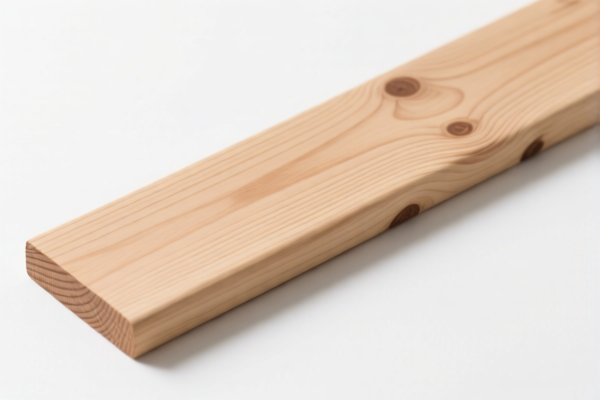


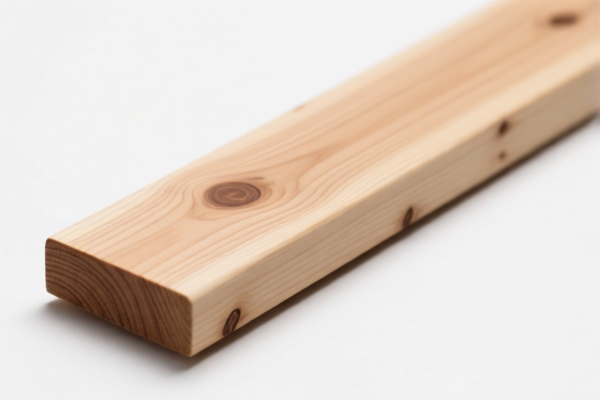
AI Analysis
🌲 Untreated Beech Wood: The Heavy Hitter of Hardwoods
🌐 HS Code Reference & Customs Clearance Guide | 2026 Latest Tariff Analysis | Hardwood Logistics Strategy
📌 I. Product Definition & Classification: Understanding the "Beech" Category
Untreated Beech Wood (Fagus sylvatica) is a premium, dense hardwood widely used in flooring, furniture, tool handles, and plywood production. In international trade, its classification depends strictly on its processing state (log vs. sawn) and physical dimensions.
Because Beech is a non-coniferous (hardwood) species, it falls under Chapter 44, Section XI. However, "Untreated" is not a specific HS code; it is a condition. The HS Code is determined by: 1. Form: Is it a round log (Chapter 4403) or a sawn/chipped piece (Chapter 4407)? 2. Species: It must be identified as Beech (often coded specifically under sub-headings for Beech in the US Harmonized Tariff Schedule).
⚠️ Key Distinction Point:
- If the wood is round/log form (raw timber) → Goes to 4403 series.
- If the wood is sawn, chipped, or peeled (even if thin) → Goes to 4407 series.
- "Untreated" means no chemical preservation, staining, or impregnation. It does not exempt it from Section 301 or IEEPA tariffs.
📦 II. HS Code Classification Details (2026 Latest Tariff Authority)
Based on your product data, here are the exact classifications for Untreated Beech Wood. Note that Beech is often grouped with other hardwoods or given specific sub-headings depending on the exact processing method.
| HS Code | Product Description | Application Scenario | Processing State |
|---|---|---|---|
4403.96.01.30 |
Untreated Beech Wood (Logs/Raw Timber) | Raw logs, round timber, raw material for milling | ✅ Raw/Log Form |
4407.92.00.00 |
Beech Wood,纵向锯切或切片 (Sawn Beech) | Planks, beams, longitudinal sawn chips, peeled veneers | ✅ Sawn/Chipped |
4407.99.02.95 |
Other Sawn Beech (>6mm thickness) | Thicker sawn timber, blocks, shapes not elsewhere specified | ✅ Sawn (>6mm) |
🔍 Critical Reminder:
- 4403.96.01.30: Used if the beech is still in log form (round,未经锯切).
- 4407.92.00.00: Used if the beech is sawn longitudinally (boards, planks) or peeled (veneer).
- 4407.99.02.95: Used for sawn wood >6mm that doesn't fit specific narrow definitions (e.g., blocks, thicker pieces).
- All three codes attract the same high tariff structure for US imports from China.
💰 III. 2026 Latest Tariff Rate Breakdown (Including Add-on Taxes)
✅ Applicable Country: United States (US)
✅ Country of Origin: China (CN)
✅ Effective Date: November 10, 2025 (and onwards)
🎯 1. 4403.96.01.30 – Untreated Beech Wood (Logs)
| Item | Detail |
|---|---|
| Base Duty Rate | 0.0% (Ad valorem) |
| Section 301 Add-on | +25.0% (USITC Footnote 9903.42.00) |
| IEEPA Add-on (122) | +10.0% (For China/HK products, effective Nov 10, 2025) |
| Total Tax Rate | 35.0% |
| Tax Calculation | CIF Value × 35% |
| De Minimis Exemption | ❌ NOT Eligible (Deny De Minimis) |
| Legal Authority Path | IEEPA:9903.01.25 → USITC:4403.96.01.30 → FOOTNOTE:9903.42.00 |
📌 Explanation:
- "Base 0%": Standard MFN duty for raw hardwood logs is low.
- "Section 301 (25%)": Applies to most wood products from China to protect domestic timber industries.
- "IEEPA 10%": A new, aggressive tariff layer added in late 2025 specifically targeting Chinese goods.
- Total 35%: This is a HIGH effective rate. It applies to the full CIF value (Cost + Insurance + Freight).
🎯 2. 4407.92.00.00 – Sawn Beech Wood (Longitudinal)
| Item | Detail |
|---|---|
| Base Duty Rate | 0.0% |
| Section 301 Add-on | +25.0% |
| IEEPA Add-on (122) | +10.0% |
| Total Tax Rate | 35.0% |
| Tax Calculation | CIF Value × 35% |
| De Minimis Exemption | ❌ NOT Eligible |
| Legal Authority Path | IEEPA:9903.01.25 → USITC:4407.92.00.00 → FOOTNOTE:9903.88.01 |
📌 Note:
- Even though the processing is more advanced (sawn), the base duty remains 0%, but the add-ons remain identical.
- Whether it's a raw log or a finished plank, the 35% total tariff applies.
🎯 3. 4407.99.02.95 – Other Sawn Beech (>6mm)
| Item | Detail |
|---|---|
| Base Duty Rate | 0.0% |
| Section 301 Add-on | +25.0% |
| IEEPA Add-on (122) | +10.0% |
| Total Tax Rate | 35.0% |
| Tax Calculation | CIF Value × 35% |
| De Minimis Exemption | ❌ NOT Eligible |
| Legal Authority Path | IEEPA:9903.01.25 → USITC:4407.99.02.95 → FOOTNOTE:9903.88.01 |
📌 Note:
- For thicker sawn timber (>6mm) that doesn't fit the "peeled" or "thin sawn" categories, this code applies.
- Same 35% rate. No savings by changing sub-code within Chapter 44 for Chinese Beech.
🛠️ IV. Customs Clearance Practical Advice (Avoiding Pitfalls)
✅ 1. Required Documentation Checklist
| Document | Required | Notes |
|---|---|---|
| ✅ Commercial Invoice | ✔️ | Must specify "Untreated Beech Wood" and HS Code. |
| ✅ Packing List | ✔️ | Detail dimensions, weight, and quantity. |
| ✅ Phytosanitary Certificate | ✔️ | CRITICAL for raw wood. Issued by origin country's plant agency. |
| ✅ ISPM 15 Marking | ✔️ | If packed in wooden pallets/crates, they must be heat-treated/stamped. |
| ✅ Species Declaration | ✔️ | Confirm it is Fagus (Beech) and not a prohibited hardwood. |
| ✅ Bill of Lading | ✔️ | Standard shipping document. |
✅ 2. Declaration Tips (Key Mantra)
🔥 "Raw or Sawn, 35% is the law! No De Minimis, treat it as saw!"
| Scenario | Correct Declaration | Incorrect Action | Consequence |
|---|---|---|---|
| Raw Logs | HS 4403.96.01.30 |
Declare as "Sawn Wood" → May face inspection for misclassification. | Delays |
| Sawn Planks | HS 4407.92.00.00 |
Declare as "Furniture Parts" → Wrong Chapter. | High Risk of Penalty |
| Small Pieces (<6mm) | Check if it qualifies as "Chips" (4401) | Declare as "Sawn" → Overpay or Misdeclare. | Confusion |
| Treated Wood | Must declare preservative type | Declare as "Untreated" → Customs Seizure (Quarantine risk). | Seizure & Fine |
✅ 3. Special Considerations
| Issue | Handling Advice |
|---|---|
| ISPM 15 Compliance | Ensure all packaging (pallets, crates) is treated and marked. Raw wood itself may need phytosanitary cert. |
| Moisture Content | Specify moisture content on invoice. High moisture can lead to mold claims or rejection. |
| Country of Origin | Must be China. If transshipped through Vietnam, ensure no substantial transformation occurred. |
| Section 232 (Steel/Aluminum) | Not applicable. This is wood. |
| Section 301 List | Beech wood is included. No exclusions currently available for general trade. |
🌍 V. Global Market Comparison (2026)
| Country/Region | Recommended HS Code | Duty Rate | Certification | Notes |
|---|---|---|---|---|
| 🇺🇸 USA | 4403.96.01.30 or 4407.92.00.00 |
35% | Phytosanitary + ISPM 15 | Highest cost due to 301 + IEEPA. |
| 🇨🇳 China (Import) | 4403.96.01.30 |
~10-15% | Phytosanitary | Lower base duty, no US add-ons. |
| 🇪🇺 EU | 4403.96.00 |
~6.5% | FSC/PEFC (Optional) | No Section 301. IEEPA does not apply. |
| 🇬🇧 UK | 4403.96.00 |
~6.5% | FSC/PEFC | Post-Brexit tariffs similar to EU. |
| 🇯🇵 Japan | 4403.96.00 |
~3.2% | IPPC | Low duty, high quality standards. |
📌 Conclusion:
- USA is the most expensive market for Chinese Beech Wood due to the 35% combined tariff.
- Consider supply chain diversification (e.g., sourcing Beech from EU or North America) if importing into the US.
- For EU/UK/Japan, tariffs are significantly lower (~3-7%), making them more cost-effective alternatives.
📌 VI. Common Mistakes & Pitfalls (Lessons Learned)
❌ Mistake 1: Assuming "Untreated" means "No Tax"
👉 Reality: "Untreated" only refers to chemical preservation. Tariffs are based on HS Code, not treatment status.
👉 Result: 35% tax still applies.
❌ Mistake 2: Confusing 4403 (Logs) with 4407 (Sawn)
👉 Reality: Logs are round; Sawn are cut. Misclassification leads to duties underpayment or penalties.
👉 Result: Customs audit, back taxes, and fines.
❌ Mistake 3: Ignoring Phytosanitary Requirements
👉 Reality: Raw wood is a high-risk commodity for pests (e.g., Asian Longhorned Beetle).
👉 Result: Shipment rejected or destroyed at US port if no Phytosanitary Certificate.
❌ Mistake 4: Using De Minimis (Section 321) for Beech Wood
👉 Reality: Wood products from China are explicitly excluded from the $800 de minimis exemption.
👉 Result: 100% tax liability even for small samples.
✅ Correct Practice:
"Untreated Beech Wood, Fagus sylvatica, Logs/Sawn, Origin: China, Phytosanitary Cert Attached, ISPM 15 Packaged."
🎯 VII. Conclusion: Professional Clearance for Hardwoods
🎯 Remember the Mantra:
🔹 "Beech from China, 35% is the law!"
🔹 "Logs are 4403, Sawn are 4407, Tax is the same!"
🔹 "No De Minimis, No Excuses!"
📌 Pro Tip:
If your business volume is high, consider applying for a Section 301 Exclusion (if available for specific uses) or explore foreign trade zones to defer duty payments. However, as of 2026, broad exclusions for Beech Wood are rare.
📣 Immediate Action:
📞 Contact a licensed customs broker to verify your specific product dimensions against
4403vs.4407.
📄 Secure Phytosanitary Certificates BEFORE shipping.
💸 Budget for 35% duty in your cost analysis.
✨ Professional Clearance, Start with Accurate Classification!
💼 Your Profit Margin Depends on Precise Tariff Calculation!
Customer Reviews
About HS Code Classification
The Harmonized System (HS) is an internationally standardized nomenclature developed by the World Customs Organization (WCO) to classify traded products. Over 200 countries use the HS system as the basis for customs tariffs, trade statistics, and import/export regulations.
Each HS code follows a hierarchical structure:
- Chapter (2 digits) — Broad category of goods (e.g., Chapter 84: Machinery and Mechanical Appliances)
- Heading (4 digits) — More specific grouping within the chapter
- Subheading (6 digits) — Internationally standardized breakdown, used by all WCO member countries
- National subdivisions (8-10 digits) — Country-specific extensions for further classification, such as US HTSUS 10-digit codes
Correct HS code classification is essential for smooth customs clearance, accurate duty payment, and compliance with trade regulations. Misclassification can lead to customs delays, overpayment of duties, or penalties.
When importing from CN to US, the applicable tariff rates may include:
- Most-Favored-Nation (MFN) rate — The standard duty rate applied to WTO members
- General rate — Applied to countries without trade agreements
- Trade remedy duties — Additional tariffs such as Section 301 (anti-dumping), Section 232 (national security), or countervailing duties
The information provided on this page is for reference purposes only. For official classification, please consult with your local customs authority or a licensed customs broker.