Untreated Mink Whole Skins
CN → US| HS Code | Tariff Rate | Origin | Destination | Doc |
|---|---|---|---|---|
| 4301100020 | 17.5% | CN | US | Official Doc |
| 4303100030 | 39.0% | CN | US | Official Doc |
| 4302110020 | 37.1% | CN | US | Official Doc |
| 4302110010 | 37.1% | CN | US | Official Doc |
| 4302110020 | 37.1% | CN | US | Official Doc |
Product Images
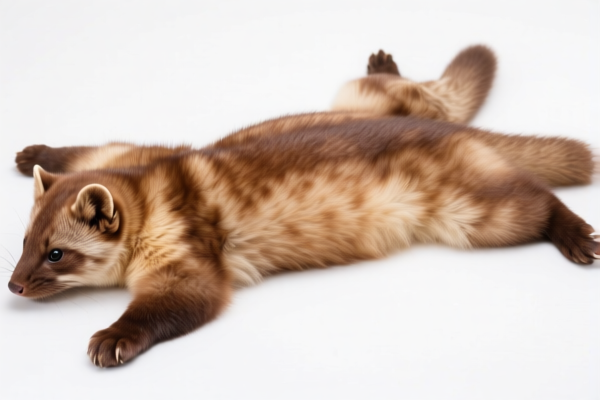
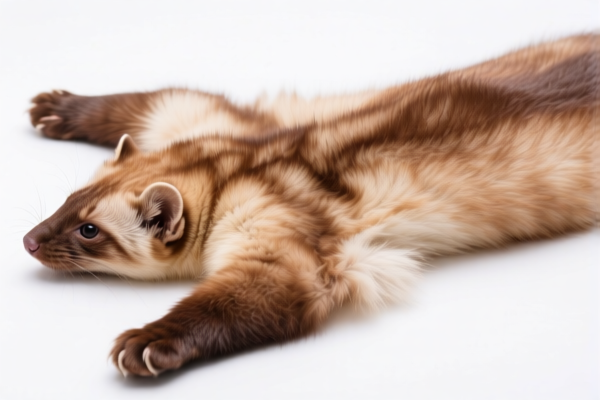
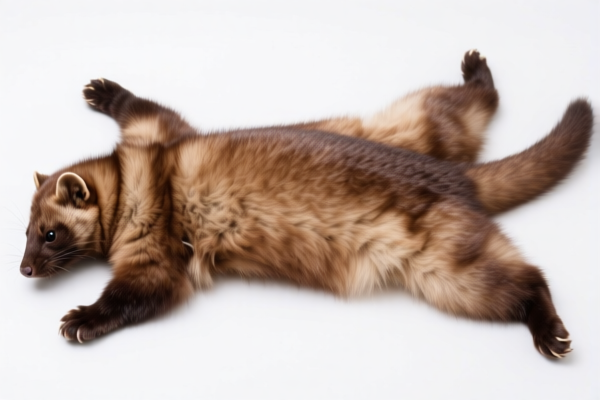
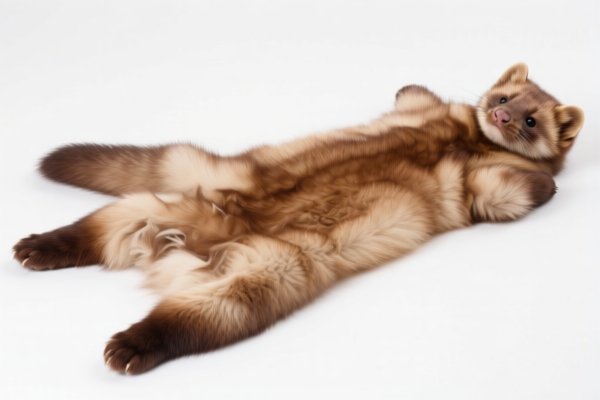
AI Analysis
🦨 Untreated Mink Whole Skins: The "Raw Material" Paradox in Global Trade
🌐 HS Code Reference & Customs Clearance Guide | 2026 Tariff Regime Analysis | Strategic Clearance Strategy
📌 I. Product Definition: What Are "Untreated Mink Whole Skins"?
In the international fur trade, "Untreated Mink Whole Skins" refer to mink pelts that have been removed from the animal but have not undergone chemical preservation, tanning, or deep processing suitable for direct garment manufacturing. They are the raw agricultural/industrial feedstock for the fur industry.
In customs classification, the distinction between "Raw/Untreated" (Chapter 4301) and "Tanned/Prepared" (Chapter 4302) is the critical determinant of your tariff liability.
⚠️ Key Distinction Point:
- If the skin is merely salted, dried, or fresh-frozen (basic preservation) → Classified as 4301.10.00.20 ("Raw furskins").
- If the skin has been tanned, dyed, or assembled (even if for fur garments) → Classified as 4302.11.00.x0 or 4303.10.00.30 ("Tanned/Prepared").
- Crucial: "Untreated" in a commercial sense often means "salted/dried," but if it shows signs of tanning or tailoring, it triggers a higher tax bracket.
📦 II. HS Code Classification Matrix (2026 Latest Tariff Rules)
| HS Code | Product Description | Classification Logic | Tax Rate Impact |
|---|---|---|---|
4301.10.00.20 |
Raw Mink Skins (Untreated) Definition: Raw furskins of mink, other than those of subheading 4301.10.00.10. |
Lowest Base Tax. Applies to skins that are merely salted, dried, or preserved without chemical tanning. No assembly, no dyeing. | 17.5% (Lowest entry point) |
4302.11.00.10 |
Tanned Mink Skins (Whole, with Head) Definition: Tanned furskins of mink, including with head, tail, and paws, unassembled. |
Mid Tax. Skins have been chemically treated (tanned) to prevent decay and prepare for leather-like use. Includes head/tail. | 37.1% (+20% vs Raw) |
4302.11.00.20 |
Other Tanned Mink Skins Definition: Other tanned furskins of mink, including with head, tail, and paws, unassembled. |
Mid Tax. Similar to .10 but may exclude certain body parts or have different preparation standards. Often grouped with .10 in tax calculation. | 37.1% (Same as .10) |
4303.10.00.30 |
Mink Fur Garments/Accessories Definition: Articles of apparel and clothing accessories, of mink. |
Highest Tax. Applies if the "skin" is cut, sewn, or assembled into a garment, collar, or trim. Even partially processed items fall here. | 39.0% (Highest entry point) |
🔍 Critical Note:
-4301.10.00.20is the only classification for "Untreated" or minimally preserved raw skins.
- Any move toward tanning pushes you to4302.11.00.x0(37.1%).
- Any move toward assembly/garment making pushes you to4303.10.00.30(39.0%).
- Do NOT misdeclare tanned skins as raw to avoid higher taxes; customs inspections (microscopy, chemical tests) will detect tanning agents.
💰 III. 2026 Latest Tariff Breakdown (Detailed Tax Composition)
✅ Applicable Country: United States (US)
✅ Origin: China (CN)
✅ Effective Date: November 10, 2025 onwards
🎯 1. 4301.10.00.20 — Raw Mink Skins (Untreated)
The most favorable category for raw material importers.
| Item | Content |
|---|---|
| Base Tariff | 0.0% (Ad valorem) |
| Section 301 Additional Tariff | +7.5% |
| IEEPA Section 122 Tariff | +10.0% (Specific to certain Chinese fur products under 122 rules) |
| Total Tax Rate | 17.5% |
| De Minimis Eligibility | ❌ Denied (Deny De Minimis) |
| Legal Basis Path | IEEPA:122 → USITC:4301.10.00.20 → Section 301: 7.5% |
📌 Interpretation:
- 0% Base: Raw agricultural/fur skins often enjoy lower base duties.
- 7.5% Section 301: Standard US-China trade war tariff for certain fur products.
- 10% IEEPA 122: A specific punitive tariff layer added to fur imports from China.
- Total: 17.5%. This is the lowest tax burden for mink skins.
🎯 2. 4302.11.00.10 & .20 — Tanned Mink Skins
Higher tax due to processed status.
| Item | Content |
|---|---|
| Base Tariff | 2.1% (Ad valorem) |
| Section 301 Additional Tariff | +25.0% |
| IEEPA Section 122 Tariff | +10.0% |
| Total Tax Rate | 37.1% |
| De Minimis Eligibility | ❌ Denied |
| Legal Basis Path | IEEPA:122 → USITC:4302.11.00.10 → Section 301: 25% |
📌 Interpretation:
- 2.1% Base: Tanned goods have a small base duty.
- 25% Section 301: High penalty for processed fur goods.
- 10% IEEPA 122: Same punitive layer.
- Total: 37.1%. This is more than double the tax of raw skins (17.5% vs 37.1%).
🎯 3. 4303.10.00.30 — Mink Fur Articles (Garments/Accessories)
The highest tax bracket, targeting finished goods.
| Item | Content |
|---|---|
| Base Tariff | 4.0% (Ad valorem) |
| Section 301 Additional Tariff | +25.0% |
| IEEPA Section 122 Tariff | +10.0% |
| Total Tax Rate | 39.0% |
| De Minimis Eligibility | ❌ Denied |
| Legal Basis Path | IEEPA:122 → USITC:4303.10.00.30 → Section 301: 25% |
📌 Interpretation:
- 4.0% Base: Finished goods have the highest base duty.
- 25% Section 301: Highest penalty tier.
- 10% IEEPA 122: Same punitive layer.
- Total: 39.0%. Importing finished mink products is the most expensive option.
🛠️ IV. Customs Clearance Practical Advice (Real-World Pitfall Guide)
✅ 1. Documentation Checklist (Must-Have)
| Document | Required? | Purpose |
|---|---|---|
| ✅ Commercial Invoice | ✔️ | Must explicitly state "Untreated Mink Skins" and "Raw/Fresh-Salted" to justify HS 4301.10.00.20. |
| ✅ Packing List | ✔️ | Detail weight, count, and condition (e.g., "Salted, Dried"). |
| ✅ Species Certificate | ✔️ | Prove species is Mink (not other fur). |
| ✅ CITES Permit | ✔️ | Critical! Mink is often listed. Ensure Appendix II/III compliance. |
| ✅ Treatment Declaration | ✔️ | State: "No tanning, dyeing, or assembly performed. Skins are raw/salted." |
| ✅ Photos | ✔️ | Show skins in raw state (no garment-like shape). |
✅ 2. Classification Strategy (Key Mantra)
🔥 "Raw is 17.5%, Tanned is 37.1%, Garment is 39.0% — Choose Wisely!"
| Scenario | Correct HS Code | Common Mistake | Consequence |
|---|---|---|---|
| Importing Raw Skins for local tanning | 4301.10.00.20 |
Misdeclare as 4302.11.00.10 |
Overpay tax (17.5% vs 37.1%) |
| Importing Tanned Skins from China | 4302.11.00.10 |
Declare as "Raw" to save tax | Customs Seizure + Penalty (Chemical test fails) |
| Importing Mink Collars | 4303.10.00.30 |
Declare as "Skins" | Severe Penalty (39.0% vs 17.5% + fraud charges) |
| Mixed Shipment (Raw + Tanned) | Split Declaration | Mix in one line item | Audits, Delays, Rejection |
✅ 3. Special Handling Tips
| Situation | Recommendation |
|---|---|
| "Untreated" Ambiguity | If skins are salted, they are still "Raw" (4301). If chemically tanned, they are 4302. Use the chemical treatment as the dividing line. |
| CITES Compliance | Mink is not always CITES-listed, but check the specific subspecies. Sable is CITES; Mink is usually domestic (farm-raised). Provide a "Non-CITES" declaration if applicable. |
| Hygiene Standards | Raw skins must be free of disease. Provide Veterinary Health Certificate. |
| Packaging | Use watertight, sealed containers for raw skins to prevent spoilage during transit. |
🌍 V. Global Market Comparison (2026)
| Market | HS Code | Tax Rate (China Origin) | Notes |
|---|---|---|---|
| 🇺🇸 USA | 4301.10.00.20 |
17.5% | High Section 301 + IEEPA 122. |
| 🇪🇺 EU | 4301.10.00.00 |
~4.0% - 6.0% | No Section 301/IEEPA. Lower base duty. |
| 🇨🇳 China | 4301.10.00.20 |
0% | Zero import duty on raw fur skins. |
| 🇯🇵 Japan | 4301.10.00.00 |
~0% - 2.0% | Low duty for raw materials. |
📌 Insight:
- The US is the most expensive market for importing mink skins due to Section 301 and IEEPA 122 tariffs.
- If possible, consider sourcing raw skins from non-China origins (e.g., Denmark, Finland) to avoid punitive tariffs, though these may have higher base costs.
📌 VI. Common Errors & Pitfalls (Lessons Learned)
❌ Error 1: Calling "Tanned Skins" "Raw Skins" to save 19.6% tax.
👉 Result: Customs lab test reveals tanning agents → Fine + Back Taxes.
❌ Error 2: Mixing "Garments" and "Raw Skins" in one invoice.
👉 Result: Audited shipment, delayed release, potential seizure of entire lot.
❌ Error 3: Ignoring CITES documentation.
👉 Result: Seizure if species is misidentified or permit is missing.
❌ Error 4: Using vague descriptions like "Fur Skins" without specifying "Mink" or "Raw".
👉 Result: Customs Classification Dispute, manual review, delays.
✅ Correct Practice:
"Untreated Mink Skins, Salted, Raw, Unassembled, Species: Neovison vison, HS 4301.10.00.20, Origin: China"
🎯 VII. Conclusion: Optimize Your Tariff Load
🎯 Key Takeaway:
🔹 Raw Skins (
4301.10.00.20) = 17.5% → Best for importers planning to tan/assemble locally.
🔹 Tanned Skins (4302.11.00.10) = 37.1% → Best for importers needing ready-to-cut materials.
🔹 Garments (4303.10.00.30) = 39.0% → Avoid if possible due to highest tax.
📌 Action Item:
- Declare accurately: "Untreated" must mean no tanning.
- Prepare docs: Invoice, CITES, Vet Certificate.
- Consult a broker: Pre-classify with a licensed customs broker to avoid misdeclaration penalties.
📣 Immediate Action:
📞 Contact a Customs Broker + Provide Product Photos + Verify CITES Status
🚀 Minimize Tariff, Maximize Profit, Ensure Compliance!
✨ Precision in Classification Saves Thousands in Taxes!
💼 Your Supply Chain Strategy Starts with Accurate HS Codes!
Customer Reviews
About HS Code Classification
The Harmonized System (HS) is an internationally standardized nomenclature developed by the World Customs Organization (WCO) to classify traded products. Over 200 countries use the HS system as the basis for customs tariffs, trade statistics, and import/export regulations.
Each HS code follows a hierarchical structure:
- Chapter (2 digits) — Broad category of goods (e.g., Chapter 84: Machinery and Mechanical Appliances)
- Heading (4 digits) — More specific grouping within the chapter
- Subheading (6 digits) — Internationally standardized breakdown, used by all WCO member countries
- National subdivisions (8-10 digits) — Country-specific extensions for further classification, such as US HTSUS 10-digit codes
Correct HS code classification is essential for smooth customs clearance, accurate duty payment, and compliance with trade regulations. Misclassification can lead to customs delays, overpayment of duties, or penalties.
When importing from CN to US, the applicable tariff rates may include:
- Most-Favored-Nation (MFN) rate — The standard duty rate applied to WTO members
- General rate — Applied to countries without trade agreements
- Trade remedy duties — Additional tariffs such as Section 301 (anti-dumping), Section 232 (national security), or countervailing duties
The information provided on this page is for reference purposes only. For official classification, please consult with your local customs authority or a licensed customs broker.