Unveneered Wood
CN → US| HS Code | Tariff Rate | Origin | Destination | Doc |
|---|---|---|---|---|
| 4410110060 | 35.0% | CN | US | Official Doc |
| 4410190060 | 35.0% | CN | US | Official Doc |
Product Images
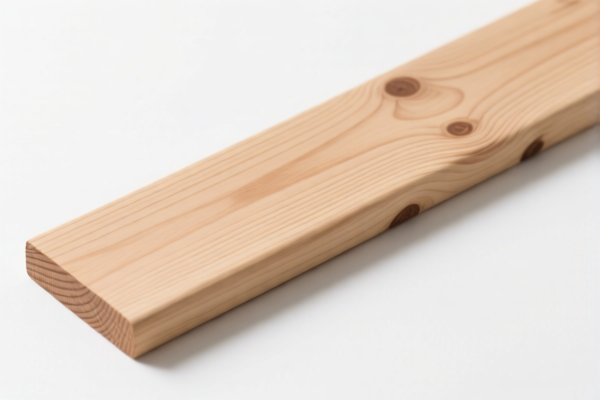


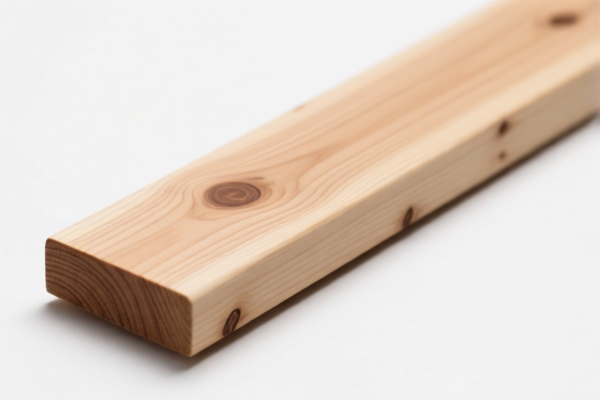
AI Analysis
🪵 Unveneered Wood (Particle Board & OSB)
🌐 HS Code Reference & Customs Clearance Guide | 2026 Latest Tariff Analysis | Professional Clearance Strategy
📌 1. Product Definition & Classification: What Exactly is "Unveneered Wood"?
In the context of international trade and the provided data, "Unveneered Wood" specifically refers to engineered wood panels made from wood strands, particles, or wafers bonded together. This is distinct from solid sawn timber. The key classification criteria are:
- Particle Board (PB): Made from wood chips, shavings, or sawdust bonded with resin.
- Oriented Strand Board (OSB): Made from large wood strands oriented in layers and bonded.
- Similar Boards (Waferboard): Similar composition to PB but with larger flakes.
- Key Exclusion: These are "unveneered," meaning they are not covered with a thin layer of wood veneer. If veneered, they would fall under different HS codes (e.g., Chapter 44, Section X).
⚠️ Critical Distinction:
- Not Solid Wood: Do not classify as "Sawn Wood" (4403-4407).
- Not Plywood: Do not classify as "Plywood" (4412).
- Correct Category: These fall under HS 4410 – "Particle board, oriented strand board (OSB) and similar board of wood or other ligneous materials."
📦 2. HS Code Classification Details (2026 Latest Tariff Authority对照)
Based on the provided <DATA>, there are two specific HS Codes for unveneered wood products, distinguished by their manufacturing process/type within the "Of wood" category.
| HS Code | Product Description | Specific Type | Binding Substance |
|---|---|---|---|
4410.11.00.60 |
Particle Board | Particle Board | Resins or other organic binding substances |
4410.19.00.60 |
Other | OSB / Waferboard / Similar Boards | Resins or other organic binding substances |
🔍 Key Insight:
- HS 4410.11.00.60: Specifically for Particle Board. If your product is standard chipboard/particle board, use this code.
- HS 4410.19.00.60: For OSB, Waferboard, or similar boards. If your product is OSB (common in construction), use this code.
- Both codes require the product to be "Of wood" and "agglomerated with resins or other organic binding substances."
💰 3. 2026 Latest Tariff Rate Breakdown (Including Additional Taxes)
✅ Applicable Country: United States (US)
✅ Origin: China (CN) (Implied by the 25% Additional Tariff)
✅ Effective Date: Current (as per provided data)
🎯 1. 4410.11.00.60 – Particle Board
| Item | Content |
|---|---|
| Base Tariff | 0.0% (Ad Valorem) |
| Additional Tariff (Section 301) | +25.0% |
| Total Tariff Rate | 25.0% |
| Tax Calculation | CIF Value × 25% |
| De Minimis Eligibility | ❌ Not Eligible (Section 301 tariffs apply regardless of value) |
| Legal Basis | USITC Tariff Schedule → HTS 4410.11.00.60 → Footnote 9903.88.01 (301 Tariff) |
📌 Explanation:
- Base Rate 0%: The US has no base tariff for this specific subheading.
- 25% Additional Tariff: This is the Section 301 tariff imposed on certain Chinese goods. It is non-negotiable and applies to all imports from China unless a specific exclusion applies (which is rare for basic wood panels).
- Total Cost Impact: You pay 25 cents in duties for every $1.00 of CIF value.
🎯 2. 4410.19.00.60 – Other (OSB, Waferboard, etc.)
| Item | Content |
|---|---|
| Base Tariff | 0.0% (Ad Valorem) |
| Additional Tariff (Section 301) | +25.0% |
| Total Tariff Rate | 25.0% |
| Tax Calculation | CIF Value × 25% |
| De Minimis Eligibility | ❌ Not Eligible |
| Legal Basis | USITC Tariff Schedule → HTS 4410.19.00.60 → Footnote 9903.88.01 (301 Tariff) |
📌 Note:
- The tariff structure is identical to Particle Board.
- Whether you ship Particle Board or OSB, the duty burden is the same: 25%.
🛠️ 4. Customs Clearance Practical Advice (Pitfall Avoidance Guide)
✅ 1. Required Documentation Checklist
| Document | Mandatory? | Purpose |
|---|---|---|
| ✅ Commercial Invoice | ✔️ | Must clearly state "Particle Board" or "OSB," not just "Wood." |
| ✅ Packing List | ✔️ | Detail weight, dimensions, and number of bundles. |
| ✅ Product Specification Sheet | ✔️ | Confirm it is wood-based and agglomerated with resins. |
| ✅ Bill of Lading (B/L) | ✔️ | Standard shipping document. |
| ✅ Fumigation Certificate | ✔️ | Critical: Wood products often require ISPM 15 compliance (heat treatment/fumigation) to prevent pest introduction. |
| ✅ Certificate of Origin (CO) | ✔️ | To prove origin (China) for tariff application. |
✅ 2. Declaration Tips (Key Mantras)
🔥 "Be Specific: Say 'Particle Board' or 'OSB,' Not 'Wood'"
| Scenario | Correct Declaration | Wrong Declaration | Consequence |
|---|---|---|---|
| Standard Chipboard | "Particle Board, 18mm, Formaldehyde Resin" | "Wood Board" | Risk of misclassification, audit delays |
| Construction OSB | "Oriented Strand Board (OSB), 12mm, Phenolic Resin" | "Plywood" | Wrong HS Code (Plywood is 4412, different rate) |
| Veneered Boards | Do NOT use 4410 codes. Use 4412/4408. | Using 4410 for veneered wood | Penalties for false classification |
⚠️ Critical Warning:
- If the product is veneer-covered, it is NOT "Unveneered." It must be classified under Chapter 44, Section X (e.g., 4412 for plywood-veneer, or 4408 for veneer sheets). Using 4410 for veneered wood is a major compliance error.
✅ 3. Special Considerations
| Issue | Recommendation |
|---|---|
| Formaldehyde Emissions | Ensure products meet CARB Phase 2 or TSCA Title VI standards if entering the US. Non-compliance leads to seizure. |
| ISPM 15 Compliance | If packaged in wooden pallets, ensure pallets are stamped and compliant. Loose wood particles do not require ISPM 15, but packaging does. |
| Anti-Dumping Duties | Check if specific Particle Board or OSB from your country faces anti-dumping duties (AD/CVD). While the provided data shows only 25%, AD/CVD could add extra percentages. Always verify with a customs broker. |
🌍 5. Global Market Comparison (2026 Latest)
| Country/Region | Recommended HS Code | Total Tariff Rate (China Origin) | Notes |
|---|---|---|---|
| 🇺🇸 United States | 4410.11.00.60 / 4410.19.00.60 |
25.0% | Includes Section 301 tariff. |
| 🇨🇳 China (Import) | 4410.11.00 / 4410.19.00 |
Varies | Check latest Chinese tariff schedule. |
| 🇪🇺 European Union | 4410.11 / 4410.19 |
~0-5% | No major Section 301 equivalent, but check for carbon border adjustments. |
| 🇨🇦 Canada | 4410.11 / 4410.19 |
~0% | Likely duty-free under CUSMA, but verify. |
📌 Conclusion:
- The 25% tariff is specific to US imports from China.
- For other markets, the tariff may be significantly lower or zero, but documentation and phytosanitary requirements remain strict.
📌 6. Common Mistakes & Pitfalls (Lessons Learned)
❌ Mistake 1: Declaring OSB as "Plywood"
👉 Consequence: Wrong HS Code (4412 vs 4410). While rates might be similar, it triggers customs audits for misclassification.
❌ Mistake 2: Ignoring Formaldehyde Compliance
👉 Consequence: US Customs and Border Protection (CBP) may detain shipments for violating TSCA Title VI. Fines can be massive.
❌ Mistake 3: Assuming "Wood" means Solid Timber
👉 Consequence: Using HS 4403/4407 codes for engineered wood leads to immediate rejection. Use 4410 for particle/strand boards.
❌ Mistake 4: Forgetting the 25% Additional Tariff in Costing
👉 Consequence: Profit margins are wiped out. Always include 25% duty in landed cost calculations for US-bound wood panels from China.
✅ Correct Practice:
"Oriented Strand Board (OSB), 12mm Thick, Phenol-Formaldehyde Resin Bound, CARB Phase 2 Compliant, ISPM 15 Palletized"
🎯 7. Conclusion: Precision in Classification Saves Money!
🎯 Remember the Mantra:
🔹 "Unveneered = 4410. Particle = .11. OSB = .19. Tariff = 25%."
🔹 "Veneered? Go to 4412. No Veneer? Stick to 4410."
📌 Pro Tip:
- If you are shipping to the US, budget for 25% duty on the CIF value.
- Ensure your supplier provides a TSCA Title VI compliance statement to avoid clearance delays.
- Use a licensed customs broker to verify Anti-Dumping Duties specific to your product type and origin.
📣 Immediate Action:
📞 Contact your customs broker with the exact product description.
📄 Provide technical specs to confirm "Unveneered" status.
📉 Calculate landed cost including the 25% tariff to ensure profitability.
✨ Professional Clearance Starts with Accurate Classification!
💼 Every Dollar of Duty Matters – Get It Right the First Time!
Customer Reviews
About HS Code Classification
The Harmonized System (HS) is an internationally standardized nomenclature developed by the World Customs Organization (WCO) to classify traded products. Over 200 countries use the HS system as the basis for customs tariffs, trade statistics, and import/export regulations.
Each HS code follows a hierarchical structure:
- Chapter (2 digits) — Broad category of goods (e.g., Chapter 84: Machinery and Mechanical Appliances)
- Heading (4 digits) — More specific grouping within the chapter
- Subheading (6 digits) — Internationally standardized breakdown, used by all WCO member countries
- National subdivisions (8-10 digits) — Country-specific extensions for further classification, such as US HTSUS 10-digit codes
Correct HS code classification is essential for smooth customs clearance, accurate duty payment, and compliance with trade regulations. Misclassification can lead to customs delays, overpayment of duties, or penalties.
When importing from CN to US, the applicable tariff rates may include:
- Most-Favored-Nation (MFN) rate — The standard duty rate applied to WTO members
- General rate — Applied to countries without trade agreements
- Trade remedy duties — Additional tariffs such as Section 301 (anti-dumping), Section 232 (national security), or countervailing duties
The information provided on this page is for reference purposes only. For official classification, please consult with your local customs authority or a licensed customs broker.