Unvulcanized Rubber Gasket
CN → US| HS Code | Tariff Rate | Origin | Destination | Doc |
|---|---|---|---|---|
| 4006901000 | 35.0% | CN | US | Official Doc |
| 4006905000 | 37.7% | CN | US | Official Doc |
| 4005990000 | 35.0% | CN | US | Official Doc |
| 4001290000 | 35.0% | CN | US | Official Doc |
| 4001220050 | 35.0% | CN | US | Official Doc |
Product Images
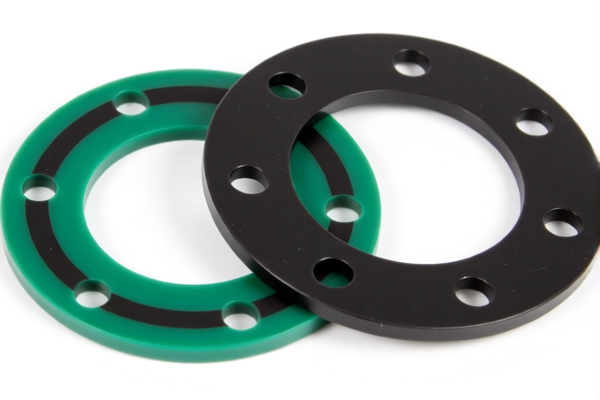
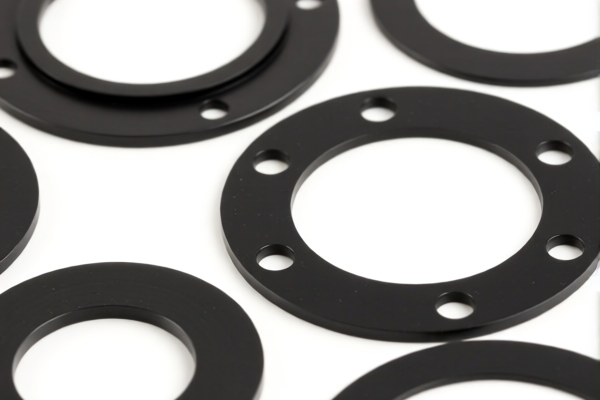
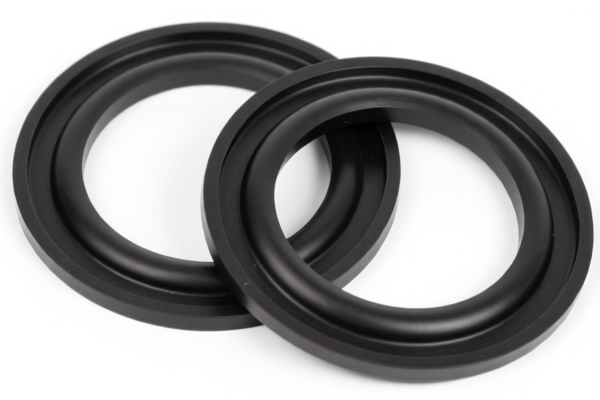
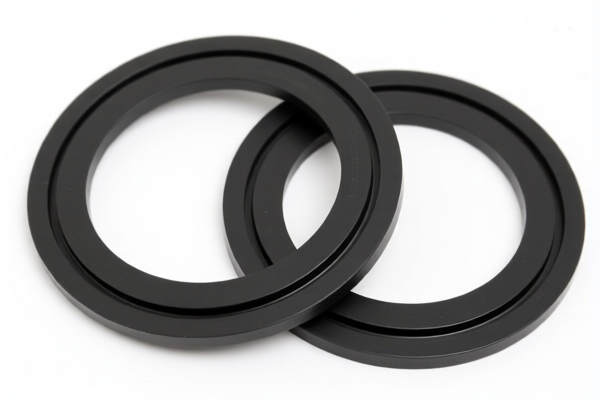
AI Analysis
🛡️ Unvulcanized Rubber Gaskets & Profiles (HS Code Classification Guide)
🌐 HS Code Reference & Customs Clearance Guide | 2026 Latest Tariff Analysis | Professional Compliance Strategy
📌 I. Product Definition & Classification: What Exactly Are "Unvulcanized Rubber" Goods?
In international trade, "Unvulcanized Rubber" refers to raw rubber or compounded rubber that has not yet undergone the vulcanization process (heating with sulfur or other agents to cross-link polymer chains). This state makes the material soft, sticky, and moldable, but lacking final mechanical strength.
The classification depends heavily on the shape and material composition (Natural vs. Synthetic/Mixed):
- Gaskets/Pads (垫片): Pre-formed flat or shaped items intended for sealing.
- Bars/Rods/Stripes (棒/条): Semi-finished shapes intended for further machining.
⚠️ Critical Distinction:
- If the item is a finished gasket intended for immediate use → Look at Chapter 40, Heading 4006 (Other rubber articles).
- If the item is a raw bar/strip for further processing → Look at Chapter 40, Heading 4001/4005 (Raw rubber or compounded rubber).
- Material Conflict: Natural rubber has different duty structures compared to synthetic/mixed rubber in certain subheadings.
📦 II. HS Code Classification Matrix (Based on Provided Data)
The following HS Codes are derived strictly from the provided dataset for Unvulcanized Rubber products.
| HS Code | Product Description | Form Factor | Material Specifics | Total Tax Rate |
|---|---|---|---|---|
| 4006.90.10.00 | Unvulcanized Rubber Gasket | Gasket/Pad | Natural Rubber (Matches "Other shapes of natural rubber") | 35.0% |
| 4006.90.50.00 | Unvulcanized Rubber Gasket | Gasket/Pad | Non-specific shape/General Rubber | 37.7% |
| 4005.99.00.00 | Unvulcanized Rubber Bar | Bar/Rod | Mixed/Compounded Rubber (Non-natural specific) | 35.0% |
| 4001.29.00.00 | Unvulcanized Rubber Bar | Strip/Bar | Natural Rubber (Board/Sheet/Strip form) | 35.0% |
| 4001.22.00.50 | Unvulcanized Rubber Bar | Bar/Rod | Natural Rubber (Primary form/Strip) | 35.0% |
🔍 Key Insight:
- Gaskets (4006) are classified as "Other Rubber Articles."
- Bars/Rods (4001/4005) are classified as "Raw Rubber" or "Compounded Rubber."
- Natural Rubber items often attract 0% Basic Duty but still face heavy附加 taxes, resulting in the same 35% total as mixed rubber in this specific dataset context.
💰 III. 2026 Tariff Rate Breakdown (Detailed Tax Analysis)
✅ Applicable Jurisdiction: USA (US)
✅ Origin: China (CN)
✅ Effective Date: Post-November 2025 (Based on 122 Clause and 301 Tariffs)
🎯 1. HS Code 4006.90.10.00 — Unvulcanized Rubber Gasket (Natural)
| Item | Detail |
|---|---|
| Basic Duty | 0.0% (Ad Valorem) |
| Trade Remedy Duty | +25.0% (Section 301 / USITC Footnote) |
| IEEPA / 122 Clause | +10.0% (Specific to China-origin goods) |
| Total Effective Rate | 35.0% |
| Calculation Base | CIF Value × 35% |
| De Minimis Exemption | ❌ Denied (High-value trade remedy duties usually block de minimis) |
| Legal Basis Path | IEEPA:9903.01.25 → USITC:4006.90.10.00 → FOOTNOTE:301 |
📌 Explanation:
- Although the Basic Duty is 0%, the 25% Section 301 tariff and 10% 122 Clause tariff apply, summing to 35%.
- This code is specific to Natural Rubber gaskets.
🎯 2. HS Code 4006.90.50.00 — Unvulcanized Rubber Gasket (Non-Specific)
| Item | Detail |
|---|---|
| Basic Duty | 2.7% (Ad Valorem) |
| Trade Remedy Duty | +25.0% (Section 301) |
| IEEPA / 122 Clause | +10.0% |
| Total Effective Rate | 37.7% |
| Calculation Base | CIF Value × 37.7% |
| De Minimis Exemption | ❌ Denied |
| Legal Basis Path | IEEPA:9903.01.25 → USITC:4006.90.50.00 → FOOTNOTE:301 |
📌 Explanation:
- This code is a "catch-all" for unvulcanized gaskets that don't fit the specific natural rubber description of 4006.90.10.00.
- It has a higher base rate (2.7%), making it the most expensive option at 37.7%.
🎯 3. HS Code 4005.99.00.00 — Unvulcanized Rubber Bar (Mixed/Compounded)
| Item | Detail |
|---|---|
| Basic Duty | 0.0% |
| Trade Remedy Duty | +25.0% |
| IEEPA / 122 Clause | +10.0% |
| Total Effective Rate | 35.0% |
| Calculation Base | CIF Value × 35% |
| De Minimis Exemption | ❌ Denied |
| Legal Basis Path | IEEPA:9903.01.25 → USITC:4005.99.00.00 |
📌 Explanation:
- Classified under "Compounded Rubber not vulcanized."
- Same total tax as natural rubber gaskets despite being a different form factor.
🎯 4. HS Code 4001.29.00.00 & 4001.22.00.50 — Unvulcanized Rubber Bars (Natural Rubber)
| Item | Detail |
|---|---|
| Basic Duty | 0.0% |
| Trade Remedy Duty | +25.0% |
| IEEPA / 122 Clause | +10.0% |
| Total Effective Rate | 35.0% |
| Calculation Base | CIF Value × 35% |
| De Minimis Exemption | ❌ Denied |
| Legal Basis Path | IEEPA:9903.01.25 → USITC:4001.2x |
📌 Explanation:
- 4001.29: Other natural rubber in primary forms (strips/bars).
- 4001.22: Natural rubber in primary forms (specific strip规格).
- Both are treated as raw materials with 0% base duty, but the 35% total burden remains due to trade policies.
🛠️ IV. Customs Clearance Practical Advice (Real-World Pitfall Guide)
✅ 1. Documentation Checklist (Mandatory)
| Document | Required? | Notes |
|---|---|---|
| ✅ Commercial Invoice | ✔️ | Must clearly state "Unvulcanized" (未硫化). Do NOT just say "Rubber." |
| ✅ Material Safety Data Sheet (MSDS) | ✔️ | To prove chemical composition and vulcanization status. |
| ✅ Product Photos | ✔️ | Show shape (Gasket vs. Bar) and texture (soft/sticky = unvulcanized). |
| ✅ Labeling | ✔️ | Must include "Unvulcanized Rubber" and HS Code if available. |
| ✅ Origin Certificate | ✔️ | To verify China origin for 122 Clause application. |
✅ 2. Declaration Tips (The Golden Rules)
🔥 "Declare State, Declare Form, Avoid Ambiguity!"
| Scenario | Correct Declaration | Incorrect Declaration | Consequence |
|---|---|---|---|
| Gasket | "Unvulcanized Rubber Gasket, Natural" | "Rubber Part" or "Seal" | Risk of misclassification to 4006.90.50 (37.7%) |
| Bar/Rod | "Unvulcanized Rubber Bar, Natural" | "Rubber Mold" or "Raw Material" | Risk of delay or request for further evidence |
| Vulcanized? | Confirm UNVULCANIZED | "Rubber Gasket" (Ambiguous) | If found Vulcanized, duty changes to 5-6% but fraud penalty applies |
⚠️ Critical Warning:
- Do not use generic terms like "Rubber Accessory."
- Do not fail to specify "Unvulcanized" (未硫化). If customs suspects it is vulcanized, they may reclassify it under 4016 (Other vulcanized rubber articles), which has different duties, leading to back taxes and penalties.
✅ 3. Special Case Handling
| Situation | Recommendation |
|---|---|
| Mixed Material Gaskets | If it contains non-rubber components (metal inserts), disclose separately. Pure rubber gaskets go to 4006. |
| Custom Shapes | If the gasket is not a standard circle/square, ensure it fits 4006.90 (Other). If it's just a blob of rubber, it might still be 4006.90.50. |
| Sample Shipments | Even for samples, declare as Unvulcanized. De minimis ($800) exemption is NOT available due to the 35%+ effective tax rate. |
🌍 V. Global Market Comparison (2026 Outlook)
| Country/Region | Recommended HS Code | Approx. Tariff | Notes |
|---|---|---|---|
| 🇺🇸 USA | 4006.90.10.00 / 4006.90.50.00 |
35% - 37.7% | High trade remedy duties. 122 Clause applies. |
| 🇨🇳 China | 4006.90.10.00 |
~5-10% | Import duty varies. Lower than US. |
| 🇪🇺 EU | 4006.99 |
0-3% | Generally low duty. No US-style 301/122 clauses. |
| 🇬🇧 UK | 4006.99 |
0-2% | Post-Brexit tariffs are competitive. |
📌 Conclusion:
- The USA is the most expensive market for unvulcanized rubber imports due to the 35-37.7% effective rate.
- EU/UK offer much better duty advantages. Consider supply chain restructuring if shipping directly from China to the US.
📌 VI. Common Errors & Pitfalls (Lessons Learned)
❌ Error 1: Declaring "Unvulcanized" as "Vulcanized"
👉 Consequence: If customs tests it and finds it's not vulcanized, they may flag it for misdeclaration fraud. If it is vulcanized but declared as such to avoid inspection, you risk penalties if the duty rate differs.
❌ Error 2: Ignoring the "122 Clause"
👉 Consequence: Assuming only 25% (301 tariff) applies. The additional 10% (122 Clause) must be paid. Missing this leads to CBSA/Customs deficits.
❌ Error 3: Confusing Gaskets (4006) with Raw Bars (4001)
👉 Consequence: If you ship a gasket but declare it as a bar to save costs (if applicable), it is misclassification. Both in the provided data have similar 35% rates, so the financial risk is lower, but compliance risk remains.
✅ Best Practice:
Use precise English descriptions:
"Unvulcanized Natural Rubber Gasket, Circular, 50mm Diameter, for Industrial Sealing"
"Unvulcanized Natural Rubber Bar, Strip Form, Raw Material"
🎯 VII. Conclusion: Precision in Compliance Saves Money
🎯 Key Takeaways:
🔹 Unvulcanized means No De Minimis exemption in the US.
🔹 Total Tax is 35-37.7% due to Base (0-2.7%) + 301 (25%) + 122 (10%).
🔹 Natural Rubber Gaskets (4006.90.10) are cheaper (35%) than General Gaskets (4006.90.50 at 37.7%).
🔹 Bars/Rods also fall at 35% if Natural Rubber.
📌 Pro Tip:
If you are importing large volumes, consider Advanced Ruling (ACE) from CBP to confirm the HS Code and duty liability before shipment. This prevents surprise fees and delays.
📣 Immediate Action Required:
📞 Consult your customs broker with photos and material specs.
🚀 Verify "Unvulcanized" status on your invoice.
💰 Budget for ~35% total landed cost impact due to US tariffs.
✨ Professional Clearance Starts with Accurate Classification!
💼 Every percentage point in duty affects your profit margin!
Customer Reviews
About HS Code Classification
The Harmonized System (HS) is an internationally standardized nomenclature developed by the World Customs Organization (WCO) to classify traded products. Over 200 countries use the HS system as the basis for customs tariffs, trade statistics, and import/export regulations.
Each HS code follows a hierarchical structure:
- Chapter (2 digits) — Broad category of goods (e.g., Chapter 84: Machinery and Mechanical Appliances)
- Heading (4 digits) — More specific grouping within the chapter
- Subheading (6 digits) — Internationally standardized breakdown, used by all WCO member countries
- National subdivisions (8-10 digits) — Country-specific extensions for further classification, such as US HTSUS 10-digit codes
Correct HS code classification is essential for smooth customs clearance, accurate duty payment, and compliance with trade regulations. Misclassification can lead to customs delays, overpayment of duties, or penalties.
When importing from CN to US, the applicable tariff rates may include:
- Most-Favored-Nation (MFN) rate — The standard duty rate applied to WTO members
- General rate — Applied to countries without trade agreements
- Trade remedy duties — Additional tariffs such as Section 301 (anti-dumping), Section 232 (national security), or countervailing duties
The information provided on this page is for reference purposes only. For official classification, please consult with your local customs authority or a licensed customs broker.