Unvulcanized Rubber O Rings
CN → US| HS Code | Tariff Rate | Origin | Destination | Doc |
|---|---|---|---|---|
| 3926904510 | 38.5% | CN | US | Official Doc |
| 4016935010 | 37.5% | CN | US | Official Doc |
| 3926906090 | 39.2% | CN | US | Official Doc |
| 4016931010 | 37.5% | CN | US | Official Doc |
Product Images
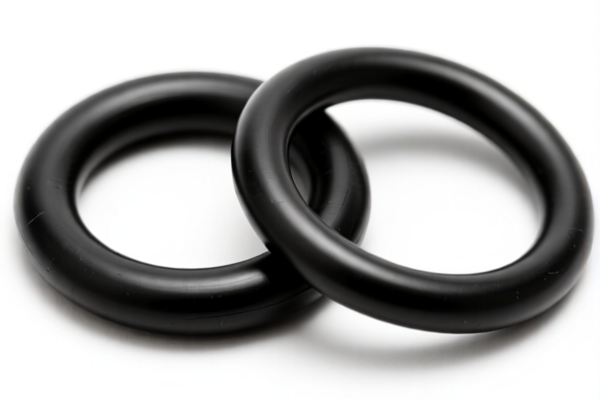
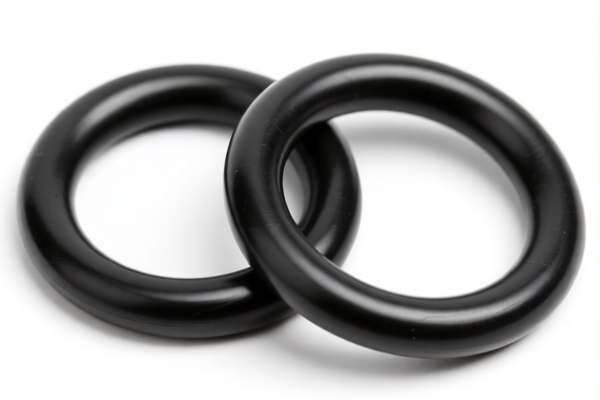
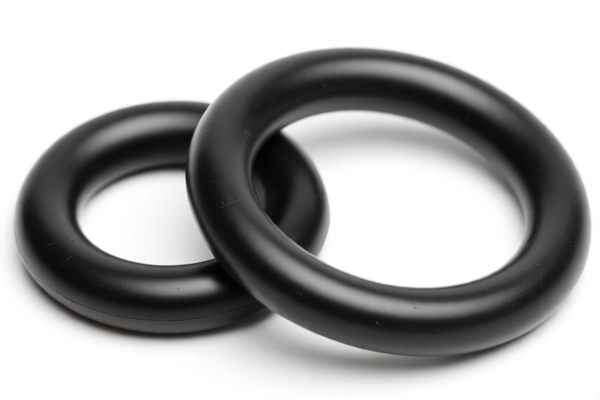
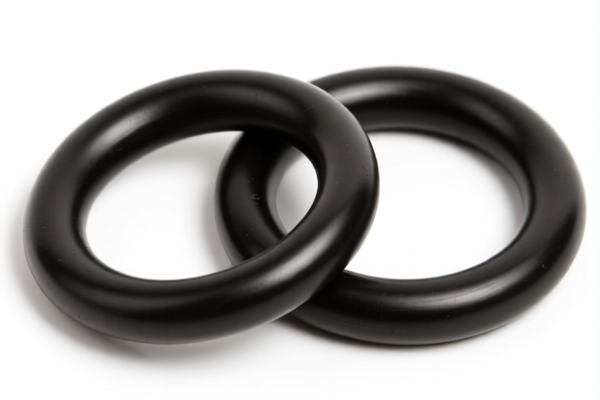
AI Analysis
🛡️ Unvulcanized Rubber O Rings (Fluoroelastomer)
🌐 HS Code Reference & Clearance Guide | 2026 Latest Tariff Analysis | Professional Customs Strategy
📌 I. Product Definition & Classification: Are You SURE It’s "Unvulcanized"?
Unvulcanized Rubber O Rings (specifically Fluoroelastomer/Viton type) represent a critical niche in international trade. The distinction between "Unvulcanized" (raw) and "Vulcanized" (finished) is the single most important factor determining your tariff rate. In the Harmonized System (HS), unvulcanized rubber often falls under plastic/synthetic rubber chapters (Chapter 39 or 40 depending on specific formulation), while vulcanized rubber falls strictly under Chapter 40 (Rubber and Articles Thereof).
⚠️ Key Distinction Point:
- Unvulcanized: Raw material, moldable, high tack, low strength. Usually classified under 3926 (Plastics/Composite) or specific subheadings of 4016 if deemed "prepared rubber." - Vulcanized: Cured, elastic, finished sealing component. Classified under 4016.93 (Rubber).
Note: The provided data specifically maps "Unvulcanized" descriptions to both Chapter 39 and 40, highlighting the complexity of customs classification where "Synthetic Rubber" intermediates can sometimes be grouped with plastics or rubber depending on the precise chemical state and intent.
📦 II. HS Code Classification Details (Based on Provided Data)
The following HS codes are derived directly from the provided dataset. Please note that while the summary mentions "Unvulcanized," the customs authority may debate the classification between Chapter 39 (Plastics/Composites) and Chapter 40 (Rubber) based on the degree of processing.
| HS Code | Product Description & Category | Total Tax Rate | Tax Composition Detail |
|---|---|---|---|
3926.90.45.10 |
Fluoroelastomer O-Ring, Plastic/Synthetic Rubber Category, Form: O-Ring | 38.5% | Base Tariff: 3.5% Supplementary Tariff: 25.0% Section 122 Tariff: 10% |
4016.93.50.10 |
Fluoroelastomer O-Ring, Vulcanized Rubber Category, Form: O-Ring | 37.5% | Base Tariff: 2.5% Supplementary Tariff: 25.0% Section 122 Tariff: 10% |
3926.90.60.90 |
Fluoroelastomer O-Ring, Synthetic Rubber/Plastic Material, Compliant with Mechanical Sealing Component Category | 39.2% | Base Tariff: 4.2% Supplementary Tariff: 25.0% Section 122 Tariff: 10% |
4016.93.10.10 |
Fluoroelastomer O-Ring, Vulcanized Rubber Category, Compliant with Automotive O-Ring Definition | 37.5% | Base Tariff: 2.5% Supplementary Tariff: 25.0% Section 122 Tariff: 10% |
🔍 Critical Observation:
- All listed HS codes attract a 25% Supplementary Tariff and a 10% Section 122 Tariff.
- The variation in total tax (37.5% vs. 39.2%) is driven by the Base Tariff (ranging from 2.5% to 4.2%).
- Confusion Alert: The prompt specifies "Unvulcanized," yet two codes (4016.93.50.10and4016.93.10.10) explicitly state "Vulcanized Rubber" in their summary. This implies that unless the raw material is clearly documented as unprocessed, customs may default to the more common "Vulcanized" rubber classification (Chapter 40), or the importer may be leveraging a specific "Synthetic Rubber" interpretation under Chapter 39 to avoid misclassification penalties. Clarity in product description is mandatory.
💰 III. 2026 Tariff Rate Breakdown (Detailed Policy Analysis)
✅ Applicable Country: United States (US)
✅ Origin: China (CN)
✅ Applicable Tariffs: USITC Base Tariff, Section 301 Supplementary Tariff, Section 122 Tariff
🎯 1. 3926.90.45.10 & 3926.90.60.90 — Chapter 39 (Plastics/Composites Route)
| Item | Content |
|---|---|
| Base Tariff | 3.5% (3926.90.45.10) / 4.2% (3926.90.60.90) |
| Section 301 Supplementary Tariff | +25.0% |
| Section 122 Tariff | +10.0% |
| Total Effective Rate | 38.5% or 39.2% |
| Calculation Basis | CIF Value × Total Rate |
| De Minimis Exemption | ❌ Not Eligible (High value/threshold items typically excluded; Section 301 items generally deny de minimis) |
| Legal Basis | USITC Subheading Analysis + Section 301 List + Section 122 Authority |
📌 Explanation:
- These codes suggest the item is treated as a "Plastic Article" or "Composite" rather than pure rubber.
- The higher base tariff for3926.90.60.90(4.2%) makes it slightly more expensive than3926.90.45.10(3.5%).
- Risk: If the product is truly unvulcanized, this might be the correct classification. However, if it’s semi-finished or vulcanized, this could be considered misclassification.
🎯 2. 4016.93.50.10 & 4016.93.10.10 — Chapter 40 (Rubber Articles Route)
| Item | Content |
|---|---|
| Base Tariff | 2.5% |
| Section 301 Supplementary Tariff | +25.0% |
| Section 122 Tariff | +10.0% |
| Total Effective Rate | 37.5% |
| Calculation Basis | CIF Value × 37.5% |
| De Minimis Exemption | ❌ Not Eligible |
| Legal Basis | Chapter 40 Notes + Section 301 List + Section 122 Authority |
📌 Explanation:
- These codes are for "Vulcanized Rubber" O-rings.
- Lower Base Tariff (2.5%) makes this the most cost-effective option among the four, despite the same 35% in additional taxes.
- Strategic Implication: If you are importing Unvulcanized rings, classifying them under Chapter 40 (4016.93) might be incorrect and subject to penalty if audited. However, if the supplier provides them in a state that can be argued as "prepared for vulcanization," you must ensure documentation supports this. Do not misclassify Unvulcanized goods as Vulcanized to save 1% in base tariff; the risk of fraud allegations is high.
🛠️ IV. Clearance Practical Advice (Avoiding Pitfalls)
✅ 1. Documentation Checklist (Non-Negotiable)
| Document | Required? | Purpose |
|---|---|---|
| ✅ Material Safety Data Sheet (MSDS) | ✔️ | To confirm "Unvulcanized" status vs. cured rubber. |
| ✅ Technical Specification Sheet | ✔️ | Must explicitly state: "Unvulcanized," "Raw Compound," "Before Curing." |
| ✅ Commercial Invoice | ✔️ | Must match HS Code and explicitly describe "Unvulcanized Fluoroelastomer O-Ring." |
| ✅ Packaging Photos | ✔️ | Show raw material state (sticky, tacky, not elastic). |
| ✅ Certificate of Origin | ✔️ | Required for Section 301/122 origin verification. |
| ✅ Importers Security Filing (ISF) | ✔️ | Filed 24 hours before loading. |
📌 Key Tip:
- If the O-rings are sticky and deformable under finger pressure, they are Unvulcanized.
- If they are elastic and snap back, they are Vulcanized.
- Misdeclaration of Unvulcanized as Vulcanized (or vice versa) can lead to seizures.
✅ 2. Classification Strategy
| Scenario | Recommended Action |
|---|---|
| Truly Unvulcanized | Use 3926.90.45.10 or 3926.90.60.90. Justify with MSDS and supplier declaration. |
| Semi-Vulcanized / Green Rubber | Consult a customs broker. May fall under 4016.93 if considered "prepared." |
| Fully Vulcanized | Use 4016.93.50.10 or 4016.93.10.10. Lower base tariff (2.5%) is optimal. |
| Automotive Specific | If for auto use, 4016.93.10.10 is ideal if vulcanized. |
✅ 3. Cost Optimization
- Choose
4016.93(37.5%) over3926.90.60.90(39.2%) if the product can be legitimately classified as rubber articles. - Avoid
3926.90.60.90if possible due to the highest base tariff (4.2%). - Section 122 Tariff (10%) applies to all. There is no exemption. Factor this into your cost model.
🌍 V. Global Market Comparison (2026)
| Country/Region | Recommended HS Code | Total Est. Tax | Notes |
|---|---|---|---|
| 🇺🇸 USA | 3926.90.45.10 / 4016.93.50.10 |
37.5% - 39.2% | Includes 25% Sec 301 + 10% Sec 122. High compliance risk. |
| 🇨🇳 China | 4016.93 |
~10-15% | No Section 301/122. Lower cost for re-export. |
| 🇪🇺 EU | 4016.93 |
4-6% | No high supplementary tariffs. EAS/CE marking required. |
| 🇯🇵 Japan | 4016.93 |
0-3% | JIS standards may apply. |
📌 Conclusion:
- The USA is the highest-cost market due to layered tariffs (Base + 301 + 122).
- Classify accurately: Using Chapter 40 (4016.93) saves 0.3% - 1.7% compared to Chapter 39 alternatives.
- Do not ignore Section 122: It adds 10% across the board for China-origin goods.
📌 VI. Common Mistakes & Pitfalls (Lessons Learned)
❌ Mistake 1: Labeling "Unvulcanized" O-rings as "Vulcanized" to get the lower 2.5% base tariff.
👉 Consequence: Customs audit reveals raw material; penalty of 25-50% of value + seizure.
❌ Mistake 2: Using 3926.90.60.90 without justification.
👉 Consequence: Paying 39.2% when 37.5% might be possible if correctly classified under Chapter 40 (if vulcanized) or if a better Chapter 39 subheading exists.
❌ Mistake 3: Ignoring Section 122 Tariff.
👉 Consequence: Underestimating landed cost by 10%. This is a mandatory surcharge.
❌ Mistake 4: Inconsistent Documentation.
👉 Consequence: Invoice says "Rubber," MSDS says "Polymer Resin." Customs delays shipment for inspection.
✅ Correct Approach:
"Unvulcanized Fluoroelastomer O-Ring, Raw Compound, Before Curing, MSDS Attached, Origin China."
🎯 VII. Conclusion: Precision Saves Money
🎯 Key Takeaway:
🔹 "Unvulcanized" vs. "Vulcanized" is a binary choice. Pick one, document it, and stick to it.
🔹 "Total Tax = Base + 25% + 10%." There is no avoiding the 35% in additional tariffs.
🔹 "Chapter 40 (4016.93) is cheaper than Chapter 39 (3926.90) by 0.3-1.7%." But only if the product is actually rubber.
📌 Pro Tip:
If you are importing large volumes, consider pre-classification rulings from CBP (Customs and Border Protection) for
4016.93.50.10or4016.93.10.10if the product can be argued as "prepared rubber articles." This provides legal certainty and avoids surprise audits.
📣 Immediate Action:
📞 Contact your customs broker with MSDS and Technical Specs.
🚀 Clarify "Unvulcanized" status. Do not guess.
💰 Calculate Landed Cost using 37.5% (if Chapter 40) or 38.5-39.2% (if Chapter 39).
✨ Professional Clearance Starts with Accurate Classification!
💼 Every Percent Matters in High-Tariff Environments!
Customer Reviews
About HS Code Classification
The Harmonized System (HS) is an internationally standardized nomenclature developed by the World Customs Organization (WCO) to classify traded products. Over 200 countries use the HS system as the basis for customs tariffs, trade statistics, and import/export regulations.
Each HS code follows a hierarchical structure:
- Chapter (2 digits) — Broad category of goods (e.g., Chapter 84: Machinery and Mechanical Appliances)
- Heading (4 digits) — More specific grouping within the chapter
- Subheading (6 digits) — Internationally standardized breakdown, used by all WCO member countries
- National subdivisions (8-10 digits) — Country-specific extensions for further classification, such as US HTSUS 10-digit codes
Correct HS code classification is essential for smooth customs clearance, accurate duty payment, and compliance with trade regulations. Misclassification can lead to customs delays, overpayment of duties, or penalties.
When importing from CN to US, the applicable tariff rates may include:
- Most-Favored-Nation (MFN) rate — The standard duty rate applied to WTO members
- General rate — Applied to countries without trade agreements
- Trade remedy duties — Additional tariffs such as Section 301 (anti-dumping), Section 232 (national security), or countervailing duties
The information provided on this page is for reference purposes only. For official classification, please consult with your local customs authority or a licensed customs broker.