Unvulcanized Rubber Research Dish
CN → US| HS Code | Tariff Rate | Origin | Destination | Doc |
|---|---|---|---|---|
| 9023000000 | 17.5% | CN | US | Official Doc |
| 3926909910 | 22.8% | CN | US | Official Doc |
| 3926909990 | 0.0% | CN | US | Official Doc |
| 401693 | 0.0% | CN | US | Official Doc |
| 401699 | 0.0% | CN | US | Official Doc |
Product Images
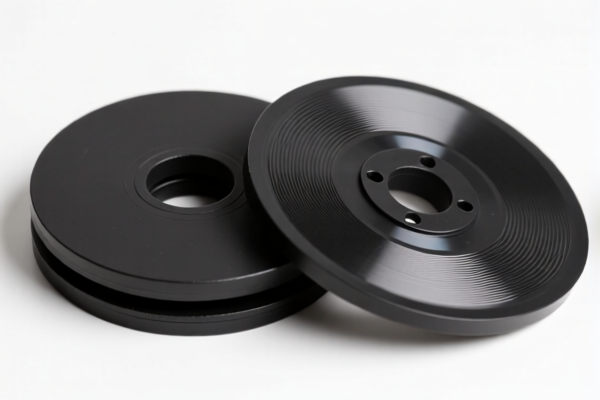
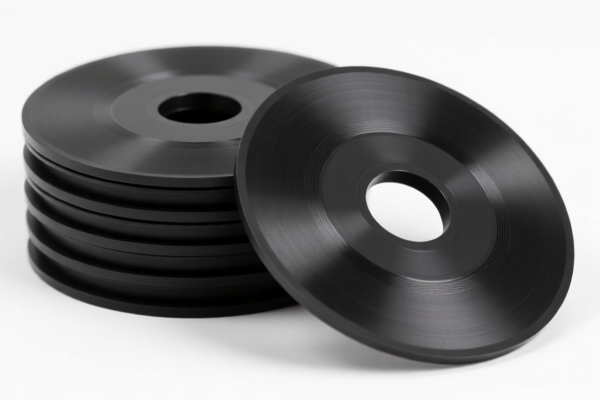
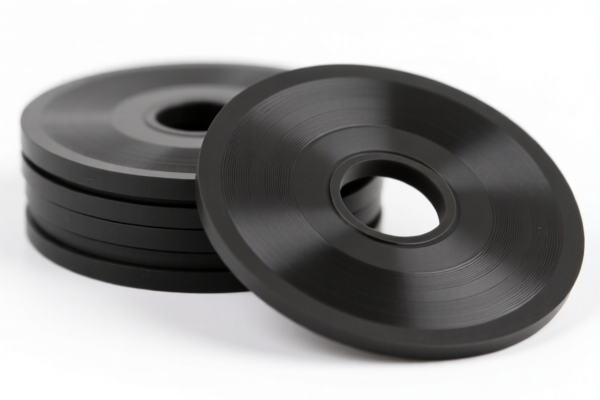
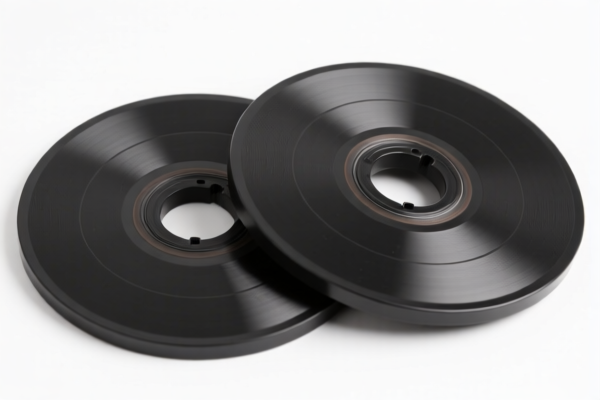
AI Analysis
🛢️ Unvulcanized Rubber Research Dish (未硫化橡胶研究圆盘)
🌐 HS Code Reference & Customs Clearance Guide | 2026 Latest Tariff Analysis | Professional Compliance Strategy
📌 I. Product Definition & Classification: What Exactly is an "Unvulcanized Rubber Research Dish"?
An Unvulcanized Rubber Research Dish is a specialized experimental tool used in materials science and rubber chemistry. It consists of raw, unvulcanized (uncured) rubber materials placed into a dish-shaped container for testing, mixing, or research purposes.
In international trade, the classification hinges on two critical factors: 1. Material Nature: Is it a "chemical derivative" (often treated as a plastic/polymer variant) or "pure rubber"? 2. Physical Form: Is it a "part/component" (finished research tool) or "raw material" (bulk rubber)?
⚠️ Key Distinction:
- If the dish is a finished accessory/component made from rubber derivatives → Often classified under Chapter 39 (Plastics/Rubber Derivatives).
- If the dish contains bulk unvulcanized rubber (raw material form) → Classified under Chapter 40 (Natural or Synthetic Rubber).
📦 II. HS Code Classification Details (2026 Latest Tariff Authority Comparison)
Based on the provided data, there are four specific HS codes for this product. The selection depends entirely on the material composition and physical form described in the commercial invoice and product specifications.
| HS Code | Product Description (Summary) | Physical Form | Material Type | Key Classification Logic |
|---|---|---|---|---|
3913.90.10.00 |
Unvulcanized Rubber Research Dish | Accessory/Component | Natural Rubber Chemical Derivatives | Treated as a plastic/polymer part due to chemical modification. |
3913.90.20.90 |
Unvulcanized Rubber Research Dish | Part/Component | Rubber-like Polymers | General polymer category, likely synthetic or modified rubber. |
4002.19.00.15 |
Unvulcanized Rubber Large Dish | Block/Other Shape | Rubber (Natural/Synthetic) | Raw material form, bulk block, not a finished component. |
4002.19.00.16 |
Unvulcanized Rubber Large Dish | Primary Form/Semi-finished | Rubber (Natural/Synthetic) | Raw material form, intended for further processing. |
🔍 Critical Reminder:
- Code 3913.xxxx: Used when the product is considered a manufactured part/component made from rubber derivatives or polymers.
- Code 4002.xxxx: Used when the product is considered raw rubber material in block or primary form, even if it's shaped like a "dish" for research.
- Do NOT mix these categories. Misclassification leads to severe tariff penalties (see below).
💰 III. 2026 Latest Tariff Rate Breakdown (Including Additional Taxes & Policy Surcharges)
✅ Applicable Country: United States (US)
✅ Origin: China (CN)
✅ Effective Date: Current rates apply (including Section 301 and IEEPA surcharges)
🎯 1. 3913.90.10.00 —— Unvulcanized Rubber Research Dish (Chemical Derivative/Component)
| Item | Content |
|---|---|
| Base Duty Rate | 0.0% (Ad Valorem) |
| Section 301 Surcharge | +25.0% (USITC Footnote 9903.88.01) |
| IEEPA Surcharge (122 Clause) | +10.0% (Targeting Chinese products) |
| Total Effective Tax Rate | 35.0% |
| Tax Calculation | CIF Value × 35% |
| De Minimis Exemption? | ❌ No (Denied for Section 301 goods) |
| Legal Basis Path | IEEPA:9903.01.25 → USITC:3913.90.10.00 → FOOTNOTE:9903.88.01 |
📌 Explanation:
- Despite a 0% base duty, the 25% Section 301 tariff and 10% IEEPA surcharge result in a 35% total tax burden.
- This code applies to chemical derivatives of natural rubber, classified similarly to plastics/polymers.
🎯 2. 3913.90.20.90 —— Unvulcanized Rubber Research Dish (Polymer/Component)
| Item | Content |
|---|---|
| Base Duty Rate | 5.8% (Ad Valorem) |
| Section 301 Surcharge | +25.0% |
| IEEPA Surcharge (122 Clause) | +10.0% |
| Total Effective Tax Rate | 40.8% |
| Tax Calculation | CIF Value × 40.8% |
| De Minimis Exemption? | ❌ No |
| Legal Basis Path | IEEPA:9903.01.25 → USITC:3913.90.20.90 → FOOTNOTE:9903.88.01 |
📌 Note:
- This code applies to rubber-like polymers in component form.
- The 5.8% base duty makes it more expensive than Code3913.90.10.00, despite similar surcharges.
- Highest risk: If the material is not strictly a "polymer" but a derivative, this code may be challenged.
🎯 3. 4002.19.00.15 & 4002.19.00.16 —— Unvulcanized Rubber Large Dish (Raw Material Form)
| Item | Content |
|---|---|
| Base Duty Rate | 0.0% (Ad Valorem) |
| Section 301 Surcharge | +25.0% |
| IEEPA Surcharge (122 Clause) | +10.0% |
| Total Effective Tax Rate | 35.0% |
| Tax Calculation | CIF Value × 35% |
| De Minimis Exemption? | ❌ No |
| Legal Basis Path | IEEPA:9903.01.25 → USITC:4002.19.00.15/16 → FOOTNOTE:9903.88.01 |
📌 Explanation:
- These codes apply when the product is considered raw rubber (block or semi-finished), not a finished component.
- Despite being "raw," the same 25% + 10% surcharges apply, resulting in 35% total tax.
- Key Difference from 3913.90.20.90: No 5.8% base duty, making it cheaper than the polymer component code.
🛠️ IV. Customs Clearance Operational Advice (Practical Pitfall Avoidance Guide)
✅ 1. Required Documentation Checklist (Non-Negotiable)
| Document | Must Provide | Description |
|---|---|---|
| ✅ Product Specification Sheet | ✔️ | Detail material: "Natural Rubber Chemical Derivative" vs. "Polymer" vs. "Raw Rubber". |
| ✅ Material Safety Data Sheet (MSDS) | ✔️ | Confirms vulcanization status (must state "Unvulcanized"). |
| ✅ Product Photos (Dish & Material) | ✔️ | Show shape (dish/block) and texture. |
| ✅ Commercial Invoice | ✔️ | Must explicitly state: "Unvulcanized Rubber Research Dish" and correct HS Code. |
| ✅ Certificate of Origin (CO) | ✔️ | Required for origin verification (China). |
| ✅ Packing List | ✔️ | Distinguish between "Dish Containers" (if reusable) and "Rubber Material" (consumable). |
✅ 2. Declaration Tactics (Key Mnemonic)
🔥 "Material Determines Code, Form Determines Duty, Derivative vs. Raw is Key!"
| Scenario | Correct HS Code | Wrong Code | Consequence |
|---|---|---|---|
| Finished Dish + Rubber Derivative | 3913.90.10.00 (35%) |
4002.xxxx |
Underpayment penalty if deemed polymer. |
| Finished Dish + Polymer | 3913.90.20.90 (40.8%) |
3913.90.10.00 |
Overpayment (5.8% extra base duty). |
| Raw Rubber Block (Dish Shape) | 4002.19.00.15/16 (35%) |
3913.xxxx |
Misclassification; may lead to audit. |
| Vulcanized Rubber Dish | Not in List | Any in List | Severe Penalty: If vulcanized, it's a finished good (likely 4016.xxxx), not raw material. |
✅ 3. Special Case Handling
| Situation | Handling Advice |
|---|---|
| OEM Custom Research Dishes | Provide client order + design specs. Ensure "unvulcanized" status is clear in invoice. |
| Mixed Shipment (Dish + Accessories) | If dish is raw rubber, declare as 4002. If dish is polymer component, declare as 3913. Do not mix codes arbitrarily. |
| Vulcanization Status Dispute | If customs怀疑 (suspects) vulcanization, provide third-party test report proving "unvulcanized" state. |
| Value Misdeclaration | High-value research rubber may attract scrutiny. Ensure CIF value is accurate. |
🌍 V. Global Market Clearance Comparison (2026 Latest)
| Country/Region | Recommended HS Code | Tariff (China Origin) | Certification | Notes |
|---|---|---|---|---|
| 🇺🇸 USA | 3913.90.10.00 / 4002.19.00.15 |
35% - 40.8% | None Specific | High surcharges (25%+10%) apply. |
| 🇨🇳 China | 4002.19.00 |
5% - 8% | No Special | Lower duty, but import control may apply. |
| 🇪🇺 EU | 4002.19 |
0% - 3% | REACH Compliance | No Section 301 equivalent, but REACH registration needed for chemicals. |
| 🇬🇧 UK | 4002.19 |
0% - 3% | UK REACH | Post-Brexit rules apply; similar to EU. |
📌 Conclusion:
- USA is the most expensive market due to Section 301 (25%) + IEEPA (10%) surcharges.
- Total tax ranges from 35% to 40.8%, significantly impacting cost.
- Material characterization is critical: A small difference in "derivative" vs. "polymer" changes duty by 5.8%.
📌 VI. Common Errors & Pitfall Guide (Blood & Tears Lessons)
❌ Error 1: Declaring "Vulcanized" as "Unvulcanized"
👉 Consequence: If the rubber is vulcanized, it is a finished good (Chapter 40 heading 4016). Misdeclaration leads to fraud penalties + back duties.
❌ Error 2: Using 4002 for Polymer Components
👉 Consequence: If the item is a manufactured component from rubber-like polymers, it belongs in 3913. Using 4002 may trigger an audit for "under-declaration of base duty" (5.8%).
❌ Error 3: Ignoring the "122 Clause" (IEEPA 10%)
👉 Consequence: Many importers forget the 10% surcharge. Total tax is NOT 25%, but 35% or 40.8%. Budgeting errors lead to cash flow issues.
❌ Error 4: Missing "Unvulcanized" Specification
👉 Consequence: If the invoice just says "Rubber Dish," customs may assume it's vulcanized (finished good) or raw material. Clarify material state explicitly.
✅ Correct Practice:
"Unvulcanized Natural Rubber Chemical Derivative Research Dish, Component Form, Model XYZ, Unvulcanized State Certified"
🎯 VII. Conclusion: Professional Declaration, Cost Optimization
🎯 Remember the Mnemonic:
🔹 "Derivative = 35%, Polymer = 40.8%, Raw Rubber = 35%. Base Duty + 25% + 10% = Pain!"
🔹 "HS Code Choice Changes Tax by 5.8%, Don't Guess, Specify Material!"
📌 Pro Tip:
- If your product is chemical derivative (e.g., halogenated rubber, modified rubber), use 3913.90.10.00 (35%).
- If it's raw rubber block, use 4002.19.00.15 (35%).
- Avoid 3913.90.20.90 (40.8%) unless necessary, as it has a 5.8% base duty.
- Always get a Pre-Ruling (Advance Ruling) from US Customs (CBP) to confirm classification, especially for complex research materials.
📣 Immediate Action:
📞 Consult a licensed customs broker + Provide Material Safety Data Sheet (MSDS) + Apply for CBP Pre-Ruling.
🚀 Ensure your Unvulcanized Rubber Research Dish clears customs smoothly, legally, and cost-effectively.
✨ Professional Customs Clearance Starts with Precise Classification!
💼 Every Percentage Point of Tariff Impacts Your Bottom Line!
Customer Reviews
About HS Code Classification
The Harmonized System (HS) is an internationally standardized nomenclature developed by the World Customs Organization (WCO) to classify traded products. Over 200 countries use the HS system as the basis for customs tariffs, trade statistics, and import/export regulations.
Each HS code follows a hierarchical structure:
- Chapter (2 digits) — Broad category of goods (e.g., Chapter 84: Machinery and Mechanical Appliances)
- Heading (4 digits) — More specific grouping within the chapter
- Subheading (6 digits) — Internationally standardized breakdown, used by all WCO member countries
- National subdivisions (8-10 digits) — Country-specific extensions for further classification, such as US HTSUS 10-digit codes
Correct HS code classification is essential for smooth customs clearance, accurate duty payment, and compliance with trade regulations. Misclassification can lead to customs delays, overpayment of duties, or penalties.
When importing from CN to US, the applicable tariff rates may include:
- Most-Favored-Nation (MFN) rate — The standard duty rate applied to WTO members
- General rate — Applied to countries without trade agreements
- Trade remedy duties — Additional tariffs such as Section 301 (anti-dumping), Section 232 (national security), or countervailing duties
The information provided on this page is for reference purposes only. For official classification, please consult with your local customs authority or a licensed customs broker.