Unwrought or Powdered Gold
CN → US| HS Code | Tariff Rate | Origin | Destination | Doc |
|---|---|---|---|---|
| 7108110000 | 35.0% | CN | US | Official Doc |
| 7108125050 | 39.1% | CN | US | Official Doc |
| 7108121013 | 35.0% | CN | US | Official Doc |
| 7108125010 | 39.1% | CN | US | Official Doc |
| 7108110000 | 35.0% | CN | US | Official Doc |
Product Images
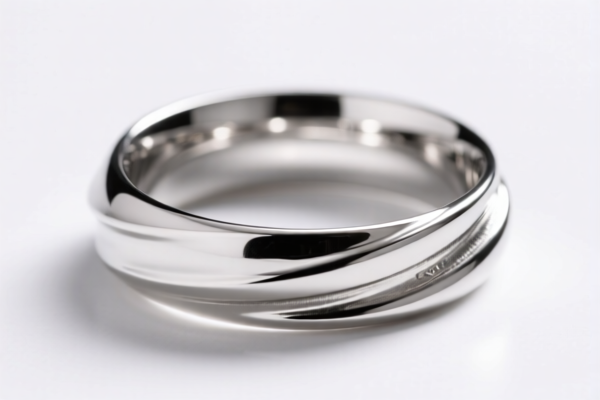
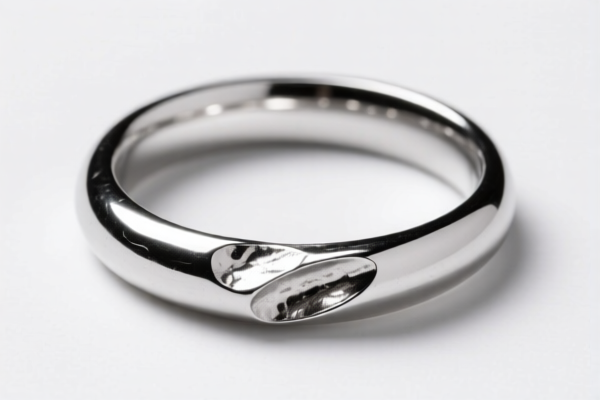
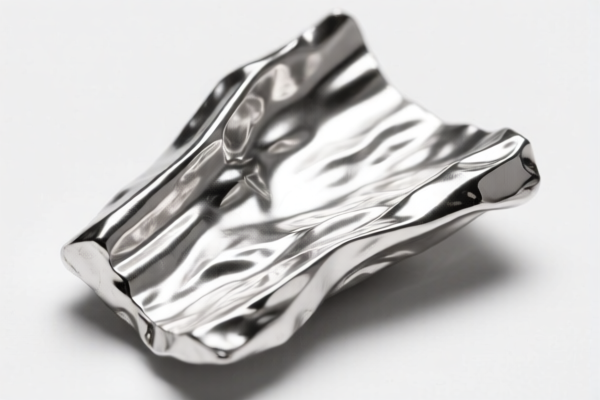

AI Analysis
💰 Unwrought or Powdered Gold (金(包括镀金)未锻轧或粉末状)
🌐 HS Code Reference & Customs Clearance Guide | 2026 Latest Tariff Analysis | Professional Compliance Strategy
📌 I. Product Definition: What is "Unwrought or Powdered Gold"?
"Unwrought Gold" refers to gold that has not been worked into a specific shape or form beyond simple casting or pressing, typically including bullion, doré bars, and gold powder. It is the raw material state of precious metals before being fashioned into jewelry, coins, or industrial components.
Key Distinction: - Unwrought/Bullion: Solid forms like bars, ingots, or granules. - Powdered: Finely divided gold particles, often used in electronics or cosmetics. - Excluded: Gold that has been manufactured into articles (e.g., jewelry, watches, or plated items with specific industrial functions other than mere plating on base metal for decorative purposes) generally fall under different chapters or subheadings.
⚠️ Critical Note:
- The term "Unwrought" in HS codes specifically excludes manufactured articles.
- If the gold is plated on a base metal, it may still be classified under Chapter 71 depending on the specific nature and weight, but often requires careful documentation to prove it is not merely a plated article.
📦 II. HS Code Classification Details (Based on Provided Data)
The following HS Codes are derived strictly from the provided <DATA>. All entries pertain to Unwrought or Powdered Gold.
| HS Code | Product Description | Summary in Data | Total Tax Rate |
|---|---|---|---|
7108.11.00.00 |
Gold (including doré) unwrought or in powder form | 金(包括镀金)未锻轧或粉末状 / 未锻造或粉末状黄金 | 35.0% |
7108.12.50.50 |
Gold (including doré) unwrought or in powder form | 金(包括镀金)未锻轧或粉末状 | 39.1% |
7108.12.10.13 |
Unwrought gold | 未锻轧黄金 | 35.0% |
7108.12.50.10 |
Unwrought gold | 未锻轧黄金 | 39.1% |
🔍 Classification Logic:
- 7108.11.00.00: Often applies to gold doré or gold not yet refined to certain standards, or specific powder forms. The data lists it as "Gold (including gold-plated) unwrought or in powder form" and "Unforged or powdered gold."
- 7108.12.xxxxxx: Typically applies to refined gold. The sub-headings7108.12.10.13and7108.12.50.10are specified as "Unwrought gold."
- 7108.12.50.50: Listed as "Gold (including gold-plated) unwrought or in powder form," indicating a potential broader category or specific tariff line for plated/unwrought mixes, carrying a higher base rate.
💰 III. 2026 Latest Tariff Rate Breakdown (Including Surtaxes)
✅ Applicable Context: Based on the provided data, these rates include Base Tariff, Additional Tariff (25%), and Section 122 Tariff (10%).
Note: The "Section 122 Tariff" usually refers to specific US trade actions or other national surcharges. In this context, it acts as an additional ad valorem duty.
🎯 1. 7108.11.00.00 & 7108.12.10.13 — Lower Rate Tier
| Item | Content |
|---|---|
| Base Tariff | 0.0% |
| Additional Tariff | +25.0% |
| Section 122 Tariff | +10.0% |
| Total Tax Rate | 35.0% |
| Calculation | CIF Value × 35% |
| Applicable Codes | 7108.11.00.00 (Gold/doré/powder), 7108.12.10.13 (Unwrought gold) |
📌 Explanation:
- Base Tariff 0%: Indicates that standard MFN (Most Favored Nation) duty for these specific subheadings is zero.
- 25% Additional Tariff: Likely due to Section 301-style tariffs on Chinese-origin goods or similar geopolitical trade measures.
- 10% Section 122 Tariff: An additional surcharge applied to specific categories.
- Total: 0% + 25% + 10% = 35%.
🎯 2. 7108.12.50.50 & 7108.12.50.10 — Higher Rate Tier
| Item | Content |
|---|---|
| Base Tariff | 4.1% |
| Additional Tariff | +25.0% |
| Section 122 Tariff | +10.0% |
| Total Tax Rate | 39.1% |
| Calculation | CIF Value × 39.1% |
| Applicable Codes | 7108.12.50.50 (Gold/plated/unwrought/powder), 7108.12.50.10 (Unwrought gold) |
📌 Explanation:
- Base Tariff 4.1%: This subheading has a non-zero base rate, increasing the total burden.
- 25% Additional Tariff: Same as above.
- 10% Section 122 Tariff: Same as above.
- Total: 4.1% + 25% + 10% = 39.1%.⚠️ Why the Difference?
-7108.11and7108.12.10have a 0% base rate, resulting in 35%.
-7108.12.50variants have a 4.1% base rate, resulting in 39.1%.
- Strategic Implication: Classifying correctly under7108.11or7108.12.10saves 4.1% compared to7108.12.50variants, which is significant for high-value gold shipments.
🛠️ IV. Customs Clearance Practical Advice (Avoiding Pitfalls)
✅ 1. Documentation Checklist
| Document | Required? | Purpose |
|---|---|---|
| Certificate of Origin (CO) | ✅ Yes | To prove origin and determine applicability of additional tariffs. |
| Commercial Invoice | ✅ Yes | Must clearly state: "Unwrought Gold," "Powdered Gold," or "Gold Doré." Avoid vague terms like "Gold Item." |
| Purity Assay Report | ✅ Yes | To confirm the gold content and value. Critical for valuation. |
| Bill of Lading/Air Waybill | ✅ Yes | Standard shipping document. |
| Import License | ✅ Maybe | Depending on the destination country's regulations on precious metals. |
| Packing List | ✅ Yes | Detail weight (gross/net) and packaging type. |
✅ 2. Declaration Tips
🔥 "Be Specific: 'Unwrought' or 'Powder' Only!"
| Scenario | Correct Declaration | Incorrect Declaration |
|---|---|---|
| Gold Bars | 7108.12.10.13 (Unwrought Gold) |
"Gold Jewelry" (Wrong chapter) |
| Gold Powder | 7108.11.00.00 (Unwrought/Powder) |
"Industrial Chemical" (Wrong chapter) |
| Gold-Plated Unwrought | 7108.11.00.00 or 7108.12.50.50 (Check Base Rate) |
"Jewelry Accessory" (Wrong classification) |
| Gold Coins | ❌ Not Unwrought | May fall under 7118 or 7117 |
📌 Key Advice:
- If the gold is plated on a base metal and is not yet wrought into a final article, ensure the description matches the HS code description exactly.
- For7108.12.50.50, the description includes "including gold-plated." If your product fits this, you must use this code or7108.12.50.10if it is pure unwrought, but be aware of the higher base rate.
✅ 3. Valuation Strategy
- CIF Value: Ensure Customs Value includes Cost, Insurance, and Freight. Gold prices are volatile; use the declaration date's market price or agreed contract price as per local customs rules.
- Purity Adjustment: If the gold is not 99.99% pure, the customs value may be adjusted based on the actual gold content. Provide assay certificates to avoid disputes.
🌍 V. Global Market Comparison (2026 Outlook)
| Country/Region | HS Code (Example) | Est. Tariff | Notes |
|---|---|---|---|
| 🇺🇸 USA | 7108.11.00.00 / 7108.12.10.13 |
35.0% | High surcharges (25% + 10%) apply. |
| 🇺🇸 USA | 7108.12.50.50 |
39.1% | Higher base rate for certain unwrought/plated forms. |
| 🇨🇳 China | 7108.11 / 7108.12 |
Low (0-4%) | Import duties may be low, but VAT applies (13%). |
| 🇪🇺 EU | 7108.11 / 7108.12 |
0% | Duty-free for gold, but VAT (15-27%) applies. |
| 🇸🇬 Singapore | 7108.11 / 7108.12 |
0% | Major gold hub, no import duty on gold. |
📌 Conclusion:
- USA: High effective tariff (35-39.1%) due to additional surcharges. Cost management is critical.
- EU/SG: Duty-free, but VAT is significant.
- China: Low import duty, but VAT and potential regulatory scrutiny on precious metals.
📌 VI. Common Errors & Pitfalls (Lessons Learned)
❌ Error 1: Declaring "Gold" without specifying "Unwrought" or "Powder"
👉 Consequence: Customs may misclassify, leading to delays, fines, or incorrect tariff application.
❌ Error 2: Using 7108.12.50.50 when 7108.12.10.13 is applicable
👉 Consequence: Paying an extra 4.1% in base tariff unnecessarily.
❌ Error 3: Forgetting to declare "Plated" if applicable
👉 Consequence: If the product is plated and declared as "Pure Unwrought," it may be deemed fraudulent or misdeclared.
❌ Error 4: Ignoring the "Section 122 Tariff"
👉 Consequence: Underestimating total landed cost. Always include the 10% surcharge in cost calculations.
✅ Correct Practice:
"Unwrought Gold, 99.99% Pure, Bars, 1kg Each, Origin: [Country]"
OR
"Gold Powder, 99.5% Purity, Industrial Grade, Origin: [Country]"
🎯 VII. Conclusion: Precision in Classification Saves Money
🎯 Remember the Golden Rule:
🔹 "Unwrought is 35%, Plated/Mixed can be 39.1%. Check Base Rate!"
🔹 "HS Code 7108.12.10.13 vs 7108.12.50.50: A 4.1% difference matters!"
📌 Tips:
- If your gold is pure and unwrought, aim for 7108.12.10.13 (35%) or 7108.11.00.00 (35%).
- If it involves plating or specific unwrought forms under the 50 subheading, expect 39.1%.
- Always verify the latest tariff schedules and consult a customs broker for pre-classification rulings.
✨ Professional clearance starts with accurate classification!
💼 Every percent saved is profit earned!
Customer Reviews
About HS Code Classification
The Harmonized System (HS) is an internationally standardized nomenclature developed by the World Customs Organization (WCO) to classify traded products. Over 200 countries use the HS system as the basis for customs tariffs, trade statistics, and import/export regulations.
Each HS code follows a hierarchical structure:
- Chapter (2 digits) — Broad category of goods (e.g., Chapter 84: Machinery and Mechanical Appliances)
- Heading (4 digits) — More specific grouping within the chapter
- Subheading (6 digits) — Internationally standardized breakdown, used by all WCO member countries
- National subdivisions (8-10 digits) — Country-specific extensions for further classification, such as US HTSUS 10-digit codes
Correct HS code classification is essential for smooth customs clearance, accurate duty payment, and compliance with trade regulations. Misclassification can lead to customs delays, overpayment of duties, or penalties.
When importing from CN to US, the applicable tariff rates may include:
- Most-Favored-Nation (MFN) rate — The standard duty rate applied to WTO members
- General rate — Applied to countries without trade agreements
- Trade remedy duties — Additional tariffs such as Section 301 (anti-dumping), Section 232 (national security), or countervailing duties
The information provided on this page is for reference purposes only. For official classification, please consult with your local customs authority or a licensed customs broker.