Urea Cream
CN → USProduct Images
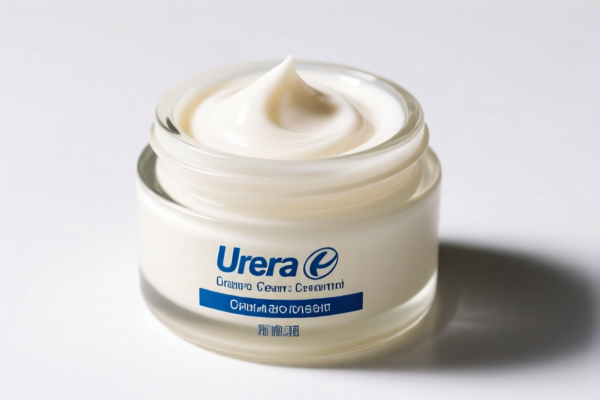
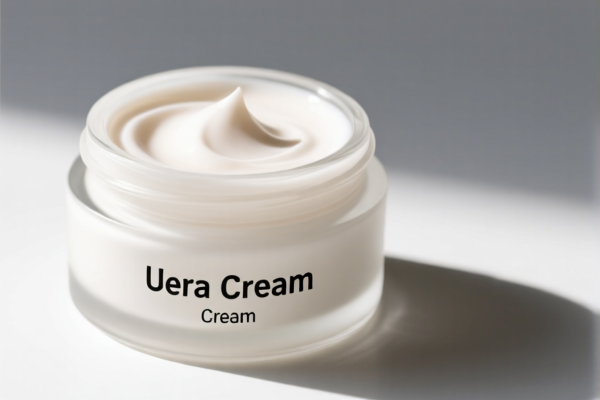
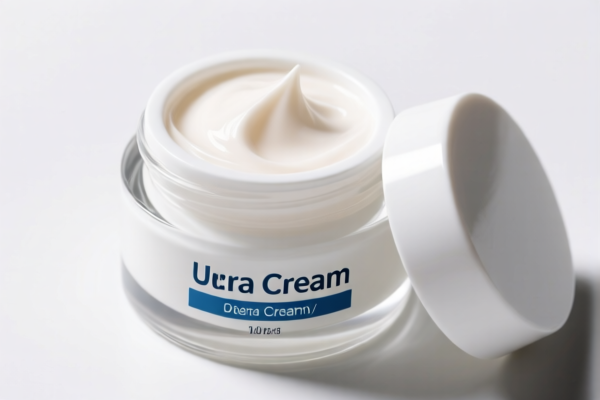
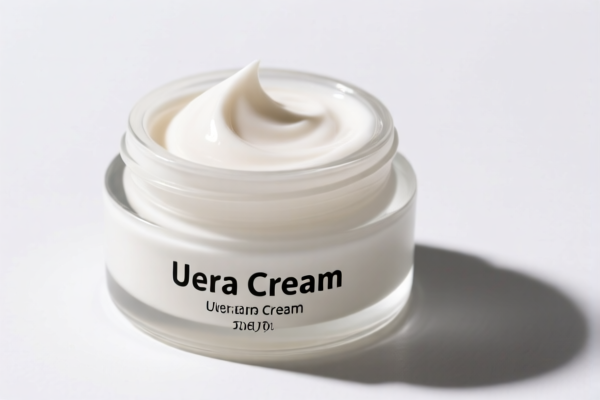
AI Analysis
🧴 Urea Cream (Medical/Dermatological Preparation)
🌐 HS Code Reference & Clearance Guide | 2026 Latest Tariff Analysis | Professional Customs Strategy
📌 I. Product Definition & Classification: Do You Know What "Urea Cream" Really Is?
Urea Cream is a topical pharmaceutical or cosmetic preparation primarily used for moisturizing, keratolytic (skin-softening), and exfoliating purposes. It treats conditions such as xerosis (dry skin), ichthyosis, psoriasis, and hyperkeratosis.
In international trade, its classification depends strictly on its intended use and active ingredient concentration:
- Pharmaceutical Urea Cream: If labeled for the treatment, mitigation, or cure of skin diseases (e.g., psoriasis, severe eczema), it is classified as a medicine.
- Cosmetic Urea Cream: If labeled only for moisturizing, beautifying, or cleansing (without therapeutic claims), it is classified as a cosmetic.
- Concentration Factor: High-concentration urea (e.g., >10-20%) is more likely to be scrutinized as a drug. Low-concentration urea (e.g., <10%) in lotions is often cosmetics.
⚠️ Critical Distinction:
- If the product claims to "treat psoriasis" or "remove calluses medically" → Chapter 30 (Pharmaceuticals)
- If the product claims to "moisturize dry skin" or "beauty care" → Chapter 33 (Essential Oils/Cosmetics)
- If it is pure urea crystals (raw material) → Chapter 29 (Organic Chemicals)
📦 II. HS Code Classification Details (2026 Latest Tariff Authority Comparison)
| HS Code | Product Description | Application Scenario | Classification Basis |
|---|---|---|---|
3004.90.70.00 |
Medicament consisting of mixed or unmixed products for therapeutic or prophylactic uses, put up in measured doses... (Other) | Pharmaceutical Urea Cream (e.g., 40% Urea for psoriasis/callus removal) | ✅ Drug/Therapeutic |
3304.99.00.00 |
Beauty or make-up preparations and preparations for the maintenance of the body... (Other) | Cosmetic Urea Lotion/Cream (e.g., 5-10% Urea for daily moisturizing) | ✅ Cosmetic |
2924.29.00.00 |
Acyclic amides and their derivatives... (Urea and derivatives) | Pure Urea Raw Material (Powder/Crystals, not formulated as cream) | ❌ Raw Chemical |
3808.94.00.00 |
Insecticides, rodenticides, fungicides... (Not applicable here but sometimes confused) | N/A | ❌ Incorrect |
🔍 Key Reminder:
- Packaging Matters: Pre-packaged tubes/jars for direct consumer use go to Ch. 30 or 33. Bulk drums for manufacturing go to Ch. 29.
- Claims Matter: A dermatologist-recommended cream for "eczema relief" is a Drug. A spa cream for "soft skin" is a Cosmetic. Misclassification leads to severe penalties.
💰 III. 2026 Latest Tariff Rate Details (US Market Focus)
✅ Applicable Country: United States (US)
✅ Origin: China (CN)
✅ Effective Date: November 10, 2025 (Current)
🎯 1. 3004.90.70.00 — Pharmaceutical Urea Cream (Therapeutic Use)
| Item | Content |
|---|---|
| Basic Duty Rate | 0% (Most favored nation) |
| USITC Additional Duty | +25% (Section 301 - Footnote 9903.01.24) |
| IEEPA Additional Duty | +10% (China-specific, effective Nov 2025) |
| Total Duty Rate | 35% |
| Tax Calculation | CIF Value × 35% |
| De Minimis Eligibility | ❌ Denied (Deny de minimis for Section 301 items) |
| Legal Basis Path | IEEPA:9903.01.24 → USITC:3004.90.70.00 → FOOTNOTE:9903.88.01 |
📌 Explanation:
- Although the base MFN rate is 0%, the Section 301 tariff (25%) applies to most Chinese-origin pharmaceuticals.
- The IEEPA 10% surcharge was added in late 2025, bringing the total to 35%.
- Crucial: This is considered a "Section 301 item," meaning it cannot use the $800 de minimis exemption for small packages (e.g., DHL/FedEx individual shipments).
🎯 2. 3304.99.00.00 — Cosmetic Urea Cream (Moisturizing/Beneficial Use)
| Item | Content |
|---|---|
| Basic Duty Rate | 0% (General) |
| USITC Additional Duty | +7.5% or +25%? Check Specific Footnote |
| IEEPA Additional Duty | +10% (China-specific) |
| Total Duty Rate | 10% - 35% (Varies by specific footnote) |
| De Minimis Eligibility | ⚠️ Check Status: Some cosmetic footnotes are exempt from Section 301, but IEEPA usually applies. |
📌 Note:
- Many cosmetics from China face 7.5% or 25% Section 301 duties depending on the specific sub-category.
- If classified under Footnote 9903.88.01, the 25% applies.
- Recommendation: Verify if your specific cosmetic formulation is exempt from Section 301 (some personal care items are). However, the IEEPA 10% is highly likely applicable.
🎯 3. 2924.29.00.00 — Pure Urea (Raw Material)
| Item | Content |
|---|---|
| Basic Duty Rate | 0% |
| USITC Additional Duty | +25% |
| IEEPA Additional Duty | +10% |
| Total Duty Rate | 35% |
| De Minimis Eligibility | ❌ Denied |
📌 Note: If you are importing raw Urea powder, the same 35% duty applies.
🛠️ IV. Customs Clearance Practical Advice (Real-World Pitfall Guide)
✅ 1. Required Documentation Checklist (Mandatory)
| Document | Must Provide | Explanation |
|---|---|---|
| ✅ Product Label Image | ✔️ | Must show ingredients, intended use, and claims. |
| ✅ FDA Registration (if US) | ✔️ | For drugs (3004), FDA approval/Listing is mandatory. |
| ✅ Ingredient List (INCI) | ✔️ | To prove Urea percentage vs. other active ingredients. |
| ✅ Free Sale Certificate | ✔️ | From country of origin. |
| ✅ Commercial Invoice | ✔️ | Must state "Urea Cream" and HS Code clearly. |
| ✅ Structure Diagram | ✔️ | If it's a medical device combination, provide it. |
| ✅ Proof of Origin | ✔️ | To claim MFN rates (though 301/IEEPA often negate benefits for China). |
✅ 2. Declaration Tips (Key Mantras)
🔥 “Claim Determines Class! Drug or Cosmetic? Be Clear!”
| Scenario | Correct Declaration | Wrong Practice |
|---|---|---|
| "Psoriasis Treatment Cream" | 3004.90.70.00 (Drug) |
Labeling as "Moisturizer" to avoid tax → Fraud |
| "Daily Moisturizing Lotion" | 3304.99.00.00 (Cosmetic) |
Labeling as "Drug" unnecessarily → FDA Hurdle |
| "Bulk Urea Powder" | 2924.29.00.00 (Chemical) |
Labeling as "Cream" → Mismatch |
✅ 3. Special Case Handling
| Situation | Handling Advice |
|---|---|
| High Concentration Urea (>20%) | Customs often assumes Drug status. Prepare FDA documentation. |
| Combination Products | If Urea is mixed with Antibiotics → Drug (3004). If mixed with Fragrance → Cosmetic (3304). |
| Sample Imports | If value < $800, Cosmetic (3304) might be exempt from Section 301 (check latest footnotes). Drug (3004) is NOT exempt. |
| Brand Name Claims | Avoid therapeutic words like "Cure," "Treat," "Heal" in cosmetics. Use "Maintain," "Soften," "Hydrate." |
🌍 V. Global Market Clearance Comparison (2026 Latest)
| Country/Region | Recommended HS Code | Duty Rate (China Origin) | Certification Requirements | Remarks |
|---|---|---|---|---|
| 🇺🇸 USA | 3004.90.70.00 (Drug) |
35% (25% + 10%) | FDA Registration + NDC Code | Strict on drug claims. |
| 🇨🇳 China | 3004.90.90.90 |
6% + VAT | CFDA/NMPA Approval | High barrier for foreign drugs. |
| 🇪🇺 EU | 3004.90 (Drug) |
0% (if registered) | EMA/National Registration | Cosmetics (3304) need CPNP notification. |
| 🇬🇧 UK | 3004.90 |
0% (if eligible) | MHRA Registration | Post-Brexit rules apply. |
| 🇯🇵 Japan | 3004.90 |
0% (if eligible) | PMDA Approval | Strict on drug definitions. |
📌 Conclusion:
- USA is the most expensive market for Chinese Urea Cream due to 35% combined tariffs.
- EU/UK/Japan may have 0% base duty, but regulatory costs (registration) are high for drugs.
- Cosmetics (3304) have lower tariffs in some regions but face strict labeling and ingredient bans.
📌 VI. Common Mistakes & Pitfall Guide (Blood Lessons)
❌ Mistake 1: Labeling a Drug as a Cosmetic to Avoid FDA
👉 Consequence: Seizure by FDA + Penalty. Customs will test for active ingredient claims.
❌ Mistake 2: Not declaring Section 301 Applicability
👉 Consequence: Audit Risk. If caught paying 0% instead of 35%, you owe back-tariffs + interest.
❌ Mistake 3: Using "Urea" for Raw Material but importing Cream
👉 Consequence: Misdeclaration. Customs will reclassify and apply wrong tax.
❌ Mistake 4: Ignoring IEEPA 10% Surcharge
👉 Consequence: Underpayment. Many importers forget the 2025 IEEPA update.
✅ Correct Practice:
"Pharmaceutical Urea Cream 40%, for topical use, Treats Hyperkeratosis, Packaged in 100g Tube, FDA Listed, Made in China"
🎯 VII. Conclusion: Professional Declaration Saves Money!
🎯 Remember the Mantra:
🔹 "Drug Claim = Drug Code = High Tax + Strict Regs"
🔹 "Cosmetic Claim = Cosmetic Code = Lower Tax + Easier Entry"
🔹 "Don't Hide the Urea! Declare Accurately or Pay the Price!"
📌 Pro Tip:
If your Urea Cream is manufactured in Vietnam, Thailand, or Mexico, you may qualify for Section 301 Exclusions or Free Trade Agreements (USMCA/ASEAN).
- Vietnam/Thailand: Check for De Minimis Exemptions or Lower Tariffs.
- Mexico (USMCA): 0% Duty if rules of origin are met.
📣 Immediate Action:
📞 Consult a Customs Broker to classify correctly based on Label Claims.
📝 Check FDA Status if marketing as a drug.
📉 Evaluate Supply Chain: If 35% tax is too high, consider transshipment (legally) or origin change to a non-China country.
✨ Professional Clearance, Starting with Precise Classification!
💼 Every Cent of Duty Saved is Pure Profit!
Customer Reviews
About HS Code Classification
The Harmonized System (HS) is an internationally standardized nomenclature developed by the World Customs Organization (WCO) to classify traded products. Over 200 countries use the HS system as the basis for customs tariffs, trade statistics, and import/export regulations.
Each HS code follows a hierarchical structure:
- Chapter (2 digits) — Broad category of goods (e.g., Chapter 84: Machinery and Mechanical Appliances)
- Heading (4 digits) — More specific grouping within the chapter
- Subheading (6 digits) — Internationally standardized breakdown, used by all WCO member countries
- National subdivisions (8-10 digits) — Country-specific extensions for further classification, such as US HTSUS 10-digit codes
Correct HS code classification is essential for smooth customs clearance, accurate duty payment, and compliance with trade regulations. Misclassification can lead to customs delays, overpayment of duties, or penalties.
When importing from CN to US, the applicable tariff rates may include:
- Most-Favored-Nation (MFN) rate — The standard duty rate applied to WTO members
- General rate — Applied to countries without trade agreements
- Trade remedy duties — Additional tariffs such as Section 301 (anti-dumping), Section 232 (national security), or countervailing duties
The information provided on this page is for reference purposes only. For official classification, please consult with your local customs authority or a licensed customs broker.