Urea Resin Powder
CN → US| HS Code | Tariff Rate | Origin | Destination | Doc |
|---|---|---|---|---|
| 2924214500 | 41.5% | CN | US | Official Doc |
| 2924215000 | 41.5% | CN | US | Official Doc |
| 3102100010 | 35.0% | CN | US | Official Doc |
| 3102100050 | 35.0% | CN | US | Official Doc |
| 3105100000 | 35.0% | CN | US | Official Doc |
Product Images
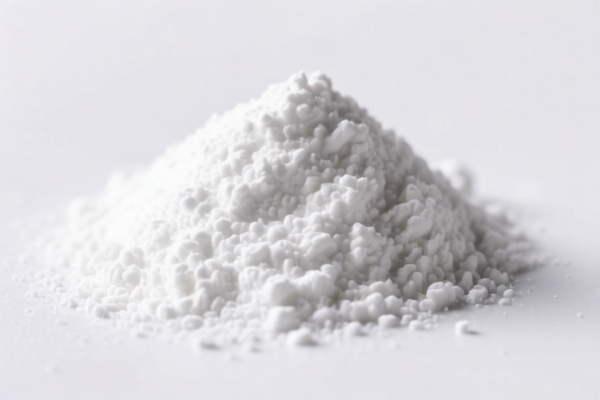

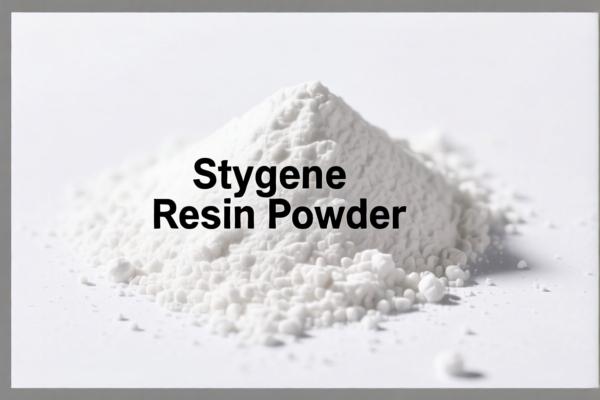
AI Analysis
🧪 Urea Resin Powder (Urea Formaldehyde Resin Powder)
🌐 HS Code Reference & Customs Clearance Guide | 2026 Updated Tariff Analysis | Professional Import Strategy
📌 One, Product Definition & Classification: What Exactly Is Urea Resin Powder?
Urea resin powder — also known as urea-formaldehyde resin powder — is a synthetic thermosetting polymer widely used in adhesives, coatings, molded plastics, and wood composites (e.g., particleboard, plywood). It is produced by reacting urea with formaldehyde under controlled conditions, resulting in a fine, free-flowing powder that hardens upon heating.
In international trade, the form, chemical structure, and intended use determine whether it is classified as a chemical or a fertilizer — and this distinction has massive implications on tariffs and customs clearance.
⚠️ Critical Distinction:
- If the product is chemically defined, powder form, and used in industrial adhesives or resins → HS Code in Chapter 29 (Chemicals)
- If the product is nitrogen-based, powder form, and used as a fertilizer → HS Code in Chapter 31 (Fertilizers)
📦 Two, HS Code Classification Details (2026 Updated Tariff Authority Match)
| HS Code | Product Description | Applicable Use Case | Key Classification Criteria |
|---|---|---|---|
2924.21.45.00 |
Urea derivatives, aromatic, in primary forms (powder), used in resins/adhesives | Industrial resins, wood bonding, coatings | Chemical structure: Aromatic urea derivative; primary form: powder; not a fertilizer |
2924.21.50.00 |
Other urea derivatives, in primary forms (powder), non-aromatic | General-purpose urea resins, plastics, laminates | Not aromatic; powder form; chemical use |
3102.10.00.10 |
Urea, solid form, for use as fertilizer | Agricultural nitrogen fertilizer | Solid form, nitrogen content, fertilizer intent |
3102.10.00.50 |
Urea, not solid, not DEF — nitrogen fertilizer (non-solid) | Liquid or powdered nitrogen fertilizer (non-solid) | Powder form, not solid block, fertilizer use |
3105.10.00.00 |
Nitrogen fertilizers, including urea, in powder form | General-purpose nitrogen fertilizer | Elemental composition: nitrogen-rich; common fertilizer form |
🔍 Key Insight:
- Same material (urea powder), different HS codes → different tariffs
- The declared purpose (chemical vs. fertilizer) determines the code
- Misclassification = 41.5% vs. 35.0% tariff → $10k+ difference per container
💰 Three, 2026 Updated Tariff Breakdown (With Detailed Duty Clauses)
✅ Applicable Country: United States (US)
✅ Origin: China (CN)
✅ Effective Date: November 10, 2025 (including future imports)
🎯 1. 2924.21.45.00 — Aromatic Urea Derivatives (Chemical Use)
| Item | Detail |
|---|---|
| Base Duty Rate | 6.5% (ad valorem) |
| USITC Section 301 Additional Duty | +25.0% (from USITC Footnote 9903.88.01) |
| Section 122 (IEEPA) Emergency Duty | +10.0% (applies to goods from China/HK) |
| Total Effective Duty | 41.5% |
| Tax Calculation | CIF Value × 41.5% |
| De Minimis Threshold | ❌ Not applicable (denied under IEEPA) |
| Legal Basis Path | IEEPA:9903.01.25 → IEEPA:9903.01.24 → USITC:2924.21.45.00 → FOOTNOTE:9903.88.01 |
📌 Explanation:
- USITC 301 Duty (25%): Imposed under the U.S. Trade Act of 1974, targeting Chinese goods deemed unfairly subsidized or protected.
- IEEPA 10% (Section 122): Enacted under the International Emergency Economic Powers Act (50 U.S.C. § 1701), targeting China-based exports.
- Combined with 6.5% base, this creates a 41.5% total tariff — extremely high for chemical intermediates.
🎯 2. 2924.21.50.00 — Other Urea Derivatives (Non-Aromatic, Chemical Use)
| Item | Detail |
|---|---|
| Base Duty Rate | 6.5% |
| USITC Section 301 Additional Duty | +25.0% |
| Section 122 (IEEPA) Emergency Duty | +10.0% |
| Total Effective Duty | 41.5% |
| Tax Calculation | CIF × 41.5% |
| De Minimis | ❌ Not eligible |
| Legal Basis Path | IEEPA:9901.25 → IEEPA:9903.01.24 → USITC:2924.21.50.00 → FOOTNOTE:9903.88.01 |
📌 Note:
- Same tax treatment as2924.21.45.00— no difference in rate, only chemical structure differs.
- Applies to non-aromatic urea resins, such as those used in molded plastics, laminates, or adhesives.
🎯 3. 3102.10.00.10 — Urea, Solid Form (Fertilizer Use)
| Item | Detail |
|---|---|
| Base Duty Rate | 0.0% |
| USITC Section 301 Additional Duty | +25.0% |
| Section 122 (IEEPA) Emergency Duty | +10.0% |
| Total Effective Duty | 35.0% |
| Tax Calculation | CIF × 35.0% |
| De Minimis | ❌ Not eligible |
| Legal Basis Path | IEEPA:9903.01.25 → IEEPA:9903.01.24 → USITC:3102.10.00.10 → FOOTNOTE:9903.88.01 |
📌 Why Lower?
- 0% base rate for fertilizers under U.S. tariff schedules
- Still subject to 25% + 10% due to China origin
- Total: 35.0% — 6.5% lower than chemical classification
🎯 4. 3102.10.00.50 — Urea, Non-Solid, Non-DEF (Fertilizer Use)
| Item | Detail |
|---|---|
| Base Duty Rate | 0.0% |
| USITC Section 301 Additional Duty | +25.0% |
| Section 122 (IEEPA) Emergency Duty | +10.0% |
| Total Effective Duty | 35.0% |
| Tax Calculation | CIF × 35.0% |
| De Minimis | ❌ Not eligible |
| Legal Basis Path | IEEPA:9903.01.25 → IEEPA:9903.01.24 → USITC:3102.10.00.50 → FOOTNOTE:9903.88.01 |
📌 Clarification:
- Applies to powdered urea that is not solid blocks or DEF (Diesel Exhaust Fluid)
- Common for agricultural nitrogen fertilizer shipments
- Same 35% rate as3102.10.00.10
🎯 5. 3105.10.00.00 — Nitrogen Fertilizers (Including Urea)
| Item | Detail |
|---|---|
| Base Duty Rate | 0.0% |
| USITC Section 301 Additional Duty | +25.0% |
| Section 122 (IEEPA) Emergency Duty | +10.0% |
| Total Effective Duty | 35.0% |
| Tax Calculation | CIF × 35.0% |
| De Minimis | ❌ Not eligible |
| Legal Basis Path | IEEPA:9903.01.25 → IEEPA:9903.01.24 → USITC:3105.10.00.00 → FOOTNOTE:9903.88.01 |
📌 Why This Matters:
- This is the broadest fertilizer category — includes all nitrogen-based fertilizers
- If your product is nitrogen-rich, powder form, and used in agriculture, this is the most likely correct code
- 35% total tariff, 6.5% lower than chemical classification
🛠️ Four, Customs Clearance Best Practices (Pro Tips to Avoid Penalties)
✅ 1. Required Documentation (Must-Have List)
| Document | Required? | Purpose |
|---|---|---|
| ✅ Product Specification Sheet | ✔️ | Detail: chemical structure, nitrogen content, moisture, particle size |
| ✅ Material Safety Data Sheet (MSDS/SDS) | ✔️ | Prove chemical identity and safety |
| ✅ Certificate of Analysis (CoA) | ✔️ | Confirm nitrogen %, purity, form (powder) |
| ✅ Commercial Invoice | ✔️ | Must state intended use: "For agricultural fertilizer" OR "For resin production" |
| ✅ Packing List | ✔️ | Show packaging, net weight, batch numbers |
| ✅ Origin Certificate (CO) | ✔️ | If from non-China origin (e.g., Vietnam, India), may qualify for lower tariffs |
| ✅ Test Report (FCC, FDA, or ISO) | ✔️ | If used in food-grade or medical applications |
✅ 2.申报技巧(Key Rules of Thumb)
🔥 "Use determines code, code determines tax — declare truthfully!"
| Scenario | Correct HS Code | Wrong Code | Risk |
|---|---|---|---|
| Urea resin powder used in wood glue | 2924.21.45.00 or 2924.21.50.00 |
3102.10.00.10 |
Pay 41.5% instead of 35% |
| Urea powder used in farming | 3102.10.00.10 or 3105.10.00.00 |
2924.21.45.00 |
Pay 41.5% instead of 35% |
| Product labeled as "Urea" but used in resins | 2924.21.45.00 |
3105.10.00.00 |
Audit, penalties, reclassification |
| Mixed-use product (both fertilizer & resin) | Declare based on dominant use | Split shipment | Customs may treat as separate entries → higher risk |
✅ 3. Special Cases & Risk Mitigation
| Situation | Recommended Action |
|---|---|
| Product used in both industries | Declare based on primary use — provide evidence (e.g., customer contracts, application notes) |
| Exporting from China to U.S. | Pre-apply for HTS pre-ruling to lock in code and tariff |
| Origin from Vietnam/India/Malaysia | Apply for CO — may qualify for IEEPA exemption → 0% additional duty |
| Small shipments (<$800) | De Minimis still denied — no relief due to IEEPA |
| Re-exporting after processing | Declare as processed product — may qualify for lower tariff |
🌍 Five, Global Market Comparison (2026)
| Country/Region | Recommended HS Code | Tariff | Certification | Notes |
|---|---|---|---|---|
| 🇺🇸 USA | 2924.21.45.00 or 3105.10.00.00 |
41.5% or 35.0% | None (but need CoA) | China-origin: 41.5% |
| 🇨🇳 China | 2924.21.45.00 |
5% | CCC, ISO | No 301/IEEPA duties |
| 🇪🇺 EU | 2924.21.45.00 |
0% (if CE) | CE, REACH | No 301/IEEPA |
| 🇦🇺 Australia | 3105.10.00.00 |
5% | RCM | Fertilizer tariff |
| 🇯🇵 Japan | 2924.21.45.00 |
0% | PSE | No additional duties |
📌 Insight:
- USA is the only market with 301 + IEEPA tariffs
- China and EU are more favorable for chemical use
- Fertilizer classification saves 6.5% in U.S.
📌 Six, Common Mistakes & How to Avoid Them (Real-World Pitfalls)
❌ Mistake 1: Declaring urea resin powder as fertilizer when used in adhesives
👉 Result: Pay 41.5% instead of 35% — $10k+ per container
👉 Fix: Provide customer use cases, technical data, application notes
❌ Mistake 2: Using "urea" as the product name without specifying intended use
👉 Result: Customs may classify as fertilizer — risk of audit
👉 Fix: Use precise description:
"Urea-formaldehyde resin powder, 95% purity, for industrial adhesives, not for agricultural use"
❌ Mistake 3: Not applying for pre-ruling before shipment
👉 Result: Customs may reclassify — delay, penalties, re-export
👉 Fix: Apply for HTS pre-ruling with full technical package
❌ Mistake 4: Splitting shipment into "resin" and "fertilizer" components
👉 Result: Each part may face 41.5% or 35% — no savings, higher risk
👉 Fix: Declare as one product with dominant use
🎯 Seven, Final Verdict: Smart Classification = Big Savings!
🎯 Remember the Golden Rule:
🔹 "If it’s used in glue → use chemical code → 41.5%
🔹 If it’s used in farming → use fertilizer code → 35.0%
🔹 **Same material, different purpose, different tariff — **
📌 Pro Tip:
If your urea resin powder is originating from Vietnam, India, or Malaysia, apply for Certificate of Origin — you may qualify for IEEPA exemption → 0% additional duty → only 6.5% or 0% total.
📣 Take Action Now:
📞 Contact a licensed customs broker + submit product data + use case
🚀 Apply for HTS pre-ruling to lock in the correct HS code
💼 Avoid penalties, delays, and overpayment — declare with confidence!
✨ Precision in Classification = Profit in Trade!
💼 Your next shipment starts with the right HS code.
Customer Reviews
About HS Code Classification
The Harmonized System (HS) is an internationally standardized nomenclature developed by the World Customs Organization (WCO) to classify traded products. Over 200 countries use the HS system as the basis for customs tariffs, trade statistics, and import/export regulations.
Each HS code follows a hierarchical structure:
- Chapter (2 digits) — Broad category of goods (e.g., Chapter 84: Machinery and Mechanical Appliances)
- Heading (4 digits) — More specific grouping within the chapter
- Subheading (6 digits) — Internationally standardized breakdown, used by all WCO member countries
- National subdivisions (8-10 digits) — Country-specific extensions for further classification, such as US HTSUS 10-digit codes
Correct HS code classification is essential for smooth customs clearance, accurate duty payment, and compliance with trade regulations. Misclassification can lead to customs delays, overpayment of duties, or penalties.
When importing from CN to US, the applicable tariff rates may include:
- Most-Favored-Nation (MFN) rate — The standard duty rate applied to WTO members
- General rate — Applied to countries without trade agreements
- Trade remedy duties — Additional tariffs such as Section 301 (anti-dumping), Section 232 (national security), or countervailing duties
The information provided on this page is for reference purposes only. For official classification, please consult with your local customs authority or a licensed customs broker.