Urinalysis Strips
CN → US| HS Code | Tariff Rate | Origin | Destination | Doc |
|---|---|---|---|---|
| 3822190080 | 10.0% | CN | US | Official Doc |
| 9018390050 | 10.0% | CN | US | Official Doc |
| 9018902000 | 35.0% | CN | US | Official Doc |
| 3006305000 | 10.0% | CN | US | Official Doc |
| 3822190030 | 10.0% | CN | US | Official Doc |
Product Images
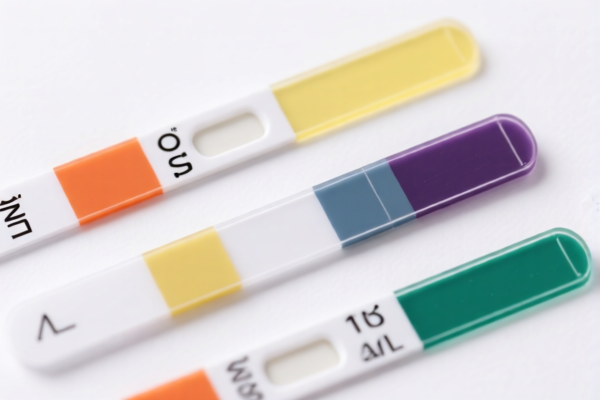
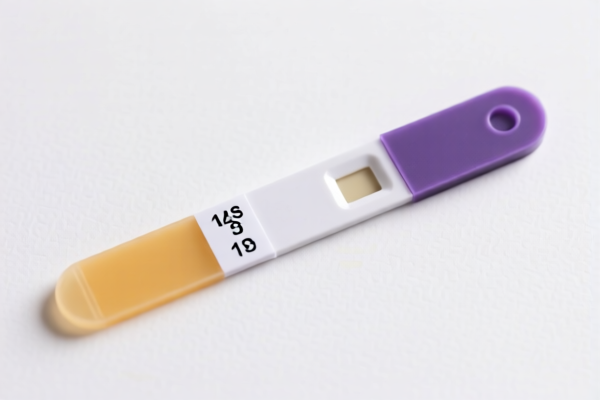
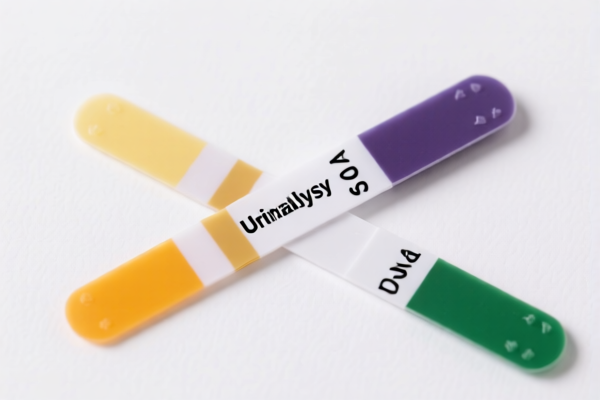
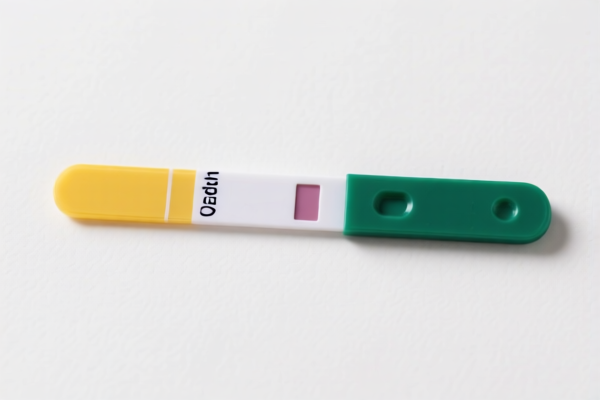
AI Analysis
🧪 Urinalysis Strips (Diagnostic Reagent Strips)
🌐 HS Code Reference & Customs Clearance Guide | 2026 Latest Tariff Analysis | Professional Compliance Strategy 📌 I. Product Definition & Classification: Do You Truly Understand “Urinalysis Strips”?
Urinalysis strips are essential diagnostic tools used in clinical settings, veterinary practices, and home health monitoring. They are multi-test dipsticks impregnated with chemical reagents designed to detect specific parameters in urine, such as pH, protein, glucose, blood, ketones, and leukocytes.
In international trade, the classification depends heavily on the form factor (paper/carrier vs. liquid kit) and the primary function (diagnostic reagent vs. medical instrument accessory).
⚠️ Key Distinction Points: - If the product is a chemical-impregnated paper carrier used for chemical colorimetric analysis → It is typically classified under Chapter 38 (Miscellaneous Chemical Products) as diagnostic reagents. - If it is part of a larger diagnostic system or considered an accessory to a medical analyzer → It may fall under Chapter 90 (Medical Instruments). - Critical Note: The presence of "chemical reagents" on a "paper carrier" strongly points toward HS Code 3822 unless explicitly defined as an instrument part.
📦 II. HS Code Classification Details (2026 Latest Tariff Authority Comparison)
| HS Code | Product Description | Applicability Scenario | Material/State Inference |
|---|---|---|---|
3822.19.00.80 |
Other diagnostic/reagent preparations on carriers | Diagnostic strips, test papers with chemical reagents | ✅ Chemical colorimetric reagents on paper carrier |
9018.39.00.50 |
Other instruments/apparatus for medical/diagnostic use | Medically dedicated diagnostic strips, fiber/paper-based | ✅ Chemical reagents on paper/fiber |
9018.90.20.00 |
Other optical/biochemical instruments & parts | Clinical detection tools, chemical colorimetric optical devices | ✅ Chemical/optical detection apparatus |
3006.30.50.00 |
Pharmaceutical diagnostic preparations | Diagnostic reagents containing active chemical components | ✅ Chemical reaction reagents |
3822.19.00.30 |
Other diagnostic reagents (Antigen/Antiserum) | Diagnostic strips with antigen/antibody components | ✅ Antigen/antiserum chemical reagents |
🔍 Important Reminder: - Chapter 38 (3822) is generally preferred for standalone reagent strips because the primary value lies in the chemical preparation on a carrier. - Chapter 90 (9018) is used if the strip is deemed an integral part of a medical instrument or if the classification focuses on the medical apparatus aspect rather than the chemical reagent. - Chapter 30 (3006) is less common for simple strips unless they contain specific pharmaceutical-grade active ingredients for diagnostic purposes.
💰 III. 2026 Latest Tariff Rate Breakdown (Including Surcharges & Policy Add-ons)
✅ Applicable Country: United States (US) ✅ Origin: China (CN) ✅ Effective Time: From November 10, 2025 (including subsequent imports)
🎯 1. 3822.19.00.80 —— Diagnostic Reagent Strips (Chemical Carrier)
| Item | Content |
|---|---|
| Base Tariff | 0% (ad valorem) |
| USITC Surcharge | 0% (No additional Section 301 tariff for this specific subheading under current data) |
| IEEPA Surcharge | +10% (Targeting China/HK products under IEEPA) |
| Total Rate | 10.0% |
| Tax Calculation | CIF Value × 10% |
| De Minimis Eligibility | ❌ Not Eligible (deny_de_minimis applies to most Chapter 38/90 medical/chemical goods from China) |
| Legal Basis Path | IEEPA:9903.01.24 → USITC:3822.19.00.80 |
📌 Explanation: - The base tariff is 0% because diagnostic reagents on carriers are often duty-free under standard MFN rates. - The 10% IEEPA surcharge is the primary cost driver for Chinese-origin products. - Total landed duty cost is 10%. This is relatively low compared to electronics, but still significant for high-volume, low-margin goods.
🎯 2. 9018.39.00.50 —— Medical Diagnostic Instruments (Reagent-Based)
| Item | Content |
|---|---|
| Base Tariff | 0% |
| USITC Surcharge | 0% |
| IEEPA Surcharge | +10% |
| Total Rate | 10.0% |
| Tax Calculation | CIF Value × 10% |
| De Minimis Eligibility | ❌ Not Eligible |
| Legal Basis Path | IEEPA:9903.01.24 → USITC:9018.39.00.50 |
📌 Note: - Same tax burden as
3822.19.00.80. - Classification under9018implies the customs authority views the item as a medical instrument rather than just a chemical product.
🎯 3. 9018.90.20.00 —— Other Optical/Biochemical Instruments
| Item | Content |
|---|---|
| Base Tariff | 0% |
| USITC Surcharge | +25% (Section 301) |
| IEEPA Surcharge | +10% |
| Total Rate | 35.0% |
| Tax Calculation | CIF Value × 35% |
| De Minimis Eligibility | ❌ Not Eligible |
| Legal Basis Path | IEEPA:9903.01.24 → USITC:9018.90.20.00 → FOOTNOTE:9903.88.01 |
📌 Critical Warning: - This classification carries a much higher tax burden (35%). - It applies if the urinalysis strip is considered a component of a larger biochemical analyzer or if it involves optical detection machinery. - Avoid this classification unless your product is strictly an instrument part. Use
3822or9018.39if possible to save 25%.
🎯 4. 3006.30.50.00 —— Pharmaceutical Diagnostic Preparations
| Item | Content |
|---|---|
| Base Tariff | 0% |
| USITC Surcharge | 0% |
| IEEPA Surcharge | +10% |
| Total Rate | 10.0% |
| Tax Calculation | CIF Value × 10% |
| De Minimis Eligibility | ❌ Not Eligible |
| Legal Basis Path | IEEPA:9903.01.24 → USITC:3006.30.50.00 |
📌 Note: - Similar to
3822, but emphasizes pharmaceutical nature. - Use only if the reagent contains active pharmaceutical ingredients (APIs) with diagnostic function.
🎯 5. 3822.19.00.30 —— Other Diagnostic Reagents (Antigen/Antiserum)
| Item | Content |
|---|---|
| Base Tariff | 0% |
| USITC Surcharge | 0% |
| IEEPA Surcharge | +10% |
| Total Rate | 10.0% |
| Tax Calculation | CIF Value × 10% |
| De Minimis Eligibility | ❌ Not Eligible |
| Legal Basis Path | IEEPA:9903.01.24 → USITC:3822.19.00.30 |
📌 Note: - Specific to immunological reagents (antigens/antibodies). - If your strips use lateral flow immunochromatography (e.g., pregnancy tests, viral antigen tests), this code may be more accurate.
🛠️ IV. Customs Clearance Practical Advice (Battle-Tested Pitfall Guide)
✅ 1. Preparation Checklist (Must-Have Documents)
| Document | Required | Explanation |
|---|---|---|
| ✅ Product Specification Sheet | ✔️ | Must detail chemical reagents, detection parameters, and carrier material |
| ✅ Composition List | ✔️ | Breakdown of chemicals on the strip (critical for Chapter 38 vs. 30) |
| ✅ Product Photos (Labeled) | ✔️ | Clear view of packaging, instructions, and strip appearance |
| ✅ Third-Party Test Report | ✔️ | ISO 13485, CE, FDA 510(k) if applicable (proves medical/diagnostic nature) |
| ✅ Commercial Invoice | ✔️ | Clearly state "Urinalysis Reagent Strips" – avoid vague terms like "Medical Supplies" |
| ✅ Certificate of Origin (CO) | ✔️ | To prove Chinese origin (triggering IEEPA 10%) |
| ✅ Packing List | ✔️ | Show quantity, weight, and packaging type |
✅ 2. Declaration Tips (Key Mnemonics)
🔥 "Carrier is Key, Chemicals Declare, Avoid 'Instrument', Save 25%!"
| Scenario | Correct Declaration | Wrong Practice |
|---|---|---|
| Standard dipstick strips | 3822.19.00.80 (Reagent on Carrier) |
Misdeclare as 9018.90.20.00 → 35% Tax! |
| Immunological test strips | 3822.19.00.30 |
Misdeclare as 3006.30.50.00 → Potential classification dispute |
| Strip + Reader Device | Split Declaration: Strip (3822) + Reader (9018) |
Combined Declaration → Complex valuation & higher risk |
| "Medical Supply" (Vague) | Avoid! → Leads to manual examination & delays | Clear description: "Chemical Reagent Strips for Urinalysis" |
✅ 3. Special Case Handling
| Scenario | Handling Advice |
|---|---|
| FDA-Regulated Products | Ensure FDA registration number is on label; customs may request FDA entry summary |
| Bulk Chemical vs. Finished Strip | If importing loose reagent paper → 3824.71.00.00; if finished strips → 3822.19.00.80 |
| Home Use vs. Clinical Use | Both fall under diagnostic reagents, but clinical use may require stricter documentation (ISO 13485) |
| Mixed Containers | If container has both strips and unrelated goods, separate invoices are mandatory to avoid holistic reclassification |
🌍 V. Global Market Comparison (2026 Latest)
| Country/Region | Recommended HS Code | Tariff | Certification | Notes |
|---|---|---|---|---|
| 🇺🇸 USA | 3822.19.00.80 |
10% | FDA 510(k) + IEEPA 10% | Avoid 9018.90 to save 25% |
| 🇨🇳 China | 3822.19.00.80 |
5% | N/A | No IEEPA surcharge |
| 🇪🇺 EU | 3006.30 or 3822 |
0-2.5% | CE Mark + IVDR | IVDR classifies many as Class C/D |
| 🇬🇧 UK | 3822.19 |
0-5% | UKCA | Post-Brexit rules align closely with EU |
| 🇦🇺 Australia | 3822.19 |
5% | TGA Registration | Required for therapeutic goods |
📌 Conclusion: - USA is the most complex market due to IEEPA 10% and potential Section 301 surcharges. - EU/UK have stricter IVDR regulations but lower tariffs. - Always prefer
3822over9018.90to avoid the 25% USITC surcharge unless the product is undeniably an instrument part.
📌 VI. Common Errors & Pitfall Guide (Blood-Tested Lessons)
❌ Error 1: Declaring as "Medical Instrument" (9018) for simple strips
👉 Consequence: Tax jumps from 10% to 35%. Loss of $25,000 per $100k shipment!
❌ Error 2: Vague description "Diagnostic Supplies" 👉 Consequence: Customs holds shipment for manual examination → 30-60 day delay.
❌ Error 3: Ignoring FDA/IVDR compliance 👉 Consequence: Seizure or refusal of entry if product requires pre-market approval.
❌ Error 4: Misclassifying Immunological Strips as Chemical Strips 👉 Consequence: Minor duty difference, but potential compliance audit for misrepresentation of active ingredients.
✅ Correct Practice:
"Urinalysis Reagent Strips, Multi-Parameter, Paper Carrier, Chemical Reagents: pH, Glucose, Protein, Ketones, Blood, Leukocytes. Model: UR-100. FDA Registered."
🎯 VII. Conclusion: Precision in Classification Saves Thousands!
🎯 Remember the Mantra:
🔹 "Carrier = 3822, Instrument = 9018, Avoid 35%, Stick to 10%!"
🔹 "IEEPA 10% is Unavoidable for China, But 301 25% is Avoidable with Right Code!"
📌 Pro Tip:
If your strips are imported from Vietnam, Thailand, or Malaysia, you may qualify for IEEPA Exemptions, reducing tax to 0-5%. Always apply for an Advance Ruling from CBP if you are unsure between
3822and9018.39.
📣 Immediate Action:
📞 Contact a Licensed Customs Broker
📂 Provide Product Composition & FDA Status
🚀 Ensure Clean Clearance, Minimize Duty, Maximize Profit!
✨ Professional Customs Compliance Starts with the Right HS Code! 💼 Every Percent Saved is Pure Profit!
Customer Reviews
About HS Code Classification
The Harmonized System (HS) is an internationally standardized nomenclature developed by the World Customs Organization (WCO) to classify traded products. Over 200 countries use the HS system as the basis for customs tariffs, trade statistics, and import/export regulations.
Each HS code follows a hierarchical structure:
- Chapter (2 digits) — Broad category of goods (e.g., Chapter 84: Machinery and Mechanical Appliances)
- Heading (4 digits) — More specific grouping within the chapter
- Subheading (6 digits) — Internationally standardized breakdown, used by all WCO member countries
- National subdivisions (8-10 digits) — Country-specific extensions for further classification, such as US HTSUS 10-digit codes
Correct HS code classification is essential for smooth customs clearance, accurate duty payment, and compliance with trade regulations. Misclassification can lead to customs delays, overpayment of duties, or penalties.
When importing from CN to US, the applicable tariff rates may include:
- Most-Favored-Nation (MFN) rate — The standard duty rate applied to WTO members
- General rate — Applied to countries without trade agreements
- Trade remedy duties — Additional tariffs such as Section 301 (anti-dumping), Section 232 (national security), or countervailing duties
The information provided on this page is for reference purposes only. For official classification, please consult with your local customs authority or a licensed customs broker.