Urine Collection Bag
CN → US| HS Code | Tariff Rate | Origin | Destination | Doc |
|---|---|---|---|---|
| 4202923120 | 52.6% | CN | US | Official Doc |
| 6307909891 | 24.5% | CN | US | Official Doc |
| 4202923131 | 52.6% | CN | US | Official Doc |
Product Images
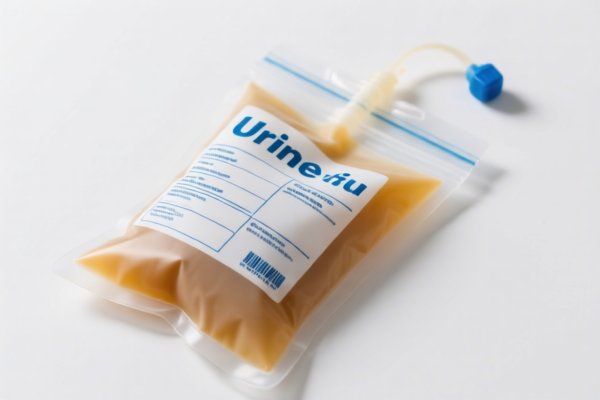
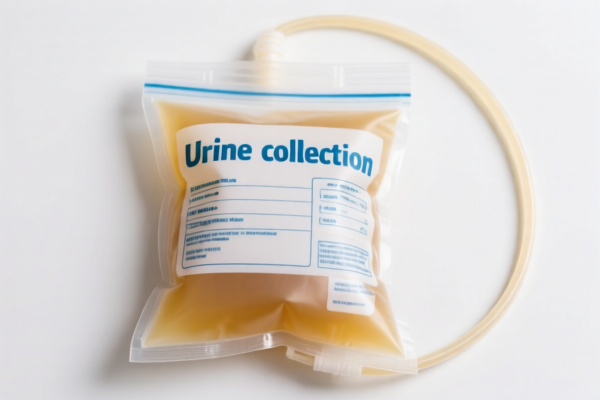
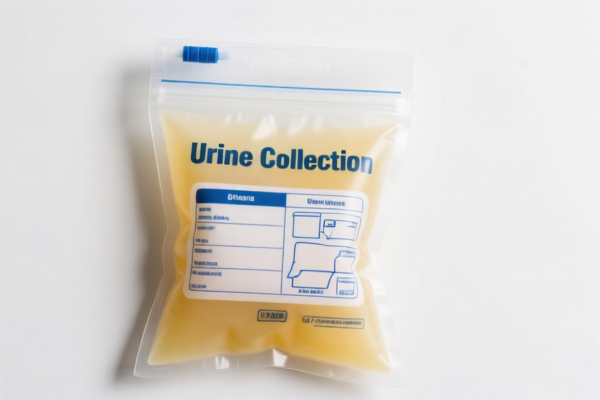
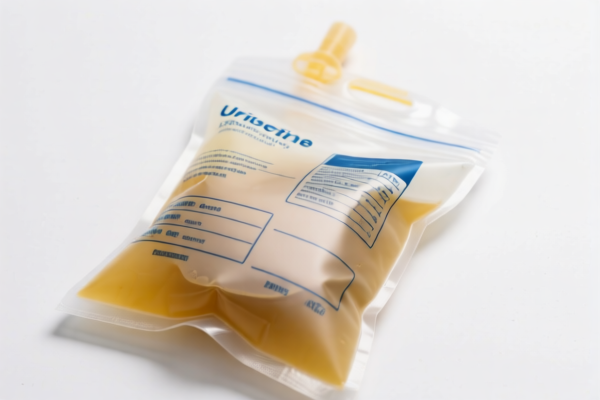
AI Analysis
🩺 Urine Collection Bag (Medical Device)
🌐 HS Code Classification & Customs Clearance Guide | 2026 Tax Analysis | Strategic Compliance Strategy
📌 I. Product Definition & Classification: What Exactly is a "Urine Collection Bag"?
Urine Collection Bags are essential medical devices used for the collection, storage, and drainage of urine from patients. In international trade, they are classified not as simple "textiles" or "plastics," but as medical apparatus or bag-like articles, depending on their specific construction, material, and intended use.
The classification hinges on two critical factors:
1. Material Composition: Is it made of textile materials (e.g., woven fabric, non-woven fabric) or plastic films?
2. Form & Function: Is it a general-purpose bag (classified under Heading 4202 or 6307) or does it have specific medical features that might push it towards Chapter 90?
Note: The provided data strictly maps these bags to Headings 4202 (Articles of apparel, traveling goods...) and 6307 (Other made-up articles), implying they are classified based on their form (bag) rather than their medical function (which would be Chapter 90). This is a crucial distinction for importers.
⚠️ Key Distinction:
- If the bag is primarily a plastic film container for urine → Likely 4202 (Plastic sheeting).
- If the bag is made of textile/synthetic fiber and is a finished article → Likely 6307 (Other made-up articles).
- If the bag is considered a traveling/travel-like bag (e.g., with handles, specific structure) → 4202.92.31.
📦 II. HS Code Classification Details (2026 Latest Tariff Reference)
Based on the provided data, there are three specific HS Codes for Urine Collection Bags. Each has a distinct tax implication.
| HS Code | Product Description | Material/Type | Key Characteristics |
|---|---|---|---|
4202.92.31.20 |
Urine Collection Bag, classified as a bag-like article | Textile Materials or Plastic Film | General-purpose bag structure. Broadest category under 4202.92 (Bag-like articles with outer surface of textile materials or plastic sheeting). |
6307.90.98.91 |
Urine Collection Bag, classified as a finished made-up article | Textile Materials or Synthetic Fibers | Specifically identified as a "made-up article" of textile/synthetic fiber. Often applies to simpler, non-rigid textile bags. |
4202.92.31.31 |
Urine Collection Bag, classified as a traveling or similar bag | Textile Materials | Treated as a "traveling bag" due to its form (e.g., with straps, handles, or specific carrying features). Structurally similar to 4202.92.31.20 but categorized under the "traveling" sub-group. |
🔍 Critical Note:
- All three HS Codes incur additional US tariffs due to trade policies (Section 301 and IEEPA Section 122).
- The material (Textile vs. Plastic) is the primary differentiator between 4202 and 6307.
- The form (General Bag vs. Traveling Bag) differentiates the two sub-codes under 4202.
💰 III. 2026 Latest Tariff Rate Breakdown (Including Additional Taxes)
✅ Applicable Country: United States (US)
✅ Origin: China (CN)
✅ Effective Date: Ongoing (as per current trade restrictions)
🎯 1. 4202.92.31.20 & 4202.92.31.31
(Applies to both Plastic Film/Textile General Bags and Textile Traveling Bags)
| Item | Details |
|---|---|
| Base Tariff Rate | 17.6% (ad valorem) |
| Section 301 Additional Tariff | +25.0% (Under USITC Footnote 9903.88.01 / 301 List 4) |
| Section 122 Tariff (IEEPA) | +10.0% (Under International Emergency Economic Powers Act, targeting specific Chinese medical/consumer goods) |
| Total Effective Rate | 52.6% |
| Tax Calculation | CIF Value × 52.6% |
| De Minimis Exemption | ❌ NOT Eligible (Value > $800 does not apply due to high duty rate and specific exclusions for Chinese goods under 122/301). |
| Legal Authority Path | HTSUS:4202.92.31.20/31 → Section 301: 25% → IEEPA Section 122: 10% |
📌 Explanation:
- These two codes share the same total tax rate of 52.6%.
- The 10% Section 122 tariff is a significant addition targeting specific Chinese-made articles, significantly increasing the cost of entry.
- The 25% Section 301 tariff is a standard punitive tariff on many Chinese manufactured goods.
🎯 2. 6307.90.98.91
(Applies to Textile/Synthetic Fiber Finished Made-Up Articles)
| Item | Details |
|---|---|
| Base Tariff Rate | 7.0% (ad valorem) |
| Section 301 Additional Tariff | +7.5% (Under USITC Footnote 9903.88.01 / 301 List 4) |
| Section 122 Tariff (IEEPA) | +10.0% (Under IEEPA, targeting specific Chinese goods) |
| Total Effective Rate | 24.5% |
| Tax Calculation | CIF Value × 24.5% |
| De Minimis Exemption | ❌ NOT Eligible (Due to Section 122 and 301 restrictions). |
| Legal Authority Path | HTSUS:6307.90.98.91 → Section 301: 7.5% → IEEPA Section 122: 10% |
📌 Explanation:
- This code has a significantly lower total tax rate (24.5%) compared to the 4202 codes (52.6%).
- The base rate is only 7%, and the Section 301 rate is only 7.5% (not 25%).
- However, the Section 122 tariff (10%) still applies, making it more expensive than pre-2018 rates but much cheaper than the 4202 options.
- Strategic Implication: If your urine bags are made of textile/synthetic fibers, consider classifying under 6307.90.98.91 to save 28.1% in total duties.
🛠️ IV. Customs Clearance Practical Advice (Battle-Tested Pitfall Guide)
✅ 1. Document Checklist (Non-Negotiable)
| Document | Required? | Notes |
|---|---|---|
| ✅ Product Specification Sheet | ✔️ | Must clearly state material (Textile vs. Plastic), dimensions, and capacity. |
| ✅ Material Composition Certificate | ✔️ | Critical for distinguishing between 4202 (Plastic/Textile) and 6307 (Textile only). |
| ✅ Product Photos | ✔️ | Show the bag’s structure (handles, straps, spigot). |
| ✅ Commercial Invoice | ✔️ | Must specify "Urine Collection Bag" and HS Code. Avoid generic terms like "Medical Bag." |
| ✅ Packing List | ✔️ | Detail contents to ensure no misclassification of accessories. |
| ✅ Certificate of Origin | ✔️ | To confirm Chinese origin for accurate tariff application. |
✅ 2. Classification Strategy (Key Tips)
🔥 "Material Matters, Form Follows!"
| Scenario | Recommended HS Code | Why? |
|---|---|---|
| Bag made of Plastic Film | 4202.92.31.20 |
Plastic is explicitly under 4202.92. |
| Bag made of Textile with Travel Features (straps, handles) | 4202.92.31.31 |
Classified as a "traveling bag." |
| Bag made of Textile/Synthetic Fiber, No special travel features | 6307.90.98.91 |
Classified as a "made-up article." Best for tax savings. |
| Bag with Medical Grade certification | Still use above | Medical certification does not automatically move it to Chapter 90 if the primary characteristic is its bag form. |
⚠️ Warning:
- Do NOT assume all medical bags go to Chapter 90. If the bag’s essential character is its form as a container (not its medical device function), it stays in Chapter 42 or 63.
- Misclassifying a plastic bag as textile (6307) to save tax will lead to penalties and retroactive duties.
✅ 3. Special Cases & Risk Mitigation
| Situation | Action |
|---|---|
| Mixed Materials (e.g., Plastic window on a textile bag) | If plastic is the primary outer surface → 4202. If textile is primary → 6307. |
| Sample Imports | Even for samples, declare the correct HS Code. De minimis ($800) is not applicable for these codes due to Section 122. |
| Section 122 Exemptions | Currently, no broad exemptions for urine bags under Section 122. Monitor for policy changes. |
🌍 V. Global Market Comparison (2026)
| Market | Recommended HS Code | Total Tax Rate (China Origin) | Notes |
|---|---|---|---|
| 🇺🇸 USA | 6307.90.98.91 |
24.5% | Best option for textile bags. Avoid 4202 if possible. |
| 🇺🇸 USA | 4202.92.31.20/31 |
52.6% | High tariff. Only if plastic or traveling bag structure. |
| 🇨🇳 China | 6307.90.98.91 |
~7% | Lower domestic tax. |
| 🇪🇺 EU | 4202.92.90 |
~2.7% | No Section 301/122 equivalents. |
📌 Conclusion:
- USA is the most expensive market due to Section 301 and Section 122 tariffs.
- Optimization Strategy: If your urine bags are made of textile/synthetic fibers, strongly consider classifying under6307.90.98.91to reduce the total duty from 52.6% to 24.5%.
- Plastic bags have no tax optimization option under the current data and will incur 52.6%.
📌 VI. Common Errors & Pitfalls (Lessons Learned)
❌ Error 1: Classifying all urine bags under one generic "Medical Bag" code.
👉 Result: Customs may reclassify, leading to delays and penalties.
✅ Fix: Be specific about material and form.
❌ Error 2: Assuming textile bags automatically qualify for lower duties.
👉 Result: If the bag has "traveling" features (straps, handles), it may be forced into 4202.92.31.31 (52.6%).
✅ Fix: Ensure textile bags are simple made-up articles without travel-specific features to qualify for 6307.90.98.91 (24.5%).
❌ Error 3: Ignoring Section 122.
👉 Result: Underestimating the total cost.
✅ Fix: Always add 10% for Section 122 regardless of the base HS Code.
🎯 VII. Conclusion: Strategic Classification for Cost Efficiency
🎯 Key Takeaway:
🔹 "Textile Bags? Go 6307 (24.5%)."
🔹 "Plastic/Traveling Bags? Stuck with 4202 (52.6%)."
📌 Action Plan:
1. Audit your materials: Are they textile or plastic?
2. Audit your design: Do they have travel features (straps, zippers for travel)?
3. Choose the lowest applicable HS Code: Prioritize 6307.90.98.91 for textile bags.
4. Consult a customs broker: To confirm classification before shipment.
✨ Professional clearance starts with accurate classification!
💼 Save 28% in duties by choosing the right HS Code!
Customer Reviews
About HS Code Classification
The Harmonized System (HS) is an internationally standardized nomenclature developed by the World Customs Organization (WCO) to classify traded products. Over 200 countries use the HS system as the basis for customs tariffs, trade statistics, and import/export regulations.
Each HS code follows a hierarchical structure:
- Chapter (2 digits) — Broad category of goods (e.g., Chapter 84: Machinery and Mechanical Appliances)
- Heading (4 digits) — More specific grouping within the chapter
- Subheading (6 digits) — Internationally standardized breakdown, used by all WCO member countries
- National subdivisions (8-10 digits) — Country-specific extensions for further classification, such as US HTSUS 10-digit codes
Correct HS code classification is essential for smooth customs clearance, accurate duty payment, and compliance with trade regulations. Misclassification can lead to customs delays, overpayment of duties, or penalties.
When importing from CN to US, the applicable tariff rates may include:
- Most-Favored-Nation (MFN) rate — The standard duty rate applied to WTO members
- General rate — Applied to countries without trade agreements
- Trade remedy duties — Additional tariffs such as Section 301 (anti-dumping), Section 232 (national security), or countervailing duties
The information provided on this page is for reference purposes only. For official classification, please consult with your local customs authority or a licensed customs broker.