Used Aircraft Pneumatic Tires
CN → US| HS Code | Tariff Rate | Origin | Destination | Doc |
|---|---|---|---|---|
| 4011300050 | 35.0% | CN | US | Official Doc |
| 4012130050 | 35.0% | CN | US | Official Doc |
| 4011300010 | 35.0% | CN | US | Official Doc |
| 4012208000 | 35.0% | CN | US | Official Doc |
| 4012206000 | 35.0% | CN | US | Official Doc |
Product Images
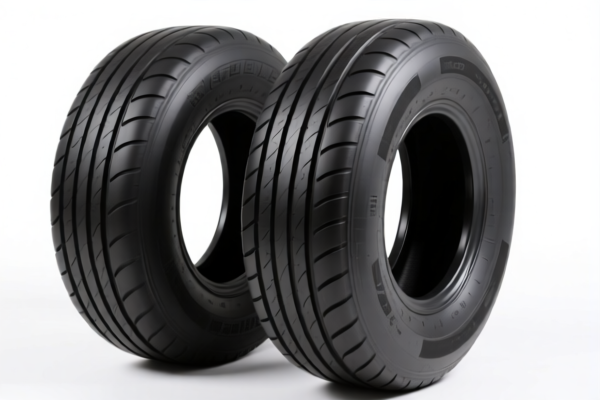
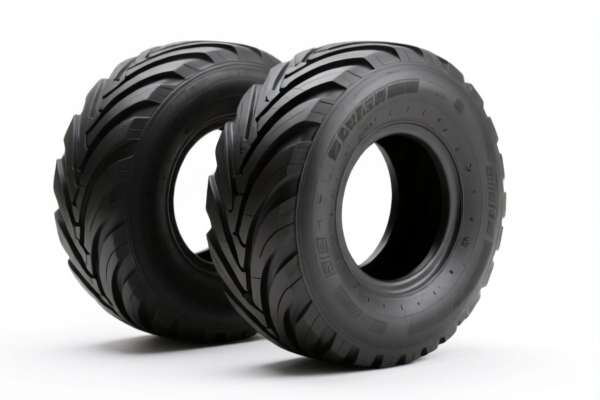
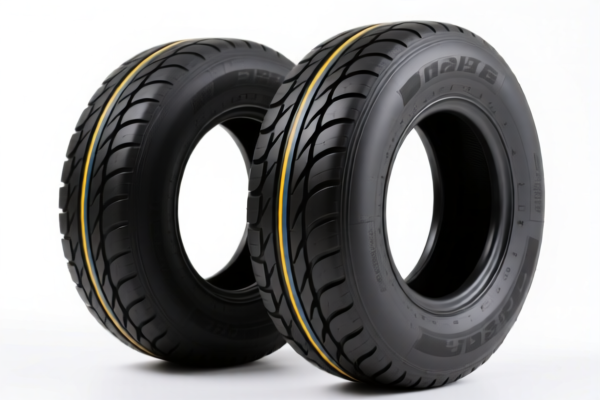
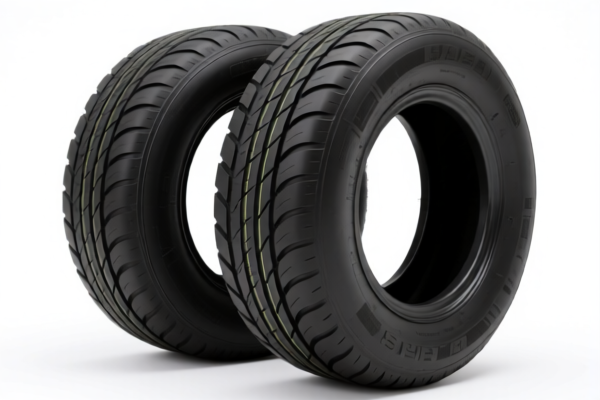
AI Analysis
✈️ Used Aircraft Pneumatic Tires (Aviation Retreaded Tires)
🌐 HS Code Reference & Customs Clearance Guide | 2026 Latest Tariff Analysis | Professional Airport Logistics Strategy
📌 I. Product Definition & Classification: What Exactly Are "Used Aircraft Pneumatic Tires"?
Aircraft pneumatic tires are high-performance rubber products designed to withstand extreme pressures, high-speed landings, and heavy loads. In international trade, "Used" aircraft tires are rarely scrapped. Instead, they are re-treaded (Retreaded) to restore their original performance specifications.
Key Distinction:
New Tires: Brand new, manufactured once.
Retreaded/Reconditioned Tires (HS 4011.30/4012.13): Original tire casings that have been worn down but retain structural integrity. They are cleaned, inspected, and new treads are vulcanized onto them.
Scrap/Defective*: Tires deemed unsafe for re-treading. These fall under different waste/scrap codes.
⚠️ Critical Classification Point:
- If the tire is retreaded/reconditioned, it belongs to HS 4011.30 or HS 4012.13.
- Do NOT classify as "New Aircraft Tires" (HS 4011.20) if they are used/retreaded, as this triggers severe penalties for misdeclaration.
- The material is primarily Rubber with textile/fabric reinforcement.
📦 II. HS Code Classification Details (2026 Latest Tariff Authority)
Based on the provided data, there are three specific sub-headings for Retreaded Aircraft Tires. All carry the same tax burden due to trade policies.
| HS Code | Product Description | Application Scenario | Key Identifier |
|---|---|---|---|
4011.30.00.50 |
Retreaded pneumatic tires, for aircraft | Airline fleets, airport maintenance units | Matches "Aircraft pneumatic tires", Material inferred as Rubber |
4012.13.00.50 |
Retreaded pneumatic tires, for aircraft | Specific category for "Aircraft use & Retreaded" | Explicitly categorized under "Retreaded" & "Aircraft" |
4011.30.00.10 |
Retreaded pneumatic tires, for aircraft | General aviation, cargo airlines | Matches "Rubber pneumatic tires for aircraft", Material inferred as Rubber |
🔍 Important Note:
- All three codes refer to Retreaded/Used aircraft tires.
- The.50and.10suffixes often denote specific regulatory or statistical tracking within the national customs system (e.g., US HTS).
- Material: Rubber (Class 40).
- Usage: Aviation only. Not for cars, trucks, or industrial machinery.
💰 III. 2026 Latest Tariff Rate Breakdown (Including Surtaxes & Policy Add-ons)
✅ Applicable Country: United States (US)
✅ Origin: China (CN) (Note: The tax detail mentions "Section 122" and "Additional Tariffs," which strongly implies US-China trade context in 2026)
✅ Effective Date: 2025/2026
🎯 1. All Listed HS Codes (4011.30.00.50, 4012.13.00.50, 4011.30.00.10)
| Item | Content |
|---|---|
| Base Duty Rate | 0.0% (ad valorem) |
| Section 301 Additional Tariff | +25.0% |
| Section 122 Tariff | +10.0% |
| Total Tax Rate | 35.0% |
| Tax Calculation | CIF Value × 35% |
| De Minimis Exemption? | ❌ NO (Cannot use Section 321 de minimis) |
| Legal Basis Path | USITC:4011.30.00.50 → Footnote:301 → Section:122 |
📌 Detailed Explanation:
- Base Duty (0%): Standard MFN (Most Favored Nation) rate for these goods is often low or zero, but...
- Section 301 Tariff (+25%): Imposed under U.S. Trade Law Section 301 to counter unfair trade practices. This is a fixed surcharge on Chinese-origin goods in this category.
- Section 122 Tariff (+10%): Under the "Section 122" authority (19 U.S.C. § 2153(c)(2)), the President may suspend duty-free treatment for goods imported in excess of national security needs or market disruption. This adds an additional 10% on top of the 301 tariff.
- Total Effective Rate: 35%. This is a high-cost commodity for importers from China.
🛠️ IV. Customs Clearance Practical Advice (Avoiding Pitfalls)
✅ 1. Required Documentation Checklist
| Document | Must Provide? | Explanation |
|---|---|---|
| ✅ Commercial Invoice | ✔️ | Must clearly state "Retreaded Aircraft Tire" or "Reconditioned Pneumatic Tire". Do NOT just write "Tire". |
| ✅ Bill of Lading (B/L) | ✔️ | Ensure HS Code 4011.30.00.50 / 4012.13.00.50 / 4011.30.00.10 is listed. |
| ✅ Retreading Certificate | ✔️ | Proof that the tire has been professionally re-treaded by an approved facility. |
| ✅ Manufacturer's Statement | ✔️ | Confirming the tire casing is airworthy and meets FAA/EASA standards. |
| ✅ Country of Origin Cert | ✔️ | Crucial for applying the correct 301/122 tariffs. If misdeclared as "Vietnam", penalties apply. |
| ✅ Safety Inspection Report | ✔️ | From the retreading facility confirming structural integrity. |
✅ 2. Declaration Tips (Key Mantra)
🔥 "Retreaded, Not New; Aircraft, Not Auto; Full Disclosure or Face Fines!"
| Scenario | Correct Declaration | Wrong Practice |
|---|---|---|
| Retreaded Tire | HS 4012.13.00.50 or 4011.30.00.xx |
Declaring as "New Tire" (4011.20) → Fraud/High Penalty |
| Aircraft Use | Explicitly state "For Aircraft Use" | Vague description "Rubber Tire" → Detention for Inspection |
| Mixed Shipment | Separate line items for Aircraft vs. Ground Support Equipment | Mixing with car tires → Incorrect HS Code Application |
✅ 3. Special Circumstances
| Situation | Handling Advice |
|---|---|
| OEM Retreading | If you are a major airline outsourcing retreading, provide the Master Service Agreement and FAA Approval Numbers of the retreader. |
| Origin Change | If the casing is from China but retreading happened in USA/Mexico, you may qualify for different origin rules. Consult a trade lawyer to see if "Substantial Transformation" applies to avoid 301/122 tariffs. |
| Damaged Casings | If the tire is not retreadable, it may be classified as Scrap Rubber (HS 4004). Tariffs differ. Do not declare as "Aircraft Tire" if it's scrap. |
🌍 V. Global Market Comparison (2026 Snapshot)
| Country/Region | Recommended HS Code | Tariff (China Origin) | Certification | Notes |
|---|---|---|---|---|
| 🇺🇸 USA | 4011.30.00.50 / 4012.13.00.50 |
35% (0% Base + 25% 301 + 10% 122) | FAA/EASA Compliance | High tariff impact on Chinese retreaders. |
| 🇨🇳 China | 4012.13.00.50 |
Low/Zero (Import Duty) | CAAC Certification | China imports many casings for retreading. |
| 🇪🇺 EU | 4011.30.00.90 |
4.5% (Standard) | EASA Approval | No Section 301/122 equivalents. More favorable. |
| 🇦🇪 UAE | 4011.30.00.90 |
0% (GCC Common Customs) | GSO Standards | Duty-free entry for aviation parts in GCC. |
📌 Conclusion:
- The US market is the most expensive for Chinese-origin retreaded aircraft tires due to the 35% combined tariff.
- Many airlines shift retreading operations to ASEAN countries (e.g., Malaysia, Singapore) to avoid US Section 301/122 duties.
- Supply Chain Optimization: Consider "Off-shore Retreading" to change the country of origin for the final product.
📌 VI. Common Errors & Pitfalls (Lessons Learned)
❌ Error 1: Declaring "Retreaded Tires" as "New Tires" (4011.20)
👉 Consequence: Customs will detect the mismatch via serial number lookup or physical inspection. Result: Seizure, fines, and potential fraud charges.
❌ Error 2: Missing the Section 122 tariff
👉 Consequence: Even if you know the 25% 301 tariff, forgetting the additional 10% Section 122 tariff leads to underpayment of duties. CBP will assess interest and penalties.
❌ Error 3: Vague Description "Used Tires"
👉 Consequence: CBP may classify as "Used Goods" (HS 4012) with different regulatory requirements, or worse, as "Waste" (HS 4004) if condition is poor, leading to rejection at port.
✅ Correct Approach:
"Aircraft Pneumatic Tire, Retreaded, Rubber Casing, FAA-PMA Approved, Model XYZ, Country of Origin: China"
🎯 VII. Conclusion: Professional Clearance, Cost Control & Efficiency!
🎯 Remember the Mantra:
🔹 "Retreaded = 4012/4011, Not New!"
🔹 "301 + 122 = 35% Total Tax!"
🔹 "Origin Matters: China vs. ASEAN Shift Strategy!"
📌 Pro Tip:
If you are importing large volumes, apply for a Section 301 Exclusion if available (though rare for tires now) or explore Free Trade Zones (FTZ) where duties can be deferred until the tires are sold domestically.
📣 Immediate Action:
📞 Engage a licensed customs broker specializing in Aviation Parts.
📄 Ensure your Retreading Certificate and FAA/EASA Compliance Docs are ready.
🚀 Optimize your supply chain to mitigate the 35% tariff burden.
✨ Professional Customs Clearance Starts with Accurate Classification!
💼 Every Dollar Saved on Tariffs is Pure Profit!
Customer Reviews
About HS Code Classification
The Harmonized System (HS) is an internationally standardized nomenclature developed by the World Customs Organization (WCO) to classify traded products. Over 200 countries use the HS system as the basis for customs tariffs, trade statistics, and import/export regulations.
Each HS code follows a hierarchical structure:
- Chapter (2 digits) — Broad category of goods (e.g., Chapter 84: Machinery and Mechanical Appliances)
- Heading (4 digits) — More specific grouping within the chapter
- Subheading (6 digits) — Internationally standardized breakdown, used by all WCO member countries
- National subdivisions (8-10 digits) — Country-specific extensions for further classification, such as US HTSUS 10-digit codes
Correct HS code classification is essential for smooth customs clearance, accurate duty payment, and compliance with trade regulations. Misclassification can lead to customs delays, overpayment of duties, or penalties.
When importing from CN to US, the applicable tariff rates may include:
- Most-Favored-Nation (MFN) rate — The standard duty rate applied to WTO members
- General rate — Applied to countries without trade agreements
- Trade remedy duties — Additional tariffs such as Section 301 (anti-dumping), Section 232 (national security), or countervailing duties
The information provided on this page is for reference purposes only. For official classification, please consult with your local customs authority or a licensed customs broker.