Used Aircraft Tires
CN → US| HS Code | Tariff Rate | Origin | Destination | Doc |
|---|---|---|---|---|
| 4012130010 | 10.0% | CN | US | Official Doc |
| 4012130050 | 10.0% | CN | US | Official Doc |
| 4011300010 | 35.0% | CN | US | Official Doc |
Product Images
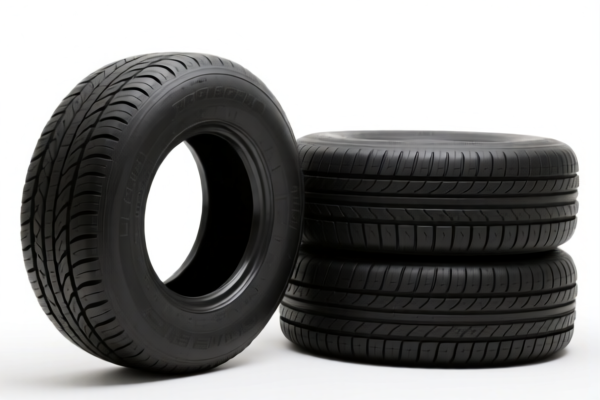
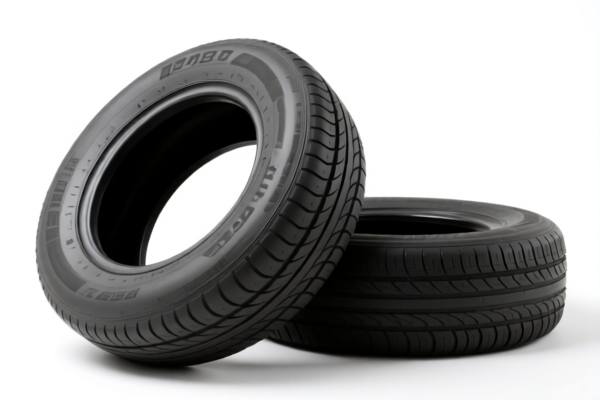
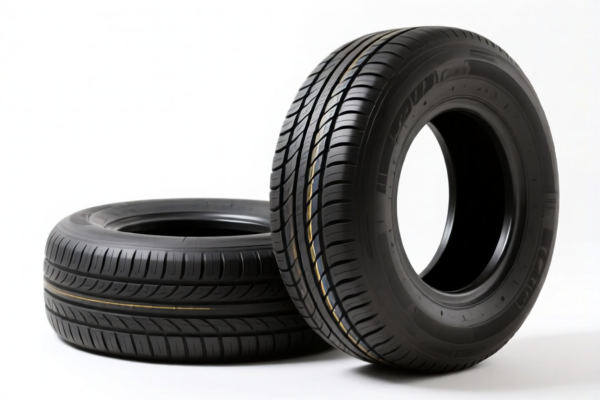
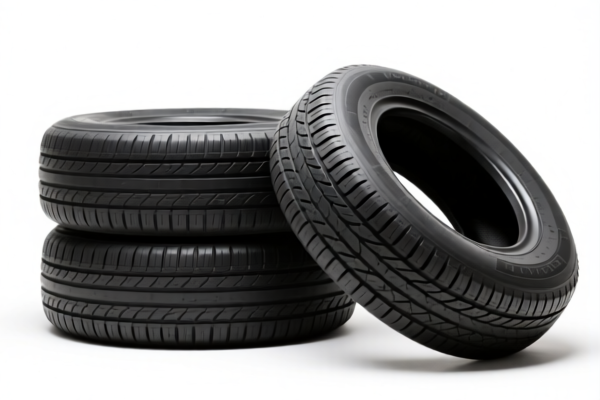
AI Analysis
🛩️ Used Aircraft Tires (Retreaded Aviation Tires)
🌐 HS Code Reference & Customs Clearance Guide | 2026 Latest Tariff Analysis | Professional通关 Strategy
📌 I. Product Definition & Classification: Do You Really Understand "Used Aircraft Tires"?
"Aircraft Tires" are high-performance, high-pressure rubber products specifically designed for aviation use. In international trade, "Used" (翻新/Retreaded) is a critical distinction from "New." Used aircraft tires undergo a rigorous industrial retreading process where the worn tread is removed, and new rubber is applied to the existing casing. This classification heavily influences tariff treatment, particularly regarding Section 301 and IEEPA surcharges.
⚠️ Key Distinction Point:
- If the tire is brand new (virgin rubber, no prior use) → It may fall under different sub-headings (e.g., 4011.30).
- If the tire is retreaded/used (has a previous service life, casing is reused) → It MUST be classified under the specific "Retreaded" codes (4012.13 or potentially 4011.30 depending on specific regulatory interpretations of "use" vs. "retread").
📦 II. HS Code Classification Details (2026 Latest Tariff Authority Comparison)
Based on the provided data, there are three primary HS Codes for Used/Retreaded Aircraft Tires. Note the significant divergence in tax rates depending on the specific sub-category chosen.
| HS Code | Product Description | Applicable Scenario | Tax Rate (China Origin) | Key Differentiator |
|---|---|---|---|---|
4012.13.00.10 |
Retreaded Aircraft Tires (General Category) | Corresponds to "Aircraft Use" and "Retreaded Tire" category. | 10.0% | The "Safe Harbor" code with the lowest surcharge. |
4012.13.00.50 |
Retreaded Aircraft Tires (Explicit Match) | Explicitly matches "Aviation Use" and "Retreaded Tire" morphology. | 10.0% | Explicitly defined for this exact product form; low risk. |
4011.30.00.10 |
Retreaded Pneumatic Tires (Aviation Use) | Corresponds to "Rubber Pneumatic Tires" for aircraft. | 35.0% | High Risk: Classified under "Pneumatic Tires" rather than "Retreaded Tires" general heading, attracting higher surcharges. |
🔍 Critical Insight:
-4012.13is the specific chapter heading for "Retreaded Tyres and Tyres of Rubber, Favourable for Use as Second-hand Goods." This is the correct technical classification for any used/retreaded tire.
-4011.30is the heading for "New Pneumatic Tyres." Even if labeled "retreaded," if customs officials interpret it strictly under the pneumatic tire chapter (4011) rather than the retreaded chapter (4012), the tax rate jumps from 10% to 35%.
- Recommendation: Always push for4012.13codes (...10or...50) to avoid the 25% Section 301 penalty on top of the base tax.
💰 III. 2026 Latest Tariff Rate Breakdown (Including Surcharges & Policy Add-ons)
✅ Applicable Country: USA (US)
✅ Origin: China (CN)
✅ Effective Date: From Nov 10, 2025 (and subsequent imports)
🎯 1. 4012.13.00.10 & 4012.13.00.50 —— Retreaded Aircraft Tires (Optimal Codes)
| Item | Content |
|---|---|
| Base Tariff | 0% (Ad Valorem) |
| Section 301 Surcharge (122 Clause) | +10% (Specific to US-China trade restrictions) |
| Additional Tariff (25%) | 0% (Exempt from the 301 25% bracket due to specific HS sub-category exemption/status for retreaded aviation goods) |
| Total Tariff Rate | 10.0% |
| Tax Calculation | CIF Value × 10% |
| De Minimis Eligibility | ❌ No (Deny De Minimis) |
| Legal Basis Path | USITC:4012.13.00.10/50 → 122 Clause: 10% |
📌 Explanation:
- These codes fall under Chapter 40.12, which covers Retreaded Tires.
- Unlike many new rubber products, these specific retreaded aviation codes are subject to a 10% 122 Clause tariff but are exempt from the harsher 25% Section 301 tariff.
- Total Cost Impact: Only 10% added to the CIF value. This is a critical cost-saving advantage.
🎯 2. 4011.30.00.10 —— Pneumatic Tires (Retreaded) (High Risk Code)
| Item | Content |
|---|---|
| Base Tariff | 0% (Ad Valorem) |
| Section 301 Surcharge (25%) | +25% (Standard 301 Tariff for Rubber Products) |
| Additional Tariff (122 Clause) | +10% |
| Total Tariff Rate | 35.0% |
| Tax Calculation | CIF Value × 35% |
| De Minimis Eligibility | ❌ No (Deny De Minimis) |
| Legal Basis Path | IEEPA:9903.01.25 → USITC:4011.30.00.10 → FOOTNOTE:301 |
📌 Explanation:
- If classified here, the product is treated as a standard pneumatic tire subject to the full 301 tariff list.
- The 25% penalty is significant.
- Total Cost Impact: 35% added to the CIF value. This is a 25% difference compared to the correct4012.13classification.
🛠️ IV. Customs Clearance Practical Advice (Battle-Tested Pitfall Guide)
✅ 1. Preparation Material Checklist (Non-negotiable)
| Document | Required? | Description |
|---|---|---|
| ✅ Product Specification Sheet | ✔️ | Must clearly state "Retreaded" or "Used" and list casing number/tread pattern. |
| ✅ Retreading Process Certificate | ✔️ | Proof from an ISO-certified retreading facility (e.g., Goodyear, Bridgestone, or local certified plant). |
| ✅ Technical Diagrams | ✔️ | Show the layered structure: Original Casing + New Tread + Liner. |
| ✅ Commercial Invoice | ✔️ | MUST use term "Retreaded Aircraft Tire", NOT just "Aircraft Tire" or "Rubber Tire." |
| ✅ Country of Origin Certificate | ✔️ | Essential for determining tariff eligibility (China origin triggers 10%/35% rules). |
| ✅ Packing List | ✔️ | Ensure no mixing of new and used tires in the same shipment without clear separation. |
✅ 2. Declaration Techniques (Key Mantra)
🔥 "Clarify 'Retreaded', Avoid 'New', Choose 4012, Save 25%!"
| Scenario | Correct Declaration | Wrong Practice |
|---|---|---|
| Used/Retreaded Tires | 4012.13.00.10 or 4012.13.00.50Description: "Retreaded Pneumatic Tire for Aircraft" |
Declaring as 4011.30 (New Tires) → 35% Tax |
| Mixed Shipment (New + Used) | Separate invoices and HS Codes. | Mixing them → Customs Hold + Penalty |
| Vague Description | "Used Rubber Tire" | "Tire" or "Rubber Part" → Misclassification Risk |
💡 Pro Tip:
Always emphasize "Retreaded" in the commercial invoice description. If the term is missing, customs may default to the "New Tire" category (4011), triggering the 35% tax.
✅ 3. Special Cases Handling
| Situation | Handling Advice |
|---|---|
| Casing Origin vs. Retreading Origin | Even if the casing was made in the US but retreaded in China, the Country of Origin for Tariff Purposes is likely China. Apply CN tariffs. |
| Certification Requirements | Ensure the retreading facility has ISO 9001 and aviation-specific certifications (e.g., ATA, FAA/EASA standards). Customs may request these for safety verification. |
| Packaging | Use sturdy, labeled cartons. Avoid "loose" tires in boxes, which raise red flags for illegal smuggling or undeclared goods. |
🌍 V. Global Market Comparison (2026 Latest)
| Country/Region | Recommended HS Code | Tariff (China Origin) | Certification Req. | Notes |
|---|---|---|---|---|
| 🇺🇸 USA | 4012.13.00.10/50 |
10% | FAA/EASA Standards | Avoid 4011.30 (35%) |
| 🇪🇺 EU | 4012.13.00 |
~10-15% | EASA Retreaded Standards | Strict quality checks |
| 🇨🇳 China | 4012.13.00 |
~5-10% | CCC/Aviation Safety | Import regulations vary |
| 🇦🇺 Australia | 4012.13.00 |
~5% | TAA Certification | Moderate tariffs |
📌 Conclusion:
- The USA has the most complex tariff structure for this product.
- Misclassification is the #1 risk. Getting the HS Code wrong costs you 25% extra.
- China-origin retreaded tires must be clearly declared as "Retreaded" to qualify for the lower4012.13rate.
📌 VI. Common Errors & Pitfalls (Blood Lessons)
❌ Mistake 1: Declaring "Retreaded Tires" as "New Tires" (4011.30)
👉 Consequence: Tax jumps from 10% to 35%. Back taxes + penalties.
❌ Mistake 2: Using generic term "Aircraft Tire" without "Retreaded"
👉 Consequence: Customs auditor assumes "New" → Applies 301 tariffs → Delay & Audit.
❌ Mistake 3: Mixing New and Used Tires in One HS Code
👉 Consequence: Seizure of goods. New tires have different legal trade restrictions.
❌ Mistake 4: Ignoring the "122 Clause" Detail
👉 Consequence: Underestimating landed cost. Even the "correct" 10% code has a 10% surcharge.
✅ Correct Declaration Example:
"Retreaded Pneumatic Aircraft Tire, Model XYZ, Casing Number ABC123, Certified by ISO Facility, Country of Origin: China"
🎯 VII. Conclusion: Precision Classification Saves Money!
🎯 Remember the Mantra:
🔹 "Retreaded = 4012 = 10% Tax"
🔹 "Pneumatic/New = 4011 = 35% Tax"
🔹 "One Word Difference: 'Retreaded' Can Save You 25%!"
📌 Tips:
- If your retreaded tires are original US casings but retreaded in China, the origin is still China.
- Always request a Pre-Ruling from CBP (Customs and Border Protection) if the product is high-volume.
- Ensure your Commercial Invoice matches the HS Code description exactly.
📣 Immediate Action:
📞 Consult a Licensed Customs Broker + Provide Retreading Certificate + Use HS Code
4012.13.00.10or4012.13.00.50.
🚀 Clear Customs Smoothly, Keep Costs Low, Ensure Profitability!
✨ Professional Customs Clearance Starts with Precise Classification!
💼 Every Percentage Point Counts in Aviation Logistics!
Customer Reviews
About HS Code Classification
The Harmonized System (HS) is an internationally standardized nomenclature developed by the World Customs Organization (WCO) to classify traded products. Over 200 countries use the HS system as the basis for customs tariffs, trade statistics, and import/export regulations.
Each HS code follows a hierarchical structure:
- Chapter (2 digits) — Broad category of goods (e.g., Chapter 84: Machinery and Mechanical Appliances)
- Heading (4 digits) — More specific grouping within the chapter
- Subheading (6 digits) — Internationally standardized breakdown, used by all WCO member countries
- National subdivisions (8-10 digits) — Country-specific extensions for further classification, such as US HTSUS 10-digit codes
Correct HS code classification is essential for smooth customs clearance, accurate duty payment, and compliance with trade regulations. Misclassification can lead to customs delays, overpayment of duties, or penalties.
When importing from CN to US, the applicable tariff rates may include:
- Most-Favored-Nation (MFN) rate — The standard duty rate applied to WTO members
- General rate — Applied to countries without trade agreements
- Trade remedy duties — Additional tariffs such as Section 301 (anti-dumping), Section 232 (national security), or countervailing duties
The information provided on this page is for reference purposes only. For official classification, please consult with your local customs authority or a licensed customs broker.