Used Bus Inflatable Tires
CN → US| HS Code | Tariff Rate | Origin | Destination | Doc |
|---|---|---|---|---|
| 4012208000 | 35.0% | CN | US | Official Doc |
| 4012206000 | 35.0% | CN | US | Official Doc |
| 4016996010 | 37.5% | CN | US | Official Doc |
| 4012128050 | 38.4% | CN | US | Official Doc |
| 4011201035 | 39.0% | CN | US | Official Doc |
Product Images
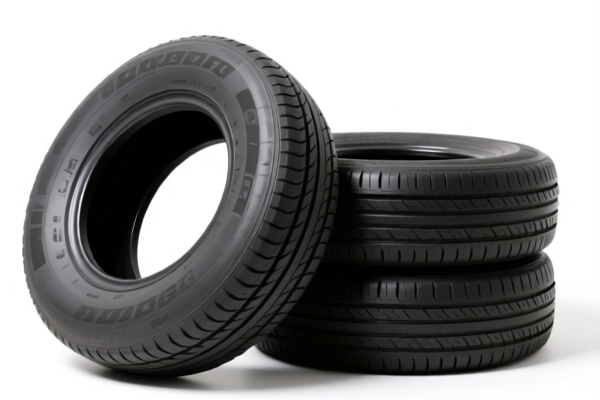
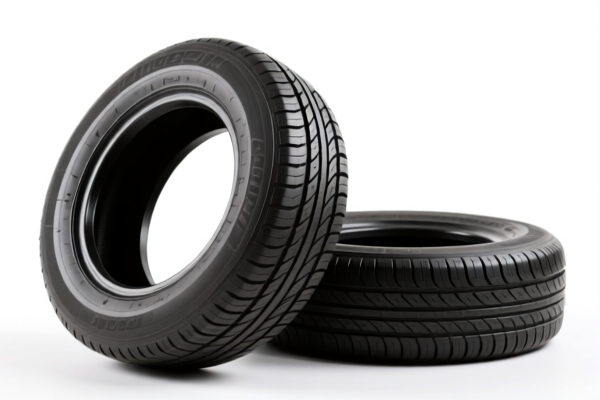
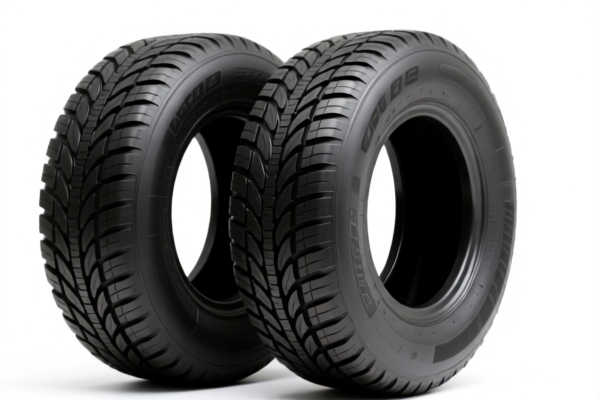
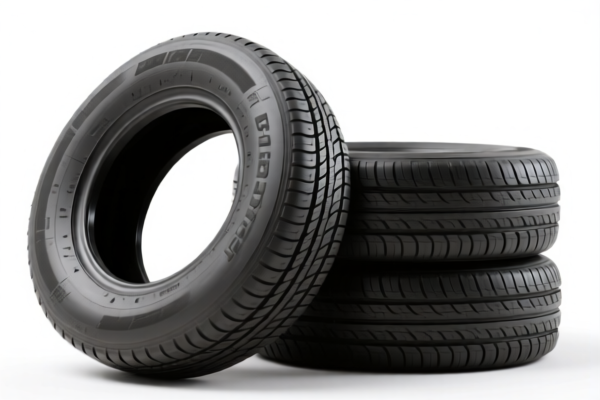
AI Analysis
🚌 Used Bus Inflatable Tires (HS Code Analysis & Customs Clearance Guide)
🌐 HS Code Reference & Customs Guide | 2026 Updated Tariff Structure | Strategic Clearance Strategy
📌 I. Product Definition & Classification: Do You Truly Understand "Used Bus Tires"?
Used bus tires, specifically those designed for heavy-duty road freight and passenger transport vehicles, fall under the broad category of used pneumatic tires made of rubber. In international trade, the classification depends heavily on the specific application (e.g., highway vs. off-road) and the condition (used vs. new).
Key Distinctions: - Used Road Tires (Pneumatic): These are retreaded or worn tires intended for highway trucks and buses. They are classified under 4012. - Off-Road/New Tires: If the tire is for off-road bus use (e.g., construction sites, mining) and is new (not used), it may fall under 4016 or 4011. Note: The provided data includes both used road tires and new off-road tires. It is critical to distinguish between "Used" (4012) and "New/Other" (4016/4011) to avoid misclassification penalties.
⚠️ Critical Warning:
- If the tire is Used and for Road Transport →归入 4012 series.
- If the tire is New and for Off-Road Bus Use →归入 4016.99.60.10 or 4011.20.10.35.
- Do not mix "Used" and "New" descriptions, as customs may reject the entry for inconsistency.
📦 II. HS Code Classification Details (2026 Tariff Authority Cross-Reference)
| HS Code | Product Description | Applicable Scenario | Condition | Total Tax Rate |
|---|---|---|---|---|
4012.20.80.00 |
Used Road Freight Tires, Corresponding to Used Rubber Pneumatic Tires | Highway trucks, long-haul buses | Used | 35.0% |
4012.20.60.00 |
Used Road Freight Tires, Used Tires for Road Transport Vehicles | Standard highway buses, city buses | Used | 35.0% |
4016.99.60.10 |
Bus Off-Road Tires, Vulcanized Rubber Products for Auto Mechanical Parts | Construction buses, mining buses | New (Implied by 4016) | 37.5% |
4012.12.80.50 |
Bus Off-Road Tires, Matched Based on "Other" Category Fallback Principle | Ambiguous off-road use, fallback classification | Used (Based on 4012 prefix) | 38.4% |
4011.20.10.35 |
Bus Off-Road Tires, Non-Road Use, Material: Rubber | Non-highway bus applications | New (Implied by 4011) | 39.0% |
🔍 Key Insight:
- HS 4012 is the primary category for USED pneumatic tires.
- HS 4016 and 4011 are for NEW or OTHER rubber articles and tires, respectively.
- The term "Used Bus Inflatable Tires" primarily maps to 4012.20.80.00 and 4012.20.60.00 if they are for highway use.
- If the bus tires are for off-road use and are used, they may still fall under 4012 (e.g.,4012.12.80.50), but this is a fallback category with a slightly higher tax rate.
💰 III. 2026 Latest Tariff Rate Details (Including Additional Taxes & Policy Surcharges)
✅ Applicable Country: United States (US)
✅ Origin: China (CN)
✅ Effective Date: November 10, 2025 (including subsequent imports)
🎯 1. 4012.20.80.00 & 4012.20.60.00 —— Used Road Freight/Bus Tires
| Item | Content |
|---|---|
| Base Tariff | 0.0% (ad valorem) |
| Section 301 Additional Tariff | +25.0% |
| Section 122 Tariff (IEEPA) | +10.0% (Applied to Chinese/Hong Kong products) |
| Total Tax Rate | 35.0% |
| Tax Calculation | CIF Value × 35% |
| De Minimis Exemption Eligible? | ❌ No (deny_de_minimis) |
| Legal Basis Path | IEEPA:9903.01.25 → USITC:4012.20.80.00 → FOOTNOTE:301 |
📌 Explanation:
- "Base Tariff 0%": Used tires generally have a low base duty under normal MFN rates.
- "301 Additional Tariff 25%": Imposed under Section 301 of the Trade Act for Chinese-origin goods.
- "Section 122 Tariff 10%": Additional surcharge under the International Emergency Economic Powers Act (IEEPA).
- Total 35%: This is a high tariff rate. Importers must factor this into cost calculations.
- No De Minimis: Used tires do not qualify for the $800 de minimis exemption, meaning full customs declaration is required.
🎯 2. 4016.99.60.10 —— Bus Off-Road Tires (New Rubber Articles)
| Item | Content |
|---|---|
| Base Tariff | 2.5% |
| Section 301 Additional Tariff | +25.0% |
| Section 122 Tariff (IEEPA) | +10.0% |
| Total Tax Rate | 37.5% |
| Tax Calculation | CIF Value × 37.5% |
| De Minimis Exemption Eligible? | ❌ No |
| Legal Basis Path | IEEPA:9903.01.25 → USITC:4016.99.60.10 → FOOTNOTE:301 |
📌 Note:
- This code is for vulcanized rubber products not elsewhere specified, including off-road tires.
- The base tariff is 2.5%, making it slightly more expensive than used road tires (0% base) before surcharges.
- Ensure the product is correctly described as "Off-Road" and "New" to avoid misclassification with used tires.
🎯 3. 4012.12.80.50 —— Bus Off-Road Tires (Fallback Classification)
| Item | Content |
|---|---|
| Base Tariff | 3.4% |
| Section 301 Additional Tariff | +25.0% |
| Section 122 Tariff (IEEPA) | +10.0% |
| Total Tax Rate | 38.4% |
| Tax Calculation | CIF Value × 38.4% |
| De Minimis Exemption Eligible? | ❌ No |
| Legal Basis Path | IEEPA:9903.01.24 → USITC:4012.12.80.50 → FOOTNOTE:301 |
📌 Warning:
- This is a "fallback" (兜底) classification. It should only be used if the tire does not fit neatly into other 4012 subheadings.
- Higher Base Tariff (3.4%) makes it more expensive than standard used road tires.
- Use this code only with strong justification and supporting documentation.
🎯 4. 4011.20.10.35 —— Bus Off-Road Tires (Non-Road Use)
| Item | Content |
|---|---|
| Base Tariff | 4.0% |
| Section 301 Additional Tariff | +25.0% |
| Section 122 Tariff (IEEPA) | +10.0% |
| Total Tax Rate | 39.0% |
| Tax Calculation | CIF Value × 39.0% |
| De Minimis Exemption Eligible? | ❌ No |
| Legal Basis Path | IEEPA:9901.25 → USITC:4011.20.10.35 → FOOTNOTE:301 |
📌 Note:
- This code is for non-road tires (e.g., industrial, construction).
- Highest Base Tariff (4.0%) in this list.
- Ensure the tire is not for highway use, as this may trigger a misclassification claim.
🛠️ IV. Customs Clearance Practical Advice (Real-World Pitfall Guide)
✅ 1. Required Documentation Checklist (Must-Haves)
| Document | Mandatory | Explanation |
|---|---|---|
| ✅ Product Specification Sheet | ✔️ | Include dimensions, load index, speed rating, tread depth (for used tires), brand, model. |
| ✅ Condition Declaration | ✔️ | Explicitly state "Used" or "New". For used tires, provide photos showing tread wear. |
| ✅ Commercial Invoice | ✔️ | Clearly describe as "Used Bus Tires" or "Off-Road Bus Tires". Avoid vague terms like "Rubber Parts". |
| ✅ Packing List | ✔️ | Detail quantity, weight, and packaging type. |
| ✅ Origin Certificate (CO) | ✔️ | If non-China origin, can help avoid Section 301/IEEPA surcharges. |
| ✅ Third-Party Inspection Report | ✔️ | For used tires, a condition report may be required to prove safety and compliance. |
✅ 2. Declaration Tips (Key Rules)
🔥 “Used Must Be Labeled, Off-Road Must Be Defined, Base Rate Matters, Avoid Fallbacks!”
| Scenario | Correct Declaration | Wrong Approach |
|---|---|---|
| Used Highway Bus Tires | 4012.20.80.00 or 4012.20.60.00 |
Misclassifying as new tires → Higher base rate + penalties |
| New Off-Road Bus Tires | 4016.99.60.10 or 4011.20.10.35 |
Declaring as "used" → Rejection or audit |
| Ambiguous Off-Road Used Tires | 4012.12.80.50 (with justification) |
Guessing → Audit risk + 38.4% tax |
| Mixing Used & New in One Shipment | Split Declarations | Mixed entry → Customs delay, potential seizure |
✅ 3. Special Situations
| Situation | Handling Advice |
|---|---|
| Retreaded Tires | Must be declared as "Used" or "Retreaded". Ensure documentation matches HS 4012. |
| OEM Custom Tires | Provide client order + design specs to avoid "general merchandise" classification. |
| Tires with Steel Belts | Still classified under rubber articles (4012/4016). No separate steel classification. |
| Tires for Military/Aviation Use | May qualify for special exemptions. Requires proof of non-commercial use. |
🌍 V. Global Market Customs Comparison (2026 Latest)
| Country/Region | Recommended HS Code | Tariff | Certification | Notes |
|---|---|---|---|---|
| 🇺🇸 USA | 4012.20.80.00 |
35% (China Origin) | None specific | 37.5%-39% for new/off-road |
| 🇨🇳 China | 4012.20.80.00 |
0-5% | CCC (if new) | Low base rate, no US surcharges |
| 🇪🇺 EU | 4012.20.80.00 |
0% | ECE R108/R109 | No additional surcharges |
| 🇦🇺 Australia | 4012.20.80.00 |
5% | SAA | No additional surcharges |
| 🇯🇵 Japan | 4012.20.80.00 |
0% | JIS | No additional surcharges |
📌 Conclusion:
- USA is the only market with significant additional tariffs (301 + 122) for Chinese-origin tires.
- Chinese-origin used bus tires face a 35% effective tariff in the US.
- Non-China origin (e.g., Vietnam, Thailand) may avoid these surcharges. Consider supply chain diversification.
📌 VI. Common Errors & Pitfall Guide (Blood Lessons)
❌ Error 1: Describing "Used Tires" as "New Rubber Parts"
👉 Consequence: Misclassification → Audit, Back Taxes, Fines.
❌ Error 2: Using "Fallback" HS Code (4012.12.80.50) without justification
👉 Consequence: Higher tax (38.4%) vs. standard (35%) + Customs scrutiny.
❌ Error 3: Mixing Used and New tires in one shipment
👉 Consequence: Customs may reject the entire entry for inconsistency.
❌ Error 4: Ignoring "Section 122" 10% surcharge
👉 Consequence: Underpayment of duties → Penalties and interest.
✅ Correct Practice:
“Used Bus Tires, Highway Use, Retreaded, Brand XYZ, Tread Depth 8/32”, Model ABC, US Origin if applicable”
🎯 VII. Conclusion: Precision in Classification Saves Money!
🎯 Remember the Mantra:
🔹 “Used = 4012, Off-Road = 4016/4011, Base Rate Matters, Avoid Fallbacks!”
🔹 “HS Code Determines Duty, 35% is the US Standard for Used Tires, Misclassification Costs Millions!”
📌 Pro Tip:
If your tires are originating from Vietnam, Mexico, or Thailand, you may avoid Section 301 and IEEPA surcharges, reducing the total tax to just the base rate (0-4%).
Recommendation:
- Apply for an Advance Ruling (Pre-Ruling) from US Customs and Border Protection (CBP) to confirm the correct HS Code.
- Diversify sourcing to non-China origins to optimize tariff costs.
📣 Immediate Action:
📞 Contact a licensed customs broker + Provide product photos + Apply for HS Code Pre-Ruling
🚀 Ensure your tires clear customs smoothly, avoid delays, and maximize profit margins!
✨ Professional Clearance Starts with Accurate Classification!
💼 Every Cent of Cost is Worth Precise Calculation!
Customer Reviews
About HS Code Classification
The Harmonized System (HS) is an internationally standardized nomenclature developed by the World Customs Organization (WCO) to classify traded products. Over 200 countries use the HS system as the basis for customs tariffs, trade statistics, and import/export regulations.
Each HS code follows a hierarchical structure:
- Chapter (2 digits) — Broad category of goods (e.g., Chapter 84: Machinery and Mechanical Appliances)
- Heading (4 digits) — More specific grouping within the chapter
- Subheading (6 digits) — Internationally standardized breakdown, used by all WCO member countries
- National subdivisions (8-10 digits) — Country-specific extensions for further classification, such as US HTSUS 10-digit codes
Correct HS code classification is essential for smooth customs clearance, accurate duty payment, and compliance with trade regulations. Misclassification can lead to customs delays, overpayment of duties, or penalties.
When importing from CN to US, the applicable tariff rates may include:
- Most-Favored-Nation (MFN) rate — The standard duty rate applied to WTO members
- General rate — Applied to countries without trade agreements
- Trade remedy duties — Additional tariffs such as Section 301 (anti-dumping), Section 232 (national security), or countervailing duties
The information provided on this page is for reference purposes only. For official classification, please consult with your local customs authority or a licensed customs broker.