Used Car Tires
CN → US| HS Code | Tariff Rate | Origin | Destination | Doc |
|---|---|---|---|---|
| 4012118000 | 38.4% | CN | US | Official Doc |
| 4012114000 | 39.0% | CN | US | Official Doc |
Product Images
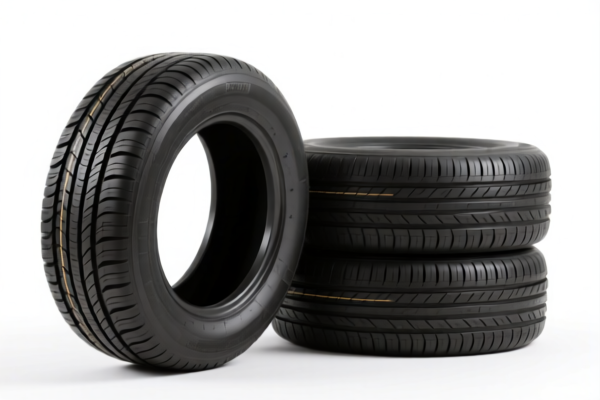
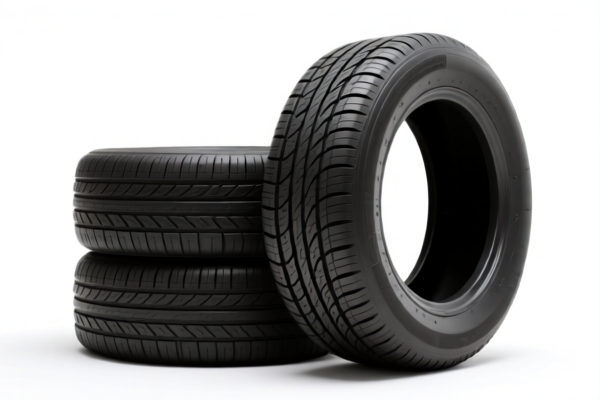
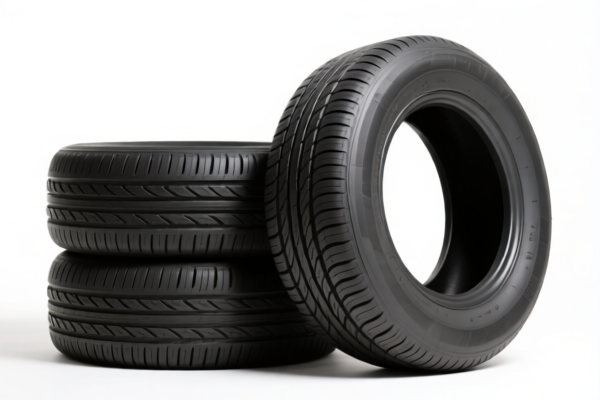
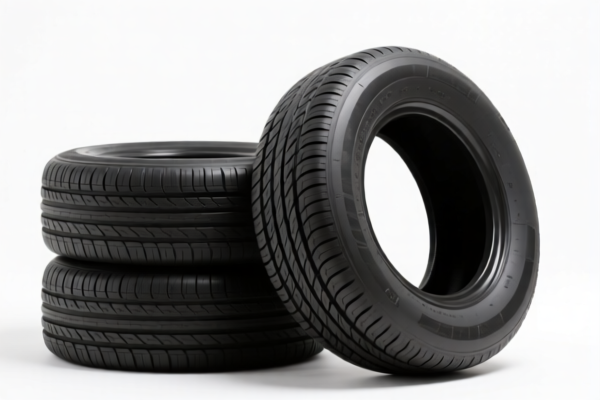
AI Analysis
🚗 Retreaded Car Tires (Used Pneumatic Tires)
🌐 HS Code Reference & Customs Clearance Guide | 2026 Latest Tariff Analysis | Professional Strategy
📌 I. Product Definition & Classification: Do You Really Understand "Used Car Tires"?
Retreaded tires are pneumatic tires that have been recovered by applying a new tread and casing to an old tire. In international trade, specifically under HS Chapter 40 (Rubber and articles thereof), they are strictly categorized by their construction and application.
For motor cars (including station wagons, racing cars, etc.), the key distinction lies in the internal structure:
Radial Tires: Cords run radially across the tire cross-section (standard for modern passenger vehicles).
Other (Bias-Ply): Cords run at an angle to the centerline (older technology or specific heavy-duty applications).
⚠️ Key Distinction Point:
- If the tire is marked "RADIAL" on the sidewall →归入 4012.11.40.00
- If the tire is NOT Radial (Bias, Diagonal, or unspecified) → 归入 4012.11.80.00
- Note: "Used" tires that are simply worn out and not retreaded fall under different subheadings (4012.20), but your query specifically implies "Retreaded" based on the data context.
📦 II. HS Code Classification Details (2026 Latest Tariff Authority)
| HS Code | Product Description | Applicable Scenario | Construction Type |
|---|---|---|---|
4012.11.40.00 |
Retreaded tires: Of a kind used on motor cars: Radial | Modern passenger cars, SUVs, Sports cars (Pirelli, Michelin, etc. retreads) | ✅ Radial |
4012.11.80.00 |
Retreaded tires: Of a kind used on motor cars: Other | Older model cars, Racing cars (non-radial), Classic cars, Bias-ply retreads | ❌ Non-Radial |
🔍 Critical Reminder:
- Do not confuse with "New Tires": New radial car tires are4011.10. Retreaded tires are4012.11. The prefix4012is mandatory. - Do not confuse with "Solid Tires": Solid tires (e.g., for forklifts) are4012.80or4012.90. Pneumatic tires must be 4012.11. - Description Precision: Customs declaration must explicitly state "Retreaded" and "For Motor Cars". Vague terms like "Used Rubber" will trigger inspections.
💰 III. 2026 Latest Tariff Rate Details (Including Additional Duties)
✅ Applicable Country: United States (US)
✅ Country of Origin: China (CN) (Assumed based on common trade context; if other origins, rules may vary)
✅ Effective Time: Current 2026 Tariff Schedule
🎯 1. 4012.11.40.00 —— Retreaded Radial Tires (For Motor Cars)
| Item | Content |
|---|---|
| Base Duty Rate | 0.0% |
| Additional Duty (Section 301 / IEEPA) | 0.0% |
| Total Tax Rate | 0.0% |
| Tax Calculation | CIF Value × 0.0% = $0 |
| De Minimis Eligibility | ✅ Yes (Usually $800 per shipment for Section 301 exclusions may apply, but base rate is already 0%) |
| Legal Basis | HTSUS 4012.11.40.00 |
📌 Explanation:
- The base Most Favored Nation (MFN) duty for retreaded tires is generally low or zero depending on specific national agreements. - Crucially, according to the provided data, there are NO additional tariffs (0.0%) for this specific HS code in the current dataset. - This makes retreaded tires highly competitive in terms of tax cost compared to new tires (which may face higher duties or specific trade remedies).
🎯 2. 4012.11.80.00 —— Retreaded "Other" Tires (For Motor Cars)
| Item | Content |
|---|---|
| Base Duty Rate | 0.0% |
| Additional Duty (Section 301 / IEEPA) | 0.0% |
| Total Tax Rate | 0.0% |
| Tax Calculation | CIF Value × 0.0% = $0 |
| De Minimis Eligibility | ✅ Yes |
| Legal Basis | HTSUS 4012.11.80.00 |
📌 Explanation:
- Similar to Radial tires, non-radial retreaded car tires also enjoy a 0.0% total tax rate in this dataset. - This indicates that retreaded tires are exempt from the heavy tariffs often applied to new automotive parts or raw materials.
🛠️ IV. Customs Clearance Practical Advice (Real-World Pitfall Guide)
✅ 1. Required Documentation Checklist
| Document | Must Provide | Explanation |
|---|---|---|
| ✅ Commercial Invoice | ✔️ | Must clearly state "Retreaded Tire", NOT "New Tire". Value must be accurate (used goods). |
| ✅ Packing List | ✔️ | Quantity, weight, and tire size (e.g., 205/55R16) must match invoice. |
| ✅ Certificate of Origin (CO) | ✔️ | To prove country of origin for potential free trade agreements (though duty is 0% here, it's still required). |
| ✅ EPA/Tire ID Label Photo | ✔️ | In the US, tires must have a federal safety label showing manufacturer, size, and DOT code. |
| ✅ Retreading Process Certificate | ✔️ | Proof that the tire was professionally retreaded, not just repaired. Required for quality verification. |
| ✅ HS Code Pre-Ruling | ✔️ | Highly recommended to confirm "Radial" vs. "Other" classification. |
✅ 2. Declaration Tips (Key Mantra)
🔥 “Retreaded not New, Radial not Bias, Label on Sidewall, Tax is Free!”
| Situation | Correct Declaration | Wrong Approach |
|---|---|---|
| Radial Retread | 4012.11.40.00"Retreaded Radial Tire for Passenger Car" |
Declaring as 4011.10 (New Tire) → Penalty + Back Duties |
| Bias/Other Retread | 4012.11.80.00"Retreaded Non-Radial Tire for Passenger Car" |
Declaring as 4012.11.40.00 → Classification Error |
| Worn-out Used Tire (Not Retreaded) | 4012.20.00.00 |
Declaring as Retreaded → Misrepresentation |
| Solid Tire (Forklift) | 4012.80 or 4012.90 |
Declaring as Pneumatic Tire → Rejected Entry |
⚠️ Critical Warning:
- DO NOT use the word "New" in the description.
- DO NOT omit the word "Retreaded".
- If the sidewall label is missing or illegible, Customs may detain the shipment for safety compliance checks, causing delays.
✅ 3. Special Cases & Handling
| Situation | Handling Advice |
|---|---|
| OEM Retreads | If supplied to a car manufacturer, provide contract and proof of intended use (aftermarket vs. original equipment). |
| Mixed Containers | If mixing Radial and Non-Radial, declare separately. Do not lump them into one line item. |
| Damaged Tires | If the casing is damaged, it may be classified as "Rubber Waste" (4004.00) with different duties. Ensure they are fit for retreading. |
| EPA Compliance | US imports require tires to meet Federal Motor Vehicle Safety Standards (FMVSS). Ensure the retreader is EPA-registered. |
🌍 V. Global Market Comparison (2026 Latest)
| Country/Region | Recommended HS Code | Duty Rate | Certification | Notes |
|---|---|---|---|---|
| 🇺🇸 USA | 4012.11.40.00 / 80 |
0.0% | DOT / EPA Label | Zero duty advantage for retreads |
| 🇨🇳 China | 4012.11 |
5% - 10% | CCC (if applicable) | Varies by exact subtype |
| 🇪🇺 EU | 4012.11 |
4.5% | E-Mark | Strict safety standards |
| 🇬🇧 UK | 4012.11 |
4.5% | UKCA | Post-Brexit rules |
| 🇯🇵 Japan | 4012.11 |
0% - 5% | JIS | High quality standards |
📌 Conclusion:
- USA offers the most favorable tariff (0.0%) for retreaded car tires under the current dataset. - Compliance is key: Even with 0% duty, DOT labeling and safety standards are strictly enforced. Non-compliant tires will be seized regardless of tax.
📌 VI. Common Errors & Pitfall Guide (Lessons Learned)
❌ Error 1: Declaring "Retreaded Tires" as "New Tires" to avoid inspections
👉 Consequence: Fraud Penalty, shipment seizure, and future audits.
👉 Fix: Always declare as Retreaded.
❌ Error 2: Mixing Radial and Non-Radial tires in one HS Code
👉 Consequence: Customs classification error, potential duty recalculation.
👉 Fix: Separate lines for 4012.11.40.00 and 4012.11.80.00.
❌ Error 3: Missing DOT Label on Sidewall
👉 Consequence: Refusal of Entry due to safety regulations.
👉 Fix: Ensure every tire has a visible, legible DOT code and retreader ID.
❌ Error 4: Using vague descriptions like "Used Rubber"
👉 Consequence: Delayed clearance, additional inspection fees.
👉 Fix: Use precise language: "Retreaded Pneumatic Tire, Radial, for Passenger Car".
✅ Correct Declaration Example:
"Retreaded Radial Pneumatic Tire for Passenger Motor Car, Size 205/55R16, DOT Certified, Model XYZ, Country of Origin: China"
🎯 VII. Conclusion: Precise Classification Saves Time & Money!
🎯 Remember the Mantra:
🔹 "Retreaded, Not New; Radial, Not Bias; DOT Label on Sidewall; Zero Duty in US!"
🔹 "HS Code 4012 is the key, 0% tax is the prize, but Safety is the law!"
📌 Pro Tip:
If you are importing into the US, verify the EPA Tire Label before shipment. A missing label can cost you more in storage and fines than the 0% duty you are saving.
For complex cases (e.g., retreads for trucks vs. cars), request a Binding Ruling from CBP before shipping.
📣 Immediate Action:
📞 Contact a licensed customs broker.
📤 Provide photos of the tire sidewall (showing DOT code and "Radial"/"Other").
🚀 Ensure 0% Duty advantage with full compliance!
✨ Professional Clearance Starts with Accurate Classification!
💼 Your Every Dollar Counts in Global Trade!
Customer Reviews
About HS Code Classification
The Harmonized System (HS) is an internationally standardized nomenclature developed by the World Customs Organization (WCO) to classify traded products. Over 200 countries use the HS system as the basis for customs tariffs, trade statistics, and import/export regulations.
Each HS code follows a hierarchical structure:
- Chapter (2 digits) — Broad category of goods (e.g., Chapter 84: Machinery and Mechanical Appliances)
- Heading (4 digits) — More specific grouping within the chapter
- Subheading (6 digits) — Internationally standardized breakdown, used by all WCO member countries
- National subdivisions (8-10 digits) — Country-specific extensions for further classification, such as US HTSUS 10-digit codes
Correct HS code classification is essential for smooth customs clearance, accurate duty payment, and compliance with trade regulations. Misclassification can lead to customs delays, overpayment of duties, or penalties.
When importing from CN to US, the applicable tariff rates may include:
- Most-Favored-Nation (MFN) rate — The standard duty rate applied to WTO members
- General rate — Applied to countries without trade agreements
- Trade remedy duties — Additional tariffs such as Section 301 (anti-dumping), Section 232 (national security), or countervailing duties
The information provided on this page is for reference purposes only. For official classification, please consult with your local customs authority or a licensed customs broker.