Used Clothing
CN → US| HS Code | Tariff Rate | Origin | Destination | Doc |
|---|---|---|---|---|
| 6309000010 | 17.5% | CN | US | Official Doc |
| 6309000020 | 17.5% | CN | US | Official Doc |
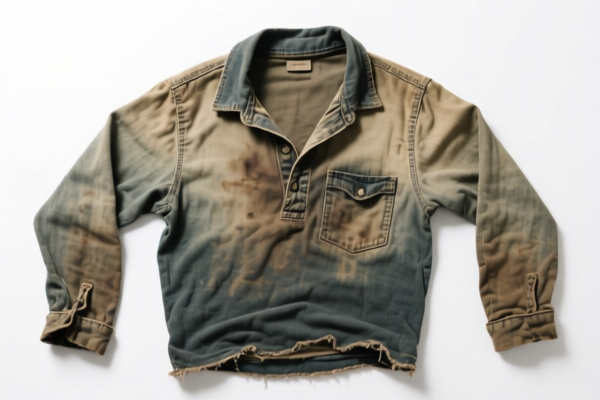
Product Images


AI Analysis
🧥 Used Clothing (Worn Articles) | Global Trade & Customs Clearance Guide
🌐 HS Code Reference & Customs Strategy | 2026 Tax Code Analysis | Professional Clearance Protocol
📌 Part I: Product Definition & Classification: What Exactly is "Used Clothing"?
Used Clothing refers to articles of apparel that have been worn, previously owned, or recycled. In international trade, this category is strictly divided into two distinct sub-categories based on origin, quality, and destination. It is crucial to distinguish between "Worn Clothing" (personal effects or low-grade recycled materials) and "Second-hand Apparel" (which may fall under different headings if not explicitly "worn").
However, under HS Code 6309.00, the classification focuses on "Worn clothing and other worn articles".
⚠️ Critical Distinction:
- "Worn Clothing" (6309.00): Items that are genuinely used, often recycled, or donated. This includes rags, scrap textiles, or bulk used garments.
- New vs. Used: Do NOT misclassify new clothing as "worn" to avoid duties; customs authorities will reject this and impose penalties.
- Specific Sub-Items: The HS code 6309.00 is further split based on whether the items are classified as "Worn Clothing" (specifically targeted at certain markets or types) or "Other".
📦 Part II: HS Code Classification Details (2026 Latest Tariff Schedule)
Based on the provided data, the classification for Used Clothing is strictly divided into two specific HS codes with divergent tax implications.
| HS Code | Product Description | Key Characteristics | Typical Use Case |
|---|---|---|---|
| 6309.00.00.10 | Worn clothing and other worn articles Worn clothing | Specific subset of worn apparel; often implies higher grade or specific regional classification (e.g., US Section 301 impacted goods). | High-value recycled textiles, specific bulk imports from designated countries. |
| 6309.00.00.20 | Worn clothing and other worn articles Other | General category for used clothing not falling under the specific "Worn clothing" sub-heading. Often includes lower-grade rags, scrap, or items from non-tariff-affected origins. | Low-grade textile scraps, general used apparel from non-US-tariff-affected sources. |
🔍 Key Insight:
- The split between 10 and 20 is primarily driven by trade policy adjustments (e.g., Section 301 tariffs in the US).
- 6309.00.00.10 carries a 7.5% additional tariff (likely due to US-China trade tensions).
- 6309.00.00.20 carries 0% additional tariff.
- Do not mix these in one shipment without precise documentation; misclassification leads to severe delays and back-taxes.
💰 Part III: 2026 Latest Tariff Rate Breakdown
✅ Applicable Country: United States (US)
✅ Origin: China (CN) (Inferred from the 7.5% additional tax, typical of Section 301 tariffs)
✅ Effective Date: 2025-11-10 onwards
🎯 1. HS Code 6309.00.00.10 – Worn Clothing (Specific Sub-category)
| Item | Content |
|---|---|
| Base Duty Rate | 0.0% (Ad Valorem) |
| Additional Tariff (Section 301) | +7.5% |
| Total Tax Rate | 7.5% |
| Tax Calculation | CIF Value × 7.5% |
| De Minimis Exemption | ❌ Not Applicable (Used clothing is generally excluded from de minimis thresholds like $800 in the US) |
| Legal Basis | USITC 6309.00.00.10 → Section 301 Additional Duties |
📌 Explanation:
- Although the base duty for used clothing is often 0% (encouraging recycling), the 7.5% additional tariff is applied specifically to this sub-code, likely due to its classification as a strategic or high-volume import from China.
- Total Cost Impact: You pay 7.5% of the declared CIF value.
🎯 2. HS Code 6309.00.00.20 – Worn Clothing (Other/General)
| Item | Content |
|---|---|
| Base Duty Rate | 0.0% (Ad Valorem) |
| Additional Tariff | 0.0% |
| Total Tax Rate | 0.0% |
| Tax Calculation | CIF Value × 0% = $0 |
| De Minimis Exemption | ❌ Not Applicable (See note below) |
| Legal Basis | USITC 6309.00.00.20 |
📌 Note:
- This code enjoys zero additional tariffs, making it the most cost-effective classification if the goods qualify.
- Risk: Customs may scrutinize this code heavily to ensure the goods are indeed "worn" and not new, and that they fit the "Other" category (i.e., not the specific high-tariff subset).
🛠️ Part IV: Customs Clearance Operational Advice (Practical Pitfall Guide)
✅ 1. Documentation Checklist (Mandatory)
| Document | Required? | Explanation |
|---|---|---|
| ✅ Detailed Commercial Invoice | ✔️ | Must clearly state "Used" or "Worn" in the description. Do not just say "Clothing." |
| ✅ Certificate of Origin | ✔️ | Essential for determining if the 7.5% or 0% additional tariff applies. |
| ✅ Condition Report | ✔️ | Photos or inspection reports proving items are used, not new. |
| ✅ Packing List | ✔️ | Itemized list by weight and type. |
| ✅ FDA/USDA Forms (if applicable) | ✔️ | If clothing contains natural materials (e.g., feathers, fur) or has been stored in unsanitary conditions, additional inspections may apply. |
| ✅ De Minimis Waiver | ✔️ | Warning: Used clothing is NOT eligible for the $800 de minimis exemption in the US. Formal entry is required. |
✅ 2. Declaration Tips (Key Mantras)
🔥 "Be Honest, Be Specific: 'Used' is Not a Color!"
| Scenario | Correct Declaration | Wrong Declaration |
|---|---|---|
| Bulk Used Shirts | "Used Men's Cotton T-Shirts, HS 6309.00.00.20" | "T-Shirts" or "Apparel" → May be classified as new (higher duty) or rejected. |
| Textile Rags | "Used Cotton Rags for Industrial Cleaning, HS 6309.00.00.20" | "Rags" → Too vague; may be held for inspection. |
| Donated Clothes | "Worn Clothing for Charity, HS 6309.00.00.10/20" | "Donations" → Still subject to import duties and formal entry; charity status does not exempt duties. |
✅ 3. Special Handling Notes
| Issue | Advice |
|---|---|
| Misclassification Risk | If you classify new clothing as used to avoid duties, customs will detect it via quality/label inspection. Penalties include 200%+ fines. |
| Sanitation Concerns | Used clothing must be clean and pest-free. Inspectors may reject shipments with mold, pests, or strong odors. |
| Country of Origin | The 7.5% tax applies specifically to goods from countries targeted by Section 301 (e.g., China). If sourced from Vietnam or India, confirm if the 7.5% still applies to HS 6309.00.00.10. |
| De Minimis Trap | Do NOT use courier services (DHL/FedEx) for bulk used clothing claiming de minimis. It will be seized. Use Formal Entry via a licensed customs broker. |
🌍 Part V: Global Market Comparison (2026)
| Country/Region | Recommended HS Code | Duty Rate | Notes |
|---|---|---|---|
| 🇺🇸 USA | 6309.00.00.10 |
7.5% | High scrutiny on "used" status; Section 301 applies. |
| 🇺🇸 USA | 6309.00.00.20 |
0.0% | Best for "Other" used articles; ensure goods fit "Other" definition. |
| 🇨🇳 China | 6309.00.00.00 |
Varies | China allows import of used clothing under strict licensing. |
| 🇪🇺 EU | 6309.00.00.00 |
0%~12% | Varies by member state; strict hygiene standards apply. |
| 🇬🇧 UK | 6309.00.00.00 |
0%~12% | Post-Brexit rules; similar to EU. |
📌 Conclusion:
- The USA is the most complex market due to the split tax rate (0% vs. 7.5%).
- Correct HS sub-code selection is critical to save 7.5% on high-volume shipments.
- Never use de minimis for used clothing.
📌 Part VI: Common Errors & Pitfalls (Lessons Learned)
❌ Error 1: Classifying new clothing as used to avoid duties.
👉 Result: Seizure, fines, and blacklist of importer.
❌ Error 2: Using "Donated" as the product name without specifying "Worn".
👉 Result: Customs may classify as "New" if condition is ambiguous → Higher duties.
❌ Error 3: Ignoring the 10 vs. 20 sub-code difference.
👉 Result: Paying 7.5% unnecessarily if the goods qualify for 0% under 6309.00.00.20.
❌ Error 4: Attempting de minimis clearance for bulk used clothing.
👉 Result: Package held, inspection fees applied, or returned.
✅ Correct Practice:
"Used Men's Cotton T-Shirts, Previously Owned, HS 6309.00.00.20, Origin: Vietnam"
🎯 Part VII: Conclusion: Professional Classification Saves Money!
🎯 Remember the Golden Rule:
🔹 "Used is Not New! Declare Truthfully!"
🔹 "Code .10 Costs 7.5%, Code .20 Costs 0% – Choose Wisely!"
🔹 "No De Minimis for Used Goods – Use Formal Entry!"
📌 Pro Tip:
If you are importing from China, verify if your specific type of used clothing falls under 6309.00.00.10 (7.5%) or 6309.00.00.20 (0%). The distinction can save thousands of dollars on large shipments. Consult a licensed customs broker to review your product's condition and origin.
📣 Immediate Action:
📞 Contact a Customs Broker + Provide Product Photos + Confirm Country of Origin
🚀 Ensure Compliance, Avoid Fines, Maximize Profit!
✨ Precision in Classification is the Key to Smooth Clearance!
💼 Your Duty Savings Start with the Right HS Code!
Customer Reviews
About HS Code Classification
The Harmonized System (HS) is an internationally standardized nomenclature developed by the World Customs Organization (WCO) to classify traded products. Over 200 countries use the HS system as the basis for customs tariffs, trade statistics, and import/export regulations.
Each HS code follows a hierarchical structure:
- Chapter (2 digits) — Broad category of goods (e.g., Chapter 84: Machinery and Mechanical Appliances)
- Heading (4 digits) — More specific grouping within the chapter
- Subheading (6 digits) — Internationally standardized breakdown, used by all WCO member countries
- National subdivisions (8-10 digits) — Country-specific extensions for further classification, such as US HTSUS 10-digit codes
Correct HS code classification is essential for smooth customs clearance, accurate duty payment, and compliance with trade regulations. Misclassification can lead to customs delays, overpayment of duties, or penalties.
When importing from CN to US, the applicable tariff rates may include:
- Most-Favored-Nation (MFN) rate — The standard duty rate applied to WTO members
- General rate — Applied to countries without trade agreements
- Trade remedy duties — Additional tariffs such as Section 301 (anti-dumping), Section 232 (national security), or countervailing duties
The information provided on this page is for reference purposes only. For official classification, please consult with your local customs authority or a licensed customs broker.