Used Commercial Vehicle Tires
CN → US| HS Code | Tariff Rate | Origin | Destination | Doc |
|---|---|---|---|---|
| 4011201015 | 39.0% | CN | US | Official Doc |
| 4011205010 | 38.4% | CN | US | Official Doc |
| 4012124035 | 39.0% | CN | US | Official Doc |
| 4012208000 | 35.0% | CN | US | Official Doc |
| 4012206000 | 35.0% | CN | US | Official Doc |
Product Images
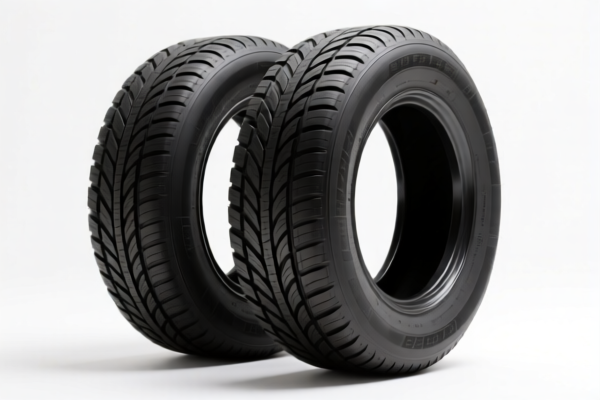
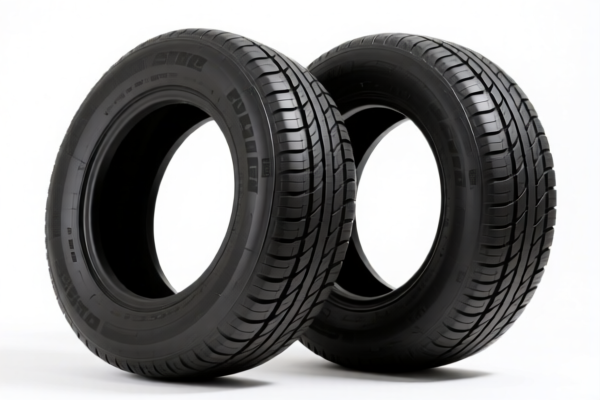
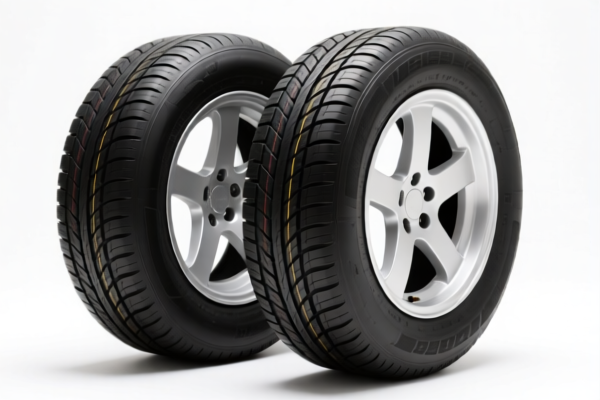
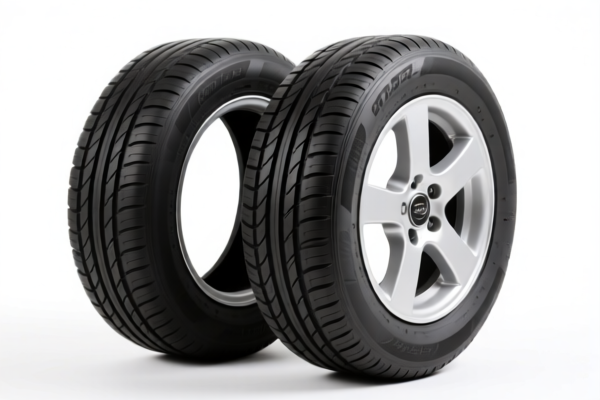
AI Analysis
🚛 Used Commercial Vehicle Tires (Used Truck & Bus Radial Tires)
🌐 HS Code Reference & Customs Clearance Guide | 2026 Latest Tariff Analysis | Professional Clearance Strategy for US Imports
📌 I. Product Definition & Classification: Do You Understand "Used" vs. "New"?
Used Commercial Vehicle Tires refer to retreadable or end-of-life radial tires previously installed on trucks, buses, or heavy-duty goods vehicles. In international trade, the critical distinction lies between New and Used status, which drastically affects the HS Code and tariff burden.
Key Distinction:
- New Tires: Classified under Heading 4011. Subject to high base tariffs + Section 301 + Section 122 tariffs.
- Used Tires: Classified under Heading 4012 (specifically "Other used tires"). Base tariff is 0%, but still subject to heavy additional levies.
⚠️ Critical Compliance Point:
- "Used" must be declared explicitly. If customs suspects new tires are misdeclared as used to evade tariffs, penalties will apply.
- Material: Must be rubber.
- Application: Must match heavy commercial use (bus, truck, trailer).
📦 II. HS Code Classification Details (2026 Authoritative Reference)
Based on the provided data, here are the precise HS Codes for Used Commercial Vehicle Tires. Note that New Tires are also listed for comparison purposes as they fall under the user's broader inquiry of "commercial vehicle tires."
| HS Code | Product Description | Usage Scenario | Material | Total Tax Rate | Tax Breakdown |
|---|---|---|---|---|---|
| 4012.20.80.00 | Used Highway Transport Tires | Used tires for highway trucks/buses | Rubber | 35.0% | Base: 0% + Add. Tariff: 25% + Section 122: 10% |
| 4012.20.60.00 | Used Highway Transport Tires (Other) | Used tires for highway transport vehicles, other category | Rubber | 35.0% | Base: 0% + Add. Tariff: 25% + Section 122: 10% |
| 4011.20.10.15 | New Commercial Vehicle Tires | New tires for buses or trucks | Rubber | 39.0% | Base: 4.0% + Add. Tariff: 25% + Section 122: 10% |
| 4011.20.50.10 | New Commercial Vehicle Tires | New rubber tires for commercial vehicles, catch-all | Rubber | 38.4% | Base: 3.4% + Add. Tariff: 25% + Section 122: 10% |
| 4012.12.40.35 | New Commercial Vehicle Tires | New tires for bus/truck use, other category | Rubber | 39.0% | Base: 4.0% + Add. Tariff: 25% + Section 122: 10% |
🔍 重点提醒 (Key Reminder):
- For USED tires, the primary codes are 4012.20.80.00 and 4012.20.60.00.
- The base tariff is 0% for used tires, which is significantly lower than new tires (3.4%-4.0%).
- However, the Additional Tariff (25%) and Section 122 Tariff (10%) still apply, resulting in a total of 35%.
- Do NOT use the 4011 series (New Tires) for used goods; this is a common misclassification error that leads to severe penalties.
💰 III. 2026 Latest Tariff Rate Detail (Including Additional Taxes & Policy Levies)
✅ Applicable Country: United States (US)
✅ Origin: China (CN)
✅ Effective Date: 2025年11月10日起 (Nov 10, 2025 onwards)
🎯 1. 4012.20.80.00 & 4012.20.60.00 —— Used Highway Transport Tires
| Item | Detail |
|---|---|
| Base Tariff | 0.0% (Ad Valorem) |
| Additional Tariff (Section 301) | +25.0% |
| Section 122 Tariff | +10.0% (For products from China) |
| Total Tariff Rate | 35.0% |
| Tax Calculation | CIF Value × 35% |
| De Minimis Exemption | ❌ Not Eligible (deny_de_minimis) |
| Legal Basis Path | USITC:4012.20.80.00 → Section 301: 25% → Section 122: 10% |
📌 Explanation:
- Although the base tariff is 0%, the 25% Additional Tariff and 10% Section 122 Tariff are still fully applicable to used tires from China.
- The Total Rate is 35%, which is substantial.
- No De Minimis Exemption: Small shipments (under $800) do not qualify for tax-free entry for these goods.
🎯 2. 4011.20.10.15 / 4011.20.50.10 / 4012.12.40.35 —— New Commercial Vehicle Tires (For Reference)
| Item | Detail |
|---|---|
| Base Tariff | 3.4% - 4.0% |
| Additional Tariff | +25.0% |
| Section 122 Tariff | +10.0% |
| Total Tariff Rate | 38.4% - 39.0% |
| Tax Calculation | CIF Value × 38.4%-39.0% |
| De Minimis Exemption | ❌ Not Eligible |
📌 Comparison:
- New tires are taxed at ~39%, while used tires are taxed at 35%.
- The difference is only 4%, but the classification risk for used tires is much higher due to stricter inspection for fraud.
🛠️ IV. Customs Clearance Practical Advice (Real-World Pitfall Avoidance Guide)
✅ 1. Required Documentation Checklist (All Mandatory)
| Document | Required? | Description |
|---|---|---|
| ✅ Commercial Invoice | ✔️ | Must explicitly state "USED COMMERCIAL TIRES". Do not just say "Tires". |
| ✅ Packing List | ✔️ | Detail the number of units, weights, and dimensions. |
| ✅ Product Photos | ✔️ | Clear photos showing tread wear, sidewall condition, and brand/model to prove "used" status. |
| ✅ Condition Certificate | ✔️ | Optional but recommended: A statement from the seller confirming the tires are used, suitable for retreading or disposal. |
| ✅ Bill of Lading (B/L) | ✔️ | Ensure the description matches the invoice. |
| ✅ Export License (if applicable) | ✔️ | Check if the origin country requires an export license for used tires. |
🔥 Pro Tip:
Include high-resolution photos of the tire tread in your shipment documentation. Customs may inspect for wear patterns to verify "used" status. If new tires are found declared as used, expect confiscation and fines.
✅ 2. Declaration Strategy (Key Mnemonics)
🔥 "Declare 'Used' Clearly, Wear Must Be Visible, No New Tricks!"
| Scenario | Correct Declaration | Incorrect Declaration |
|---|---|---|
| Used Tires | "Used Highway Transport Tires, HS 4012.20.80.00" | "Tires" (Vague) |
| New Tires | "New Radial Tires for Trucks, HS 4011.20.10.15" | "Used Tires" (Fraudulent) |
| Mixed Shipment | Split invoice: One line for New, One for Used | Mix under one code |
✅ 3. Special Circumstances
| Situation | Handling Advice |
|---|---|
| Retreadable Tires | If intended for retreading, declare as "Used Tires for Retreading". Some countries have specific regulations for retreaded tires. |
| End-of-Life Tires | If tires are worn out beyond retreading, declare as "Used Tires". Check local environmental disposal regulations. |
| OEM vs. Aftermarket | Tariff rates are the same, but brand declaration is required for compliance with labeling laws. |
| Containers with Mixed Goods | Do not mix used tires with new tires in the same HS Code line item. |
🌍 V. Global Market Comparison (2026 Latest)
| Country/Region | Recommended HS Code | Tariff Rate | Certification | Notes |
|---|---|---|---|---|
| 🇺🇸 USA | 4012.20.80.00 |
35% | None specific | High additional tariffs apply. |
| 🇨🇳 China | 4012.20.80.00 |
0% | CCC (if new) | Used tire imports may face environmental restrictions. |
| 🇪🇺 EU | 4012.20.80.00 |
0% | CE (if new) | EU has strict rules on used tire imports. |
| 🇦🇺 Australia | 4012.20.80.00 |
5% | RCM (if new) | Check biosecurity laws. |
| 🇯🇵 Japan | 4012.20.80.00 |
0% | PSE (if new) | Strict quality inspections for used tires. |
📌 Conclusion:
- USA is the largest market for used commercial tires but imposes a 35% total tariff.
- Base tariff is 0%, but additional levies make it expensive.
- Ensure accurate "Used" declaration to avoid misclassification penalties.
📌 VI. Common Errors & Pitfall Guide (Blood Lessons)
❌ Mistake 1: Declaring New Tires as Used Tires to save 4% tax.
👉 Consequence: Customs inspection reveals new tires → Confiscation, Fines, and Blacklisting.
❌ Mistake 2: Not specifying "Used" in the description.
👉 Consequence: Customs assumes New Tires → Apply 39% tariff + Penalties for incorrect declaration.
❌ Mistake 3: Missing "Section 122" Tariff.
👉 Consequence: Underpayment of 10% → Back taxes + Interest.
❌ Mistake 4: Providing unclear photos of tire condition.
👉 Consequence: Customs requests further inspection → Delays in Clearance.
✅ Correct Practice:
"USED HIGHWAY TRANSPORT TIRES, RADIAL, RUBBER, FOR TRUCKS, PREVIOUSLY INSTALLED, HS 4012.20.80.00"
🎯 VII. Conclusion: Professional Declaration, Save Time & Money!
🎯 Remember the Mnemonic:
🔹 "Used is 35%, New is 39%, Misdeclare is Disaster!"
🔹 "HS Code 4012 for Used, 4011 for New, Don't Mix Them Up!"
📌 Pro Tip:
- If your used tires are retreadable, ensure you have a retread facility contract or proof of intended retreading.
- Apply for Advance Ruling if you are unsure about the condition classification.
- Insurance: Consider cargo insurance for high-value tire shipments.
📣 Immediate Action:
📞 Contact a Professional Customs Broker + Provide Clear Photos + Apply for HS Code Advance Ruling
🚀 Ensure your used commercial vehicle tires clear customs smoothly, efficiently, and profitably!
✨ Professional Customs Clearance Starts with Accurate Classification!
💼 Every Dollar of Tariff is Worth Calculating Precisely!
Customer Reviews
About HS Code Classification
The Harmonized System (HS) is an internationally standardized nomenclature developed by the World Customs Organization (WCO) to classify traded products. Over 200 countries use the HS system as the basis for customs tariffs, trade statistics, and import/export regulations.
Each HS code follows a hierarchical structure:
- Chapter (2 digits) — Broad category of goods (e.g., Chapter 84: Machinery and Mechanical Appliances)
- Heading (4 digits) — More specific grouping within the chapter
- Subheading (6 digits) — Internationally standardized breakdown, used by all WCO member countries
- National subdivisions (8-10 digits) — Country-specific extensions for further classification, such as US HTSUS 10-digit codes
Correct HS code classification is essential for smooth customs clearance, accurate duty payment, and compliance with trade regulations. Misclassification can lead to customs delays, overpayment of duties, or penalties.
When importing from CN to US, the applicable tariff rates may include:
- Most-Favored-Nation (MFN) rate — The standard duty rate applied to WTO members
- General rate — Applied to countries without trade agreements
- Trade remedy duties — Additional tariffs such as Section 301 (anti-dumping), Section 232 (national security), or countervailing duties
The information provided on this page is for reference purposes only. For official classification, please consult with your local customs authority or a licensed customs broker.