Used Tires
CN → US| HS Code | Tariff Rate | Origin | Destination | Doc |
|---|---|---|---|---|
| 4004000000 | 35.0% | CN | US | Official Doc |
| 4004000000 | 35.0% | CN | US | Official Doc |
| 4012208000 | 35.0% | CN | US | Official Doc |
| 4012206000 | 35.0% | CN | US | Official Doc |
| 8714100020 | 17.5% | CN | US | Official Doc |
| 8714998000 | 27.5% | CN | US | Official Doc |
Product Images
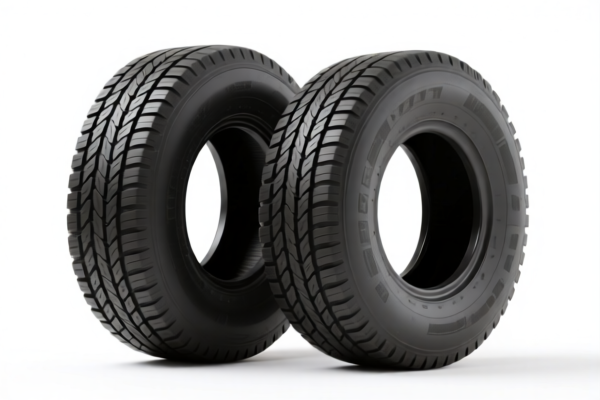
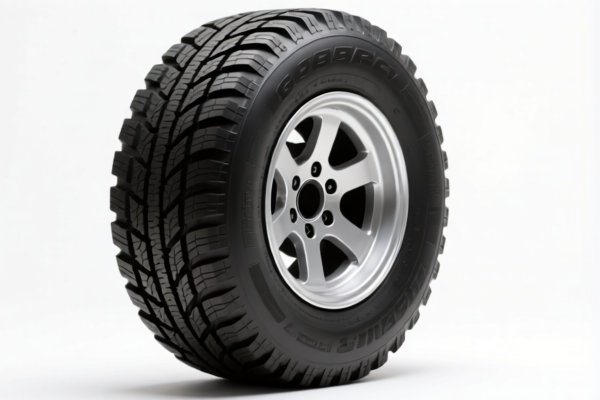


AI Analysis
🚗 Used Tires (Retreaded & Scrap Rubber)
🌐 HS Code Reference & Clearance Guide | 2026 Latest Tariff Breakdown | Professional Customs Strategy
📌 I. Product Definition & Classification: What Exactly is "Used Tires"?
In international trade, "Used Tires" is not a single category. It is strictly divided based on condition and intended use. Misclassification here leads to severe penalties, as the US and other major markets impose high punitive tariffs on specific rubber products from China.
The Two Main Categories:
-
Used Pneumatic Tires (Functional):
- Definition: Tires that have been driven on but still have tread life. They may be retreaded or sold as second-hand for further use.
- Key Indicator: Tread depth > 0, usable on vehicles.
- Risk: Heavily restricted in some markets; high tariffs if used on passenger vehicles in the US.
-
Waste, Parings, and Scrap of Rubber (Non-Functional):
- Definition: Tires that are cut, shredded, or worn out beyond repair. Includes powders and granules.
- Key Indicator: Unusable for driving; intended for recycling (e.g., rubber mulch, asphalt).
- Risk: Subject to "Scrap" tariffs which can be even higher than functional tires.
⚠️ Critical Distinction:
- If the item is a whole tire that can still be used on a road vehicle → 4012.20 (Used Tires).
- If the item is shredded, cut, or waste → 4004.00 (Rubber Scrap/Waste).
- Do not misdeclare "Used Tires" as "New Tires" or vice versa to avoid fraud.
📦 II. HS Code Classification Details (2026 Latest Tariff Reference)
| HS Code | Product Description | Application Scenario | Classification Logic |
|---|---|---|---|
| 4004.00.00.00 | Waste, parings and scrap of rubber (other than hard rubber) | Shredded tires, rubber powder, granules, tire sidewalls, used for recycling or asphalt. | ✅ Waste/Scrap Not a tire, but rubber material. |
| 4012.20.60.00 | Used pneumatic tires: Of a kind used on vehicles... for on-highway transport of passengers or goods | Second-hand tires meant for trucks, buses, or heavy-duty highway vehicles. | ✅ Functional (Heavy Duty) Passenger/Truck tires for roads. |
| 4012.20.80.00 | Used pneumatic tires: Other | Second-hand tires for non-highway use, or tires not fitting 4012.20.60 (e.g., light vehicles, off-road). | ✅ Functional (Other) Light vehicles, industrial, off-road. |
| 8714.10.00.20 | Parts: Wheels of motorcycles/mopeds | NOT a tire. Used only if the item is a wheel rim (metal) without rubber, or a motorcycle wheel assembly. | ❌ Part Accessory If it's a wheel, not a tire. |
| 8714.99.80.00 | Parts: Other parts and accessories of motorcycles/vehicles | NOT a tire. Generic parts (brakes, chains, frames, rims) not specified elsewhere. | ❌ Part Accessory Only if it's a component, not the tire itself. |
🔍 Focus Alert:
- 4004.00.00.00 (Scrap) and 4012.20 (Used Tires) are the primary codes for "Used Tires."
- Codes 8714.10 and 8714.99 apply only if the user is importing parts (wheels, rims) of motorcycles, NOT the rubber tires themselves.
💰 III. 2026 Latest Tariff Rate Breakdown (Detailed Tax Clauses)
✅ Applicable Market: USA (US)
✅ Origin: China (CN) (Assumed based on "Additional Tariff" structure in data)
✅ Effective Time: 2025-11-10 onwards (Including subsequent imports)
🎯 1. 4004.00.00.00 — Rubber Waste, Parings, and Scrap
| Item | Content |
|---|---|
| Base Duty | 0.0% (Ad valorem) |
| Additional Tariff | +25.0% (Section 301 / Trade War Tariff) |
| Total Tax Rate | 25.0% |
| Tax Calculation | CIF Value × 25% |
| De Minimis Exemption | ❌ Not Applicable (High risk for B2B) |
| Legal Basis | Section 301 Tariff List (China-specific) |
📌 Interpretation:
- Even though the base duty is 0%, the 25% additional tariff makes rubber scrap highly expensive to import.
- This applies strictly to recycled rubber material (shredded tires).
🎯 2. 4012.20.60.00 — Used Pneumatic Tires (Passenger/Goods Transport)
| Item | Content |
|---|---|
| Base Duty | 0.0% |
| Additional Tariff | +25.0% |
| Total Tax Rate | 25.0% |
| Tax Calculation | CIF Value × 25% |
| De Minimis Exemption | ❌ Not Applicable |
| Legal Basis | Section 301 Tariff List (Used Tire Ban/Restriction) |
📌 Interpretation:
- Used tires for highway vehicles (trucks, buses, passenger cars) face a strict 25% tariff.
- Note: Many US states have additional bans on importing used tires for environmental reasons.
🎯 3. 4012.20.80.00 — Used Pneumatic Tires (Other)
| Item | Content |
|---|---|
| Base Duty | 0.0% |
| Additional Tariff | +25.0% |
| Total Tax Rate | 25.0% |
| Tax Calculation | CIF Value × 25% |
| De Minimis Exemption | ❌ Not Applicable |
| Legal Basis | Section 301 Tariff List |
📌 Interpretation:
- "Other" used tires (e.g., light vehicles, off-road) also attract the 25% penalty tariff.
🎯 4. 8714.10.00.20 — Motorcycle Wheels (Parts)
| Item | Content |
|---|---|
| Base Duty | 0.0% |
| Additional Tariff | +7.5% |
| Total Tax Rate | 7.5% |
| Tax Calculation | CIF Value × 7.5% |
📌 Interpretation:
- CRITICAL: This code is for Wheels, not tires! If you declare "Used Tires" here, it will be rejected.
- Only applies if the item is a wheel rim for a motorcycle/moped.
🎯 5. 8714.99.80.00 — Other Vehicle Parts
| Item | Content |
|---|---|
| Base Duty | 10.0% |
| Additional Tariff | +7.5% |
| Total Tax Rate | 17.5% |
| Tax Calculation | CIF Value × 17.5% |
📌 Interpretation:
- This is a catch-all for parts (not tires). If you are importing used tires, do NOT use this code. It will cause a customs violation.
🛠️ IV. Customs Clearance Practical Advice (Real-World Pitfall Guide)
✅ 1. Documentation Checklist (Essential)
| Document | Required? | Purpose |
|---|---|---|
| ✅ Commercial Invoice | YES | Must explicitly state "Used Tires" (Not "New Tires") and condition (Tread depth %). |
| ✅ Packing List | YES | Must separate "Scrap/Waste" from "Functional Used Tires." |
| ✅ Certificate of Origin | YES | Prove origin (e.g., US, Vietnam) to check for exemptions (if not China). |
| ✅ Inspection Report | YES | EPA/Environmental compliance (Tire scrap must be free of hazardous fluids). |
| ✅ Photos of Goods | YES | Show tread condition. If it's "scrap," show it's shredded/cut. |
✅ 2. Declaration Strategy (Golden Rules)
🔥 Rule #1: "Waste vs. Tire"
- If it is a whole tire, declare under 4012.
- If it is shredded, declare under 4004.
- NEVER mix them in one shipment.🔥 Rule #2: "Part vs. Product"
- If you are importing Motorcycle Wheels, use 8714.10.00.20 (Tax: 7.5%).
- If you are importing Tires, NEVER use 8714 codes. You risk a 25% penalty + seizure.
| Scenario | Correct HS Code | Tax Rate | Wrong Code | Wrong Tax |
|---|---|---|---|---|
| Used Truck Tires | 4012.20.60.00 |
25% | 4011.10 (New Tires) |
0% Base + 25% = 25% (But fraud risk) |
| Shredded Tire Rubber | 4004.00.00.00 |
25% | 4001 (Raw Rubber) |
0% Base (But "Scrap" tariff applies) |
| Motorcycle Wheel (Rim) | 8714.10.00.20 |
7.5% | 8714.99 |
17.5% (Overpaying) |
| General Car Part | 8714.99.80.00 |
17.5% | 4012 |
25% (Overpaying) |
✅ 3. Special Handling for "Used Tires"
| Situation | Action |
|---|---|
| EPA Environmental Ban | Check if the destination state bans used tire imports (e.g., California often restricts them). |
| Oil/Gas Contamination | If scrap tires contain residue oil, they may be classified as "Hazardous Waste" (Higher fees). |
| Recycled Rubber (Powder) | 4004.00.00.00 requires proof that it is not hazardous waste (RoHS/REACH). |
| OEM "Scrap" | If the seller sends "defective tires" as scrap, declare as 4004 (Tax 25%). |
🌍 V. Global Market Comparison (2026)
| Country/Region | Recommended HS Code | Duty | Special Notes |
|---|---|---|---|
| 🇺🇸 USA | 4012.20.60.00 / 4004.00.00.00 |
25% (Additional) | High scrutiny; EPA checks mandatory. |
| 🇨🇳 China | 4012.20.00.00 |
0% - 5% | Imports of used tires are banned/restricted in many zones. |
| 🇪🇺 EU | 4012.20.00.00 |
0% - 4% | Strict environmental regulations; often banned for re-entry. |
| 🇦🇺 Australia | 4012.20.00.00 |
10% - 5% | Strict biosecurity checks. |
📌 Conclusion:
- USA is the most open to "Used Tires" but charges a heavy 25% penalty tariff.
- China generally bans imports of used tires for safety reasons.
- Scrap Rubber (4004) is often taxed at the same 25% rate as used tires in the US due to trade war measures.
📌 VI. Common Mistakes & Pitfalls (Lessons Learned)
❌ Mistake 1: Declaring "Used Tires" as "New Tires" to avoid 25% tariff.
👉 Consequence: Customs inspection finds wear marks → Seizure + Fine + Criminal Charges.
❌ Mistake 2: Declaring "Shredded Tires" as "Raw Rubber" (4001).
👉 Consequence: Tax rate 0% vs 25% → Re-evaluation + Back Tax + 25% Penalty.
❌ Mistake 3: Using 8714 codes for tires.
👉 Consequence: 8714 is for parts (rims, spokes). Tires belong to 40.
👉 Result: If you declare "Tires" as 8714.99.80.00 (17.5%), you pay less than 25%, but the code is wrong, leading to an audit.
✅ Correct Action:
"24 Used Truck Tires (Tread 6/32), Shredded Rubber Granules (100kg), Motorcycle Wheel Rims (Qty 10)"
Codes:4012.20.60.00,4004.00.00.00,8714.10.00.20(Separate declarations!).
🎯 VII. Final Verdict: Professional Clearance Strategy
🎯 Remember the Motto:
🔹 "Used Tires = 25% Tariff" (If from China/Section 301).
🔹 "Scrap = 25% Tariff" (If not hazardous, but still scrap).
🔹 "Parts = 7.5% or 17.5%" (But only if it's a wheel/ring, NOT a tire).🔹 "Don't mix tires with parts in one declaration!"
🔹 "Don't call scrap tires 'Raw Rubber'!"
🔹 "Don't call used tires 'New Tires'!"
📌 Pro Tip:
If you are importing used tires into the US, ensure you have:
1. EPA Certificate (No hazardous fluids).
2. Proof of Origin (To verify if the 25% tariff applies).
3. Clear Photos (To prove "Used" status and condition).
📣 Immediate Action:
📞 Contact a licensed Customs Broker immediately.
🚀 Calculate the 25% tax into your cost model.
🌍 Consider sourcing from countries NOT subject to Section 301 (e.g., Vietnam, Thailand) to avoid the 25% surcharge.
✨ Professional Clearance, Start with the Right Code!
💼 Your profit margin depends on the correct HS Code!
Customer Reviews
About HS Code Classification
The Harmonized System (HS) is an internationally standardized nomenclature developed by the World Customs Organization (WCO) to classify traded products. Over 200 countries use the HS system as the basis for customs tariffs, trade statistics, and import/export regulations.
Each HS code follows a hierarchical structure:
- Chapter (2 digits) — Broad category of goods (e.g., Chapter 84: Machinery and Mechanical Appliances)
- Heading (4 digits) — More specific grouping within the chapter
- Subheading (6 digits) — Internationally standardized breakdown, used by all WCO member countries
- National subdivisions (8-10 digits) — Country-specific extensions for further classification, such as US HTSUS 10-digit codes
Correct HS code classification is essential for smooth customs clearance, accurate duty payment, and compliance with trade regulations. Misclassification can lead to customs delays, overpayment of duties, or penalties.
When importing from CN to US, the applicable tariff rates may include:
- Most-Favored-Nation (MFN) rate — The standard duty rate applied to WTO members
- General rate — Applied to countries without trade agreements
- Trade remedy duties — Additional tariffs such as Section 301 (anti-dumping), Section 232 (national security), or countervailing duties
The information provided on this page is for reference purposes only. For official classification, please consult with your local customs authority or a licensed customs broker.