Used Transport Vehicle Tires
CN → US| HS Code | Tariff Rate | Origin | Destination | Doc |
|---|---|---|---|---|
| 4012208000 | 35.0% | CN | US | Official Doc |
| 4012206000 | 35.0% | CN | US | Official Doc |
| 4012206000 | 35.0% | CN | US | Official Doc |
| 4012208000 | 35.0% | CN | US | Official Doc |
| 4012206000 | 35.0% | CN | US | Official Doc |
Product Images
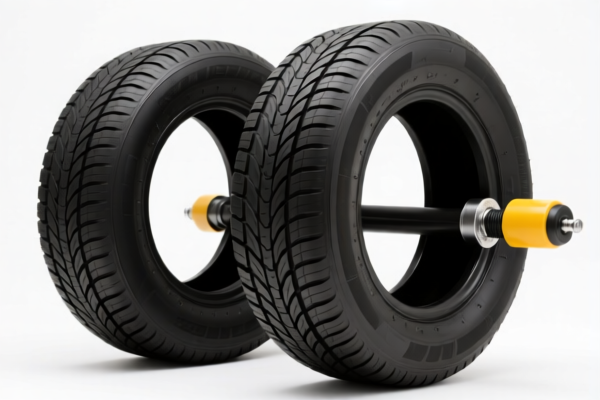
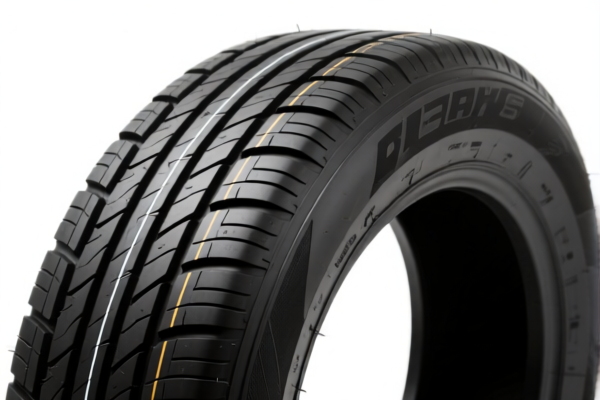
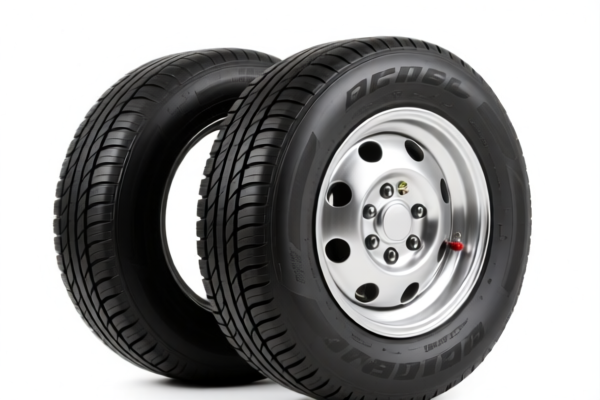
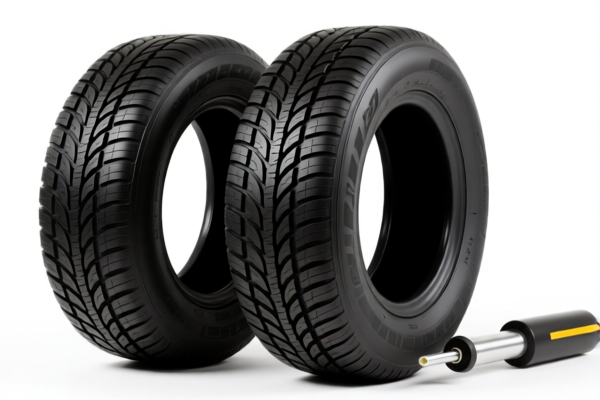
AI Analysis
🛞 Used Transport Vehicle Tires (Retreads & Second-Hand)
🌐 HS Code Reference & Customs Clearance Guide | 2026 Latest Tariff Analysis | Professional Entry Strategy for US Imports
📌 I. Product Definition & Classification: Do You Really Understand "Used Tires"?
Used Transport Vehicle Tires refer to pneumatic tires that have already been used on vehicles and are being imported for resale, retreading, or disposal. Unlike new tires, these are classified as waste/recovered rubber products or used articles, subjecting them to stricter inspection and higher tariff burdens under current trade policies.
In international trade, they are primarily categorized by vehicle type (Heavy Duty vs. Passenger) and condition (Recapable vs. Non-Recapable).
⚠️ Key Distinction Point:
- Heavy Duty/Truck/Bus Tires: Often subject to specific "122 Section" duties if deemed detrimental to domestic recycling industries;
- Passenger Car Tires: Generally face uniform high tariffs due to Section 301 and IEEPA measures;
- New vs. Used: "Used" status does not exempt you from additional duties; in fact, it may trigger environmental inspections.
📦 II. HS Code Classification Details (2026 Latest Tariff Authority Comparison)
Based on the provided data, used tires are primarily classified under Heading 4012.20. The specific subheadings distinguish between heavy-duty transport and passenger vehicles.
| HS Code | Product Description | Applicable Scenario | Total Tax Rate |
|---|---|---|---|
4012.20.80.00 |
Used Pneumatic Tires, for Road Transport Vehicles (Heavy Duty/Truck/Bus) | Used truck tires, bus tires, large commercial vehicle tires | 35.0% |
4012.20.60.00 |
Used Pneumatic Tires, for Passenger Cars (Truck/Bus category in some contexts) | Used car tires, SUV tires, light truck tires | 35.0% |
🔍 Important Note:
- Although the subheadings differ (.60vs.80), the total effective tariff rate is identical at 35% for Chinese-origin goods entering the US in 2026.
- The distinction matters for Customs Inspection Priority: Heavy-duty tires (.80) may face stricter scrutiny regarding recycling capabilities and environmental compliance under Section 122.
- Both codes fall under Chapter 40: Rubber and Articles Thereof.
💰 III. 2026 Latest Tariff Rate Breakdown (Including Surtaxes & Policy Add-ons)
✅ Applicable Country: United States (US)
✅ Country of Origin: China (CN)
✅ Effective Time: 2025 November 10 onwards (including subsequent imports)
🎯 1. 4012.20.80.00 & 4012.20.60.00 —— Used Tires (All Categories)
| Item | Content |
|---|---|
| Base MFN Rate | 0.0% (ad valorem) |
| Section 301 Surtax (USITC) | +25.0% (Footnote 9903.88.01 / 9903.01.25) |
| Section 122 Tariff (IEEPA) | +10.0% (Targeting used tires from specific countries, including China) |
| Total Effective Rate | 35.0% |
| Tax Calculation | CIF Value × 35% |
| De Minimis Eligibility | ❌ NOT Eligible (deny_de_minimis) |
| Legal Basis Path | IEEPA:9903.01.25 → IEEPA:9903.01.24 → USITC:4012.20.xx.00 → FOOTNOTE:122 |
📌 Interpretation:
- The 0% base rate is misleading. Do not assume used tires are duty-free because they are "second-hand."
- The +25% is the standard Section 301 tariff for rubber products from China.
- The +10% is a specific add-on under Section 122 of the Trade Act, designed to protect domestic scrap rubber processors from imported used tires.
- Total 35% is a significant cost burden, reducing margins drastically compared to new tires (which may have different duty structures).
🛠️ IV. Customs Clearance Practical Advice (Real-World Pitfall Avoidance)
✅ 1. Required Documentation Checklist (Non-Negotiable)
| Document | Required | Explanation |
|---|---|---|
| ✅ Product Description | ✔️ | Must explicitly state "USED", HS Code, Quantity, Weight, and Condition (e.g., "Used Truck Tires, 12R22.5, Scrap Grade") |
| ✅ Commercial Invoice | ✔️ | Must match the packing list; declare value accurately (Used goods often have lower declared value, but CBP assesses fair market value) |
| ✅ Packing List | ✔️ | Detailed breakdown of tire sizes, quantities, and total weight |
| ✅ Proof of Ownership | ✔️ | If imported by a recycling company, provide proof of purchase from scrap yards |
| ✅ Environmental Compliance Docs | ⚠️ | May be required to prove tires are not hazardous waste (e.g., lead-acid battery residue, oil contamination) |
| ✅ Fumigation Certificate | ✔️ | If wooden pallets/crates are used, ISPM 15 compliance is mandatory |
✅ 2. Declaration Tips (Key Mantra)
🔥 "Declare 'Used', Declare 'HS', Don't Hide 'China'!"
| Scenario | Correct Declaration | Wrong Practice |
|---|---|---|
| Importing for Recycling | 4012.20.80.00 + "Used Truck Tires for Scrap/Recycling" |
Declare as "New Tires" → Smuggling/Fraud |
| Importing for Retreading | 4012.20.60.00 + "Used Passenger Tires, Recapable" |
Declare as "Rubber Parts" → Misclassification |
| Mixed Containers | Separate HS codes for 4012.20.60 and 4012.20.80 |
Lump all under one code → Audit Risk |
| Value Declaration | Declare Fair Market Value of used tires | Under-invoice to save tax → CBP Seizure |
✅ 3. Special Situation Handling
| Situation | Handling Advice |
|---|---|
| Tires with Treads < 2/32” | Considered Scrap/Waste. May require EPA notification. Ensure they are not banned imports. |
| Tires with Embedded Nails/Metal | Must be cleaned and declared as Scrap Rubber. Failure to declare may lead to quarantine rejection. |
Used Passenger Tires (4012.20.60) |
High inspection rate. CBP often verifies if they are truly "used" and not new tires relabeled. Provide photos of wear patterns. |
Used Truck/Bus Tires (4012.20.80) |
Subject to Section 122 scrutiny. Ensure you have the importer license for scrap/rubber if applicable. |
🌍 V. Global Market Clearance Comparison (2026 Latest)
| Country/Region | Recommended HS Code | Tariff (China Origin) | Certification/Notes | Remarks |
|---|---|---|---|---|
| 🇺🇸 USA | 4012.20.60 / 4012.20.80 |
35% (0% Base + 25% Sec 301 + 10% Sec 122) | EPA Scrutiny + CBP Inspection | High Risk: Strict environmental & trade controls. |
| 🇪🇺 EU | 4012.20 |
Varies (0-6.5%) | REACH Compliance | EU restricts import of used tires for recycling from non-EU in many cases. Check national laws. |
| 🇨🇳 China | 4012.20 |
0% | Environmental Permits | China has banned the import of most used rubber tires since 2017. Do not export to China. |
| 🇦🇺 Australia | 4012.20 |
5% | Quarantine Inspection | Strict biosecurity rules. Tires must be clean and free of soil/seeds. |
| 🇯🇵 Japan | 4012.20 |
3-5% | JIS Standards | Accepts used tires but requires detailed condition reports. |
📌 Conclusion:
- USA is the primary market for used tires but comes with the highest tariff burden (35%) and strict regulatory scrutiny.
- EU and China largely restrict or ban used tire imports for environmental reasons.
- Profitability depends on volume: Low-margin, high-volume trade is necessary to absorb the 35% tax.
📌 VI. Common Mistakes & Pitfall Guide (Lessons Learned)
❌ Mistake 1: Declaring "Used Tires" as "New Tires" to avoid the 10% Section 122 tax.
👉 Consequence: Fraud detection. CBP uses tread depth sensors and historical data. Penalties include seizure, fines, and loss of import privileges.
❌ Mistake 2: Under-declaring the value of used tires.
👉 Consequence: Assessment of Higher Value. CBP uses market data to reassess. You will owe back taxes + interest.
❌ Mistake 3: Ignoring the "Scrap" nature of worn-out tires.
👉 Consequence: Environmental Violation. Tires contaminated with oil or debris may be rejected by EPA/State agencies.
❌ Mistake 4: Mixing Passenger (4012.20.60) and Truck (4012.20.80) tires in one line item.
👉 Consequence: Customs Hold. Different inspection protocols apply. Separate them in the packing list and invoice.
✅ Correct Approach:
"Used Pneumatic Tires, Size 11R22.5, for Heavy Duty Trucks, Grade B, Used, China Origin, CIF Value $X"
🎯 VII. Conclusion: Professional Declaration, Cost Control, Risk Mitigation
🎯 Remember the Mantra:
🔹 "Used Tires = 35% Tax + Strict Inspection + Environmental Compliance"
🔹 "Do Not Lie About Condition. Do Not Under-Declare Value."
🔹 "Section 122 is Real. Plan Your Margin Accordingly."
📌 Pro Tip:
If you are importing large volumes, consider applying for an Advance Ruling from CBP to confirm the exact HS code and duty liability. Also, verify if your facility qualifies for any recycling incentives that might offset the 35% cost.
📣 Immediate Action:
📞 Consult with a licensed Customs Broker specialized in Rubber & Scrap Imports.
📸 Document tire condition with photos (tread depth, sidewall integrity).
🚀 Ensure Compliance First. Profit Second.
✨ Professional Clearance Starts with Accurate Classification!
💼 Your 35% Tax Burden is Fixed. Optimize Your Volume and Documentation Instead!
Customer Reviews
About HS Code Classification
The Harmonized System (HS) is an internationally standardized nomenclature developed by the World Customs Organization (WCO) to classify traded products. Over 200 countries use the HS system as the basis for customs tariffs, trade statistics, and import/export regulations.
Each HS code follows a hierarchical structure:
- Chapter (2 digits) — Broad category of goods (e.g., Chapter 84: Machinery and Mechanical Appliances)
- Heading (4 digits) — More specific grouping within the chapter
- Subheading (6 digits) — Internationally standardized breakdown, used by all WCO member countries
- National subdivisions (8-10 digits) — Country-specific extensions for further classification, such as US HTSUS 10-digit codes
Correct HS code classification is essential for smooth customs clearance, accurate duty payment, and compliance with trade regulations. Misclassification can lead to customs delays, overpayment of duties, or penalties.
When importing from CN to US, the applicable tariff rates may include:
- Most-Favored-Nation (MFN) rate — The standard duty rate applied to WTO members
- General rate — Applied to countries without trade agreements
- Trade remedy duties — Additional tariffs such as Section 301 (anti-dumping), Section 232 (national security), or countervailing duties
The information provided on this page is for reference purposes only. For official classification, please consult with your local customs authority or a licensed customs broker.