V Belt
CN → USProduct Images
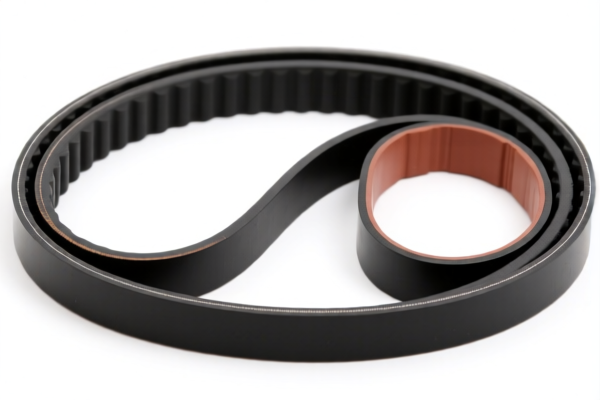
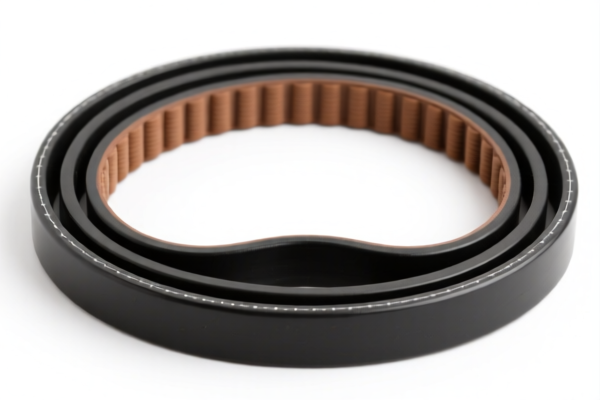
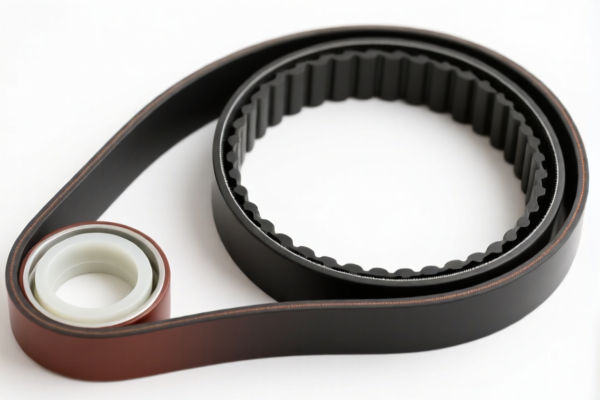
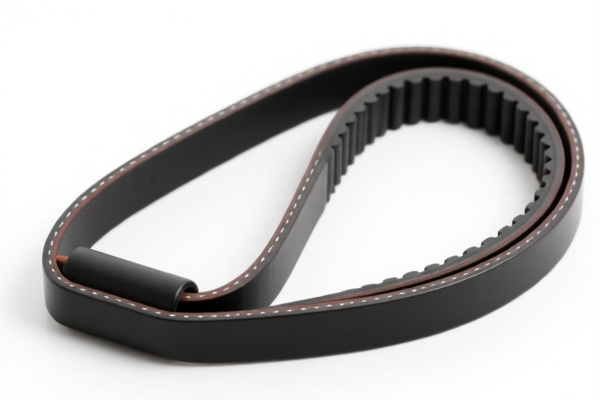
AI Analysis
⚙️ V-Belts (Transmission Belts)
🌐 HS Code Reference & Customs Clearance Guide | 2026 Latest Tariff Analysis | Professional Compliance Strategy
📌 I. Product Definition & Classification: Do You Really Know What a "V-Belt" Is?
V-belts are flexible loops of rubber used to transmit power between two or more pulleys. They are critical components in automotive, industrial machinery, agricultural equipment, and HVAC systems.
In international trade, they are broadly categorized by their profile (shape) and application:
- Classical V-Belts (Standard): Traditional wedge-shaped belts (e.g., A, B, C, D sections) for general industrial use.
- Narrow & Super Narrow V-Belts: Higher power density, used in high-speed engines and precision machinery.
- Wedge V-Belts (SPZ, SPA, SPB, SPC): Modern replacement for classical belts, thinner and more efficient.
- Multi-V/Ribbed Belts (Serpentine): Belts with multiple ribs on one side, used in automotive engines for accessory drive.
- Flat Belts with V-Shape: Often misclassified; must be distinguished from true V-belts.
⚠️ Key Distinction Point:
- If it is a looped belt made of rubber/fabric/cord for transmitting power → Chapter 40 (Rubber) or Chapter 59 (Impregnated Textiles).
- If it is a timing belt (with teeth) → HS 4010 (Rubber) or 5910 (Textile) depending on material.
- V-belts WITHOUT teeth are primarily classified under HS 4010 if rubber-based, or HS 5910 if textile-based.
- Most commercial V-belts are Rubber-based → HS 4010.
📦 II. HS Code Classification Details (2026 Latest Tariff Authority Comparison)
| HS Code | Product Description | Applicable Scenario | Material | Toothed? |
|---|---|---|---|---|
4010.11.00.00 |
V-belts and transmission belts of a circumferential length not exceeding 60 cm | Small machinery, light duty, small engines | Rubber-based | ❌ No |
4010.12.00.00 |
V-belts and transmission belts of a circumferential length exceeding 60 cm but not exceeding 120 cm | Standard industrial motors, mid-size engines | Rubber-based | ❌ No |
4010.13.00.00 |
V-belts and transmission belts of a circumferential length exceeding 120 cm but not exceeding 180 cm | Heavy machinery, large industrial fans | Rubber-based | ❌ No |
4010.19.00.00 |
Other V-belts and transmission belts (exceeding 180 cm) | Very large industrial systems, conveyors | Rubber-based | ❌ No |
4010.31.00.00 |
Other transmission belts (V-ribbed belts, not exceeding 60 cm) | Automotive serpentine belts (small) | Rubber-based | ✅ Yes (Ribs) |
4010.39.00.00 |
Other transmission belts (V-ribbed, exceeding 60 cm) | Heavy-duty ribbed belts | Rubber-based | ✅ Yes (Ribs) |
5910.00.00.00 |
Transmission belts or belting, of textile material, whether or not impregnated | Niche industrial applications, fire-resistant belts | Textile/Cord | ❌ No (or ✅ Yes) |
🔍 Critical Reminder:
- Most standard V-belts are classified under4010.1X.XX.XXbased on circumferential length.
- Do NOT confuse V-belts with Timing Belts (toothed belts). While both are in 4010, they have different subheadings. V-belts rely on friction; timing belts rely on teeth.
- Material Matters: If the belt is primarily textile (e.g., canvas-covered), it may fall under 5910.00.00.00, but rubber-covered textile belts are still 4010.
💰 III. 2026 Latest Tariff Rate Breakdown (Including Surtaxes & Policy Add-ons)
✅ Applicable Country: United States (US)
✅ Country of Origin: China (CN)
✅ Effective Date: November 10, 2025 onwards (including subsequent imports)
🎯 1. 4010.11.00.00 to 4010.19.00.00 —— Classical & Wedge V-Belts (Rubber)
| Item | Content |
|---|---|
| Base Rate | 0% (ad valorem) |
| USITC Surcharge | +25% (from USITC Footnote 9903.08.01) |
| IEEPA Surcharge | +10% (for China/HK products, from Nov 10, 2025) |
| Total Rate | 45% |
| Tax Calculation | CIF Value × 45% |
| De Minimis Exemption | ❌ Not Eligible (deny_de_minimis) |
| Legal Pathway | IEEPA:9903.01.25 → IEEPA:9903.01.24 → USITC:4010.1X.XX.XX → FOOTNOTE:9903.08.01 |
📌 Explanation:
- The 25% USITC surcharge is under Section 301 of the Trade Act, targeting "rubber and rubber articles."
- The 10% IEEPA surcharge is an additional national security tariff on Chinese rubber products.
- Total 45% is extremely high, making Chinese V-belts less competitive in the US market.
🎯 2. 5910.00.00.00 —— Textile V-Belts (Less Common)
| Item | Content |
|---|---|
| Base Rate | 0% |
| USITC Surcharge | +25% (Footnote 9903.08.01 applies to "rubber and rubber articles," but some textile belts with rubber coating may be scrutinized) |
| IEEPA Surcharge | +10% (if deemed textile goods from China under specific lists) |
| Total Rate | Up to 45% (if classified as rubber-coated) or 35% (if purely textile) |
| De Minimis Exemption | ❌ Not Eligible |
📌 Note:
- Pure textile belts are rare. Most "V-belts" are rubber.
- If the belt is textile core with rubber cover, it is still 4010 (Rubber Chapter).
- Only uncoated textile belts fall under 5910, but they are subject to similar surcharges if sourced from China.
🛠️ IV. Customs Clearance Practical Advice (Battle-Tested Pitfall Guide)
✅ 1. Required Documentation Checklist (Non-negotiable)
| Document | Must Provide | Notes |
|---|---|---|
| ✅ Product Specification Sheet | ✔️ | Include material composition (rubber type, cord material), dimensions, length, profile (A/B/C/SPZ/SPA/etc.) |
| ✅ Material Declaration | ✔️ | Specify percentage of rubber, fabric, steel/cord reinforcement |
| ✅ Product Photos | ✔️ | Clear view of the cross-section (trapezoidal) and side profile |
| ✅ Commercial Invoice | ✔️ | Must state "V-Belt" or "Transmission Belt," not generic "Rubber Part" |
| ✅ Country of Origin Certificate | ✔️ | Essential for proving origin to apply surcharges correctly |
| ✅ Packing List | ✔️ | Show quantity, weight, and packaging type |
✅ 2. Declaration Tips (Critical Mantras)
🔥 “Length Defines Code, Rubber is Key, Don’t Say ‘Part,’ Say ‘Belt’!”
| Scenario | Correct Declaration | Wrong Practice |
|---|---|---|
| Standard V-Belt, 100cm long | 4010.12.00.00 + "V-Belt, Rubber" |
"Rubber Belt" (too vague) |
| Small V-Belt, 50cm long | 4010.11.00.00 + "V-Belt, Rubber" |
"Car Part" |
| Ribbed/Serpentine Belt | 4010.31.00.00 + "V-Ribbed Belt" |
"V-Belt" (incorrect profile) |
| Timing Belt (Toothed) | 4010.21.00.00 or 4010.31.00.00 |
4010.1X.00.00 (Wrong HS) |
✅ 3. Special Handling
| Scenario | Handling Advice |
|---|---|
| OEM Custom V-Belts | Provide customer approval drawings. Ensure the description matches the drawing’s profile. |
| Kit Sets (Multiple Belts) | Declare as a set if sold together. However, each belt’s HS code should still be accurate. |
| Belts with Metal Cores | If >50% weight is metal, it may shift to Chapter 73. But for V-belts, rubber/textile is usually dominant. Stick to 4010 unless proven otherwise. |
| Used V-Belts | Prohibited or Highly Restricted. New belts only. |
🌍 V. Global Market Comparison (2026 Latest)
| Country/Region | Recommended HS Code | Tariff (China Origin) | Certification Requirements | Notes |
|---|---|---|---|---|
| 🇺🇸 USA | 4010.1X.00.00 |
45% (25% + 10%) | None specific | High surcharge. Consider Vietnam/MX origin. |
| 🇨🇳 China | 4010.1X.00.00 |
0% | CCC (if automotive) | Domestic trade friendly. |
| 🇪🇺 EU | 4010.1X.00.00 |
0% | REACH, RoHS | Low tariff. CE mark if machinery component. |
| 🇲🇽 Mexico | 4010.1X.00.00 |
0% (USMCA) | NOM | Ideal for US-bound goods if assembled there. |
| 🇻🇳 Vietnam | 4010.1X.00.00 |
0-5% (depending on agreement) | None | Good alternative to China for US exports. |
📌 Conclusion:
- US Market is Costly: 45% tariff makes Chinese V-belts expensive.
- Alternative Origins: Consider sourcing from Vietnam, Mexico, or Thailand to avoid IEEPA and Section 301 surcharges.
- EU/China: Low barriers. Focus on quality and certifications.
📌 VI. Common Mistakes & Pitfalls (Lessons Learned)
❌ Mistake 1: Declaring V-Belts as "Rubber Parts" or "Machine Parts"
👉 Consequence: Incorrect HS code (e.g., 4016.99), leading to 45%+ audit risk and penalties.
❌ Mistake 2: Confusing V-Belts with Timing Belts
👉 Consequence: Timing belts (toothed) have different HS codes (4010.21 or 4010.31). Misclassification can lead to different duty rates and rejection.
❌ Mistake 3: Ignoring Circumferential Length
👉 Consequence: 4010.11 (≤60cm) vs 4010.12 (>60cm). While duty rate is same, customs data consistency is required. Mismatch causes delays.
❌ Mistake 4: Declaring Ribbed Belts as Classical V-Belts
👉 Consequence: Ribbed belts are 4010.3X. Classical are 4010.1X. Wrong code = Customs Hold.
✅ Correct Practice:
“Classical V-Belt, Cross-Section B, Circumference 1200mm, Rubber/Fabric Construction, New”
🎯 VII. Conclusion: Precision Classification, Cost Efficiency, Smooth Clearance
🎯 Remember the Mantra:
🔹 “Rubber V-Belt, Check Length, 4010.1X is Key.”
🔹 “Ribbed is 4010.3X, Toothed is Timing, Don’t Mix Up the Code!”
🔹 “China Origin = 45% in US, Vietnam/MX = Lower Cost.”
📌 Pro Tip:
If you are importing V-belts into the US from China, consider tariff engineering:
- Can the belts be assembled in Vietnam/Mexico to benefit from USMCA or lower surcharges?
- Can you classify correctly to avoid penalties?
- Apply for an Advance Ruling if unsure about the profile or material.
📣 Take Action Now:
📞 Contact a licensed customs broker + Provide cross-section photos + Verify circumferential length
🚀 Clear customs faster, reduce duties, and keep your supply chain running!
✨ Professional Customs Compliance Starts with Accurate Classification!
💼 Every dollar saved on duties is profit earned!
Customer Reviews
About HS Code Classification
The Harmonized System (HS) is an internationally standardized nomenclature developed by the World Customs Organization (WCO) to classify traded products. Over 200 countries use the HS system as the basis for customs tariffs, trade statistics, and import/export regulations.
Each HS code follows a hierarchical structure:
- Chapter (2 digits) — Broad category of goods (e.g., Chapter 84: Machinery and Mechanical Appliances)
- Heading (4 digits) — More specific grouping within the chapter
- Subheading (6 digits) — Internationally standardized breakdown, used by all WCO member countries
- National subdivisions (8-10 digits) — Country-specific extensions for further classification, such as US HTSUS 10-digit codes
Correct HS code classification is essential for smooth customs clearance, accurate duty payment, and compliance with trade regulations. Misclassification can lead to customs delays, overpayment of duties, or penalties.
When importing from CN to US, the applicable tariff rates may include:
- Most-Favored-Nation (MFN) rate — The standard duty rate applied to WTO members
- General rate — Applied to countries without trade agreements
- Trade remedy duties — Additional tariffs such as Section 301 (anti-dumping), Section 232 (national security), or countervailing duties
The information provided on this page is for reference purposes only. For official classification, please consult with your local customs authority or a licensed customs broker.