VA Copolymer Resin (for Labels)
CN → US| HS Code | Tariff Rate | Origin | Destination | Doc |
|---|---|---|---|---|
| 3905290000 | 39.0% | CN | US | Official Doc |
| 3905210000 | 39.0% | CN | US | Official Doc |
| 3917290050 | 38.1% | CN | US | Official Doc |
| 3917290090 | 38.1% | CN | US | Official Doc |
| 3926909989 | 22.8% | CN | US | Official Doc |
Product Images


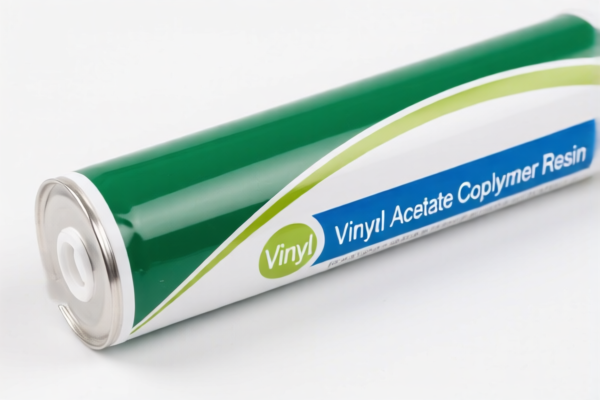

AI Analysis
🏷️ VA Copolymer Resin (for Labels)
🌐 HS Code Reference & Clearance Guide | 2026 Latest Tariff Analysis | Professional Customs Strategy
📌 I. Product Definition & Classification: What is "VA Copolymer Resin for Labels"?
VA Copolymer Resin (specifically for labels/adhesives) is a versatile thermoplastic material derived from the copolymerization of Vinyl Acetate (VAc) and other monomers. In international trade, it serves as a critical raw material for: 1. Pressure-Sensitive Adhesives (PSAs): Used in tape manufacturing and label backing. 2. Coatings & Inks: Enhancing flexibility and adhesion in label printing. 3. Hot-Melt Adhesives: Providing quick bonding for packaging labels.
⚠️ Key Distinction:
- If classified by its chemical nature (the resin itself), it falls under Chapter 39 (Plastics and Articles Thereof), specifically subheading 3905 (Polyvinyl acetate).
- If classified by its form/end-use (e.g., as a finished tube or pipe component, though rare for "label" resin), it might fall under 3917 (Tubes, Pipes, and Hoses).
- If classified as a generic plastic article due to lack of specific description, it might fall under 3926 (Other articles of plastics).
📦 II. HS Code Classification Details (2026 Latest Tariff Authority Comparison)
Based on the provided dataset, here are the four potential HS Codes for "VA Copolymer Resin," ranked by specificity and risk.
| HS Code | Product Description | Application Scenario | Classification Basis | Total Tax Rate |
|---|---|---|---|---|
| 3905.29.00.00 | VA Copolymer Resin (Polyvinyl Acetate Copolymers in primary forms) | Raw resin material for chemical processing, adhesives, coatings. | Chemical Composition: Explicitly "Polyvinyl acetate copolymers." | 39.0% |
| 3905.21.00.00 | VA Copolymer (Polyvinyl Acetate, non-aqueous dispersions) | Resin in liquid/paste form for direct adhesive formulation. | Chemical Form: Specific sub-category for non-aqueous dispersions. | 39.0% |
| 3917.29.00.50 | Copolymer Resin (Plastic tubes/pipes) | Misclassification Risk: If mistakenly declared as "pipe material" rather than raw resin. | End-Use Error: Treats resin as finished plastic tubes/pipes. | 38.1% |
| 3926.90.99.89 | Resin (Other plastic articles) | Last Resort: If no specific chemical heading fits, categorized as generic plastic goods. | General Category: Fallback for unspecified plastic items. | 22.8% |
🔍 Critical Warning:
- 3905.2x is the correct classification for raw VA Copolymer Resin.
- 3917.29 is likely an incorrect classification unless the resin is pre-formed into pipes/tubes for direct use (unlikely for "label" resin).
- 3926.90 is a risky fallback with lower tax but high risk of customs rejection or reclassification penalties.
💰 III. 2026 Latest Tariff Rate Breakdown (Detailed Tax Clauses)
✅ Applicable Country: United States (US)
✅ Origin: China (CN)
✅ Effective Date: November 10, 2025 (and subsequent imports)
🎯 1. 3905.29.00.00 & 3905.21.00.00 —— VA Copolymer Resin (Correct Classification)
| Item | Content |
|---|---|
| Base Duty Rate | 4.0% |
| USITC Additional Duty (Section 301) | +25.0% |
| IEEPA Additional Duty (Section 122 Clause) | +10.0% |
| Total Duty Rate | 39.0% |
| Tax Calculation | CIF Value × 39.0% |
| De Minimis Exemption | ❌ Not Eligible (deny_de_minimis) |
| Legal Basis Path | IEEPA:9903.01.25 → USITC:3905.29.00.00 → FOOTNOTE:3905.29.00.00 |
📌 Explanation:
- The Base Duty (4.0%) is the standard Most Favored Nation (MFN) rate for polyvinyl acetate copolymers.
- The 25% USITC Duty is applied under Section 301 of the Trade Act of 1974, targeting specific Chinese chemical products.
- The 10% IEEPA Duty is the latest addition (Section 122 clause mentioned in data), applying to Chinese-origin goods.
- Total Cost Impact: These taxes significantly increase the landed cost. Pre-classification is essential to avoid disputes.
🎯 2. 3917.29.00.50 & 3917.29.00.90 —— Copolymer Resin (Plastic Tubes/Pipes)
| Item | Content |
|---|---|
| Base Duty Rate | 3.1% |
| USITC Additional Duty (Section 301) | +25.0% |
| IEEPA Additional Duty (Section 122 Clause) | +10.0% |
| Total Duty Rate | 38.1% |
| Tax Calculation | CIF Value × 38.1% |
| De Minimis Exemption | ❌ Not Eligible (deny_de_minimis) |
📌 Note:
- This rate is 0.9% lower than the correct chemical classification (39.0%).
- Risk: Customs may reject this classification if the product is clearly raw resin (powder/granules) and not finished tubes. Misdeclaration can lead to audits, penalties, and retroactive tax demands.
🎯 3. 3926.90.99.89 —— Resin (Other Plastic Articles)
| Item | Content |
|---|---|
| Base Duty Rate | 5.3% |
| USITC Additional Duty (Section 301) | +7.5% |
| IEEPA Additional Duty (Section 122 Clause) | +10.0% |
| Total Duty Rate | 22.8% |
| Tax Calculation | CIF Value × 22.8% |
| De Minimis Exemption | ❌ Not Eligible (deny_de_minimis) |
📌 Caution:
- This is the lowest tax rate (22.8%), but it is high-risk.
-3926is a residual category for "Other articles of plastics." Using it for raw resin is technically incorrect under the Harmonized System rules (GRI 1 & 6).
- Consequence: If Customs determines the goods are raw resin (chemicals), they will reclassify to3905, charging the difference (39.0% - 22.8% = 16.2%) plus interest and penalties.
🛠️ IV. Customs Clearance Practical Advice (Real-World Pitfall Avoidance)
✅ 1. Required Documentation List (Must-Have)
| Document | Mandatory? | Description |
|---|---|---|
| ✅ Product Specification Sheet | ✔️ | Must specify: Chemical composition (e.g., Vinyl Acetate content %), form (powder, beads, dispersion), and intended use (adhesive, coating). |
| ✅ Certificate of Origin (CO) | ✔️ | Essential for proving Chinese origin (triggers Section 301/IEEPA duties). |
| ✅ Commercial Invoice | ✔️ | Clearly state: "VA Copolymer Resin, Chemically Defined, Raw Material for Label Adhesives." |
| ✅ Bill of Lading/Air Waybill | ✔️ | Ensure commodity description matches invoice. |
| ✅ MSDS (Material Safety Data Sheet) | ✔️ | Required for chemical handling and safety compliance. |
| ✅ Usage Declaration | ✔️ | Statement confirming use in label manufacturing/adhesives (supports 3905 classification). |
✅ 2. Declaration Tips (Key Mantras)
🔥 "Chemical Nature First, End-Use Second! Don't misdeclare resin as pipes!"
| Scenario | Correct Declaration | Wrong Practice |
|---|---|---|
| Raw Resin (Powder/Granules) | 3905.29.00.00 (VA Copolymer Resin) |
Misdeclare as 3926 to save tax → High Audit Risk |
| Liquid Dispersion | 3905.21.00.00 |
Declare as 3917 (tubes) → Rejection |
| Finished Label Roll (with adhesive) | Might be 3919 (Self-adhesive tape) |
Declare as raw resin → Wrong Classification |
| Mixed Shipment (Resin + Tools) | Separate entries | Combined declaration → Valuation Issues |
✅ 3. Special Circumstances Handling
| Situation | Handling Advice |
|---|---|
| OEM Custom Resin | Provide client formulas and specs. If modified for specific label adhesion, still classify by chemical composition (3905). |
| Blended Resins | If mixed with other polymers, determine the essential character. If VA is dominant, 3905 applies. |
| Resin for Non-Label Use | If used for pipes, classify based on form. If raw, still 3905. If pre-formed tubes, 3917. |
| Origin Masking | Attempting to hide Chinese origin via transshipment is illegal and leads to severe penalties. |
🌍 V. Global Market Clearance Comparison (2026 Latest)
| Country/Region | Recommended HS Code | Duty Rate (China Origin) | Certification Requirements | Notes |
|---|---|---|---|---|
| 🇺🇸 USA | 3905.29.00.00 |
39.0% | None (Chemical) | High duty due to Section 301 + IEEPA. |
| 🇨🇳 China | 3905.29.00.00 |
~6-10% | GB Standards | Low duty, no US-style附加 taxes. |
| 🇪🇺 EU | 3905.21.00 |
~6.5% | REACH Registration | REACH compliance critical for chemicals. |
| 🇬🇧 UK | 3905.29.00 |
~6.5% | UK REACH | Post-Brexit regulatory framework applies. |
| 🇯🇵 Japan | 3905.29.00 |
~6-8% | JIS Standards | No major retaliatory tariffs on chemicals. |
📌 Conclusion:
- The USA imposes the highest total duty (39.0%) on VA Copolymer Resin due to multiple layers of tariffs.
- EU and Japan have significantly lower duties (~6-8%) but stricter chemical safety regulations (REACH, JIS).
- Cost Optimization: Consider supply chain diversification if the 39% duty erodes margins, or explore duty drawback programs if re-exporting.
📌 VI. Common Errors & Pitfall Guide (Lessons Learned)
❌ Error 1: Declaring raw resin as "Plastic Pipes" (3917) to save 0.9%
👉 Consequence: Customs audit, reclassification to 3905, back-taxes, and penalties. Not worth it.
❌ Error 2: Declaring resin under 3926 ("Other plastics") to save 16.2%
👉 Consequence: High risk of customs seizure or heavy fines for misclassification. 3905 is the specific heading; specific prevails over general.
❌ Error 3: Ignoring the 122 Clause IEEPA Duty (10%)
👉 Consequence: Unexpected cost increase. Ensure your ERP system updates tariff rates to include this 10% surcharge for Chinese goods.
❌ Error 4: Vague Description: "Plastic Material"
👉 Consequence: Customs may assign a higher default rate or hold the shipment for detailed review.
✅ Correct Description:
"VA Copolymer Resin, Vinyl Acetate Copolymer, Raw Material for Label Adhesives, Powder Form, HS 3905.29.00.00"
🎯 VII. Conclusion: Precision Classification, Cost Control, Compliance!
🎯 Remember the Mantra:
🔹 "Chemical First, Form Second! 3905 is the Home! 3926 is a Trap! 3917 is for Pipes!"
🔹 "39% Tax is Steep, Prepare Cash Flow! Declare Accurately, Avoid the Law!"
📌 Pro Tip:
- If your resin is originating from Vietnam, Mexico, or Thailand, you may qualify for IEEPA Exemptions or lower Section 301 rates.
- Apply for Advance Rulings from US Customs and Border Protection (CBP) to lock in the 3905 classification and avoid future disputes.
📣 Immediate Action:
📞 Consult a licensed customs broker.
📄 Provide full chemical specs.
🚀 Ensure smooth clearance, minimize duty leakage, and protect your profit margins!
✨ Professional Clearance Starts with Accurate Classification!
💼 Every Percent of Duty Saved is Pure Profit!
Customer Reviews
About HS Code Classification
The Harmonized System (HS) is an internationally standardized nomenclature developed by the World Customs Organization (WCO) to classify traded products. Over 200 countries use the HS system as the basis for customs tariffs, trade statistics, and import/export regulations.
Each HS code follows a hierarchical structure:
- Chapter (2 digits) — Broad category of goods (e.g., Chapter 84: Machinery and Mechanical Appliances)
- Heading (4 digits) — More specific grouping within the chapter
- Subheading (6 digits) — Internationally standardized breakdown, used by all WCO member countries
- National subdivisions (8-10 digits) — Country-specific extensions for further classification, such as US HTSUS 10-digit codes
Correct HS code classification is essential for smooth customs clearance, accurate duty payment, and compliance with trade regulations. Misclassification can lead to customs delays, overpayment of duties, or penalties.
When importing from CN to US, the applicable tariff rates may include:
- Most-Favored-Nation (MFN) rate — The standard duty rate applied to WTO members
- General rate — Applied to countries without trade agreements
- Trade remedy duties — Additional tariffs such as Section 301 (anti-dumping), Section 232 (national security), or countervailing duties
The information provided on this page is for reference purposes only. For official classification, please consult with your local customs authority or a licensed customs broker.