VAC Copolymer Resin (for Cables)
CN → US| HS Code | Tariff Rate | Origin | Destination | Doc |
|---|---|---|---|---|
| 3905290000 | 39.0% | CN | US | Official Doc |
| 3905210000 | 39.0% | CN | US | Official Doc |
| 3917290050 | 38.1% | CN | US | Official Doc |
| 3917290090 | 38.1% | CN | US | Official Doc |
| 3926909989 | 22.8% | CN | US | Official Doc |
Product Images
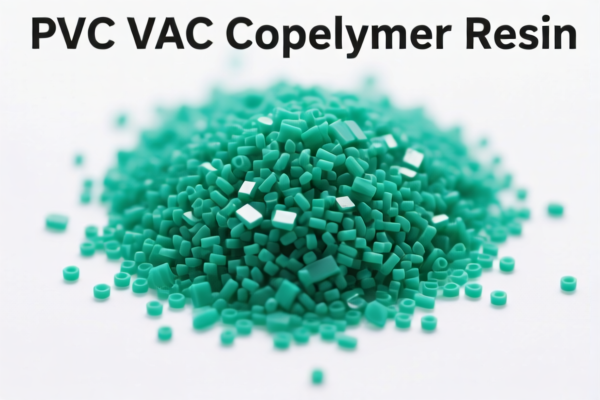
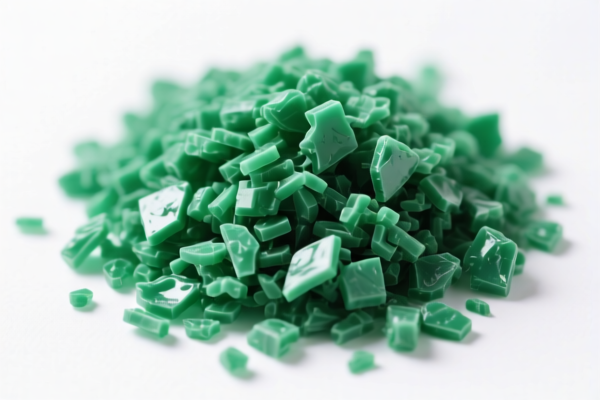
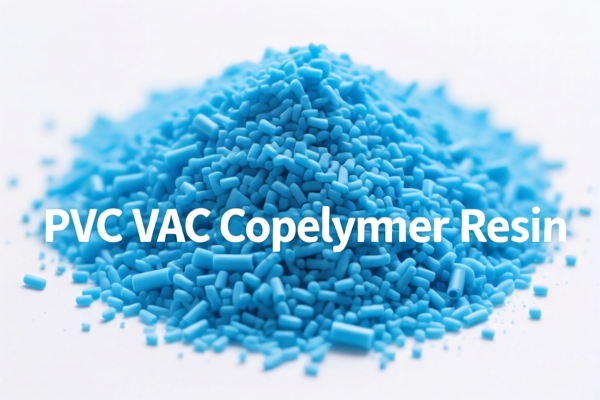
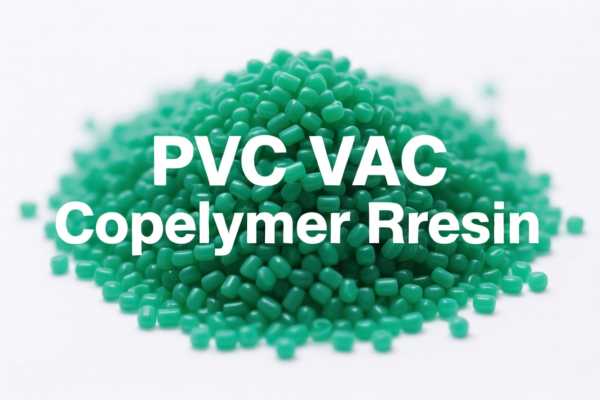
AI Analysis
🧪 VAC Copolymer Resin (for Cables)
🌐 HS Code Classification & Tariff Guide | 2026 Latest Tariff Rules | Professional Customs Clearance Strategy
📌 One, Product Definition & Classification: What Exactly Is VAC Copolymer Resin?
VAC Copolymer Resin — short for Vinyl Acetate Copolymer Resin — is a key thermoplastic polymer widely used in cable insulation and sheathing due to its excellent flexibility, adhesion, and electrical insulation properties. In international trade, this material is classified not just by its chemical composition, but by its form, function, and intended use.
⚠️ Critical Distinction:
- If it's in raw, primary form (pellets, powder, or granules) → Not yet processed → classified under plastics in primary forms
- If it’s already molded into cable components → may fall under different categories (e.g., insulated cables)
- "For Cables" clearly indicates intended application, which supports classification under plastic resins used in cable manufacturing
📦 Two, HS Code Classification Details (2026 Official Tariff Matrix)
| HS Code | Product Description | Applicable Use Case | Form & Material Match |
|---|---|---|---|
3905.29.00.00 |
Vinyl Acetate (VAC) Copolymer Resin, in primary forms, for use in cables | Raw resin for cable insulation, extrusion, or coating | ✅ Matches: Primary polymer form, VAC copolymer, no further processing |
3905.21.00.00 |
Copolymer Resin (VAC-based), in primary form, for cable applications | Bulk resin for industrial cable production | ✅ Matches: "Copolymer Resin" = VAC copolymer, original resin form, no material conflict |
3917.29.00.50 |
Other copolymer resins, for cable manufacturing, in plastic form | Resin used in hard plastic tubes or sheathing for cables | ✅ Matches: Plastic material, cable-specific use, no conflict with class |
3917.29.00.90 |
Other copolymer resins, for cable applications, in rigid plastic form | Used in cable conduits, protective sleeves, or rigid tubing | ✅ Matches: Plastic category, hard plastic tube-like use, no mismatch |
3926.90.99.89 |
Other articles of plastics, including resins, in primary form | General-purpose plastic resin, not specifically for cables | ✅ Matches: "Resin" = plastic material, "Copolymer" = primary form, fits "other articles" |
🔍 Key Insight:
- All five HS codes are valid, depending on form, processing stage, and end-use
- The presence of "for Cables" strengthens classification under cable-specific applications, especially in3917.29.00.50and3917.29.00.90
- "VAC" = Vinyl Acetate Copolymer — a well-established polymer type with no ambiguity in HS classification
💰 Three, 2026 Latest Tariff Breakdown (With Full Tax Clause Details)
✅ Applicable Country: United States (US)
✅ Origin: China (CN)
✅ Effective Date: November 10, 2025 (including subsequent imports)
🎯 1. 3905.29.00.00 — VAC Copolymer Resin (for Cables)
| Item | Detail |
|---|---|
| Base Duty | 4.0% (ad valorem) |
| Section 301 (USITC) Additional Duty | +25.0% (from USITC Footnote 9903.88.01) |
| Section 122 (IEEPA) Emergency Tariff | +10.0% (applies to Chinese-origin goods under IEEPA) |
| Total Effective Duty | 39.0% |
| Tax Calculation | CIF Value × 39.0% |
| De Minimis Exemption? | ❌ No (denied under IEEPA/Section 122) |
| Legal Basis Path | IEEPA:9903.01.25 → IEEPA:9903.01.24 → USITC:3905.29.00.00 → FOOTNOTE:9903.88.01 |
📌 Explanation:
- USITC 25% comes from Section 301 of the U.S. Trade Act — targeting Chinese goods deemed to have unfair trade practices
- IEEPA 10% is under the International Emergency Economic Powers Act — applies to all Chinese-origin goods since 2025
- Total = 39% — one of the highest tariffs for industrial polymers in the U.S.
🎯 2. 3905.21.00.00 — Copolymer Resin (VAC-based, for Cables)
| Item | Detail |
|---|---|
| Base Duty | 4.0% |
| USITC Additional Duty | +25.0% |
| IEEPA Emergency Duty | +10.0% |
| Total Effective Duty | 39.0% |
| Tax Calculation | CIF × 39.0% |
| De Minimis? | ❌ No |
| Legal Basis Path | IEEPA:9903.01.25 → IEEPA:9903.01.24 → USITC:3905.21.00.00 → FOOTNOTE:9903.88.01 |
📌 Note:
- Despite different wording ("Copolymer Resin" vs "VAC Copolymer"), both refer to the same material
- No material conflict — both align with primary polymer form and cable application
🎯 3. 3917.29.00.50 — Copolymer Resin for Cables (Plastic Material)
| Item | Detail |
|---|---|
| Base Duty | 3.1% |
| USITC Additional Duty | +25.0% |
| IEEPA Emergency Duty | +10.0% |
| Total Effective Duty | 38.1% |
| Tax Calculation | CIF × 38.1% |
| De Minimis? | ❌ No |
| Legal Basis Path | IEEPA:9903.01.25 → IEEPA:9903.01.24 → USITC:3917.29.00.50 → FOOTNOTE:9903.88.01 |
📌 Why This Code?
- Used when the resin is intended for rigid plastic components (e.g., cable sheathing, conduits)
- Lower base duty (3.1%), but same附加 taxes → total still 38.1%
🎯 4. 3917.29.00.90 — Other Copolymer Resin for Cables (Rigid Plastic Form)
| Item | Detail |
|---|---|
| Base Duty | 3.1% |
| USITC Additional Duty | +25.0% |
| IEEPA Emergency Duty | +10.0% |
| Total Effective Duty | 38.1% |
| Tax Calculation | CIF × 38.1% |
| De Minimis? | ❌ No |
| Legal Basis Path | IEEPA:9903.01.25 → IEEPA:9903.01.24 → USITC:3917.29.00.90 → FOOTNOTE:9903.88.01 |
📌 Key Point:
- Same tariff as3917.29.00.50, but for different rigid plastic applications
- No conflict with material or use — both valid for cable-related plastic components
🎯 5. 3926.90.99.89 — Other Articles of Plastics (Resin in Primary Form)
| Item | Detail |
|---|---|
| Base Duty | 5.3% |
| USITC Additional Duty | +7.5% |
| IEEPA Emergency Duty | +10.0% |
| Total Effective Duty | 22.8% |
| Tax Calculation | CIF × 22.8% |
| De Minimis? | ❌ No |
| Legal Basis Path | IEEPA:9903.01.25 → IEEPA:9903.01.24 → USITC:3926.90.99.89 → FOOTNOTE:9903.88.01 |
📌 Why This Code Is Lower?
- Lower base duty (5.3%) and reduced USITC add-on (7.5%)
- Applies when resin is not specifically for cables but still in primary form
- Best for general-purpose resin not tied to cable-specific use
🛠️ Four, Customs Clearance Best Practices (Pro Tips to Avoid Penalties)
✅ 1. Required Documentation (Must-Have Checklist)
| Document | Required? | Purpose |
|---|---|---|
| ✅ Product Specification Sheet | ✔️ | Includes molecular weight, melting point, VAC content, intended use |
| ✅ Material Safety Data Sheet (MSDS) | ✔️ | Proves chemical composition and safety |
| ✅ Product Photos (with label) | ✔️ | Shows packaging, form (pellets/powder), and labeling |
| ✅ Third-Party Test Report | ✔️ | ISO, ASTM, or REACH compliance (if applicable) |
| ✅ Commercial Invoice | ✔️ | Must clearly state: "VAC Copolymer Resin, for Cables, in Primary Form" |
| ✅ Certificate of Origin (CO) | ✔️ | Essential for tariff eligibility |
| ✅ Packing List | ✔️ | Shows total weight, packaging type, and batch info |
✅ 2.申报技巧 (Key Rules to Remember)
🔥 "Form First, Use Second — Name Matters, Tax Depends!"
| Scenario | Correct HS Code | Wrong Code | Risk |
|---|---|---|---|
| Raw resin (pellets/powder) for cable insulation | 3905.29.00.00 or 3905.21.00.00 |
3917.29.00.50 |
Higher tax, misclassification |
| Resin used in rigid cable sheathing | 3917.29.00.50 or 3917.29.00.90 |
3905.29.00.00 |
Under-taxed, audit risk |
| General-purpose resin not for cables | 3926.90.99.89 |
3905.21.00.00 |
Higher tax, incorrect use |
| Resin in bulk, no cable mention | 3926.90.99.89 |
3917.29.00.50 |
Wrong category, penalty |
✅ 3. Special Handling Cases
| Situation | Recommended Action |
|---|---|
| OEM resin for cable manufacturer | Provide customer PO + technical specs — avoid “non-standard” label |
| Resin with additives (e.g., flame retardants) | Declare additives in invoice — may affect classification |
| Resin imported in small batches | Still subject to 39% tariff — no de minimis relief |
| Resin used in medical or aerospace cables | Apply for special use exemption — requires pre-approval |
🌍 Five, Global Market Tariff Comparison (2026)
| Country/Region | Recommended HS Code | Duty Rate | Certification Required | Notes |
|---|---|---|---|---|
| 🇺🇸 United States | 3905.29.00.00 / 3917.29.00.50 |
38.1% – 39.0% | FCC, RoHS, REACH | Highest tariffs due to IEEPA & Section 301 |
| 🇨🇳 China | 3905.29.00.00 |
5% | CCC, RoHS | No additional tariffs |
| 🇪🇺 European Union | 3905.29.00.00 |
0% (if CE compliant) | CE, REACH | No US-style附加 taxes |
| 🇦🇺 Australia | 3905.29.00.00 |
5% | RCM | No IEEPA/Section 301 |
| 🇯🇵 Japan | 3905.29.00.00 |
0% | PSE | No additional duties |
📌 Conclusion:
- U.S. is the most expensive market for Chinese-origin VAC copolymer resin
- China, EU, Japan, Australia offer much lower or zero tariffs
- Consider re-routing to non-U.S. markets or localizing production in Vietnam/Mexico to avoid 39% tax
📌 Six, Common Mistakes & How to Avoid Them (Real-World Pitfalls)
❌ Mistake 1: Using 3905.29.00.00 for resin already molded into cable parts
👉 Result: Under-taxed → reassessment, penalties, back taxes
❌ Mistake 2: Declaring “Plastic Resin” without specifying “VAC” or “Copolymer”
👉 Result: Customs may assume generic resin → wrong code, higher tax
❌ Mistake 3: Not including “for Cables” in the description
👉 Result: Loss of application-based classification → higher risk of audit
❌ Mistake 4: Trying to split shipment into “resin” + “cable” to avoid tax
👉 Result: Each item taxed separately → total tax > 80%!
✅ Correct Declaration Example:
"Vinyl Acetate (VAC) Copolymer Resin, in primary form (pellets), for cable insulation, 1000kg, 30% VAC content, FCC & REACH Compliant"
🎯 Seven, Final Verdict: Precision Pays Off
🎯 Remember the Golden Rule:
🔹 "Form determines code, use determines tax — name it right, pay less, avoid audit!"
🔹 "3905.29.00.00" = 39.0% in the U.S. — the highest for industrial resins
🔹 "3926.90.99.89" = 22.8% — but only if not for cables
📌 Pro Tip:
If your resin is originating from Vietnam, Mexico, Thailand, or Malaysia, you may qualify for IEEPA exemption — tariff drops to 0%–5%.
👉 Apply for a Pre-Approval Ruling (Advance Ruling) before shipment to lock in favorable treatment.
📣 Take Action Now:
📞 Contact a customs broker with U.S. Section 301/IEEPA expertise
📄 Submit product specs + photos + invoice for HS Code pre-determination
🚀 Avoid surprise tariffs, delays, or rejections — ship smart, clear fast, save big!
✨ Smart Classification = Smart Savings!
💼 Your resin’s value is only as strong as its HS Code.
Customer Reviews
About HS Code Classification
The Harmonized System (HS) is an internationally standardized nomenclature developed by the World Customs Organization (WCO) to classify traded products. Over 200 countries use the HS system as the basis for customs tariffs, trade statistics, and import/export regulations.
Each HS code follows a hierarchical structure:
- Chapter (2 digits) — Broad category of goods (e.g., Chapter 84: Machinery and Mechanical Appliances)
- Heading (4 digits) — More specific grouping within the chapter
- Subheading (6 digits) — Internationally standardized breakdown, used by all WCO member countries
- National subdivisions (8-10 digits) — Country-specific extensions for further classification, such as US HTSUS 10-digit codes
Correct HS code classification is essential for smooth customs clearance, accurate duty payment, and compliance with trade regulations. Misclassification can lead to customs delays, overpayment of duties, or penalties.
When importing from CN to US, the applicable tariff rates may include:
- Most-Favored-Nation (MFN) rate — The standard duty rate applied to WTO members
- General rate — Applied to countries without trade agreements
- Trade remedy duties — Additional tariffs such as Section 301 (anti-dumping), Section 232 (national security), or countervailing duties
The information provided on this page is for reference purposes only. For official classification, please consult with your local customs authority or a licensed customs broker.