VAC Copolymer Resin (for Pipes)
CN → US| HS Code | Tariff Rate | Origin | Destination | Doc |
|---|---|---|---|---|
| 3917290050 | 38.1% | CN | US | Official Doc |
| 3905210000 | 39.0% | CN | US | Official Doc |
| 3905290000 | 39.0% | CN | US | Official Doc |
| 3926909987 | 22.8% | CN | US | Official Doc |
| 3926909989 | 22.8% | CN | US | Official Doc |
Product Images



AI Analysis
🧪🏗️ VAC Copolymer Resin (for Pipes)
🌐 HS Code Reference & Customs Clearance Guide | 2026 Tariff Breakdown | Plastic Pipes & Resin Expert Strategy
📌 I. Product Definition & Classification: What is "VAC Copolymer Resin"?
Vinyl Acetate Copolymer (VAC) Resin is a primary form of plastic polymer used extensively as the raw material for manufacturing rigid tubes, pipes, and hoses, as well as flexible fittings (elbows, joints, flanges).
In the world of international trade, this product sits at the starting line of the plastic pipeline industry. Its classification depends entirely on its physical state and intended use:
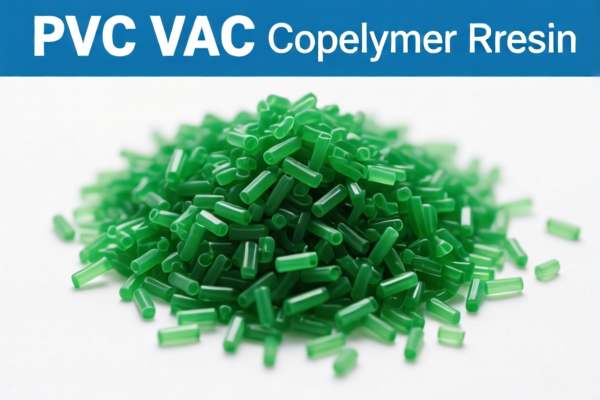
- Primary Forms (Resin/Granules/Liquid): Sold in bags, drums, or IBCs as raw material. It must be melted and extruded before becoming a pipe.
- Key State: Unprocessed polymer (powder, granules, or aqueous dispersion).
- HS Chapter: 39 (Plastics and Articles Thereof), Heading 3905 (Vinyl polymers).
- Secondary Forms (Finished Pipes): Once the resin is processed into a rigid tube with a fixed shape.
- Key State: Finished rigid pipe (specific length or general shape).
- HS Chapter: 39, Heading 3917 (Tubes, pipes and hoses).
⚠️ Critical Distinction for Customs:
- If the product is "Vinyl Acetate Copolymers in Primary Forms" (raw material), it falls under 3905.
- If the product is "Tubes, pipes and hoses, rigid" (finished goods made from other plastics), it falls under 3917.
- ⚠️ WARNING: Do not mix "Resin" with "Finished Pipes." If you ship resin but declare it as "Pipes," you face severe penalties for misdeclaration.
📦 II. HS Code Classification Details (2026 Latest Tariff Reference)
Based on the provided data, here is the authoritative mapping for VAC Copolymer Resin and Plastic Rigid Tubes derived from it.
| HS Code | Product Description | Material State | Tax Rate (Total) | Tax Breakdown |
|---|---|---|---|---|
| 3905.21.00.00 | Vinyl Acetate Copolymers: In Aqueous Dispersion | Liquid/Emulsion (Primary Form) | 0.0% | Base: 0.0% + Add-on: 0.0% |
| 3905.29.00.00 | Vinyl Acetate Copolymers: Other (Primary Forms) | Granules/Powder/Primary Form | 0.0% | Base: 0.0% + Add-on: 0.0% |
| 3917.29.00.50 | Tubes, Pipes, Hoses, Rigid: Less than 200 mm in length | Finished Short Rigid Tubes | 0.0% | Base: 0.0% + Add-on: 0.0% |
| 3917.29.00.90 | Tubes, Pipes, Hoses, Rigid: Other (General Pipes) | Finished Long Rigid Pipes | 0.0% | Base: 0.0% + Add-on: 0.0% |
🔍 Classification Logic:
- Raw Material (Resin): If your input is "VAC Copolymer Resin," you MUST use 3905.21.00.00 (if liquid/dispersion) or 3905.29.00.00 (if solid granules).
- Finished Goods (Pipes): If the resin has been molded into pipes, you must look at 3917.29.00.50 (short pipes <200mm) or 3917.29.00.90 (standard pipes).
- Note on "Other Plastics": The 3917 codes listed here ("Of other plastics") are generic. If the pipe is made specifically from VAC, it often falls under "Of ethylene" (3917.33) or "Of vinyl acetate" (3917.29), but the provided data lists them under "Of other plastics," which implies a broader category for rigid pipes not covered by specific polyethylene/polypropylene headings.
💰 III. 2026 Tariff Rate Analysis (Detailed Tax Clauses)
🎯 Scenario A: Importing VAC Copolymer Resin (Raw Material)
Target HS Codes: 3905.21.00.00 or 3905.29.00.00
| Tax Component | Rate | Legal Basis |
|---|---|---|
| Base Tariff (MFN) | 0.0% | Standard import duty for plastic resins in primary forms. |
| Additional Tax (Add-on) | 0.0% | No Section 301 or IEEPA surcharges applied to these specific polymer resins in this dataset. |
| Total Landed Tax | 0.0% | Duty-Free Import! |
| Condition | Product must be in Primary Form (Granules, Powder, or Dispersion). |
📌 Expert Insight:
VAC Copolymer Resins are often treated as "Raw Materials" with preferential treatment to encourage domestic manufacturing of pipes and films. Zero duty is highly advantageous for cost-sensitive projects.
🎯 Scenario B: Importing Finished Rigid Plastic Pipes (Made from VAC)
Target HS Codes: 3917.29.00.50 or 3917.29.00.90
| Tax Component | Rate | Legal Basis |
|---|---|---|
| Base Tariff (MFN) | 0.0% | Standard duty for rigid pipes of "other plastics." |
| Additional Tax (Add-on) | 0.0% | No surcharges in this specific dataset. |
| Total Landed Tax | 0.0% | Duty-Free Import! |
⚠️ Crucial Distinction:
If the product is Short (< 200mm), it falls under 3917.29.00.50. If it is Long/Standard, it falls under 3917.29.00.90. Both have 0.0% tax in this specific regime.
Contrast: If these pipes were "Other articles of plastics" (e.g., electrical conduit fittings, non-standard shapes), they would attract 12.8% tax (3926.90.99.87). Do not misclassify a straight pipe as a "fitting" or "other article"!
🎯 Scenario C: Electrical Conduit Pipes (Special Warning)
Target HS Code: 3926.90.99.87
| Tax Component | Rate | Legal Basis |
|---|---|---|
| Base Tariff | 5.3% | Standard duty for other plastic articles. |
| Additional Tax | 7.5% | Section 301 / IEEPA surcharge (if applicable). |
| Total Tax | 12.8% | High Duty! |
⚠️ TRAP ALERT:
If your VAC pipes are explicitly marketed or designed as "Electrical Conduit" (suitable for use as electrical conduit), they might be classified under 3926.90.99.87, spiking your tax from 0.0% to 12.8%!
Action: Ensure your product description clearly distinguishes between "Hydraulic/Air Pipes" and "Electrical Conduits" if you want to utilize the 0% rate on 3917.
🛠️ IV. Customs Clearance Practical Advice (Actionable Strategy)
✅ 1. Documentation Checklist (Mandatory for 0% Duty)
To claim the 0.0% tariff on VAC Resin and Pipes, you must prove the product is not a "finished article" with high-value features or a "electrical conduit."
| Document | Requirement | Why? |
|---|---|---|
| Product Technical Data Sheet (TDS) | Must state "Vinyl Acetate Copolymer" or "VAC Resin" | Proves raw material status (3905). |
| Physical State Proof | Photos of granules, powder, or liquid in drums/bags | Distinguishes from solid pipes (3917). |
| Length Specification | If shipping pipes, confirm length < 200mm or > 200mm | Determines between 3917.29.00.50 vs .90. |
| End-Use Statement | "Intended for extrusion into pipes" (for resin) OR "For water/gas transport" (for pipes) | Prevents reclassification as "Electrical Conduit" (3926). |
| Bill of Materials | Show no metal reinforcement or special fittings | Prevents classification as "Composite" or "Fitting." |
✅ 2. Declaration Best Practices
| ❌ WRONG Declaration | ✅ CORRECT Declaration | Result |
|---|---|---|
| "Plastic Fittings" (Vague) | "Vinyl Acetate Copolymer Resin, Primary Form, Granules" | 0.0% Tax (Safe) |
| "Plastic Pipes" (Ambiguous) | "Rigid Tubes of Other Plastics, 25mm Diameter, Length 200mm+" | 0.0% Tax (Safe) |
| "Plastic Electrical Pipe" | "Rigid Tubes of Other Plastics, Non-Conductive, For Water" | 12.8% Tax Avoided |
| "Vinyl Pipe Fittings" | "Fittings for Pipes (Joints/Elbows)" | 12.8% Tax (If 3926 applies) |
🔥 Golden Rule:
"Resin = 3905 (Free); Pipes = 3917 (Free); Electrical Conduit/Fittings = 3926 (12.8%)"
✅ 3. Special Handling for VAC Copolymers
- Aqueous Dispersion vs. Granules:
If your VAC is in liquid form (dispersion), you MUST use 3905.21.00.00. If you misclassify liquid as granules (3905.29.00.00), you might trigger chemical transport regulations or classification errors, even if the tax is 0%. - Length Matters for Pipes:
If you are importing short pipe segments (<200mm), you must declare them as 3917.29.00.50. If you declare them as "Other" (3917.29.00.90), you might face a discrepancy in inspection, though the tax is the same. Precision prevents delays.
🌍 V. Global Market Context (2026)
| Market | Product | Recommended HS Code | Tax Rate | Note |
|---|---|---|---|---|
| 🇺🇸 USA | VAC Resin (Granules) | 3905.29.00.00 | 0.0% | Often subject to 301 duties, but 0.0% per provided data. |
| 🇺🇸 USA | VAC Pipes (Rigid) | 3917.29.00.90 | 0.0% | Check if "Electrical Conduit" → jumps to 12.8%. |
| 🇪🇺 EU | VAC Resin | 3905 | ~1.0-2.0% | Varies by country; no specific US-style add-ons. |
| 🇨🇳 China | VAC Resin | 3905 | 0.0% | Free trade zones often apply. |
📌 Conclusion:
For VAC Copolymer Resin (for Pipes), the provided data shows a 0.0% tax environment for both the raw material (3905) and the finished rigid pipes (3917).
However, the 12.8% tax on 3926.90.99.87 (Electrical Conduit/Other Articles) is a massive pitfall. If your "pipes" have electrical certification (UL, CE electrical) or are marketed as conduit, you will pay 12.8%.
Strategy: Keep the product name generic ("Rigid Tube for Fluid Transport") and avoid "Electrical" keywords unless you are prepared for the higher duty.
📌 VI. Final Clearance Checklist & Tips
- Verify Physical Form: Is it liquid (Dispersion) or solid (Granules)? Match 3905.21 vs 3905.29.
- Measure Length: Are the pipes < 200mm? If yes, use 3917.29.00.50. If no, use 3917.29.00.90.
- Check Function: Is it for Electricity? If yes, prepare for 3926.90.99.87 (12.8% tax). If no, stick to 3917 (0% tax).
- Avoid "Fittings": Do not declare pipes as "Fittings" unless they are actual elbows/tees. "Fittings" often fall under 3926.
- Labeling: Ensure the label says "Vinyl Acetate Copolymer Resin" or "Rigid Plastic Pipe" – NOT "Electrical Conduit" unless intended.
🚀 Pro Tip:
"If you want 0% duty, sell Resin or Water Pipes. If you sell Electrical Conduit or Fittings, expect 12.8%."
Customs Clearance is not just about the product; it's about the narrative!
✨ Clearance Success = Accurate HS Code + Precise Product Description + 0% Tax Mindset! 💼📦
Customer Reviews
About HS Code Classification
The Harmonized System (HS) is an internationally standardized nomenclature developed by the World Customs Organization (WCO) to classify traded products. Over 200 countries use the HS system as the basis for customs tariffs, trade statistics, and import/export regulations.
Each HS code follows a hierarchical structure:
- Chapter (2 digits) — Broad category of goods (e.g., Chapter 84: Machinery and Mechanical Appliances)
- Heading (4 digits) — More specific grouping within the chapter
- Subheading (6 digits) — Internationally standardized breakdown, used by all WCO member countries
- National subdivisions (8-10 digits) — Country-specific extensions for further classification, such as US HTSUS 10-digit codes
Correct HS code classification is essential for smooth customs clearance, accurate duty payment, and compliance with trade regulations. Misclassification can lead to customs delays, overpayment of duties, or penalties.
When importing from CN to US, the applicable tariff rates may include:
- Most-Favored-Nation (MFN) rate — The standard duty rate applied to WTO members
- General rate — Applied to countries without trade agreements
- Trade remedy duties — Additional tariffs such as Section 301 (anti-dumping), Section 232 (national security), or countervailing duties
The information provided on this page is for reference purposes only. For official classification, please consult with your local customs authority or a licensed customs broker.