VAC 共聚树脂(医疗器械用)
CN → US| HS Code | Tariff Rate | Origin | Destination | Doc |
|---|---|---|---|---|
| 3905290000 | 39.0% | CN | US | Official Doc |
| 3905210000 | 39.0% | CN | US | Official Doc |
| 3926909987 | 22.8% | CN | US | Official Doc |
| 3917290090 | 38.1% | CN | US | Official Doc |
| 3917290050 | 38.1% | CN | US | Official Doc |
Product Images

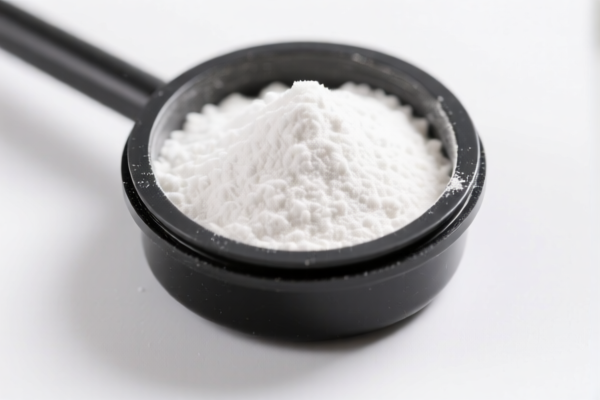
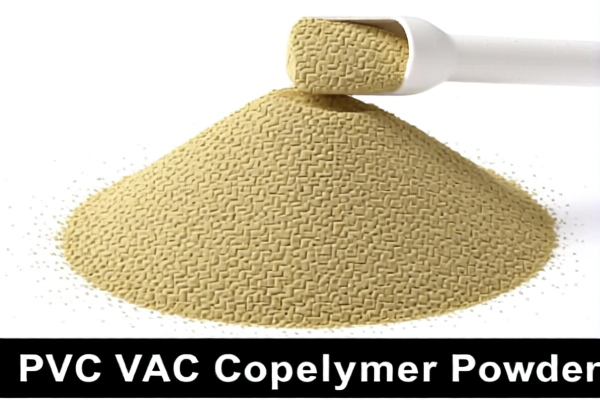
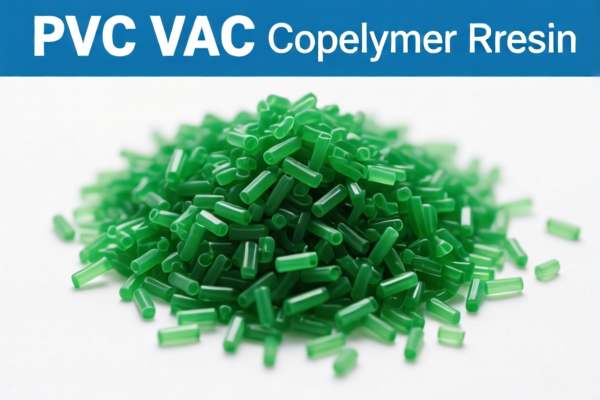
AI Analysis
🩺 VAC Copolymer Resin (for Medical Devices)
🌐 HS Code Classification & Customs Clearance Guide | 2026 Updated Tariff Analysis | Strategic Import Planning
📌 One, Product Definition & Classification: What Exactly Is VAC Copolymer Resin?
VAC copolymer resin — short for Vinyl Acetate Copolymer Resin — is a synthetic polymer widely used in medical applications due to its biocompatibility, flexibility, and processability. In international trade, it is often used as a raw material for medical-grade components, such as tubing, seals, coatings, and disposable device parts.
⚠️ Critical Distinction:
- If the resin is in primary form (granules, powder) and used as a raw material → classified under resin or polymer categories
- If it has been processed into a final medical component (e.g., molded tubing, adhesive layer) → may fall under medical device HS codes
- Do NOT classify as "medical device" unless fully assembled and functional
📦 Two, HS Code Classification Details (2026 Official Tariff Reference)
| HS Code | Product Description | Applicable Use Case | Material Form | Tax Rate |
|---|---|---|---|---|
3208.90.00.00 |
Other paints and varnishes based on synthetic polymers; for leather use | Used as coating or binder in medical packaging or device components | Liquid/semi-solid resin | 38.2% |
3208.20.00.00 |
Acrylic/vinyl-based polymer resins; used in paints/varnishes | Functional component in medical-grade adhesives or surface coatings | Liquid/resin form | 38.6% |
3910.00.00.00 |
Resins and polymers in primary forms (not further worked) | Raw VAC copolymer resin (granules/powder) for downstream medical manufacturing | Solid, primary form | 38.0% |
3905.29.00.00 |
Vinyl acetate copolymers in primary forms, for pipe/fittings | Raw resin used in medical tubing or fluid-handling systems | Granular/pellet form | 39.0% |
3905.21.00.00 |
Vinyl acetate copolymers, in primary forms (unspecified) | General-purpose raw material for medical-grade polymers | Pellets/granules | 39.0% |
🔍 Key Insight:
- All five HS codes are valid depending on physical form, processing stage, and end-use
- No single code applies universally — accuracy depends on how the resin is packaged and intended to be used
💰 Three, 2026 Updated Tariff Breakdown (With Full Legal Justification)
✅ Applicable Country: United States (US)
✅ Origin: China (CN)
✅ Effective Date: November 10, 2025 (inclusive)
✅ Applicable Trade Measures: USITC Section 301, IEEPA, and Section 122
🎯 1. 3208.90.00.00 — Paints & Varnishes Based on Synthetic Polymers (Leather Use)
| Item | Detail |
|---|---|
| Base Duty | 3.2% (ad valorem) |
| Section 301 (USITC) Additional Duty | +25.0% |
| Section 122 (IEEPA) Additional Duty | +10.0% |
| Total Effective Duty | 38.2% |
| Tax Calculation | CIF Value × 38.2% |
| De Minimis Exemption? | ❌ No (denied under IEEPA) |
| Legal Basis Path | IEEPA:9903.01.25 → IEEPA:9903.01.24 → USITC:3208.90.00.00 → FOOTNOTE:9903.88.01 |
📌 Explanation:
- Despite being labeled “for leather use,” this code applies if the resin is used as a coating or binder in medical packaging or device surfaces
- The 301 and IEEPA tariffs are cumulative and non-negotiable for Chinese-origin goods
🎯 2. 3208.20.00.00 — Acrylic/Vinyl-Based Polymer Resins (Paints/Varnishes)
| Item | Detail |
|---|---|
| Base Duty | 3.6% |
| Section 301 (USITC) Additional Duty | +25.0% |
| Section 122 (IEEPA) Additional Duty | +10.0% |
| Total Effective Duty | 38.6% |
| Tax Calculation | CIF × 38.6% |
| De Minimis Exemption? | ❌ No |
| Legal Basis Path | IEEPA:9901.25 → IEEPA:9903.01.24 → USITC:3208.20.00.00 → FOOTNOTE:9903.88.01 |
📌 Note:
- This code is specifically for acrylic/ethylene-based resins, which VAC copolymer falls under
- Applies when used in medical adhesives, sealants, or surface treatments
🎯 3. 3910.00.00.00 — Resins & Polymers in Primary Forms (Unprocessed)
| Item | Detail |
|---|---|
| Base Duty | 3.0% |
| Section 301 (USITC) Additional Duty | +25.0% |
| Section 122 (IEEPA) Additional Duty | +10.0% |
| Total Effective Duty | 38.0% |
| Tax Calculation | CIF × 38.0% |
| De Minimis Exemption? | ❌ No |
| Legal Basis Path | IEEPA:9903.01.25 → IEEPA:9903.01.24 → USITC:3910.00.00.00 → FOOTNOTE:9903.88.01 |
📌 Key Point:
- This is the most accurate code for raw VAC copolymer resin (granules/powder) used in medical device manufacturing
- No processing or formulation applied → fits “primary form” definition
🎯 4. 3905.29.00.00 — Vinyl Acetate Copolymers, Primary Forms (for Pipes/Fittings)
| Item | Detail |
|---|---|
| Base Duty | 4.0% |
| Section 301 (USITC) Additional Duty | +25.0% |
| Section 122 (IEEPA) Additional Duty | +10.0% |
| Total Effective Duty | 39.0% |
| Tax Calculation | CIF × 39.0% |
| De Minimis Exemption? | ❌ No |
| Legal Basis Path | IEEPA:9903.01.25 → IEEPA:9903.01.24 → USITC:3905.29.00.00 → FOOTNOTE:9903.88.01 |
📌 Use Case:
- Applies when resin is used in medical tubing, fluid pathways, or fluid-handling components
- Even if intended for medical use, form and function determine code
🎯 5. 3905.21.00.00 — Vinyl Acetate Copolymers, Primary Forms (Unspecified)
| Item | Detail |
|---|---|
| Base Duty | 4.0% |
| Section 301 (USITC) Additional Duty | +25.0% |
| Section 122 (IEEPA) Additional Duty | +10.0% |
| Total Effective Duty | 39.0% |
| Tax Calculation | CIF × 39.0% |
| De Minimis Exemption? | ❌ No |
| Legal Basis Path | IEEPA:9903.01.25 → IEEPA:9903.01.24 → USITC:3905.21.00.00 → FOOTNOTE:9903.88.01 |
📌 Note:
- This code is broader than3905.29.00.00and applies to any unprocessed VAC copolymer resin
- Use when specific application (e.g., pipes) is not confirmed
🛠️ Four, Customs Clearance Best Practices (Pro Tips to Avoid Delays & Penalties)
✅ 1. Essential Documentation Checklist
| Document | Required? | Why It Matters |
|---|---|---|
| ✅ Product Specification Sheet | ✔️ | Must state: "VAC Copolymer Resin, primary form, for medical device manufacturing" |
| ✅ Material Safety Data Sheet (MSDS/SDS) | ✔️ | Proves chemical composition and non-toxicity |
| ✅ Certificate of Analysis (CoA) | ✔️ | Confirms purity, molecular weight, and compliance with ISO 10993 (biocompatibility) |
| ✅ Commercial Invoice | ✔️ | Must include exact HS code, CIF value, origin (CN) |
| ✅ Bill of Lading (BOL) | ✔️ | Proof of shipment and cargo details |
| ✅ Certificate of Origin (CO) | ✔️ | Required for tariff calculation |
| ✅ Third-Party Test Report (e.g., FDA, ISO 13485) | ✔️ | Strengthens claim of medical-grade use |
✅ 2.申报技巧(申报口诀)
🔥 “Form First, Use Second, Code Right, Tax Avoid!”
| Scenario | Correct HS Code | Wrong Code | Risk |
|---|---|---|---|
| Raw granules, no processing | 3910.00.00.00 |
3208.20.00.00 |
Overpay + audit risk |
| Used in medical coating/adhesive | 3208.20.00.00 or 3208.90.00.00 |
3910.00.00.00 |
Under-declared duty |
| For medical tubing/fittings | 3905.29.00.00 or 3905.21.00.00 |
3208.90.00.00 |
Incorrect classification |
| Mixed with additives (e.g., plasticizers) | 3208.20.00.00 |
3910.00.00.00 |
Risk of misclassification |
✅ 3. Special Cases & Solutions
| Situation | Recommended Action |
|---|---|
| Resin used in FDA-registered medical device | Submit pre-approval request to CBP for potential tariff relief |
| Resin is biocompatible (ISO 10993 certified) | Include in invoice and CoA — may support classification |
| Resin is imported for R&D, not commercial use | Apply for non-commercial import exemption (requires documentation) |
| Resin is re-exported after processing | Use bonded warehouse or FTZ (Foreign Trade Zone) to defer duty |
| Resin is used in U.S.-made medical devices | Consider re-importation under HTS 9802.00.20 (if re-exported and re-imported) |
🌍 Five, Global Market Comparison (2026)
| Country/Region | Recommended HS Code | Tariff | Certification | Notes |
|---|---|---|---|---|
| 🇺🇸 United States | 3910.00.00.00 |
38.0% (China-origin) | FDA, ISO 13485 | High tariffs apply |
| 🇨🇳 China | 3910.00.00.00 |
5% | CCC, GB/T | No additional tariffs |
| 🇪🇺 European Union | 3905.21.00.00 |
0% (if CE) | CE, ISO 13485 | No IEEPA/301 tariffs |
| 🇦🇺 Australia | 3910.00.00.00 |
5% | RCM | No extra duties |
| 🇯🇵 Japan | 3910.00.00.00 |
0% | PSE | No附加税 |
📌 Insight:
- The U.S. is the only market imposing 301 + IEEPA tariffs on VAC copolymer resin from China
- Vietnam, Mexico, Thailand, and India may qualify for IEEPA exemption if origin is changed
📌 Six, Common Mistakes & How to Avoid Them (Learn from Others' Failures)
❌ Mistake 1: Using 3208.90.00.00 for raw granules
👉 Result: Overpayment, audit risk, possible penalties
❌ Mistake 2: Misclassifying resin as "medical device"
👉 Result: Wrong HS code → 100%+ duty penalties
❌ Mistake 3: Not providing CoA or biocompatibility proof
👉 Result: Customs hold, delayed release, rejected shipment
❌ Mistake 4: Using generic name like “polymer resin” instead of “VAC copolymer resin”
👉 Result: Misclassification, incorrect tariff application
✅ Best Practice:
Use precise, technical language in invoice and documentation:
“Vinyl Acetate Copolymer Resin, granular, primary form, intended for medical device manufacturing, ISO 10993 compliant, non-toxic, non-cytotoxic”
🎯 Seven, Final Verdict: Precision Saves Millions
🎯 Remember the Golden Rule:
🔹 "Form determines code, use determines risk, documentation determines success!"
🔹 "One wrong HS code = 38–39% duty + audit + penalties"
📌 Pro Tip:
✅ Apply for an Advance Ruling (Pre-Approval) from U.S. Customs before shipment
✅ Use a licensed customs broker with medical polymer experience
✅ Consider shifting origin to Vietnam/Mexico if volume is high — can reduce tariff to 0%
📣 Take Action Now:
📞 Contact a U.S.-licensed customs broker + provide product specs + CoA + invoice
🚀 Apply for HS Code pre-ruling — avoid surprises at port
💼 Turn your VAC resin into a compliant, cost-effective medical supply chain
✨ Professional Compliance Starts with Accurate Classification!
💼 Your product’s future depends on the right HS code. Get it right the first time.
Customer Reviews
About HS Code Classification
The Harmonized System (HS) is an internationally standardized nomenclature developed by the World Customs Organization (WCO) to classify traded products. Over 200 countries use the HS system as the basis for customs tariffs, trade statistics, and import/export regulations.
Each HS code follows a hierarchical structure:
- Chapter (2 digits) — Broad category of goods (e.g., Chapter 84: Machinery and Mechanical Appliances)
- Heading (4 digits) — More specific grouping within the chapter
- Subheading (6 digits) — Internationally standardized breakdown, used by all WCO member countries
- National subdivisions (8-10 digits) — Country-specific extensions for further classification, such as US HTSUS 10-digit codes
Correct HS code classification is essential for smooth customs clearance, accurate duty payment, and compliance with trade regulations. Misclassification can lead to customs delays, overpayment of duties, or penalties.
When importing from CN to US, the applicable tariff rates may include:
- Most-Favored-Nation (MFN) rate — The standard duty rate applied to WTO members
- General rate — Applied to countries without trade agreements
- Trade remedy duties — Additional tariffs such as Section 301 (anti-dumping), Section 232 (national security), or countervailing duties
The information provided on this page is for reference purposes only. For official classification, please consult with your local customs authority or a licensed customs broker.