Vacuum Cleaner Accessories Nozzle
CN → US| HS Code | Tariff Rate | Origin | Destination | Doc |
|---|---|---|---|---|
| 8508190000 | 35.0% | CN | US | Official Doc |
| 8508700000 | 85.0% | CN | US | Official Doc |
| 8421990180 | 35.0% | CN | US | Official Doc |
| 8421916000 | 35.0% | CN | US | Official Doc |
| 9603500000 | 17.5% | CN | US | Official Doc |
Product Images
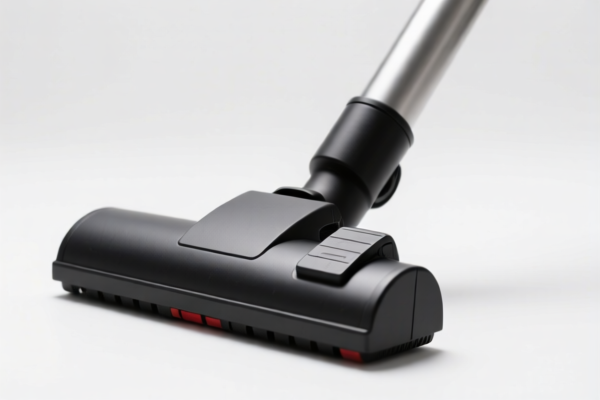
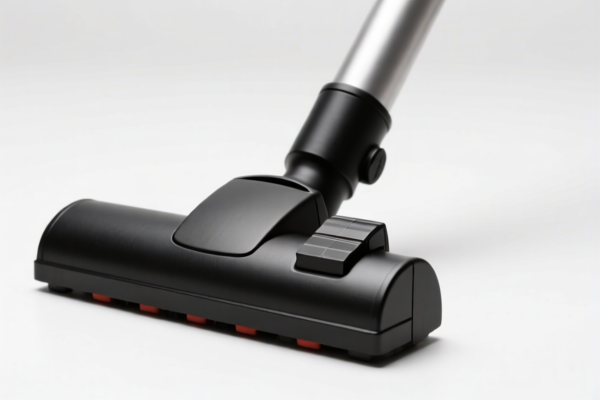
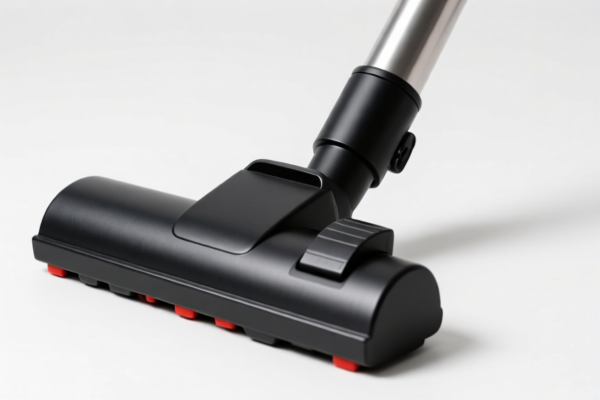
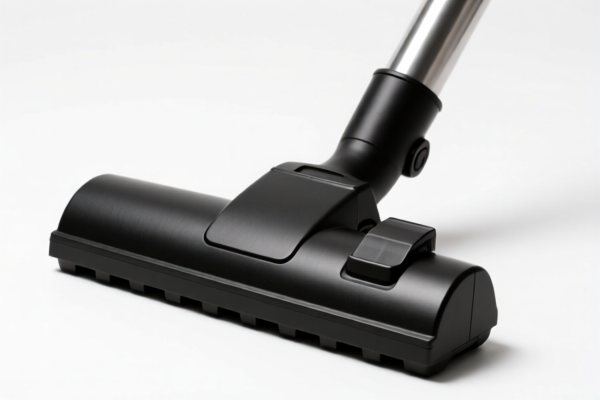
AI Analysis
🧹 Vacuum Cleaner Nozzles (Attachments)
🌐 HS Code Reference & Customs Clearance Guide | 2026 Latest Tariff Analysis | Professional-Level Clearance Strategy
📌 I. Product Definition & Classification: Do You Really Understand "Vacuum Cleaner Nozzles"?
Vacuum cleaner nozzles are essential accessories that serve as the interface between the vacuum body and the cleaning surface. They are critical for efficient dust collection, debris removal, and air filtration. In international trade, the classification of these nozzles is complex because they can be viewed as parts of a specific machine, mechanical components, or brushes, depending on their structure, function, and material composition.
⚠️ Key Classification Logic:
- If the nozzle is specifically designed for a vacuum cleaner and fits its hose/connection system → It is generally classified as a part/attachment of the vacuum cleaner (HS 8508).
- If the nozzle contains significant bristle structures and is primarily used for sweeping/scraping → It might be misclassified as a brush (HS 9603) or machine part (HS 8421).
- Crucial Distinction: The presence of "bristles" or "rollers" does not automatically make it a brush (HS 9603) if its primary function is vacuum attachment. However, customs authorities often scrutinize HS 9603 due to lower duty rates, leading to disputes.
📦 II. HS Code Classification Details (2026 Latest Tariff Authority Comparison)
Based on the provided data, here are the four potential HS Codes for vacuum cleaner nozzles, ranging from most appropriate to alternative interpretations:
| HS Code | Product Description | Applicable Scenario | Classification Logic |
|---|---|---|---|
8508.19.00.00 |
Parts of vacuum cleaners with self-contained electric motor (Other) | Standard suction nozzles, crevice tools, dusting brushes | ✅ Most Accurate: Classified as parts/attachments for vacuum cleaners. |
8508.70.00.00 |
Parts of vacuum cleaners (Other) | Non-electric nozzles, specialized attachments, or when specific subheadings don't apply | ✅ Accurate: General "parts" category for vacuum cleaners. |
8421.99.01.80 |
Parts of filtering or purifying machinery and apparatus (Other) | Nozzles considered as parts of gas filtration/purification systems | ⚠️ Alternative: Matches as a "part" of machinery if viewed broadly as air filtration components. |
9603.50.00.00 |
Brushes (Other, including brushes constituting parts of machines) | Nozzles with prominent bristle structures (e.g., stiff bristle floor nozzles) | ⚠️ Risky: Often used for nozzles with visible bristles, but may be rejected if primary function is vacuum attachment. |
🔍 Key Reminder:
- HS 8508.19.00.00 and 8508.70.00.00 are the most technically correct classifications for vacuum cleaner accessories.
- HS 9603.50.00.00 is frequently attempted by importers to reduce duties due to lower base taxes, but it carries high risk if the nozzle is not primarily a "brush" for manual sweeping.
- HS 8421 codes are used as "catch-all" parts for mechanical devices when vacuum-specific codes are disputed.
💰 III. 2026 Latest Tariff Rate Breakdown (Including Surtaxes & Policy Add-ons)
✅ Applicable Country: United States (US)
✅ Origin: China (CN)
✅ Effective Time: From November 10, 2025 (including subsequent imports)
🎯 1. 8508.19.00.00 & 8508.70.00.00 & 8421.99.01.80 & 8421.91.60.00 —— Vacuum Cleaner Parts & Machine Parts
These codes share similar tariff structures under current US trade policies for Chinese goods.
| Item | Content |
|---|---|
| Base Duty Rate | 0% (ad valorem) |
| USITC Section 301 Surtax | +25% (Based on USITC Footnotes related to Chapter 85/84 goods from China) |
| IEEPA Add-on Duty | +10% (Section 1223 Tariff, targeting Chinese products effective from Nov 2025) |
| Total Tariff Rate | 35.0% |
| Tax Calculation | CIF Value × 35% |
| De Minimis Exemption? | ❌ No (Denied under Section 321/De Minimis rules for Section 301/IEEPA goods) |
| Legal Basis Path | IEEPA:1223 → USITC:8508/8421 → FOOTNOTE:301 |
📌 Explanation:
- The 0% base rate applies to vacuum cleaner parts under HTSUS.
- The 25% Section 301 tariff is the standard surtax for many Chinese machinery/electrical parts.
- The 10% IEEPA (Section 1223) is a new/additional layer targeting specific Chinese imports, bringing the total to 35%.
- Total Cost Impact: High. Importers must factor in a 35% duty burden on the CIF value.
🎯 2. 9603.50.00.00 —— Brushes (Including Brush Parts)
This code is often sought after for its lower base duty, but it faces specific material-based surcharges.
| Item | Content |
|---|---|
| Base Duty Rate | 0% (ad valorem) |
| USITC Surtax | +7.5% (Section 301 applicable to certain brush categories) |
| IEEPA Add-on Duty | +10% (Section 1223 Tariff) |
| Metal Surcharge (Steel/Aluminum/Copper) | +50% (If the nozzle frame/construction is primarily made of steel, aluminum, or copper) |
| Total Tariff Rate | 17.5% (Non-metal) or 67.5% (Metal) |
| Tax Calculation | CIF Value × Total Rate |
| De Minimis Exemption? | ❌ No (Denied for Chinese-origin goods under these surtaxes) |
| Legal Basis Path | IEEPA:1223 → USITC:9603 → FOOTNOTE:Metal_Surcharge |
📌 Critical Warning:
- If your nozzle is made of plastic, the total tax is 17.5%.
- If your nozzle contains metal components (e.g., steel bristle cores, aluminum frames), the 50% metal surcharge may apply, pushing the total to 67.5% (0% + 7.5% + 10% + 50%).
- Risk: Customs may reject the 9603 classification if the item is deemed a "vacuum accessory" rather than a "brush," leading to reclassification to HS 8508 (35% tax) + penalties.
🛠️ IV. Customs Clearance Practical Advice (Pitfall Avoidance Guide)
✅ 1. Document Preparation Checklist (Mandatory)
| Document | Required | Description |
|---|---|---|
| ✅ Product Specification Sheet | ✔️ | Include dimensions, connection type (diameter), material (plastic/metal/bristle), and weight. |
| ✅ Product Photos (Clear) | ✔️ | Show the nozzle, bristles (if any), and connection interface. Highlight the brand/model. |
| ✅ Commercial Invoice | ✔️ | Must clearly state "Vacuum Cleaner Nozzle" or "Vacuum Cleaner Attachment." Avoid vague terms like "Cleaning Tool." |
| ✅ Packing List | ✔️ | List quantities and net/gross weights. |
| ✅ Material Declaration | ✔️ | Specify if the nozzle is plastic-only or contains metal components to avoid unexpected 50% surcharges. |
✅ 2. Declaration Tips (Key Mantras)
🔥 "Be Specific: 'Vacuum Cleaner Nozzle' not 'Brush'!"
| Scenario | Correct Declaration | Incorrect Practice |
|---|---|---|
| Standard Plastic Nozzle | HS 8508.19.00.00 or 8508.70.00.00 |
Declaring as HS 9603.50.00.00 → Risk of penalty + 35% vs 17.5% (if plastic) |
| Nozzle with Bristles | HS 8508.19.00.00 (if attached to vacuum) |
Declaring as HS 9603.50.00.00 → Only if primarily a manual brush; otherwise, high risk |
| Metal Frame Nozzle | HS 8508.xxxx |
Declaring as HS 9603.50.00.00 → Avoid due to 50% metal surcharge |
📌 Note:
- Declaring as HS 8508 is safer and more accurate for vacuum accessories.
- Declaring as HS 9603 is aggressive tax planning but requires proof that the item is primarily a "brush" and not a machine part.
- Never declare a vacuum nozzle as a "tool" or "cleaning device" without specifying its use as a vacuum attachment.
✅ 3. Special Case Handling
| Scenario | Handling Advice |
|---|---|
| OEM Custom Nozzles | Provide customer design drawings to prove specific fitment with vacuum models. |
| Mixed Material Nozzles | Clearly declare material composition. If >50% metal, anticipate potential 50% surcharge under HS 9603. |
| Nozzles for Industrial Vacuums | Still falls under HS 8508 if it's a part of a vacuum system. Do not misclassify as industrial machinery parts unless it's a standalone filtration unit. |
| Nozzles with Electrical Components | If the nozzle has a motorized brush roll, it may be considered part of the vacuum cleaner (HS 8508). If self-contained, it might be a separate appliance. |
🌍 V. Global Market Customs Comparison (2026 Latest)
| Country/Region | Recommended HS Code | Tariff (China Origin) | Certification Requirements | Remarks |
|---|---|---|---|---|
| 🇺🇸 USA | 8508.19.00.00 / 8508.70.00.00 |
35% (301 + IEEPA) | FCC (if electronic parts) | High duty; avoid HS 9603 unless plastic-only and well-justified. |
| 🇨🇳 China | 8508.19.00.00 |
0% - 5% | CCC (if electrical) | No surtaxes; low duty for imports into China. |
| 🇪🇺 EU | 8508.70.00.00 |
0% (Under Taric) | CE + RoHS | No Section 301/IEEPA; standard EU duties apply. |
| 🇬🇧 UK | 8508.70.00.00 |
0% - 4% | UKCA + RoHS | Post-Brexit tariffs; generally low. |
| 🇯🇵 Japan | 8508.70.00.00 |
0% - 3.2% | PSE (if electrical) | Low duties; no US-style surtaxes. |
📌 Conclusion:
- The US market imposes the highest barrier due to 35% total duty.
- EU/UK/Japan have significantly lower duties, making export to these markets more cost-effective for vacuum accessories.
- Strategy: If exporting to the US, ensure accurate classification under HS 8508 to avoid delays. If plastic-only, consider HS 9603 with strong justification, but be prepared for disputes.
📌 VI. Common Errors & Pitfall Guide (Blood-Teaching Lessons)
❌ Error 1: Declaring "Vacuum Nozzle" as "Brush" (HS 9603) without plastic-only proof
👉 Consequence: Customs may reject the classification, reclassify to HS 8508 (35% tax), and impose fines.
✅ Fix: Use "Vacuum Cleaner Attachment" in description. Provide material declaration.
❌ Error 2: Ignoring Metal Components
👉 Consequence: If HS 9603 is used and metal is found, the 50% metal surcharge applies, raising tax to 67.5%.
✅ Fix: Declare "Plastic" if no metal. If metal is present, use HS 8508 (35%) or prepare for higher HS 9603 tax.
❌ Error 3: Vague Description "Cleaning Tool"
👉 Consequence: Customs inspection delay; potential reclassification to higher duty items.
✅ Fix: Use specific terms: "Plastic Vacuum Cleaner Nozzle for Model XYZ."
❌ Error 4: Splitting Shipment to Avoid Thresholds
👉 Consequence: Violation of de minimis rules; shipment held for inspection.
✅ Fix: Declare accurately. No de minimis exemption for Section 301/IEEPA goods.
🎯 VII. Conclusion: Professional Declaration, Cost Control, Efficiency!
🎯 Remember the Mantra:
🔹 "Vacuum Parts go to 8508, Brushes to 9603, Check Metal! 35% is the US Standard, 67.5% is the Metal Trap!"
🔹 "Accurate Description Saves Time, Wrong Code Costs Money!"
📌 Pro Tip:
- For US imports, if the nozzle is 100% plastic, HS 9603 (17.5%) is cheaper than HS 8508 (35%). However, you must provide strong evidence that it is classified as a brush, not a machine part.
- If the nozzle is metal or mixed, HS 8508 (35%) is safer than HS 9603 (67.5%).
- Always apply for an Advance Ruling from US Customs if the classification is ambiguous.
📣 Take Action Now:
📞 Consult with a professional customs broker.
📦 Provide clear product photos and material specs.
🚀 Ensure smooth clearance, minimize costs, and maximize profit!
✨ Professional Clearance Starts with Accurate Classification!
💼 Every cent of duty matters!
Customer Reviews
About HS Code Classification
The Harmonized System (HS) is an internationally standardized nomenclature developed by the World Customs Organization (WCO) to classify traded products. Over 200 countries use the HS system as the basis for customs tariffs, trade statistics, and import/export regulations.
Each HS code follows a hierarchical structure:
- Chapter (2 digits) — Broad category of goods (e.g., Chapter 84: Machinery and Mechanical Appliances)
- Heading (4 digits) — More specific grouping within the chapter
- Subheading (6 digits) — Internationally standardized breakdown, used by all WCO member countries
- National subdivisions (8-10 digits) — Country-specific extensions for further classification, such as US HTSUS 10-digit codes
Correct HS code classification is essential for smooth customs clearance, accurate duty payment, and compliance with trade regulations. Misclassification can lead to customs delays, overpayment of duties, or penalties.
When importing from CN to US, the applicable tariff rates may include:
- Most-Favored-Nation (MFN) rate — The standard duty rate applied to WTO members
- General rate — Applied to countries without trade agreements
- Trade remedy duties — Additional tariffs such as Section 301 (anti-dumping), Section 232 (national security), or countervailing duties
The information provided on this page is for reference purposes only. For official classification, please consult with your local customs authority or a licensed customs broker.