Vacuum Cleaner Filter
CN → US| HS Code | Tariff Rate | Origin | Destination | Doc |
|---|---|---|---|---|
| 8421990180 | 35.0% | CN | US | Official Doc |
| 5911400100 | 43.0% | CN | US | Official Doc |
| 8421290065 | 35.0% | CN | US | Official Doc |
| 5911900080 | 38.8% | CN | US | Official Doc |
| 8508700000 | 85.0% | CN | US | Official Doc |
Product Images
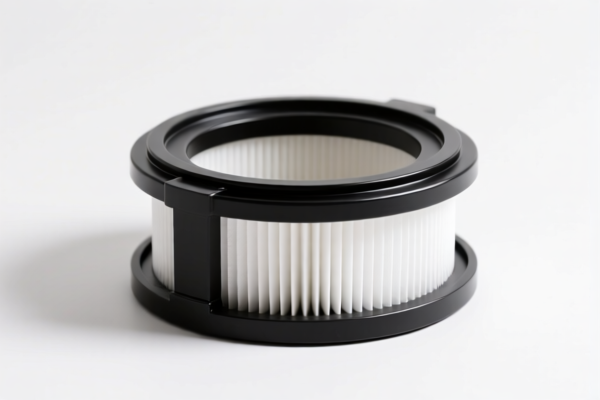
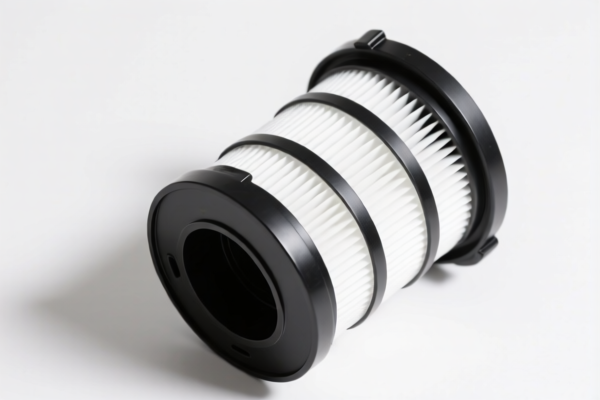
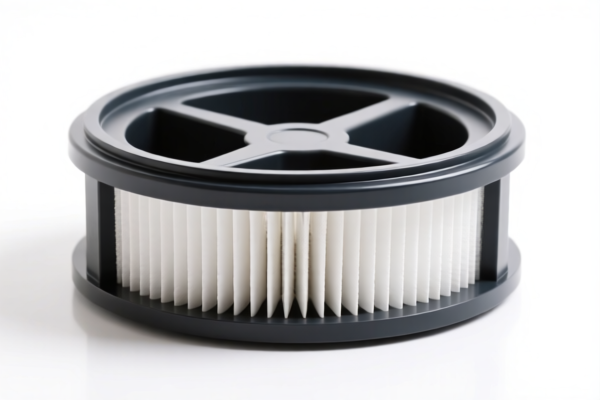
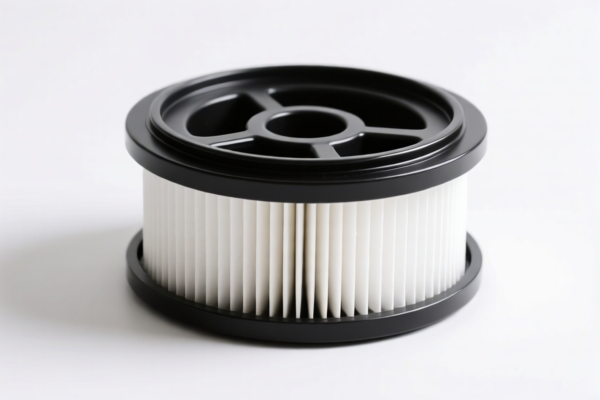
AI Analysis
🧹 Vacuum Cleaner Filter (Vacuum Filter)
🌐 HS Code Reference & Customs Clearance Guide | 2026 Latest Tariff Analysis | Professional Clearance Strategy
📌 I. Product Definition & Classification: Do You Really Understand the "Vacuum Filter"?
The vacuum filter is a critical component of vacuum cleaners and industrial filtration systems. In international trade, its classification depends heavily on material composition, intended use, and specific application context. It is generally categorized into two main types:
1. Mechanical/Industrial Filter Parts (Non-textile)
These are filters made of synthetic materials (plastic, metal mesh, paper) used in centrifuges, industrial purification equipment, or specific mechanical systems. They are classified under machinery parts.
2. Textile-Based Filtration Media
These are filters made from woven fabrics, non-wovens, or specific fiber materials used in vacuum systems or technical filtration applications. They are classified under textile products for technical uses.
⚠️ Key Distinction Point:
- If the filter is a specific part of a vacuum cleaner (OEM part) → It may fall under Vacuum Cleaner Parts (8508).
- If the filter is a general-purpose filtration medium made of textile/fiber → It may fall under Textile Products (5911).
- If the filter is a mechanical component for industrial separation/purification → It may fall under Machinery Parts (8421).
📦 II. HS Code Classification Details (2026 Latest Tariff Authoritative Comparison)
| HS Code | Product Description | Application Scenario | Material/Logic | Total Tax Rate (China Origin to US) |
|---|---|---|---|---|
8508.70.00.00 |
Parts and accessories of vacuum cleaners | Vacuum cleaner filters (OEM parts) | Specific part of appliance | 85.0% |
8421.99.01.80 |
Parts of centrifuges and other machinery for filtering/purifying | Industrial vacuum filters for centrifuges/purification | Mechanical part for purification machinery | 35.0% |
8421.29.00.65 |
Parts of liquid/gas filtering apparatus | General industrial filter parts | Parts for filtering/purifying machines | 35.0% |
5911.40.01.00 |
Textile fabrics and products for technical uses (filter cloth) | Vacuum filters as textile filtering media | Technical textile/filter cloth | 43.0% |
5911.90.00.80 |
Other technical textile products | Vacuum filters made of fibers/textiles (General category) | Technical textile (General) | 38.8% |
🔍 Key Reminder:
- Vacuum Cleaner Specific Parts (8508.70.00.00) carry the highest tax burden (85%).
- Industrial/Mechanical Filters (8421.xx) offer a moderate burden (35%).
- Textile-based Filters (5911.xx) offer a variable burden (38.8% - 43%).
- Misclassification Risk: Declaring a mechanical filter as a textile product (or vice versa) can lead to customs audits, penalties, or retroactive duty payments.
💰 III. 2026 Latest Tariff Rate Breakdown (Including Additional Duties & Policy Surcharges)
✅ Applicable Country: United States (US)
✅ Country of Origin: China (CN)
✅ Effective Date: From November 10, 2025 (and subsequent imports)
🎯 1. 8508.70.00.00 —— Parts of Vacuum Cleaners (Highest Risk)
| Item | Detail |
|---|---|
| Base Tariff | 0% (ad valorem) |
| USITC Additional Duty | +25% (Under USITC Footnote related to Section 301) |
| IEEPA Additional Duty | +10% (China/HK specific, effective Nov 10, 2025) |
| Steel/Aluminum/Copper Surcharge | +50% (If components contain these materials) |
| Total Tariff | 85.0% |
| Tax Calculation | CIF Value × 85% |
| De Minimis Exemption? | ❌ Not Eligible (deny_de_minimis) |
| Legal Basis Path | IEEPA:9903.01.25 → IEEPA:9903.01.24 → USITC:8508.70.00.00 → Footnote: Steel/Al/Cu Surcharge |
📌 Explanation:
- This is the most expensive classification.
- The 85% rate includes the base 0%, Section 301 duty (25%), IEEPA duty (10%), and a potential 50% surcharge if the filter housing or support structure contains steel, aluminum, or copper components.
- Critical: Even if the filter media is fabric, if it is declared as a "part of a vacuum cleaner," this high rate applies.
🎯 2. 8421.99.01.80 & 8421.29.00.65 —— Parts of Filtering Machinery (Industrial Use)
| Item | Detail |
|---|---|
| Base Tariff | 0% |
| USITC Additional Duty | +25% |
| IEEPA Additional Duty | +10% |
| Total Tariff | 35.0% |
| Tax Calculation | CIF Value × 35% |
| De Minimis Exemption? | ❌ Not Eligible |
| Legal Basis Path | IEEPA:9903.01.24 → USITC:8421.99.01.80 / 8421.29.00.65 |
📌 Note:
- These codes apply if the filter is used in centrifuges, industrial purifiers, or liquid/gas filtering apparatus.
- Strategy: If you can prove the filter is for industrial machinery (not home vacuums), the tax drops from 85% to 35%.
- Documentation: Must provide evidence of use in industrial machinery (e.g., compatibility with centrifuges, filtration systems).
🎯 3. 5911.40.01.00 & 5911.90.00.80 —— Technical Textile Products
| Item | Detail |
|---|---|
| Base Tariff | 3.8% - 8.0% |
| USITC Additional Duty | +25% |
| IEEPA Additional Duty | +10% |
| Total Tariff | 38.8% - 43.0% |
| Tax Calculation | CIF Value × (38.8% or 43.0%) |
| De Minimis Exemption? | ❌ Not Eligible |
| Legal Basis Path | IEEPA:9903.01.24 → USITC:5911.40.01.00 / 5911.90.00.80 |
📌 Note:
-5911.40.01.00(43.0%): Specifically for "filter cloth/screen cloth" used in technical applications.
-5911.90.00.80(38.8%): General "other technical textile products."
- Strategy: If the filter is primarily made of textile/fiber and not a complex mechanical assembly, declaring it as a textile product can be cheaper than the vacuum cleaner part code.
- Requirement: Must prove the material is textile (woven/non-woven) and used for technical filtration.
🛠️ IV. Customs Clearance Practical Advice (Avoid Pitfalls)
✅ 1. Preparation Checklist (All Must-Provides)
| Document | Required | Explanation |
|---|---|---|
| ✅ Product Specification Sheet | ✔️ | Must specify material (e.g., polyester, PP, metal mesh), pore size, dimensions. |
| ✅ Material Composition Report | ✔️ | Crucial to distinguish between "Textile" (5911) and "Mechanical Part" (8421/8508). |
| ✅ Product Photos | ✔️ | Clear images of the filter, including labels and mounting structures. |
| ✅ Commercial Invoice | ✔️ | Must clearly state the intended use (e.g., "Industrial Filter for Centrifuge" vs. "Vacuum Cleaner Part"). |
| ✅ Packing List | ✔️ | Separate packaging if different HS codes are used. |
| ✅ Certification | ✔️ | RoHS, REACH, or other material safety certificates if required by the destination. |
✅ 2. Declaration Strategy (Key Mantras)
🔥 “Material Defines Code, Use Determines Tax, Be Precise or Pay Penalty!”
| Scenario | Correct Declaration | Wrong Practice | Result |
|---|---|---|---|
| Filter made of textile/fiber | 5911.40.01.00 or 5911.90.00.80 |
Declaring as "Vacuum Cleaner Part" | Tax 38.8%-43% vs 85% |
| Filter for industrial centrifuge | 8421.99.01.80 or 8421.29.00.65 |
Declaring as "Home Appliance Part" | Tax 35% vs 85% |
| Filter for Home Vacuum Cleaner | 8508.70.00.00 |
Trying to misclassify as textile | Audit Risk + 85% Tax |
| Filter with Metal Support Frame | Check for Steel/Al/Cu Surcharge | Ignoring metal components | +50% Surcharge |
📌 Critical Tip:
- If the filter is purely textile (e.g., a bag or pleated paper-like filter), lean towards 5911.
- If it has a rigid plastic/metal frame and is designed specifically for a vacuum cleaner motor, it is likely 8508.
- If it is for industrial separation, use 8421.
✅ 3. Special Cases & Handling
| Situation | Handling Advice |
|---|---|
| OEM Replacement Filter | Provide the original vacuum cleaner model. If it’s a direct replacement part, 8508.70.00.00 is likely. |
| Generic Industrial Filter | Provide compatibility list (e.g., "Compatible with XYZ Centrifuge"). Use 8421 codes. |
| Multi-Material Filter | If it contains steel/aluminum/copper in the frame, expect the +50% surcharge if classified under 8508. |
| Pre-Clearance Ruling | Highly recommended for high-volume shipments. Apply for an Advance Ruling to confirm HS Code. |
🌍 V. Global Market Comparison (2026 Latest)
| Country/Region | Recommended HS Code | Tariff (China Origin) | Certification | Notes |
|---|---|---|---|---|
| 🇺🇸 USA | 8508.70.00.00 / 5911.xx / 8421.xx |
35% - 85% | N/A | High duty risk. Misclassification is costly. |
| 🇨🇳 China | 8508.70.00.00 / 5911.xx |
~5% - 8% | CCC (if applicable) | Low tariff. Focus on domestic standards. |
| 🇪🇺 EU | 8508.70.00.00 / 5911.xx |
0% - 4% | CE, RoHS | Lower duty. Focus on environmental standards. |
| 🇦🇺 Australia | 8508.70.00.00 |
5% | RCM | Moderate duty. |
| 🇯🇵 Japan | 8508.70.00.00 |
0% - 3% | PSE | Low duty. |
📌 Conclusion:
- The USA is the most challenging market for vacuum filters due to high additional duties.
- Optimization Strategy: If possible, design filters to be classified under 5911 (Textile) or 8421 (Industrial) rather than 8508 (Appliance Part) to save 42-50% in duties.
- Supply Chain: Consider sourcing from or assembling in countries with IEEPA exemptions (e.g., Vietnam, Mexico) if targeting the US market.
📌 VI. Common Mistakes & Pitfalls (Lessons Learned)
❌ Mistake 1: Declaring a textile filter as a "Vacuum Cleaner Part"
👉 Consequence: Tax jumps from 38.8% to 85%. Huge cost increase!
❌ Mistake 2: Ignoring the Steel/Aluminum/Copper Surcharge
👉 Consequence: If the filter has a metal frame and is classified under 8508, an additional 50% is applied. Total 85% + 50%? (Check current regulations, but high risk of penalty).
❌ Mistake 3: Providing vague descriptions like "Filter"
👉 Consequence: Customs delays, audits, and potential misclassification. Always specify material and use.
❌ Mistake 4: Using "Household" vs "Industrial" interchangeably
👉 Consequence: Misleading customs. If it’s for industrial use, declare it as such to qualify for 8421 codes.
✅ Correct Approach:
"Pleated Synthetic Filter Media, Polyester, For Industrial Vacuum System, Model XYZ, No Electrical Components"
vs.
"Replacement HEPA Filter for Home Vacuum Cleaner, Model ABC, Compatible with Brand XYZ"
🎯 VII. Conclusion: Precise Classification Saves Money!
🎯 Remember the Mantra:
🔹 "Material Matters: Textile? 5911. Mechanical? 8421. Appliance Part? 8508."
🔹 "35% vs 85%: One Word Difference 'Industrial' vs 'Vacuum Cleaner' Can Save You Half the Tax!"
🔹 "Metal Frame? Watch the +50% Surcharge!"
📌 Pro Tip:
- If your vacuum filters are made of non-woven fabric, consider declaring under 5911.90.00.80 (38.8%) instead of 8508.70.00.00 (85%) to save ~46%.
- Always apply for an Advance Ruling from US Customs and Border Protection (CBP) if you are unsure.
- For US imports, avoid de minimis claims; declare properly with full documentation.
📣 Immediate Action:
📞 Consult with a licensed customs broker.
📄 Provide material specs and intended use.
🚀 Classify correctly, clear customs smoothly, and maximize your profit margins!
✨ Professional Clearance Starts with Accurate Classification!
💼 Every Dollar of Tax Saved is Profit Gained!
Customer Reviews
About HS Code Classification
The Harmonized System (HS) is an internationally standardized nomenclature developed by the World Customs Organization (WCO) to classify traded products. Over 200 countries use the HS system as the basis for customs tariffs, trade statistics, and import/export regulations.
Each HS code follows a hierarchical structure:
- Chapter (2 digits) — Broad category of goods (e.g., Chapter 84: Machinery and Mechanical Appliances)
- Heading (4 digits) — More specific grouping within the chapter
- Subheading (6 digits) — Internationally standardized breakdown, used by all WCO member countries
- National subdivisions (8-10 digits) — Country-specific extensions for further classification, such as US HTSUS 10-digit codes
Correct HS code classification is essential for smooth customs clearance, accurate duty payment, and compliance with trade regulations. Misclassification can lead to customs delays, overpayment of duties, or penalties.
When importing from CN to US, the applicable tariff rates may include:
- Most-Favored-Nation (MFN) rate — The standard duty rate applied to WTO members
- General rate — Applied to countries without trade agreements
- Trade remedy duties — Additional tariffs such as Section 301 (anti-dumping), Section 232 (national security), or countervailing duties
The information provided on this page is for reference purposes only. For official classification, please consult with your local customs authority or a licensed customs broker.