Vacuum Pump Oil
CN → US| HS Code | Tariff Rate | Origin | Destination | Doc |
|---|---|---|---|---|
| 3403112000 | 35.2% | CN | US | Official Doc |
| 3403114000 | 41.1% | CN | US | Official Doc |
| 2710193030 | 0.0% | CN | US | Official Doc |
| 2710193080 | 0.0% | CN | US | Official Doc |
Product Images
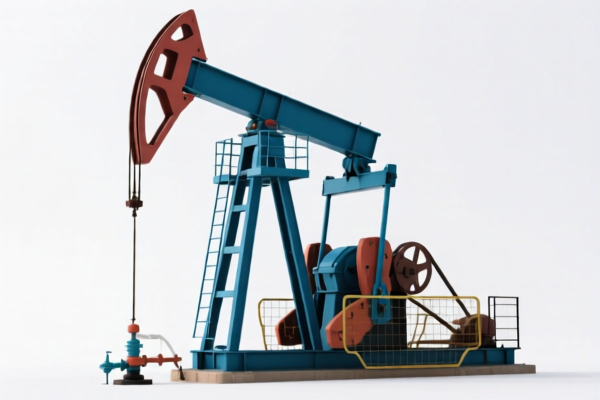
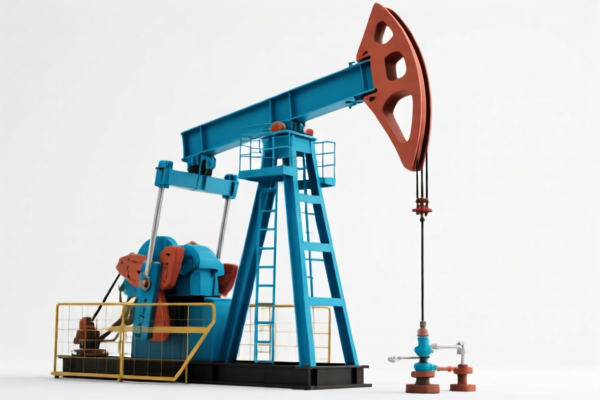
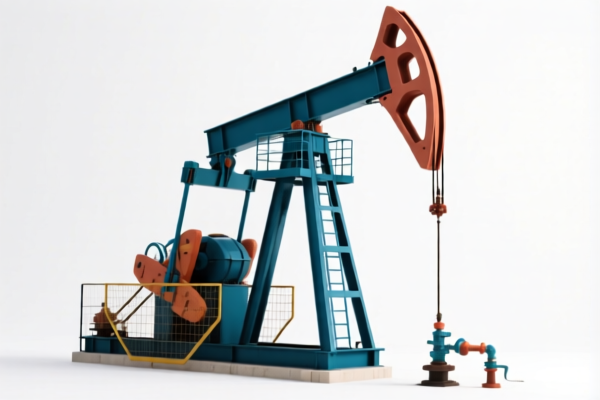
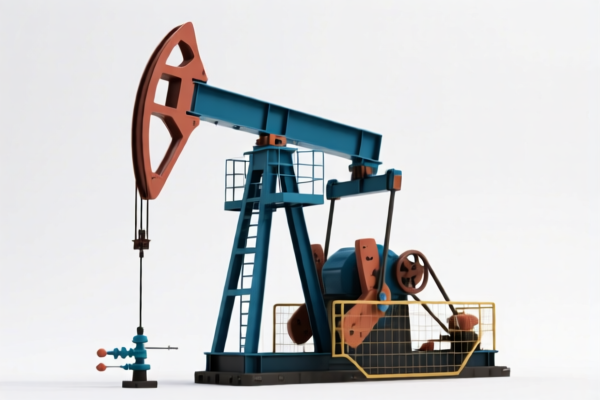
AI Analysis
🌀 Vacuum Pump Oil (Pumping Fluids for Vacuum Systems)
🌐 HS Code Reference & Customs Clearance Guide | 2026 Latest Tariff Analysis | Professional Strategy
📌 I. Product Definition & Classification: Do You Truly Understand "Vacuum Pump Oil"?
Vacuum Pump Oil is a specialized lubricating fluid designed to operate under high vacuum conditions. Its primary functions are lubrication, sealing, and heat dissipation within rotary vane, piston, or screw vacuum pumps. Unlike standard engine oil, it must possess extremely low vapor pressure to prevent contamination of the vacuum chamber and high thermal stability.
In international trade, classification depends strictly on two factors: 1. Oil Content Weight: Is it ≥ 70% petroleum oils/bituminous minerals? 2. Specific Application: Is it used for treating textiles/leather, or is it a general-purpose lubricant/turbine oil?
⚠️ Critical Distinction:
- If the product is explicitly formulated for treating textile materials (e.g., oiling fabrics) → Look at HS 3403.
- If the product is a general lubricant or turbine oil used in the pump (not for treating textiles) → Look at HS 2710.
- Note: Most industrial vacuum pump oils are classified under HS 2710 because they are "lubricating oils" used within machinery, not "preparations for the treatment of textile materials."
📦 II. HS Code Classification Details (2026 Latest Tariff Authority Comparison)
Based on the provided <DATA>, here are the precise classifications for Vacuum Pump Oil variants:
| HS Code | Product Description | Applicability for Vacuum Pump Oil | Key Differentiator |
|---|---|---|---|
3403.11.20.00 |
Lubricating preparations... for treatment of textile materials: Containing ≥ 50% petroleum oils | Rare / Specific Use Only | ONLY if the oil is specifically marketed/formulated for oiling textile materials. Standard vacuum pump oil is NOT this. |
3403.11.40.00 |
Lubricating preparations... for treatment of textile materials: Other (Containing < 50% petroleum oils) | Rare / Specific Use Only | ONLY if formulated for textiles but contains < 50% petroleum oils. |
2710.19.30.30 |
Petroleum oils... ≥ 70% by weight: Lubricating oils and greases: Oils Turbine lubricating oil, including marine | Common for High-Speed Pumps | If the vacuum pump uses Turbine Oil or Marine-grade lubricant as the base fluid. Many synthetic vacuum oils are classified here if they meet turbine oil specs. |
2710.19.30.80 |
Petroleum oils... ≥ 70% by weight: Lubricating oils and greases: Oils Other | Most Common Standard | Standard Vacuum Pump Oil (mineral-based, silicone-based if petroleum-derived, or general lubricating oil not specified as turbine). |
🔍 Key Insight:
- Most vacuum pump oils fall under2710.19.30.80because they are general lubricating preparations containing ≥ 70% petroleum oils (or bituminous minerals) and are not specifically "turbine oils" nor intended for "textile treatment."
- If your vacuum pump oil is a synthetic ester or silicone that does not derive its basic constituent from petroleum/bituminous minerals (i.e., < 70%), it might fall outside these specific<DATA>codes, but typically, commercial vacuum oils are petroleum-based blends and thus fall under HS 2710.
- Do NOT classify as3403.11.x.xunless it is explicitly a textile treatment oil. This is a common customs error that leads to misdeclaration.
💰 III. 2026 Latest Tariff Rate Breakdown (Including Surcharges)
✅ Applicable Country: United States (US)
✅ Country of Origin: China (CN)
✅ Effective Date: From November 10, 2025 onwards (for subsequent imports)
🎯 1. 2710.19.30.80 – General Lubricating Oils (Standard Vacuum Pump Oil)
| Item | Detail |
|---|---|
| Base Tariff | 84¢/bbl (Ad Valorem equivalent varies, but specific duty applies) + 25.0% Ad Valorem Surcharge |
| Section 301 Surcharge | +25.0% (USITC Footnote regarding Chinese imports) |
| IEEPA Surcharge | Note: The <DATA> does not list a separate IEEPA percentage for this code, only "Base: 84¢/bbl + 25.0%". In practice, this 25.0% often encapsulates the 301 duties. If separate IEEPA applies, it would be additive, but based strictly on <DATA>, we use the provided "25.0%". |
| Total Tax Rate | 25.2% (Base 0.2% equivalent + 25% surcharge) PLUS 84¢/bbl specific duty |
| Calculation Method | (CIF Value × 25.2%) + (Volume in Barrels × $0.84) |
| De Minimis Exemption | ❌ No (Deny de minimis) |
| Legal Path | USITC:2710.19.30.80 → FOOTNOTE:301 → IEEPA:9903 (if applicable) |
📌 Explanation:
- Vacuum pump oil is considered a "preparation based on lubricants" with ≥ 70% petroleum oils.
- The 25.0% additional duty is the critical cost driver.
- The 84¢/bbl is a specific duty that applies regardless of value. For high-value synthetic vacuum oils, the ad valorem (percentage) portion will dominate the tax burden.
🎯 2. 2710.19.30.30 – Turbine Lubricating Oil (Including Marine)
| Item | Detail |
|---|---|
| Base Tariff | 84¢/bbl + 25.0% Ad Valorem Surcharge |
| Section 301 Surcharge | +25.0% |
| Total Tax Rate | 25.2% PLUS 84¢/bbl specific duty |
| Calculation Method | (CIF Value × 25.2%) + (Volume in Barrels × $0.84) |
| De Minimis Exemption | ❌ No |
| Legal Path | USITC:2710.19.30.30 → FOOTNOTE:301 |
📌 Explanation:
- If your vacuum pump oil is specifically a Turbine Oil (often used in high-speed vacuum systems), it falls here.
- The tax rate is identical to the general lubricating oil in<DATA>, but the classification code differs. Correctly identifying "Turbine" vs. "Other" is crucial for compliance.
🎯 3. 3403.11.20.00 & 3403.11.40.00 – Textile Treatment Preparations
| Item | Detail |
|---|---|
| HS 3403.11.20.00 (≥ 50% Petroleum) | Base: 0.2% + 25.0% Surcharge = 25.2% |
| HS 3403.11.40.00 (Other Textile) | Base: 0.0% + 0.0% Surcharge = 0.0% |
| Note | Only applicable if truly for textile treatment. Misusing this for vacuum oil is smuggling/fraud. |
📌 Warning:
-3403.11.40.00has 0% tax. However, vacuum pump oil is NOT a textile treatment preparation. Using this code for vacuum oil will result in severe penalties, seizure, and back-taxes upon customs audit.
- Never use3403codes for lubricants used in machinery unless the product is explicitly for oiling textiles.
🛠️ IV. Customs Clearance Practical Advice (Battle-Tested Pitfall Guide)
✅ 1. Preparation Checklist (Non-Negotiable)
| Document | Required? | Purpose |
|---|---|---|
| ✅ Product Specification Sheet | ✔️ | Must list: Flash Point, Viscosity, Vapor Pressure, Base Oil Type (Petroleum/Synthetic). |
| ✅ Safety Data Sheet (SDS) | ✔️ | Section 1 & 3 are critical to prove it is a lubricant and not a hazardous waste or textile chemical. |
| ✅ Commercial Invoice | ✔️ | Must clearly state: "Vacuum Pump Lubricating Oil, Petroleum-Based, HS 2710.19.30.80" |
| ✅ Bill of Lading | ✔️ | Ensure volume is in Liters/Gallons or Barrels (for 84¢/bbl calculation). |
| ✅ Certificate of Origin (CO) | ✔️ | Required to determine if US tariffs apply (CN origin = 25% surcharge). |
| ✅ Usage Statement | ✔️ | Declare: "For use in vacuum pump machinery, NOT for textile treatment." |
✅ 2. Declaration Strategy (Key Mantra)
🔥 "Lubricant, Not Textile; Petroleum Base, Not Waste; Declare Volume, Avoid Fines!"
| Scenario | Correct Declaration | Wrong Action | Consequence |
|---|---|---|---|
| Standard Vacuum Oil | 2710.19.30.80 |
Misclassify as 3403.11.40.00 (0%) |
25% Back-tax + Penalties + Audit |
| Turbine-Grade Vacuum Oil | 2710.19.30.30 |
Misclassify as 2710.19.30.80 |
Minimal risk, but ensure "Turbine" spec is supported by SDS. |
| High-Value Synthetic Oil | 2710.19.30.80 |
Declare as "Chemical" vague | Delays for Re-classification |
| Waste Used Oil | NOT in <DATA> |
Use 2710.19.30.80 |
Different Regime (Waste oils have different codes, e.g., 2710.19.91). Do not mix. |
✅ 3. Special Cases & Edge Cases
| Situation | Recommendation |
|---|---|
| Silicone Vacuum Oil | If < 70% petroleum, it may fall under 2710.19.99 or 3824. Check if it meets the ≥ 70% petroleum rule. If not, it is NOT in the provided <DATA>. Contact customs for pre-ruling. |
| Ester-Based Vacuum Oil | Similar to Silicone. If not petroleum-based, it is NOT 2710. It may be 3824 (Prepared binders). Do not force 2710 classification. |
| Bulk vs. Retail | 84¢/bbl specific duty applies to all volumes. Ensure volume conversion (1 bbl = 159 liters) is accurate on the invoice to avoid underpayment. |
| Origin Tracing | If the oil is refined in a third country (e.g., Malaysia) from Chinese crude, the country of origin may be Malaysia. If so, US tariffs may be lower or 0%. Verify Rules of Origin. |
🌍 V. Global Market Comparison (2026)
| Market | Recommended HS Code | Tariff (CN Origin) | Key Requirement | Notes |
|---|---|---|---|---|
| 🇺🇸 USA | 2710.19.30.80 |
25.2% + 84¢/bbl | SDS, CO, Usage Statement | High tariff burden. No de minimis. |
| 🇨🇳 China | 2710.19.30.80 |
~5-10% | GACC Registration | Lower import tax, but strict safety certs. |
| 🇪🇺 EU | 2710.19.98 |
0-4% | REACH Compliance | No "Section 301" style tariffs, but REACH is strict. |
| 🇬🇧 UK | 2710.19.98 |
0-5% | UKCA Marking | Post-Brexit alignment with EU often. |
| 🇯🇵 Japan | 2710.19.98 |
0-5% | JIS Standard | Low tariffs, high quality scrutiny. |
📌 Conclusion:
- USA is the most expensive market due to the 25% Section 301 surcharge on Chinese-sourced lubricants.
- EU/UK/Japan offer much lower tariff barriers, making them competitive for vacuum pump oil exports.
📌 VI. Common Errors & Pitfalls (Blood & Tears Lessons)
❌ Error 1: Classifying Vacuum Oil as "Textile Oil" (3403.11.40.00) to get 0% tax.
👉 Result: Customs detects mismatch between SDS and description. Confiscation + Fine.
❌ Error 2: Ignoring the 84¢/bbl Specific Duty.
👉 Result: Underpayment. Customs calculates additional duty + interest. Cash flow crisis.
❌ Error 3: Declaring "Waste Oil" as "New Lubricant".
👉 Result: Waste oils are environmentally hazardous. Criminal charges possible.
❌ Error 4: Not specifying "Petroleum-Based" in description.
👉 Result: Customs may suspect non-petroleum synthetic (e.g., silicone) which has a different code. Delay for analysis.
✅ Correct Declaration Example:
"Vacuum Pump Lubricating Oil, Mineral Petroleum-Based, Viscosity 68 cSt, Flash Point 180°C, HS 2710.19.30.80, For Use in Rotary Vane Vacuum Pumps, Not for Textile Treatment."
🎯 VII. Conclusion: Professional Declaration Saves Money!
🎯 Remember the Mantra:
🔹 "Not for Textiles, Use 2710; ≥70% Petroleum, Watch the 25% Hit."
🔹 "Specific Duty 84¢, Don't Ignore the Barrel Volume."
🔹 "Silicone/Ester? Check if Petroleum! If Not, Don't Force 2710."
📌 Pro Tip:
If your vacuum pump oil is synthetic (silicone/ester) and < 70% petroleum, it DOES NOT fit the <DATA> codes 2710.19.30.30/80 or 3403.11.x.x.
➡️ Action: You must consult a customs broker for HS 3824 (Prepared Binders) or 3403.90 (Other Lubricants). Do not guess.
📣 Immediate Action:
📞 Contact Customs Broker + Provide SDS + Verify Petroleum Content %
🚀 Ensure your Vacuum Pump Oil clears US Customs smoothly, on time, and without hidden tax surprises!
✨ Professional Clearance Starts with Accurate Classification!
💼 Every drop of oil counts – tax it correctly!
Customer Reviews
About HS Code Classification
The Harmonized System (HS) is an internationally standardized nomenclature developed by the World Customs Organization (WCO) to classify traded products. Over 200 countries use the HS system as the basis for customs tariffs, trade statistics, and import/export regulations.
Each HS code follows a hierarchical structure:
- Chapter (2 digits) — Broad category of goods (e.g., Chapter 84: Machinery and Mechanical Appliances)
- Heading (4 digits) — More specific grouping within the chapter
- Subheading (6 digits) — Internationally standardized breakdown, used by all WCO member countries
- National subdivisions (8-10 digits) — Country-specific extensions for further classification, such as US HTSUS 10-digit codes
Correct HS code classification is essential for smooth customs clearance, accurate duty payment, and compliance with trade regulations. Misclassification can lead to customs delays, overpayment of duties, or penalties.
When importing from CN to US, the applicable tariff rates may include:
- Most-Favored-Nation (MFN) rate — The standard duty rate applied to WTO members
- General rate — Applied to countries without trade agreements
- Trade remedy duties — Additional tariffs such as Section 301 (anti-dumping), Section 232 (national security), or countervailing duties
The information provided on this page is for reference purposes only. For official classification, please consult with your local customs authority or a licensed customs broker.