Vacuum Tube (8540890080)
CN → US| HS Code | Tariff Rate | Origin | Destination | Doc |
|---|---|---|---|---|
| 8540890020 | 38.7% | CN | US | Official Doc |
| 8540890040 | 38.7% | CN | US | Official Doc |
| 8542900000 | 60.0% | CN | US | Official Doc |
Product Images
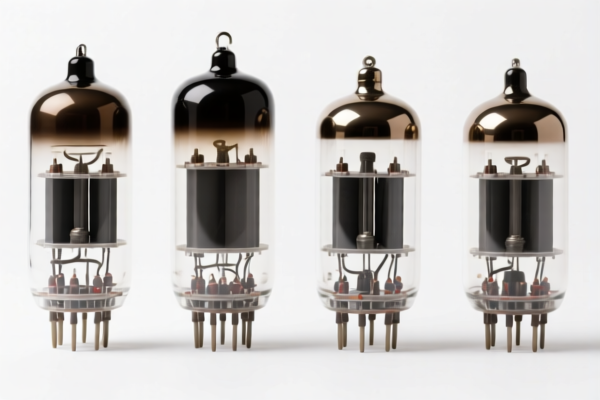
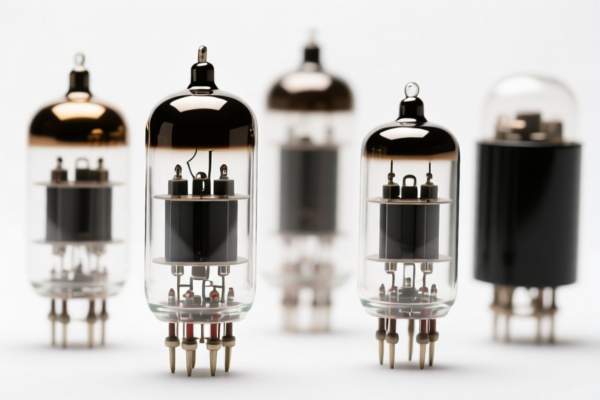
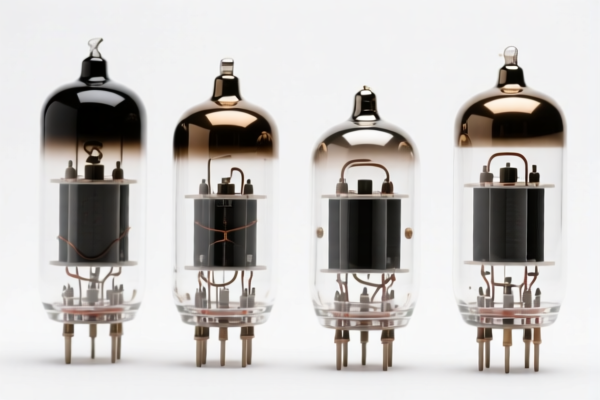
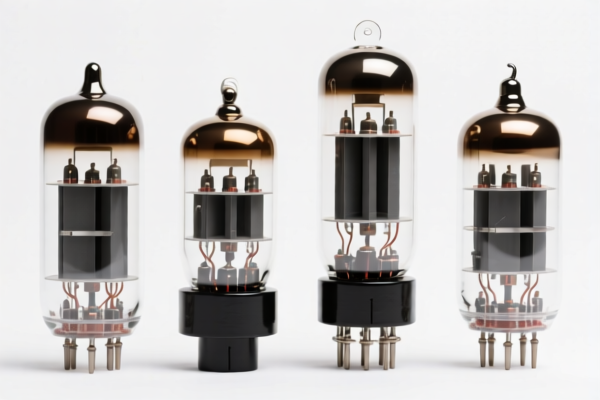
AI Analysis
💡 Vacuum Tubes (Vacuum Tubes for Valves/Thermionic/Cold Cathode/Iron Cathode)
🌐 HS Code Reference & Customs Clearance Guide | 2026 Latest Tariff Analysis | Professional Clearance Strategy
📌 1. Product Definition & Classification: Do You Really Understand "Vacuum Tubes"?
Vacuum tubes, also known as electron tubes or valves, are electronic components that control electron flow in a vacuum. They are essential in high-power radio transmission, specialized audio equipment, and industrial heating applications. In international trade, they are primarily classified under Heading 8540 for thermionic/cold cathode tubes or Heading 8542 if considered parts of integrated circuits.
⚠️ Key Distinction:
- If the tube functions as a standalone electronic valve (e.g., rectifier, oscillator, amplifier) → Classified under 8540.89.00.
- If the tube is considered a component/part of an integrated circuit or microassembly → Classified under 8542.90.00.
📦 2. HS Code Classification Details (2026 Latest Tariff Authority Comparison)
| HS Code | Product Description | Application Scenario | Tax Rate Structure (US Import from CN) |
|---|---|---|---|
8540.89.00.20 |
Other thermionic, cold cathode or photocathode valves (e.g., vacuum tubes, gas-filled valves) | General electronic valves, rectifiers, indicators | 38.7% (Base 3.7% + 25% Sec 301 + 10% IEEPA) |
8540.89.00.40 |
Other thermionic, cold cathode or photocathode valves | Audio amplifiers, RF transmitters, specialized industrial tubes | 38.7% (Base 3.7% + 25% Sec 301 + 10% IEEPA) |
8542.90.00.00 |
Parts and accessories of integrated circuits (including vacuum tubes classified as IC parts) | High-frequency microwave tubes, specialized IC components | 60.0% (Base 0.0% + 50% Sec 301/122 + 10% IEEPA) |
🔍 Important Note:
- 8540.89.00.20/40: These codes cover standard vacuum tubes. The summary states they "fully match the category of 'vacuum, vapor, or gas-filled valves' in terms of use and form." - 8542.90.00.00: This code is used when the vacuum tube is considered a part of an integrated circuit. The summary notes it fits "the category of electronic components and their parts" with "no material conflict." - Tax Warning: Misclassifying a standard vacuum tube as an IC part (8542) can lead to a significantly higher tax rate (60% vs 38.7%) due to different additional tariff calculations (50% vs 25% base additional tax).
💰 3. 2026 Latest Tariff Rate Breakdown (Including Additional Taxes, Policy Add-ons)
✅ Applicable Country: United States (US)
✅ Country of Origin: China (CN)
✅ Effective Time: 2025 November 10 onwards (including subsequent imports)
🎯 1. 8540.89.00.20 & 8540.89.00.40 —— Vacuum Tubes (Standard Classification)
| Item | Detail |
|---|---|
| Basic Tariff Rate | 3.7% (ad valorem) |
| Section 301 Additional Tax | +25.0% |
| IEEPA Additional Tax (Section 122) | +10.0% |
| Total Tariff Rate | 38.7% |
| Tax Calculation | CIF Value × 38.7% |
| De Minimis Exemption Applicable? | ❌ NO (deny_de_minimis) |
| Legal Basis Path | IEEPA:9903.01.25 → USITC:8540.89.00.20/40 → FOOTNOTE:301.8540.89.00 |
📌 Explanation:
- The 3.7% basic tariff applies to most electronic tubes. - The 25% Section 301 tax is applied due to the product's inclusion in the U.S. Trade Representative’s tariff lists for Chinese imports. - The 10% IEEPA tax is an additional levy on certain Chinese electronic components. - Total 38.7% is a significant cost factor. Accurate classification is crucial to avoid overpayment or penalties.
🎯 2. 8542.90.00.00 —— Vacuum Tubes as IC Parts (Alternative Classification)
| Item | Detail |
|---|---|
| Basic Tariff Rate | 0.0% |
| Additional Tax (Section 301/122) | +50.0% |
| IEEPA Additional Tax | +10.0% |
| Total Tariff Rate | 60.0% |
| Tax Calculation | CIF Value × 60.0% |
| De Minimis Exemption Applicable? | ❌ NO (deny_de_minimis) |
| Legal Basis Path | IEEPA:9903.01.25 → USITC:8542.90.00.00 → FOOTNOTE:122.8542.90.00 |
📌 Warning:
- Although the basic tariff is 0%, the additional tax is much higher (50% vs 25%). - This classification is only appropriate if the vacuum tube is definitively a part of an integrated circuit. For general-purpose vacuum tubes, this classification is likely incorrect and leads to a higher total tax burden (60% vs 38.7%).
🛠️ 4. Customs Clearance Practical Advice (Avoid Pitfalls)
✅ 1. Required Documentation Checklist
| Document | Must Provide | Description |
|---|---|---|
| ✅ Product Specification Sheet | ✔️ | Must clearly state type (thermionic/cold cathode), power rating, voltage, and application. |
| ✅ Circuit Diagram/Structure Diagram | ✔️ | To prove whether the tube is a standalone valve or an IC part. |
| ✅ Product Photos (with Label) | ✔️ | Clear image of model number, brand, and input/output parameters. |
| ✅ Third-party Test Report | ✔️ | FCC, CE, RoHS (if applicable). |
| ✅ Commercial Invoice | ✔️ | Must explicitly state "Vacuum Tube" and correct HS Code. |
| ✅ Certificate of Origin (CO) | ✔️ | If not Chinese origin, may qualify for preferential rates. |
| ✅ Packing List | ✔️ | Detail the relationship between units and accessories. |
✅ 2. Declaration Tips (Key Mnemonics)
🔥 "Stand-alone Valve: 8540; IC Part: 8542. Wrong Code = 60% Tax!"
| Scenario | Correct Declaration | Incorrect Practice |
|---|---|---|
| Standard Vacuum Tube (e.g., audio amp tube, rectifier) | 8540.89.00.20 or 8540.89.00.40 |
Misclassified as IC part → 60% tax |
| Vacuum Tube used as an IC component | 8542.90.00.00 |
Misclassified as standard valve → 38.7% tax (underpaid, risk of penalty) |
| Mixed Shipment (Tubes + ICs) | Separate HS Codes | Combined declaration → Audit risk |
✅ 3. Special Situation Handling
| Situation | Recommendation |
|---|---|
| High-Frequency Microwave Tubes | Verify if they are considered "IC parts" (8542) or "Standard Valves" (8540). Usually 8540 unless specifically integrated. |
| OEM Custom Tubes | Provide customer orders + design drawings to support classification. |
| Vacuum Tubes with Accessories | Declare main item (Tube) + separate HS for accessories if significant. |
| Vintage/Audio Tubes | Ensure classification under 8540, not 9031 (optical instruments) or 9013 (other instruments). |
🌍 5. Global Main Market Clearance Comparison (2026 Latest)
| Country/Region | Recommended HS Code | Tariff | Certification | Note |
|---|---|---|---|---|
| 🇺🇸 USA | 8540.89.00.20/40 |
38.7% (CN Origin) | FCC + RoHS | Avoid 8542 unless justified (60% tax) |
| 🇨🇳 China | 8540.89.00.20/40 |
3.7% | CCC (if applicable) | Low tariff, no additional taxes |
| 🇪🇺 EU | 8540.89.00.90 |
0% (if CE) | CE + RoHS | No additional taxes |
| 🇬🇧 UK | 8540.89.00.90 |
0% | UKCA + RoHS | No additional taxes |
| 🇯🇵 Japan | 8540.89.00.90 |
3.2% | PSE | No additional taxes |
📌 Conclusion:
- USA is the only major market with significant additional tariffs on Chinese vacuum tubes.
- China-origin vacuum tubes face a 38.7% total tax rate in the US.
- Misclassification as IC parts (8542) results in a 60% tax rate, which is even higher.
📌 6. Common Mistakes & Pitfalls (Blood Lessons)
❌ Mistake 1: Classifying all vacuum tubes under 8542.90.00.00 because they are "electronic components."
👉 Consequence: 60% tax rate instead of 38.7%. Overpayment!
❌ Mistake 2: Declaring "Vacuum Tube" without specifying type (thermionic/cold cathode).
👉 Consequence: Customs may reject the declaration or assign a higher default rate.
❌ Mistake 3: Using "Valve" or "Tube" interchangeably without technical documentation.
👉 Consequence: Delay in clearance or audit.
❌ Mistake 4: Ignoring the IEEPA 10% tax.
👉 Consequence: Underpayment and penalties.
✅ Correct Practice:
"Thermionic Vacuum Tube, 50W, 250V, Rectifier Type, Model XYZ, FCC Certified, HS Code 8540.89.00.20"
🎯 7. Conclusion: Professional Declaration, Save Time, Reduce Cost!
🎯 Remember the Mnemonic:
🔹 "Stand-alone Tube: 8540 (38.7%); IC Part: 8542 (60%). Choose Wisely!"
🔹 "HS Code Determines Tax, 38.7% vs 60% Difference is Huge!"
📌 Pro Tip:
If your vacuum tubes are originally from Vietnam, Mexico, Thailand, or Malaysia, you may qualify for IEEPA Exemption, reducing the tax rate to 0%~5%.
Recommendation: Apply for an Advance Ruling to confirm the correct HS Code and avoid clearance risks.
📣 Immediate Action:
📞 Contact a Professional Broker + Provide Product Specs + Apply for HS Code Advance Ruling
🚀 Let your Vacuum Tubes Clear Smoothly, Export Efficiently, and Maximize Profits!
✨ Professional Clearance Starts with Accurate Classification!
💼 Every Cent of Your Cost Deserves Precise Calculation!
Customer Reviews
About HS Code Classification
The Harmonized System (HS) is an internationally standardized nomenclature developed by the World Customs Organization (WCO) to classify traded products. Over 200 countries use the HS system as the basis for customs tariffs, trade statistics, and import/export regulations.
Each HS code follows a hierarchical structure:
- Chapter (2 digits) — Broad category of goods (e.g., Chapter 84: Machinery and Mechanical Appliances)
- Heading (4 digits) — More specific grouping within the chapter
- Subheading (6 digits) — Internationally standardized breakdown, used by all WCO member countries
- National subdivisions (8-10 digits) — Country-specific extensions for further classification, such as US HTSUS 10-digit codes
Correct HS code classification is essential for smooth customs clearance, accurate duty payment, and compliance with trade regulations. Misclassification can lead to customs delays, overpayment of duties, or penalties.
When importing from CN to US, the applicable tariff rates may include:
- Most-Favored-Nation (MFN) rate — The standard duty rate applied to WTO members
- General rate — Applied to countries without trade agreements
- Trade remedy duties — Additional tariffs such as Section 301 (anti-dumping), Section 232 (national security), or countervailing duties
The information provided on this page is for reference purposes only. For official classification, please consult with your local customs authority or a licensed customs broker.