Valves for Pipes, Boilers, and Tanks
CN → US| HS Code | Tariff Rate | Origin | Destination | Doc |
|---|---|---|---|---|
| 8481809050 | 37.0% | CN | US | Official Doc |
| 8481200030 | 37.0% | CN | US | Official Doc |
| 8481805090 | 38.0% | CN | US | Official Doc |
Product Images
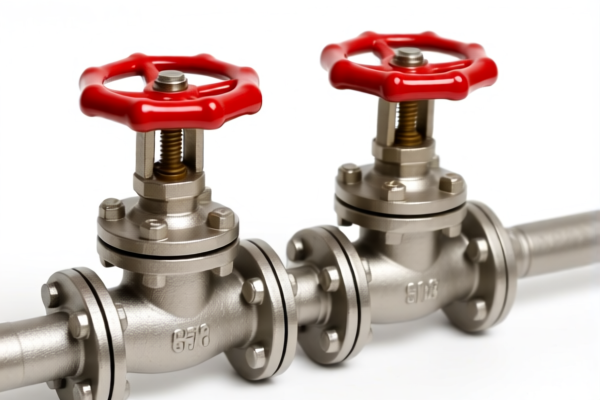
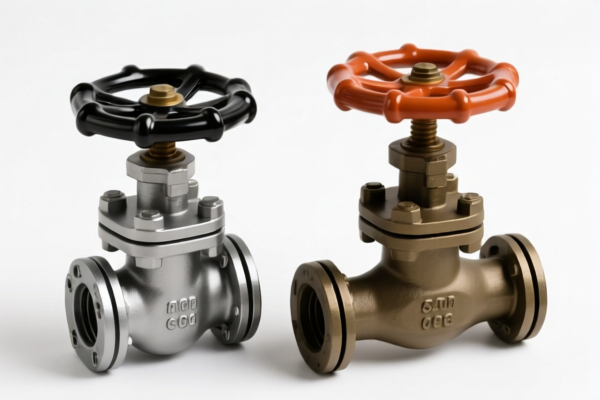
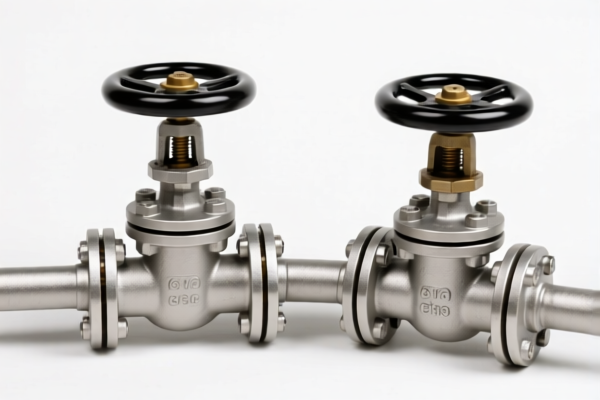
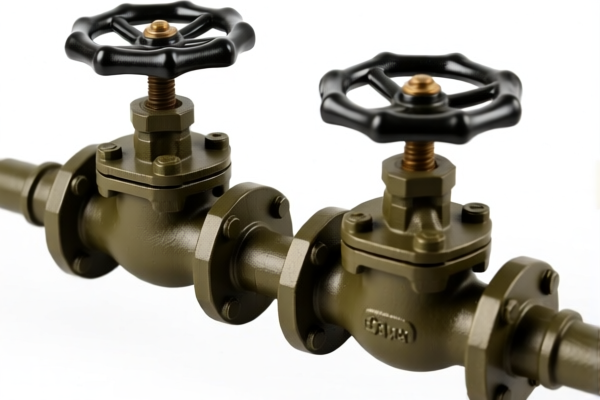
AI Analysis
⚙️ Valves for Pipes, Boilers, and Tanks (Industrial Valves)
🌐 HS Code Reference & Customs Clearance Guide | 2026 Latest Tariff Analysis | Professional Compliance Strategy
📌 I. Product Definition & Classification: What Are You Really Shipping?
Industrial valves are critical components in fluid control systems, used for regulating, directing, or controlling the flow of liquids, gases, steam, or slurries. In international trade, these are primarily classified under Chapter 84 (Nuclear Reactors, Boilers, Machinery and Mechanical Appliances).
Key Distinctions: * General Purpose Valves: Standard valves for pipelines, pressure vessels, or boilers. * Specialized Valves: Check valves, safety valves, pressure-reducing valves, etc. * Critical Classification Point: The classification depends heavily on the specific function (e.g., pressure reduction vs. simple on/off) and the subheading details of HS Code 8481.
⚠️ Key Distinction:
- If the valve is a pressure-reducing or back-pressure valve → Often falls under 8481.20.
- If the valve is a tap, cock, or general-purpose valve for pipes/boilers → Often falls under 8481.80.
- Misclassification Risk: Importing a general valve as a "specialty" valve can lead to duty discrepancies or customs audits.
📦 II. HS Code Classification Details (2026 Latest Tariff Authority Comparison)
Based on the provided data, the following HS Codes are relevant for Valves for Pipes, Boilers, and Tanks. Note that these codes represent specific sub-classifications within Chapter 84, likely reflecting specific US HTSUS subheadings or regional variations.
| HS Code | Product Description | Application Scenario | Classification Logic |
|---|---|---|---|
8481.80.90.50 |
Valves for pipes, boilers, storage tanks, etc. (Exact Match) | General industrial valves, pipeline control, tank access | ✅ Primary Match: Direct description match for valves in these applications. |
8481.20.00.30 |
Valves for pipes, boilers, tanks (Fallback/Catch-all) | Valves not specifically categorized elsewhere in 8481 | ✅ Fallback Match: Used when the specific type doesn't fit other 8481.20 subcategories; deemed "other." |
8481.80.50.90 |
Valves for pipes, boiler casings, vessels (Other Category Fallback) | Valves for boiler casings or non-standard vessel fittings | ✅ Alternative Fallback: Based on "other category" rules for boiler casings/vessels. |
🔍 Key Reminder:
- 8481.80.90.50 is the most direct match for standard valves in pipes/boilers/tanks.
- 8481.20.00.30 is often used for pressure-reducing or safety valves that don't fit the "other" category of 8481.80.
- 8481.80.50.90 applies to specific cases involving boiler casings or vessels under "other" rules.
- Do not assume all valves are the same. Misclassification can lead to significant duty differences.
💰 III. 2026 Latest Tariff Rate Breakdown (Including Surcharges & Policy Add-ons)
✅ Applicable Country: United States (US)
✅ Origin: China (CN)
✅ Effective Date: 2025/2026 (Current Enforcement)
🎯 1. 8481.80.90.50 —— Valves for Pipes, Boilers, Storage Tanks (Exact Match)
| Item | Detail |
|---|---|
| Base Duty Rate | 2.0% |
| Section 301 Duty (Additional) | 25.0% |
| Section 122 Duty (Additional) | 10.0% |
| Total Tax Rate | 37.0% |
| Tax Calculation | CIF Value × 37% |
| De Minimis Exemption | ❌ Not Eligible (High duty rates exclude small package exemptions) |
| Legal Basis Path | USITC:8481.80.90.50 → Sec301:25% → Sec122:10% |
📌 Explanation:
- The 25% Section 301 duty is the standard "trade war" tariff on many Chinese mechanical parts.
- The 10% Section 122 duty is an additional surcharge applied to specific categories (often related to national security or strategic industries).
- Total 37% is a significant cost factor. Ensure your supply chain accounts for this.
🎯 2. 8481.20.00.30 —— Valves for Pipes, Boilers, Tanks (Catch-all/Other)
| Item | Detail |
|---|---|
| Base Duty Rate | 2.0% |
| Section 301 Duty (Additional) | 25.0% |
| Section 122 Duty (Additional) | 10.0% |
| Total Tax Rate | 37.0% |
| Tax Calculation | CIF Value × 37% |
| De Minimis Exemption | ❌ Not Eligible |
| Legal Basis Path | USITC:8481.20.00.30 → Sec301:25% → Sec122:10% |
📌 Note:
- Identical tax structure to8481.80.90.50.
- This code is often used for pressure-reducing or safety valves.
- Even if the function differs, the duty rate remains the same for Chinese origin under current rules.
🎯 3. 8481.80.50.90 —— Valves for Pipes, Boiler Casings, Vessels (Other Category Fallback)
| Item | Detail |
|---|---|
| Base Duty Rate | 3.0% |
| Section 301 Duty (Additional) | 25.0% |
| Section 122 Duty (Additional) | 10.0% |
| Total Tax Rate | 38.0% |
| Tax Calculation | CIF Value × 38% |
| De Minimis Exemption | ❌ Not Eligible |
| Legal Basis Path | USITC:8481.80.50.90 → Sec301:25% → Sec122:10% |
📌 Critical Difference:
- Base duty is higher (3.0% vs 2.0%) due to the specific "other" classification for boiler casings/vessels.
- Total rate is 38%, which is 1% higher than the other two codes.
- This highlights the importance of precise classification. Even a 1% difference can be significant for high-value shipments.
🛠️ IV. Customs Clearance Practical Advice (Field Pitfall Avoidance Guide)
✅ 1. Required Documentation Checklist (Non-Negotiable)
| Document | Must Provide? | Description |
|---|---|---|
| ✅ Product Specification Sheet | ✔️ | Must include pressure rating, temperature range, material (brass, steel, etc.), valve type (gate, ball, globe). |
| ✅ Technical Diagrams | ✔️ | Critical for proving it’s a valve and not a generic fitting. |
| ✅ Product Photos (With Nameplate) | ✔️ | Clear view of model number, manufacturer, and pressure/temperature ratings. |
| ✅ Commercial Invoice | ✔️ | Must accurately describe the item as "Valve for Pipes/Boilers" and state the HS Code. |
| ✅ Packing List | ✔️ | Must match invoice. List each valve type separately if mixed. |
| ✅ Country of Origin Certificate | ✔️ | Essential for determining the Section 301 and Section 122 applicability. |
| ✅ Third-Party Certifications | ✔️ | CE, ASME, API, or UL certifications may be required for boiler/pressure vessel applications. |
✅ 2. Declaration Tips (Key Mantra)
🔥 “Be Specific, Declare Function, Avoid Ambiguity!”
| Scenario | Correct Declaration | Incorrect Practice |
|---|---|---|
| General Valve for Pipe | Valve, Gate Type, for Pipeline, Brass, 1/2" |
"Fitting" or "Connector" → Wrong HS, Higher Duty |
| Pressure-Reducing Valve | Pressure Reducing Valve, for Boiler |
"Valve, General" → Risk of Re-classification |
| Mixed Shipment | List each valve type with its own HS Code | "Mix of Valves" → Customs May Seize or Audit |
| Boiler Casing Valve | Valve for Boiler Casing, Steel, 2" |
"Pipe Fitting" → Wrong Base Duty (3% vs 2%) |
✅ 3. Special Circumstances Handling
| Situation | Handling Advice |
|---|---|
| OEM/Custom Valves | Provide customer PO and design specs to prove origin and function. |
| Valves for Medical/Gas | Ensure compliance with CGA (Compressed Gas Association) standards if applicable. |
| High-Pressure Valves | May require ASME certification. Failure to provide can lead to delays. |
| Valves with Electromagnetic Actuators | Caution: May be classified under Chapter 85 (Electrical) instead of 8481. Consult a specialist. |
🌍 V. Global Market Comparison (2026 Latest)
| Country/Region | Recommended HS Code | Base Duty | Additional Surcharges (China Origin) | Total Approx. | Notes |
|---|---|---|---|---|---|
| 🇺🇸 USA | 8481.80.90.50 |
2.0% | Sec 301: 25% + Sec 122: 10% | 37.0% | High duty environment. |
| 🇨🇳 China | 8481.80.90.50 |
2.0% | None | 2.0% | Export duty may apply. |
| 🇪🇺 EU | 8481.80.90 |
2.7% | None (GSP/FTA may apply) | ~2.7% | CE marking required. |
| 🇦🇺 Australia | 8481.80.90 |
5.0% | None (AUSFTA may apply) | 5.0% | No major surcharges. |
| 🇯🇵 Japan | 8481.80.90 |
2.5% | None (JPEPA may apply) | 2.5% | PSE marking for electrical parts. |
📌 Conclusion:
- USA is the most expensive market for Chinese-manufactured valves due to Section 301 and Section 122 duties.
- EU, Australia, and Japan offer significantly lower total duty rates, but require strict compliance with CE, RCM, or PSE standards.
- Supply Chain Strategy: Consider sourcing from Vietnam or Mexico for US-bound valves to mitigate Section 301 duties, but ensure substantial transformation occurs there.
📌 VI. Common Mistakes & Pitfall Avoidance (Lessons Learned)
❌ Mistake 1: Declaring all valves as "Pipe Fittings"
👉 Consequence: Wrong HS Code → Higher Duty or Audit → Penalties!
❌ Mistake 2: Ignoring the "Boiler Casing" distinction
👉 Consequence: Misusing 8481.80.90.50 instead of 8481.80.50.90 → 1% Savings Opportunity Lost (or vice versa, paying more).
❌ Mistake 3: Providing generic descriptions like "Valve"
👉 Consequence: Customs cannot determine function → Delay → Exam → Demurrage Charges.
❌ Mistake 4: Assuming De Minimis applies
👉 Consequence: Valves are excluded from de minimis exemptions due to high duty rates. Full duty must be paid.
✅ Correct Practice:
"Ball Valve, Brass, 1/2", ASME Certified, for Water Pipeline, Model XYZ, Made in China"
🎯 VII. Conclusion: Precision Classification, Cost Optimization, Smooth Clearance!
🎯 Remember the Mantra:
🔹 "Function First, Material Second, Origin Critical."
🔹 "37% is the US Price, 2% is the Global Baseline."
🔹 "One Percent Difference Can Cost Thousands."
📌 Pro Tip:
If your valves are shipped from Vietnam, Mexico, or Thailand, you MAY qualify for Section 301 Exclusions or lower duties.
Recommendation: Apply for Pre-Ruling (Advance Ruling) with US CBP to confirm the correct HS Code and duty rate before shipment.
📣 Immediate Action:
📞 Contact a Licensed Customs Broker + Provide Technical Specs + Apply for HS Code Pre-Ruling
🚀 Let Your Valves Pass Customs Smoothly, Reduce Costs, and Boost Profits!
✨ Professional Clearance Starts with Accurate Classification!
💼 Every Penny of Duty Saved is Pure Profit!
Customer Reviews
About HS Code Classification
The Harmonized System (HS) is an internationally standardized nomenclature developed by the World Customs Organization (WCO) to classify traded products. Over 200 countries use the HS system as the basis for customs tariffs, trade statistics, and import/export regulations.
Each HS code follows a hierarchical structure:
- Chapter (2 digits) — Broad category of goods (e.g., Chapter 84: Machinery and Mechanical Appliances)
- Heading (4 digits) — More specific grouping within the chapter
- Subheading (6 digits) — Internationally standardized breakdown, used by all WCO member countries
- National subdivisions (8-10 digits) — Country-specific extensions for further classification, such as US HTSUS 10-digit codes
Correct HS code classification is essential for smooth customs clearance, accurate duty payment, and compliance with trade regulations. Misclassification can lead to customs delays, overpayment of duties, or penalties.
When importing from CN to US, the applicable tariff rates may include:
- Most-Favored-Nation (MFN) rate — The standard duty rate applied to WTO members
- General rate — Applied to countries without trade agreements
- Trade remedy duties — Additional tariffs such as Section 301 (anti-dumping), Section 232 (national security), or countervailing duties
The information provided on this page is for reference purposes only. For official classification, please consult with your local customs authority or a licensed customs broker.