Valves for pipes, boilers, and storage tanks
CN → US| HS Code | Tariff Rate | Origin | Destination | Doc |
|---|---|---|---|---|
| 8481200030 | 37.0% | CN | US | Official Doc |
| 8481809050 | 37.0% | CN | US | Official Doc |
Product Images
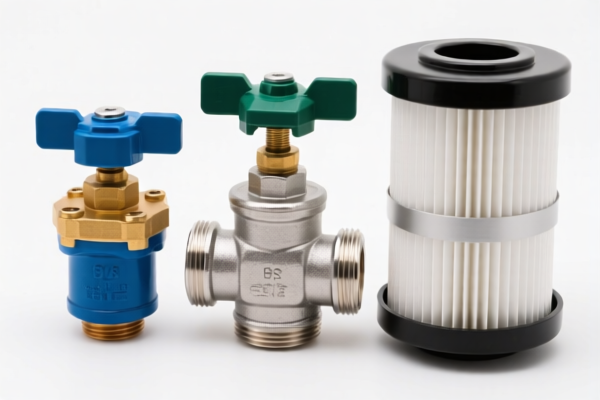
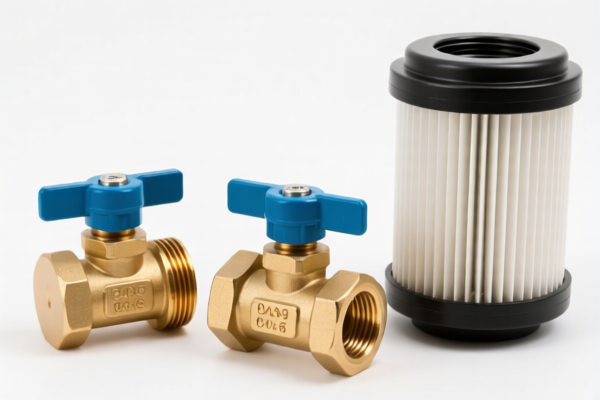
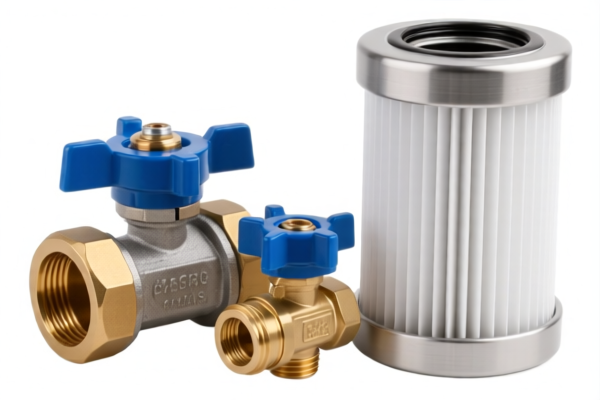
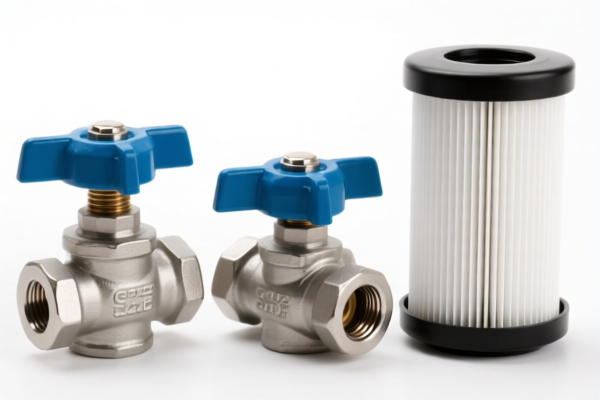
AI Analysis
🚰 Industrial Valves (Taps, Cocks, Valves, and Similar Appliances)
🌐 HS Code Reference & Customs Clearance Guide | 2026 Latest Tariff Analysis | Professional通关 Strategy
📌 I. Product Definition & Classification: Do You Really Know "Industrial Valves"?
Valves for pipes, boiler shells, tanks, and vats are critical components in fluid control systems across industries such as oil & gas, chemical processing, power generation, and water treatment. In international trade, these are broadly categorized under Heading 8481.
They are further细分 (sub-classified) based on their function and application:
Hydraulic/Pneumatic Directional Control Valves:
- Specifically designed for oleohydraulic (oil-based) or pneumatic (air-based) transmission systems.
- Used for directional control in hydraulic machinery, robotics, and automated systems.
Other General-Purpose Valves:
- Includes pressure-reducing valves, thermostatically controlled valves, safety valves, check valves, gate valves, globe valves, ball valves, etc.
- Used for general flow control, pressure regulation, or isolation in pipelines and tanks.
⚠️ Key Distinction:
- If the valve is specifically for oleohydraulic or pneumatic transmissions and used for directional control → Classify under 8481.20.00.30.
- If it is a general-purpose valve not fitting the above specific category → Classify under 8481.80.90.50 (Other appliances).
📦 II. HS Code Classification Details (2026 Latest Tariff Authority Comparison)
| HS Code | Product Description | Application Scenario | Tax Rate (China Origin → US) |
|---|---|---|---|
8481.20.00.30 |
Valves for oleohydraulic or pneumatic transmissions; Hydraulic valves; Directional control | Hydraulic systems, pneumatic actuators, robotics, industrial automation | 27.0% |
8481.80.90.50 |
Other appliances; Other; Other | General industrial valves, pressure regulators, thermostatic valves, ball valves, gate valves, check valves, etc. | 27.0% |
🔍 Key Reminder:
- Both HS Codes carry the same total tariff rate of 27.0% for goods originating from China and exported to the US.
- Breakdown: Base Tariff: 2.0% + Additional Tariff (Section 301): 25.0%.
- Misclassification Risk: Declaring a general valve as a "hydraulic directional valve" (or vice versa) may trigger customs scrutiny. Ensure documentation accurately reflects the valve’s function.
💰 III. 2026 Latest Tariff Rate Breakdown (Including Additional Taxes)
✅ Applicable Country: United States (US)
✅ Country of Origin: China (CN)
✅ Effective Date: From November 10, 2025 (including subsequent imports)
🎯 1. 8481.20.00.30 —— Hydraulic Directional Control Valves
| Item | Details |
|---|---|
| Base Tariff | 2.0% (ad valorem) |
| Section 301 Additional Tariff | +25.0% |
| Total Tariff Rate | 27.0% |
| Tax Calculation | CIF Value × 27.0% |
| De Minimis Exemption | ❌ Not Applicable (Section 301 goods are exempt from de minimis) |
| Legal Basis Path | HTSUS:8481.20.00.30 → USITC:Section 301 → Footnote 2 |
📌 Explanation:
- The 25% additional tariff is imposed under Section 301 of the Trade Act of 1974, targeting specific Chinese goods.
- Hydraulic directional control valves are explicitly listed in the Section 301 tariff schedule.
- No preferential treatment is available for Chinese-origin goods under this HS Code.
🎯 2. 8481.80.90.50 —— Other General-Purpose Valves
| Item | Details |
|---|---|
| Base Tariff | 2.0% (ad valorem) |
| Section 301 Additional Tariff | +25.0% |
| Total Tariff Rate | 27.0% |
| Tax Calculation | CIF Value × 27.0% |
| De Minimis Exemption | ❌ Not Applicable (Section 301 goods are exempt from de minimis) |
| Legal Basis Path | HTSUS:8481.80.90.50 → USITC:Section 301 → Footnote 2 |
📌 Explanation:
- Most general industrial valves fall under this subheading.
- Like hydraulic valves, they are subject to the 25% Section 301 additional tariff.
- Even if the valve is not specifically for hydraulic/pneumatic use, the 27% total rate remains the same.
🛠️ IV. Customs Clearance Practical Advice (Avoiding Pitfalls)
✅ 1. Required Documentation Checklist (Mandatory)
| Document | Required | Notes |
|---|---|---|
| ✅ Product Specification Sheet | ✔️ | Must include valve type, material, pressure rating, temperature range, flow direction, and intended use (e.g., "hydraulic directional control" or "general pipeline valve"). |
| ✅ Technical Drawing/Circuit Diagram | ✔️ | To prove whether the valve is for oleohydraulic/pneumatic systems or general use. |
| ✅ Product Photos (including Nameplate) | ✔️ | Clear images of model number, brand, pressure/temp ratings. |
| ✅ Commercial Invoice | ✔️ | Must explicitly state the HS Code and product description (e.g., "Hydraulic Directional Control Valve" or "Ball Valve for Pipeline"). |
| ✅ Packing List | ✔️ | Detail contents to avoid拆分申报 (split declaration) issues. |
| ✅ Country of Origin Certificate | ✔️ | If not China, may qualify for lower rates. |
| ✅ Third-Party Test Report | ✔️ | Pressure test, material certification, or industry-specific certs (e.g., API, ISO). |
✅ 2. Declaration Tips (Key Mnemonics)
🔥 "Function Determines Code, Don’t Guess, Avoid Fines!"
| Scenario | Correct Declaration | Wrong Practice |
|---|---|---|
| Valve for hydraulic/pneumatic directional control | 8481.20.00.30 |
Misdeclare as general valve → No difference in rate, but potential audit flag |
| General ball/gate/check valve | 8481.80.90.50 |
Misdeclare as hydraulic valve → Unjustified classification |
| Pressure-reducing valve | 8481.80.90.50 |
Misdeclare as hydraulic → Audit risk |
| Valve parts (e.g., stems, seats) | Check if separable; may fall under 8481.90.00.00 |
Include as part of main valve to avoid split tariffs |
✅ 3. Special Handling Cases
| Situation | Recommendation |
|---|---|
| OEM Custom Valves | Provide client order + design drawings to confirm intended use (hydraulic vs. general). |
| Valves with Integrated Sensors/Controllers | Still classified under 8481 if primary function is valve operation; do not classify as 9032 (automatic regulating instruments) unless specifically exempt. |
| Valves for Medical/Gas Devices | If for medical gas, may still fall under 8481; consult customs broker for specific exemptions. |
| Mixed Containers | Clearly separate hydraulic vs. general valves in documentation to avoid misclassification flags. |
🌍 V. Global Market Clearance Comparison (2026 Latest)
| Country/Region | Recommended HS Code | Tariff (China Origin) | Certification Requirements | Notes |
|---|---|---|---|---|
| 🇺🇸 USA | 8481.20.00.30 or 8481.80.90.50 |
27.0% | None specific, but may require pressure vessel certs | High tariff due to Section 301 |
| 🇨🇳 China | 8481.20.00.30 or 8481.80.90.50 |
2.0% | GB Standards | No additional tariffs |
| 🇪🇺 EU | 8481.20 or 8481.80 |
0%–4.5% (varies) | CE, PED (Pressure Equipment Directive) | Lower tariffs, but strict safety certs |
| 🇦🇺 Australia | 8481.20 or 8481.80 |
5% | RCM, AS/NZS Standards | Moderate tariffs |
| 🇯🇵 Japan | 8481.20 or 8481.80 |
0%–3% | JIS Standards | Low tariffs |
📌 Conclusion:
- USA imposes the highest effective tariff (27%) on Chinese-origin valves due to Section 301.
- Other markets offer significantly lower rates, but require specific safety/certification compliance.
- Strategic Suggestion: For US-bound shipments, consider supply chain diversification or explore tariff engineering options with legal counsel.
📌 VI. Common Mistakes & Pitfalls (Lessons Learned)
❌ Mistake 1: Declaring all valves as 8481.80.90.50 regardless of function
👉 Consequence: If classified incorrectly, customs may reassess and impose penalties, though tariff is same. Audit risk remains.
❌ Mistake 2: Ignoring the "oleohydraulic/pneumatic" specification
👉 Consequence: Misclassification may lead to delays if customs requests technical proof.
❌ Mistake 3: Failing to provide pressure/temperature ratings
👉 Consequence: Customs may suspect misdeclaration; request for additional documentation causes clearance delays.
❌ Mistake 4: Not declaring Section 301 applicability
👉 Consequence: Incorrect tax payment → fines, interest, and possible seizure.
✅ Correct Approach:
"Hydraulic Directional Control Valve, Model XYZ, 3000 PSI, Oleohydraulic Transmission, Material: Steel, Certified to ISO 4413"
or
"Ball Valve, Model ABC, 150 PSI, General Pipeline Use, Stainless Steel, API 6D Certified"
🎯 VII. Conclusion: Professional Declaration Saves Time, Money, and Stress!
🎯 Remember the Key Principles:
🔹 "Function Dictates Code: Hydraulic vs. General"
🔹 "27% Total Tariff for China-Origin Valves in US"
🔹 "Documentation is King: Specs, Drawings, and Certs Save You!"
📌 Pro Tip:
If your valves are originating from Vietnam, Mexico, Thailand, or Malaysia, they may not be subject to Section 301 tariffs, potentially reducing the rate to 2.0% (base only).
Recommendation: Apply for Advance Ruling (Prior Ruling) from US Customs and Border Protection (CBP) to confirm HS Code and tariff applicability before shipment.
📣 Immediate Action Steps:
📞 Consult a licensed customs broker + Provide product specs + Apply for HS Code Advance Ruling
🚀 Ensure smooth clearance, cost efficiency, and risk mitigation for your valve exports!
✨ Professional Clearance Starts with Accurate Classification!
💼 Every cent saved is a profit earned!
Customer Reviews
About HS Code Classification
The Harmonized System (HS) is an internationally standardized nomenclature developed by the World Customs Organization (WCO) to classify traded products. Over 200 countries use the HS system as the basis for customs tariffs, trade statistics, and import/export regulations.
Each HS code follows a hierarchical structure:
- Chapter (2 digits) — Broad category of goods (e.g., Chapter 84: Machinery and Mechanical Appliances)
- Heading (4 digits) — More specific grouping within the chapter
- Subheading (6 digits) — Internationally standardized breakdown, used by all WCO member countries
- National subdivisions (8-10 digits) — Country-specific extensions for further classification, such as US HTSUS 10-digit codes
Correct HS code classification is essential for smooth customs clearance, accurate duty payment, and compliance with trade regulations. Misclassification can lead to customs delays, overpayment of duties, or penalties.
When importing from CN to US, the applicable tariff rates may include:
- Most-Favored-Nation (MFN) rate — The standard duty rate applied to WTO members
- General rate — Applied to countries without trade agreements
- Trade remedy duties — Additional tariffs such as Section 301 (anti-dumping), Section 232 (national security), or countervailing duties
The information provided on this page is for reference purposes only. For official classification, please consult with your local customs authority or a licensed customs broker.