Valves for pipes, boilers, tanks, containers
CN → US| HS Code | Tariff Rate | Origin | Destination | Doc |
|---|---|---|---|---|
| 8481809050 | 37.0% | CN | US | Official Doc |
| 8481200030 | 37.0% | CN | US | Official Doc |
| 8481809040 | 37.0% | CN | US | Official Doc |
| 8481809050 | 37.0% | CN | US | Official Doc |
| 8481809050 | 37.0% | CN | US | Official Doc |
Product Images
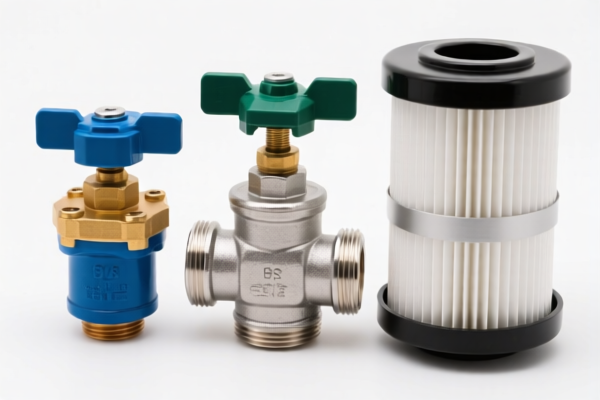
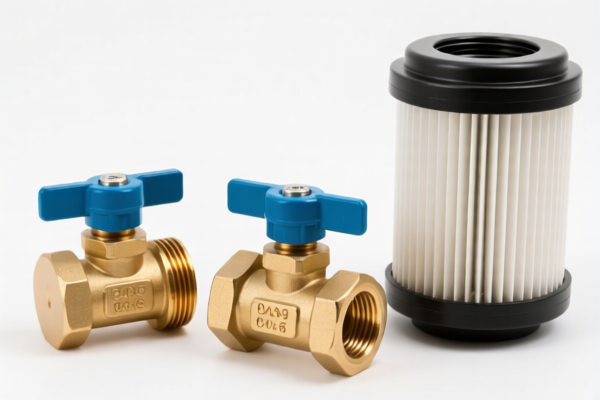
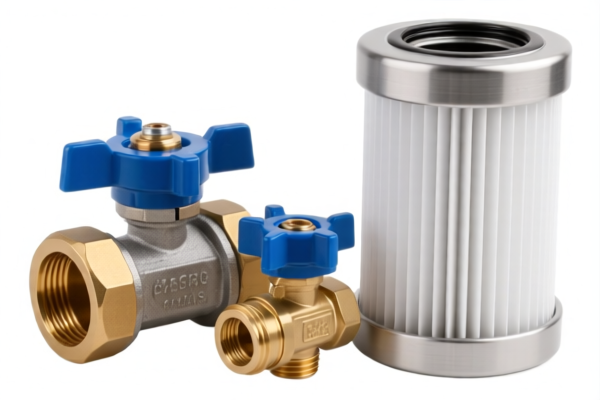
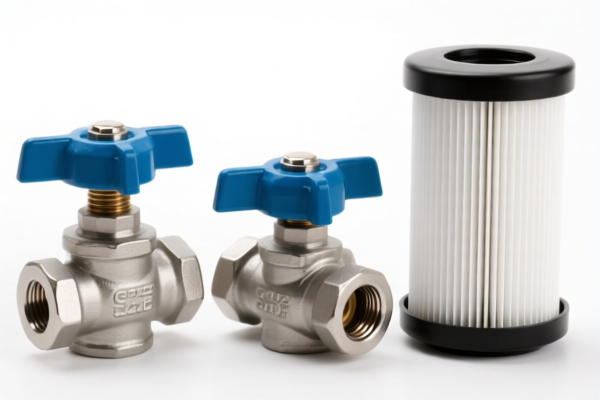
AI Analysis
⚙️ Valves for Pipes, Boilers, Tanks, Containers
🌐 HS Code Reference & Customs Clearance Guide | 2026 Latest Tariff Analysis | Professional Clearance Strategy
📌 I. Product Definition & Classification: Are You Clear on What "Valves" Mean?
Valves for pipes, boilers, tanks, and containers are critical control devices in industrial, chemical, and energy sectors. They regulate the flow, pressure, and direction of fluids (liquids, gases, or slurries). In international trade, these products are often categorized under Chapter 84 (Nuclear reactors, boilers, machinery and mechanical appliances), specifically heading 8481.
However, the exact classification depends on the specific function, type, and application of the valve. The data provided indicates a high degree of overlap and potential ambiguity, often leading to "fallback" classifications for items that don't fit perfectly into primary subheadings.
⚠️ Key Distinction:
- Standard Industrial Valves (e.g., gate, globe, check valves for general piping) typically fall under 8481.80.
- Specific Pressure-Reducing Valves might fall under 8481.20.
- "Fallback" or "Other" Classifications: When a valve does not match specific descriptions (like pressure-reducing), it may be classified under residual headings (e.g., 8481.80.50 or 8481.80.90) with varying tax implications due to USITC footnotes and IEEPA provisions.
📦 II. HS Code Classification Details (2026 Latest Tariff Authority Reference)
Based on the provided dataset, here are the specific HS Codes, their summaries, and the reasoning for their classification. Note that all entries relate to "Valves for pipes, boilers, tanks, containers", but differ in specificity and tax burden.
| HS Code | Product Description | Classification Logic / Summary | Total Tax Rate |
|---|---|---|---|
| 8481.80.90.50 | Valves for pipes, boilers, tanks, containers, etc. | Primary Match: This code is used for valves where the use and classification are consistent and explicit. It serves as a direct match for standard industrial valves not specified elsewhere. | 37.0% |
| 8481.20.00.30 | Valves for pipes, boilers, tanks, containers, etc. | Fallback Match: Classified under "Other" subheadings when the valve doesn't fit specific primary categories. It is a residual/fallback category within Heading 8481.20 (Pressure-reducing valves and other valves with integrally mounted pressure-reducing devices), often used when specific type identification is ambiguous or when customs requires a conservative classification. | 37.0% |
| 8481.80.50.90 | Valves for pipes, boiler shells, containers, etc. | Residual Fallback: Classified based on "other categories fallback rules". This implies a broader, less specific categorization within 8481.80, likely for valves that are not pressure-reducing but also don't fit narrower subheadings. | 38.0% |
🔍 Important Note:
- All three codes apply to Valves for pipes, boilers, tanks, containers.
- The difference lies in specificity and tax liability.
- 8481.80.90.50 and 8481.20.00.30 carry the same total tax (37%), but 8481.80.50.90 has a slightly higher total tax (38%) due to a higher base tariff (3% vs. 2%).
💰 III. 2026 Latest Tariff Rate Breakdown (Including Additional Taxes & Policy Surcharges)
✅ Applicable Country: United States (US)
✅ Country of Origin: China (CN)
✅ Effective Time: 2025+ (Current Trade Policy)
🎯 1. 8481.80.90.50 —— Standard Valves for Pipes/Boilers/Tanks
| Item | Content |
|---|---|
| Base Tariff | 2.0% (Ad Valorem) |
| Section 301 Additional Tariff | +25.0% (From USITC Footnote 9903.88.01, targeting Chinese origin machinery/valves) |
| IEEPA Additional Tariff (122 Clause) | +10.0% (Targeting Chinese origin, effective under Executive Orders) |
| Total Tariff Rate | 37.0% |
| Tax Calculation | CIF Value × 37% |
| De Minimis Eligibility | ❌ Not Eligible (Section 301 and IEEPA taxes generally apply regardless of value) |
| Legal Basis Path | IEEPA:9903.01.25 → USITC:8481.80.90.50 → FOOTNOTE:9903.88.01 |
📌 Explanation:
- The 25% Section 301 tariff is applied to most Chinese-origin industrial valves under heading 8481.
- The 10% IEEPA tariff is an additional surcharge targeting Chinese goods.
- Total: 37%. This is a high-cost import category.
🎯 2. 8481.20.00.30 —— Fallback Valves (Often Pressure-Related or Ambiguous Types)
| Item | Content |
|---|---|
| Base Tariff | 2.0% (Ad Valorem) |
| Section 301 Additional Tariff | +25.0% (From USITC Footnote 9903.88.01) |
| IEEPA Additional Tariff (122 Clause) | +10.0% (Targeting Chinese origin) |
| Total Tariff Rate | 37.0% |
| Tax Calculation | CIF Value × 37% |
| De Minimis Eligibility | ❌ Not Eligible |
| Legal Basis Path | IEEPA:9903.01.24 → USITC:8481.20.00.30 → FOOTNOTE:9903.88.01 |
📌 Note:
- Despite being under heading 8481.20 (which often covers pressure-reducing valves), the tax rate is identical to 8481.80.90.50.
- This is because the Section 301 and IEEPA surcharges apply broadly to Chinese-origin valves in Chapter 84, regardless of the specific subheading.
🎯 3. 8481.80.50.90 —— Residual/Fallback Valves (Other Uses)
| Item | Content |
|---|---|
| Base Tariff | 3.0% (Ad Valorem) |
| Section 301 Additional Tariff | +25.0% (From USITC Footnote 9903.88.01) |
| IEEPA Additional Tariff (122 Clause) | +10.0% (Targeting Chinese origin) |
| Total Tariff Rate | 38.0% |
| Tax Calculation | CIF Value × 38% |
| De Minimis Eligibility | ❌ Not Eligible |
| Legal Basis Path | IEEPA:9903.01.24 → USITC:8481.80.50.90 → FOOTNOTE:9903.88.01 |
📌 Note:
- This code has a higher base tariff (3%) compared to the other two (2%), resulting in a 1% higher total tax.
- It is used for valves that do not fit more specific categories, often requiring customs ruling to justify classification.
🛠️ IV. Customs Clearance Practical Advice (Battle-Tested Pitfall Guide)
✅ 1. Document Checklist (All Required)
| Document | Mandatory | Explanation |
|---|---|---|
| ✅ Product Specification Sheet | ✔️ | Must detail type (gate, globe, ball, etc.), material (steel, bronze, etc.), pressure rating, temperature range. |
| ✅ Technical Drawing / Cross-Section | ✔️ | To prove whether it’s a pressure-reducing valve (8481.20) or standard valve (8481.80). |
| ✅ Product Photos (with Nameplate) | ✔️ | Clear view of model number, brand, pressure/temperature labels. |
| ✅ Third-Party Test Reports | ✔️ | ASME, API, CE, or ISO certifications if applicable. |
| ✅ Commercial Invoice | ✔️ | Must clearly state “Valves for Pipes/Boilers/Tanks” and correct HS Code. |
| ✅ Certificate of Origin (CO) | ✔️ | Essential for proving Chinese origin (and thus applicability of Section 301/IEEPA). |
| ✅ Packing List | ✔️ | Detail individual valves and packaging to avoid misclassification of parts. |
✅ 2. Declaration Tips (Critical Keywords)
🔥 “Clear Type, Specify Material, Avoid Ambiguity!”
| Scenario | Correct Declaration | Wrong Practice |
|---|---|---|
| Standard Industrial Valve | Gate Valve, Carbon Steel, 150#, For Pipeline Use |
Vague: “Valve” → Risk of fallback classification (38%) |
| Pressure-Reducing Valve | Pressure Reducing Valve, Brass, 300 PSI |
Misclassifying as standard valve → Potential penalty for incorrect HTS |
| Valve Parts (Stem, Seat) | Valve Parts, Carbon Steel |
Declaring as “Valve” → Higher tax rate (37-38% vs. lower rates for parts) |
| Valve Assembly with Actuator | Automated Ball Valve Assembly |
Declaring as simple valve → May change classification to 8481.80.90.50 or other |
✅ 3. Special Case Handling
| Scenario | Handling Advice |
|---|---|
| Valves for Boilers | Ensure compliance with ASME BPVC standards. Customs may request proof of certification. |
| Valves for Tanks/Containers | Specify if they are for fuel, chemical, or water use. Chemical-resistant materials may require additional safety data sheets (SDS). |
| OEM Custom Valves | Provide client design drawings to prove they are not generic “fallback” items. This can help in arguing for a more specific (and potentially lower base tariff) classification. |
| Valves with Electrical Actuators | If the actuator is integral, it may still be classified under 8481, but if it’s a separate component, it might be classified under 8537 (Control Panels). Do not split incorrectly. |
🌍 V. Global Market Clearance Comparison (2026 Latest)
| Country/Region | Recommended HS Code | Tariff (CN Origin) | Certification Required | Notes |
|---|---|---|---|---|
| 🇺🇸 USA | 8481.80.90.50 / 8481.20.00.30 |
37% (301+IEEPA) | N/A (General) | High tariff burden. |
| 🇺🇸 USA | 8481.80.50.90 |
38% | N/A | Higher base tariff. |
| 🇨🇳 China | 8481.80.90.50 |
2.0% | CCC (if applicable) | No additional surcharges. |
| 🇪🇺 EU | 8481.80.90 |
0% | CE, PED (Pressure Equipment Directive) | Free trade agreement may apply if originating in EU. |
| 🇦🇺 Australia | 8481.80.90 |
5% | SAA, ATEX (if explosive) | No additional surcharges. |
| 🇯🇵 Japan | 8481.80.90 |
2.0% | JIS, METI certification | Low tariff, strict technical standards. |
📌 Conclusion:
- USA is the most expensive market for Chinese-origin valves due to Section 301 (25%) and IEEPA (10%) surcharges.
- EU, Australia, and Japan offer significantly lower tariff burdens but have strict technical and safety certifications (CE, PED, JIS).
- Diversification Strategy: Consider sourcing valves from Vietnam, Mexico, or Thailand to avoid US surcharges (if origin rules are met).
📌 VI. Common Errors & Pitfalls (Blood-Tested Lessons)
❌ Error 1: Declaring “Valves” without specifying type or material
👉 Consequence: Customs may apply the fallback classification (8481.80.50.90) with a higher base tariff (3%) and potential audits.
❌ Error 2: Splitting valve assemblies (valve + actuator) into separate line items
👉 Consequence: Misclassification of parts vs. complete articles → Penalties and back taxes.
❌ Error 3: Ignoring IEEPA 122 Clause requirements
👉 Consequence: If the valve is of Chinese origin, failure to declare correctly can lead to additional penalties and seizure.
❌ Error 4: Using “Generic Valve” on Commercial Invoice
👉 Consequence: Customs may reject the declaration for lack of specificity, causing delays and demurrage charges.
✅ Correct Practice:
“Ball Valve, 2-inch, Stainless Steel 316, 150# ANSI, For Chemical Pipeline Use, Model: XYZ-123, CE Certified”
🎯 VII. Conclusion: Precise Classification Saves Money!
🎯 Remember the Mantra:
🔹 “Specify Type, Specify Material, Avoid Fallback!”
🔹 “HS Code Determines Tax, 37% is the US Reality!”
🔹 “Clear Documentation, Smooth Clearance!”
📌 Pro Tip:
If your valves are originating from Vietnam, Mexico, or Thailand, you may exempt from Section 301 and IEEPA tariffs, reducing the total tax to ~2-5%.
Recommendation: Apply for Advance Ruling (CBSA/USCBP) if you are unsure about classification. This provides legal certainty and avoids post-clearance audits.
📣 Take Action Now:
📞 Contact a Licensed Customs Broker + Provide Technical Drawings + Apply for Pre-Ruling
🚀 Ensure your valves clear customs smoothly, minimize costs, and maximize profit!
✨ Professional clearance starts with accurate classification!
💼 Every dollar in tariff costs is worth optimizing!
Customer Reviews
About HS Code Classification
The Harmonized System (HS) is an internationally standardized nomenclature developed by the World Customs Organization (WCO) to classify traded products. Over 200 countries use the HS system as the basis for customs tariffs, trade statistics, and import/export regulations.
Each HS code follows a hierarchical structure:
- Chapter (2 digits) — Broad category of goods (e.g., Chapter 84: Machinery and Mechanical Appliances)
- Heading (4 digits) — More specific grouping within the chapter
- Subheading (6 digits) — Internationally standardized breakdown, used by all WCO member countries
- National subdivisions (8-10 digits) — Country-specific extensions for further classification, such as US HTSUS 10-digit codes
Correct HS code classification is essential for smooth customs clearance, accurate duty payment, and compliance with trade regulations. Misclassification can lead to customs delays, overpayment of duties, or penalties.
When importing from CN to US, the applicable tariff rates may include:
- Most-Favored-Nation (MFN) rate — The standard duty rate applied to WTO members
- General rate — Applied to countries without trade agreements
- Trade remedy duties — Additional tariffs such as Section 301 (anti-dumping), Section 232 (national security), or countervailing duties
The information provided on this page is for reference purposes only. For official classification, please consult with your local customs authority or a licensed customs broker.