Vanadium based Casting Anti settling Agent
CN → US| HS Code | Tariff Rate | Origin | Destination | Doc |
|---|---|---|---|---|
| 3824100000 | 41.0% | CN | US | Official Doc |
| 3824993600 | 24.0% | CN | US | Official Doc |
| 7202998040 | 15.0% | CN | US | Official Doc |
| 7202920000 | 39.2% | CN | US | Official Doc |
| 3824993600 | 24.0% | CN | US | Official Doc |
Product Images
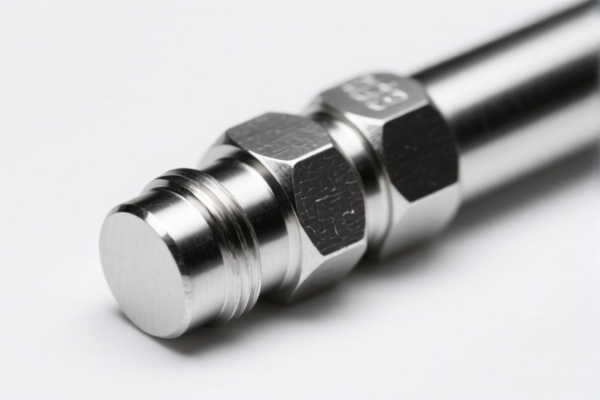
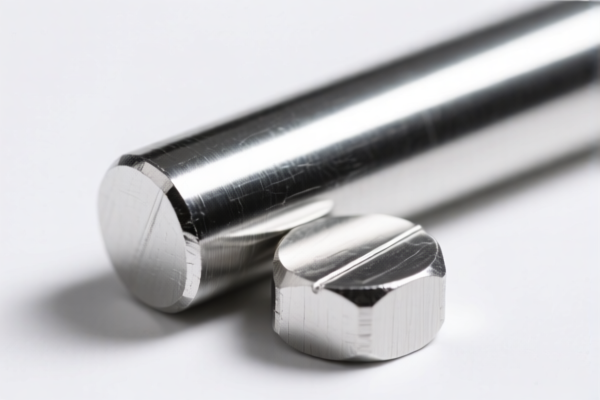
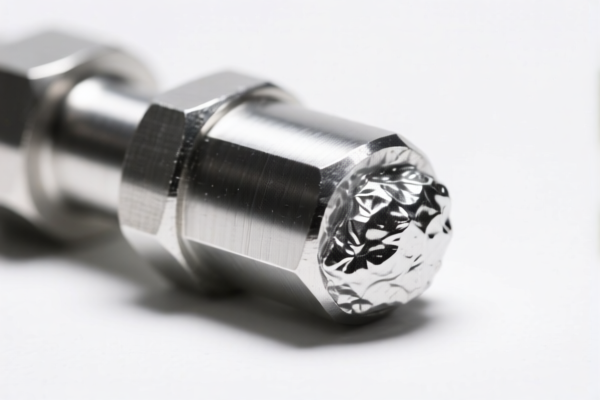

AI Analysis
🏭 Vanadium-Based Casting Anti-Settling Agent
🌐 HS Code Reference & Customs Clearance Guide | 2026 Latest Tariff Analysis | Professional Compliance Strategy
📌 I. Product Definition & Classification: Do You Understand "Vanadium-Based Anti-Settling Agent"?
A Vanadium-Based Casting Anti-Settling Agent is a specialized additive used in metal casting and foundry processes. Its primary function is to prevent the settling of solid particles within liquid binders, slurries, or mold-making compounds, ensuring uniform distribution and consistent mechanical properties in the final cast product.
In international trade, this product is ambiguous due to its dual nature: 1. Chemical/Preparation Nature: It acts as an additive/adjunct in chemical mixtures. 2. Alloy/Material Nature: It is based on Vanadium (V), which may imply an alloy component (specifically Ferrovanaadium) if the vanadium content is high or if it is used to modify the metal matrix.
⚠️ Key Distinction Point:
- If the product is primarily a chemical preparation (e.g., a slurry additive, binder modifier) where vanadium is just an active ingredient → Likely Chapter 38.
- If the product is primarily an iron alloy (e.g., Ferrovanaadium) used to add vanadium directly into the melt → Likely Chapter 72.
📦 II. HS Code Classification Details (Based on Provided Data)
| HS Code | Product Description | Applicability & Rationale | Total Tax Rate |
|---|---|---|---|
| 3824.10.00.00 | Based on vanadium casting anti-settling agent | Rationale: Classified as an additive based on vanadium as a chemical component. Form is an additive. Matches casting use and binder/preparation purposes. | 41.0% |
| 3824.99.36.00 | Vanadium-based casting anti-settling agent | Rationale: Based on vanadium material, classified as a chemical preparation. Matches casting mold binder adjustment and chemical product usage. Note: This code also applies to "Vanadium-based Casting Release Agent". | 24.0% |
| 7202.99.80.40 | Based on vanadium casting anti-settling agent | Rationale: Explicitly identified as an iron alloy material (Ferrovanaadium). Fits under "Other ferroalloys" (excluding Fe-P). Acts as an additive under the "other" category catch-all. | 15.0% |
| 7202.92.00.00 | Based on vanadium casting anti-settling agent | Rationale: Explicitly material is Vanadium, falling under Vanadium element scope (Ferrovanaadium). Anti-settling agent as an additive conflicts not with ferroalloy nature. | 39.2% |
🔍 Critical Analysis:
- 3824 Codes treat the product as a Chemical Preparation. The tax burden varies significantly (24% vs. 41%) based on specific subheading interpretations. - 7202 Codes treat the product as a Ferroalloy. The tax burden is lower (15%–39.2%) but requires proving it is an alloy (e.g., Vanadium-Iron) rather than just a chemical additive.
💰 III. 2026 Latest Tariff Rate Breakdown (Including Surtaxes & Policy Add-ons)
✅ Applicable Country: United States (US)
✅ Origin: China (CN)
✅ Effective Time: Current tariffs apply (2026 context)
🎯 1. 3824.10.00.00 —— Chemical Preparations (Vanadium-based Additive)
| Item | Detail |
|---|---|
| Base Tariff | 6.0% |
| Section 301 Surtax | 25.0% |
| Section 122 Tariff | 10.0% |
| Total Tax Rate | 41.0% |
| Tax Calculation | CIF Value × 41.0% |
| Legal Path | Base Tariff → USITC 301 List → IEEPA Section 122 |
📌 Explanation:
- This is the highest tax bracket among chemical classifications.
- It assumes the product is a finished chemical preparation where vanadium is a minor or functional component, not the main alloying element.
🎯 2. 3824.99.36.00 —— Other Chemical Preparations (Vanadium-based)
| Item | Detail |
|---|---|
| Base Tariff | 6.5% |
| Section 301 Surtax | 7.5% |
| Section 122 Tariff | 10.0% |
| Total Tax Rate | 24.0% |
| Tax Calculation | CIF Value × 24.0% |
| Legal Path | Base Tariff → USITC General List → IEEPA Section 122 |
📌 Note:
- Significant Cost Saving: This rate (24%) is 17 percentage points lower than3824.10.00.00.
- Condition: Must prove the product falls under "Other chemical preparations" and not specifically under "3824.10" (which often covers specific binders/additives). The description "Vanadium-based casting release agent" also maps here, suggesting broader applicability for vanadium-based chemical mixtures.
🎯 3. 7202.99.80.40 —— Ferroalloys (Other)
| Item | Detail |
|---|---|
| Base Tariff | 5.0% |
| Section 301 Surtax | 0.0% |
| Section 122 Tariff | 10.0% |
| Total Tax Rate | 15.0% |
| Tax Calculation | CIF Value × 15.0% |
| Legal Path | Base Tariff → USITC Ferroalloy List → IEEPA Section 122 |
📌 Advantage:
- Lowest Total Tax (15%).
- Key Requirement: You must classify the product as a Ferroalloy (e.g., Vanadium-Iron alloy). The anti-settling function is secondary to its material nature as an iron alloy.
- Section 301 Exemption: No 25% surtax applies to this specific subheading under current data.
🎯 4. 7202.92.00.00 —— Ferrovanaadium
| Item | Detail |
|---|---|
| Base Tariff | 4.2% |
| Section 301 Surtax | 25.0% |
| Section 122 Tariff | 10.0% |
| Total Tax Rate | 39.2% |
| Tax Calculation | CIF Value × 39.2% |
| Legal Path | Base Tariff → USITC Specific Ferroalloy List → IEEPA Section 122 |
📌 Explanation:
- This is the specific HS code for Ferrovanaadium.
- Despite being an alloy, it incurs the full 25% Section 301 surtax, making it more expensive than the "Other Ferroalloys" category (7202.99.80.40).
🛠️ IV. Customs Clearance Practical Advice (Avoiding Pitfalls)
✅ 1. Documentation Checklist (Non-negotiable)
| Document | Required | Purpose |
|---|---|---|
| ✅ Product Specification Sheet | ✔️ | Must detail: Vanadium content %, form (powder/liquid/granule), purpose (anti-settling vs. alloying). |
| ✅ Formula/Composition Analysis | ✔️ | Crucial for distinguishing between Chemical Preparation (Ch 38) vs. Ferroalloy (Ch 72). |
| ✅ Certificate of Origin | ✔️ | To verify CN origin and apply correct Section 301/122 rates. |
| ✅ Technical Data Sheet (TDS) | ✔️ | Shows usage in casting/binders, supporting Chapter 38 classification. |
| ✅ Commercial Invoice | ✔️ | Description must be precise: e.g., "Vanadium-Based Anti-Settling Additive for Mold Binders" vs. "Ferrovanaadium Alloy Powder". |
✅ 2. Classification Strategy (Key Mnemonic)
🔥 "Alloy vs. Chemical: Check Vanadium % and Form!"
| Scenario | Recommended HS Code | Reasoning |
|---|---|---|
| High Vanadium Content (>50%), Iron Base, Used as Alloying Agent | 7202.99.80.40 |
Treated as "Other Ferroalloy". Lowest tax (15%). |
| Specific Ferrovanaadium Product | 7202.92.00.00 |
Treated as Specific Ferroalloy. High tax (39.2%) due to 301 surtax. |
| Chemical Slurry/Additive, Vanadium as Active Ingredient | 3824.99.36.00 |
Treated as Chemical Preparation. Medium tax (24%). Best for "Release Agents". |
| Specific Binder/Additive Definition Matches 3824.10 | 3824.10.00.00 |
Treated as Specific Chemical Prep. Highest tax (41%). Avoid if possible. |
✅ 3. Special Considerations
| Situation | Handling Advice |
|---|---|
| OEM Custom Blends | Provide detailed formula. If it's >50% Vanadium and Iron, argue for Ch 72. If it's a chemical mix with <50% vanadium, argue for Ch 38. |
| Product Used in Mold Making | Emphasize "Anti-settling in Binder" to support Chapter 38. |
| Product Added Directly to Melt | Emphasize "Alloying Agent" to support Chapter 72. |
| Discrepancy in Tax Rates | If you can prove it fits 7202.99.80.40 (15%) instead of 7202.92.00.00 (39.2%), do so. The distinction is often in whether it's a "specific ferrovanaadium" or "other ferroalloy". |
🌍 V. Global Market Comparison (2026 Context)
| Country/Region | Recommended HS Code | Estimated Total Tariff (China Origin) | Notes |
|---|---|---|---|
| 🇺🇸 United States | 7202.99.80.40 or 3824.99.36.00 |
15% or 24% | Avoid 3824.10 (41%) and 7202.92 (39.2%) if possible. |
| 🇨🇳 China (Import) | 7202.92 or 3824 |
0% - 5% | No Section 301/122. Focus on duty reduction via FTAs if applicable. |
| 🇪🇺 European Union | 3824 or 7202 |
0% - 6.5% | Generally lower tariffs. No Section 301 surtax. |
| 🇬🇧 United Kingdom | 3824 or 7202 |
0% - 6.5% | Post-Brexit, UK tariff schedules align closely with EU but may have specific nuances. |
📌 Conclusion:
- US Market is the most complex due to layered tariffs (Base + 301 + 122).
- Optimization Strategy: Aim for7202.99.80.40(15%) or3824.99.36.00(24%).
- Risk: Misclassification can lead to penalties, especially if "Anti-settling agent" is seen as a chemical but classified as an alloy.
📌 VI. Common Errors & Pitfalls (Lessons Learned)
❌ Error 1: Classifying as 3824.10.00.00 (41%) without checking if 3824.99.36.00 (24%) is more appropriate.
👉 Consequence: Overpaying 17% in duties unnecessarily.
👉 Fix: Review product description against HS headings. If it's not a specific listed additive, use "Other".
❌ Error 2: Classifying as 7202.92.00.00 (39.2%) when it qualifies as 7202.99.80.40 (15%).
👉 Consequence: Overpaying 24.2%.
👉 Fix: If the product is not standard Ferrovanaadium but a modified alloy or mix, argue for "Other Ferroalloys".
❌ Error 3: Ignoring Section 122 Tariff.
👉 Consequence: Underestimating costs. Section 122 (10%) applies to most HS codes for CN origin.
👉 Fix: Always calculate Base + 301 + 122.
❌ Error 4: Inconsistent Documentation.
👉 Consequence: Customs asks for clarification, delaying clearance.
👉 Fix: Ensure Invoice, Packing List, and Spec Sheet all align with the chosen HS Code description.
🎯 VII. Conclusion: Professional Classification, Cost Optimization
🎯 Key Takeaway:
🔹 "Alloy First, Chemical Second" – If it's an iron-vanadium mix, fight for Chapter 72.
🔹 "Specific vs. Other" – Avoid specific headings like3824.10or7202.92if "Other" categories offer lower rates.
🔹 "Tax = Base + 301 + 122" – Always calculate the full burden.
📌 Pro Tip:
If your product is a chemical slurry and not a solid alloy, argue strongly for 3824.99.36.00 (24%). It is significantly cheaper than 3824.10.00.00 (41%).
If your product is a solid powder and you can prove it's an alloy, aim for 7202.99.80.40 (15%).
📣 Immediate Action:
📞 Consult a Customs Broker: Provide full formulation data.
📝 Request Advance Ruling: If shipment value is high, seek an official HS Code determination from US CBP.
🚀 Optimize Supply Chain: Consider transshipment to Vietnam/Mexico if tariffs remain prohibitive, but ensure substantial transformation.
✨ Professional Clearance Starts with Precise Classification!
💼 Every Percentage Point Saved is Pure Profit!
Customer Reviews
About HS Code Classification
The Harmonized System (HS) is an internationally standardized nomenclature developed by the World Customs Organization (WCO) to classify traded products. Over 200 countries use the HS system as the basis for customs tariffs, trade statistics, and import/export regulations.
Each HS code follows a hierarchical structure:
- Chapter (2 digits) — Broad category of goods (e.g., Chapter 84: Machinery and Mechanical Appliances)
- Heading (4 digits) — More specific grouping within the chapter
- Subheading (6 digits) — Internationally standardized breakdown, used by all WCO member countries
- National subdivisions (8-10 digits) — Country-specific extensions for further classification, such as US HTSUS 10-digit codes
Correct HS code classification is essential for smooth customs clearance, accurate duty payment, and compliance with trade regulations. Misclassification can lead to customs delays, overpayment of duties, or penalties.
When importing from CN to US, the applicable tariff rates may include:
- Most-Favored-Nation (MFN) rate — The standard duty rate applied to WTO members
- General rate — Applied to countries without trade agreements
- Trade remedy duties — Additional tariffs such as Section 301 (anti-dumping), Section 232 (national security), or countervailing duties
The information provided on this page is for reference purposes only. For official classification, please consult with your local customs authority or a licensed customs broker.